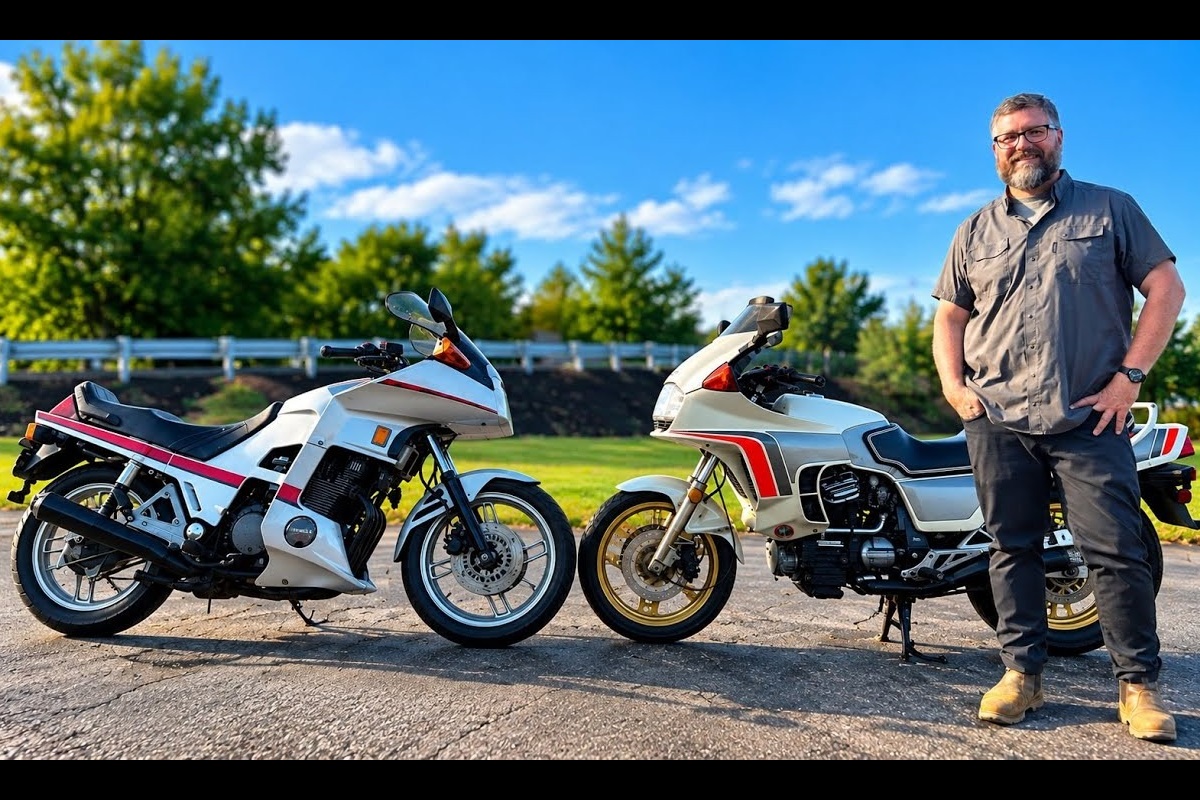
The Bearded Mechanic He is a well-known American YouTuber who is passionate about motorcycle restorations. On his YouTube channel he shows us the final result of his projects, in addition to delighting us with the entire process that a project of this type entails. One of his latest videos titled “Turbo motorcycles. First time on the road in decades!” It brings us closer to the meticulous work carried out on the Yamaha XJ650 Seca Turbo and Honda CX500 Turbo, previously abandoned for years.
The fashion of turbocharged models
At the beginning of the 1980s, the four major Japanese brands, Honda, Suzuki, Yamaha and Kawasakitried to attach turbochargers to their sports motorcycles, something that in the case of the first three had a fairly short journey and that, however, in Kawasaki was better exploited and even achieved some success.
From that passing fad, models like the GPz Turbo 750 or the Suzuki XN85 Turbo were born. Both represented the technological summit of the two Japanese companies. In parallel, Yamaha and Honda also knew how to play their cards with the respective XJ650 Dry Turbo and CX500 Turbo. Even of the latter, in 1983 and for a single season, the golden wing firm also marketed a “six and a half” variant of the model.
“The Bearded Mechanic” returns with an exciting project
In recent days, the YouTube channel “The Bearded Mechanic” published one of those videos that Old School fans like so much. Especially those rarities that today are true objects of worship for many motorcycle fans from the end of the last century. The XJ650 Seca Turbo and CX500 Turbo that star in Craig’s latest project (The Bearded Mechanic), are a good couple of examples of this.
The first of them is equipped with a 653 cc turbocharged tetra-cylinder engine, air-cooled and fed by four 30 mm Mikuni carburetors. At the time the brand declared almost 90 HP of power at 9,000 rpmbecoming one of the most special registrable motorcycles of the moment. For its part, Honda offered its CX500 Turbo equipped with a turbine of almost microscopic dimensions, with 51 mm diameter rotors that were capable of rotating at 200,000 revolutions per minute.

The brand then declared 82 hp power which forced them to reinforce some internal parts of the base engine from which they started, mounted on the standard non-turbo variant. It also included digital ignition, electronic injection, Pro-Link rear suspension, anti-dive in the fork, brakes with two-piston calipers, new Comstar tires, etc. Regarding the units rescued by Craig, as explained by Ride Apart:
“The CX500 Turbo has some discoloration and cracking on its windshield, the Seca’s looks surprisingly good for its age…both bikes were part of a private collection for between 20 and 30 years”. As expected, when disassembling they encounter a multitude of problems that they did not initially count on. For example, in the Yamaha braking system.
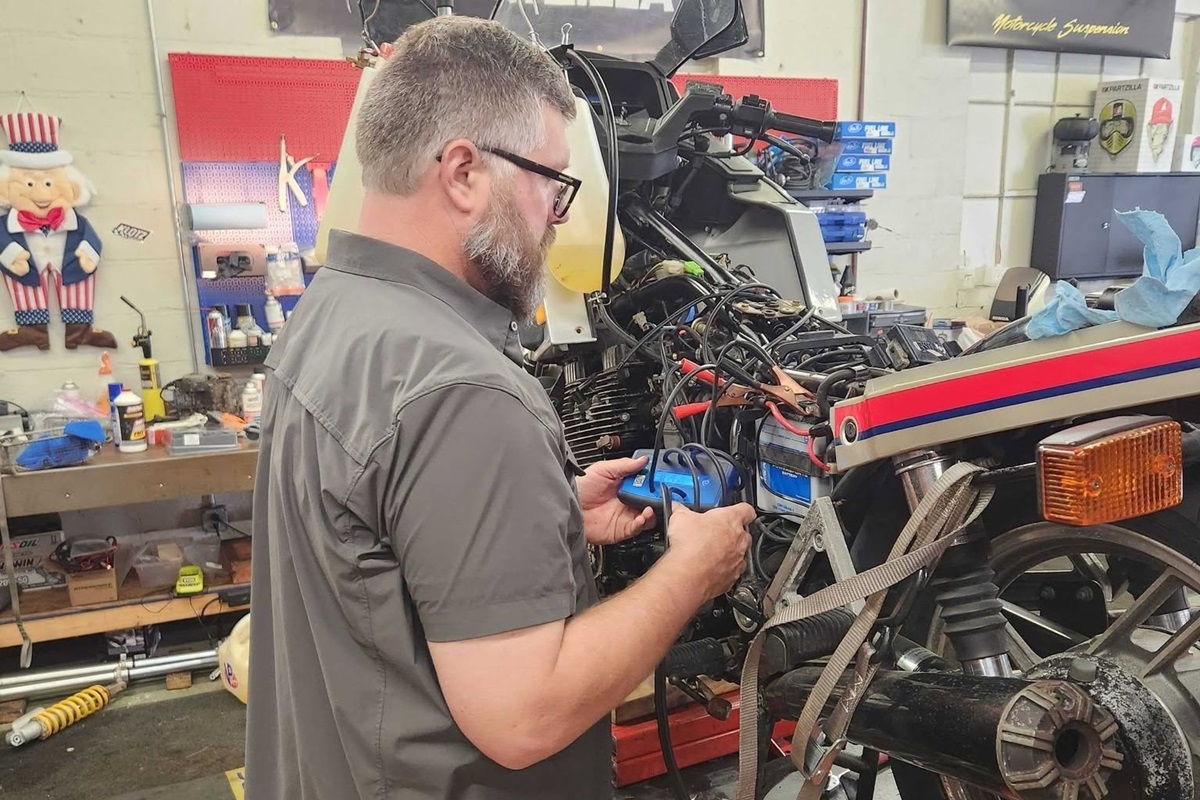
Now, at the end of the video, after they manage to start both motorcycles, they have problems with this part again, having to install new brake hoses. “The Yamaha also needs new front brake pads, since the old ones are very worn”our colleagues point out. They conclude: “It’s amazing to see someone with the combination of patience, knowledge, tools and general resources to successfully revive these two bikes and return them to some semblance of their former glory.”