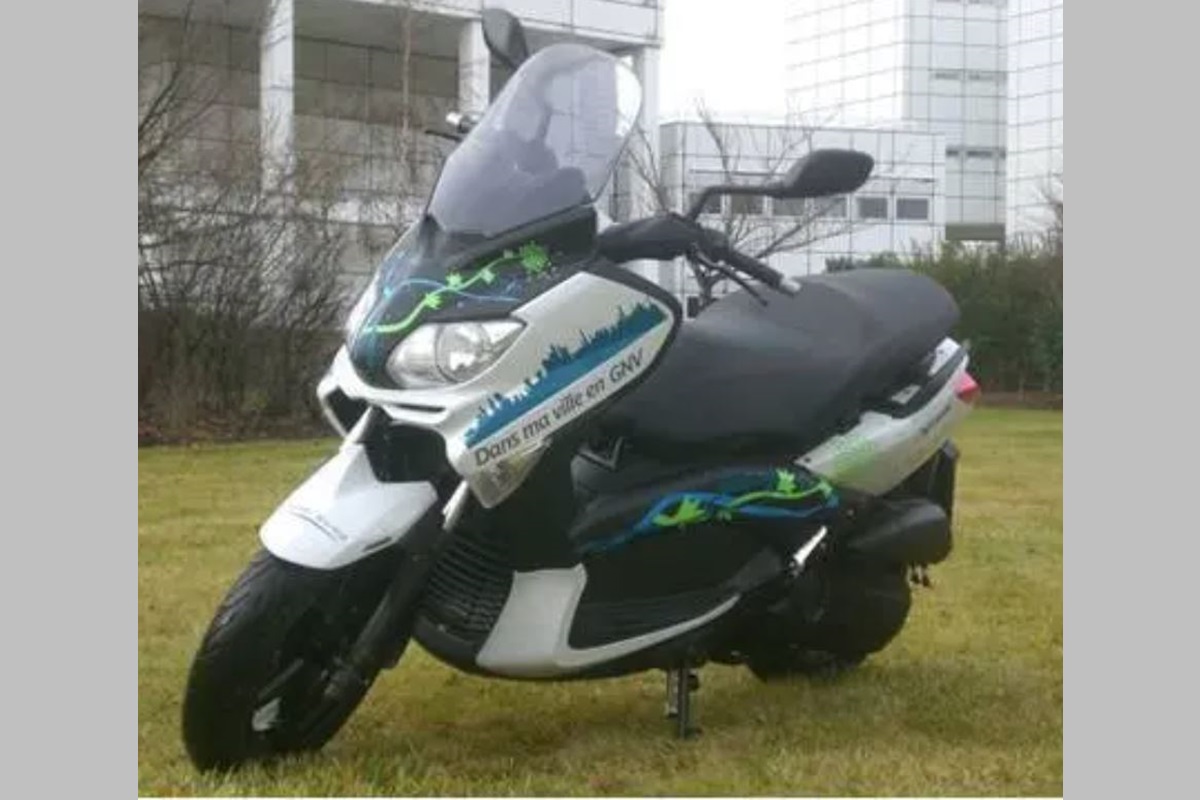
The history of the engine is full of innovative projects that, ultimately, were kept in the desk drawer of some engineer in the pay of an important multinational. This is precisely the case of Yamaha XMAX, equipped with a new feeding system using CNG camping gas cartridges.

A Yamaha XMAX “with camping gas cartridges”
The heading of the text seems like a sound rhyme in bad taste, but the reality is that this was the basis on which the collaboration project between Grupo Suez (a multinational energy company) and CRIGEN (Center of Research and Innovation in Gas and New Energies). The latter was the one who developed the project under the motto “move and live cleanly in the city with natural gas.”
There is not much information about the concept itself, although we have managed to find a small presentation brochure published at the time by the project’s ideologues. In it, they broadly detailed the possible advantages that this 125 cc XMax equipped with “an innovative feeding system using nestable CNG cartridges.”
Its main advantage, compared to the standard configuration offered by the Japanese model, was being able to reduce CO₂ emissions, thanks to being able to combine both power systems (CNG and gasoline). The project tried to demonstrate two main aspects: On the one hand, the potential of CNG to reduce CO₂ emissions and local pollutants in the two-wheeled vehicle segment, very present in urban environments.
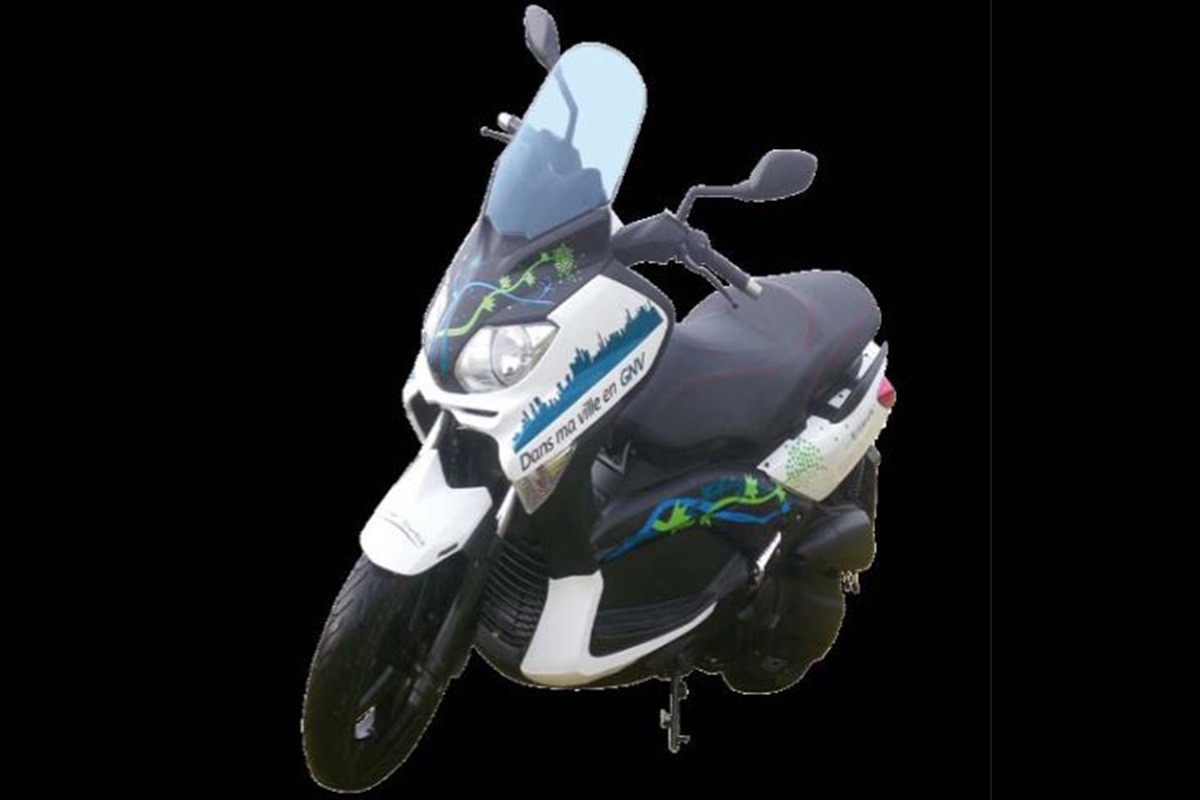
From another “design an innovative way of distributing natural gas that allows diversifying recharging places, without depending solely on service stations.” However, the most curious thing about the invention was precisely the way in which the liquefied gas was stored, as well as the ease of replacing the cartridges once they were used up. To achieve this, they made a series of modifications to the XMax used or as a “guinea pig”:
- Slight adaptation of the original gasoline engine, by incorporating a kit and a gas injection system.
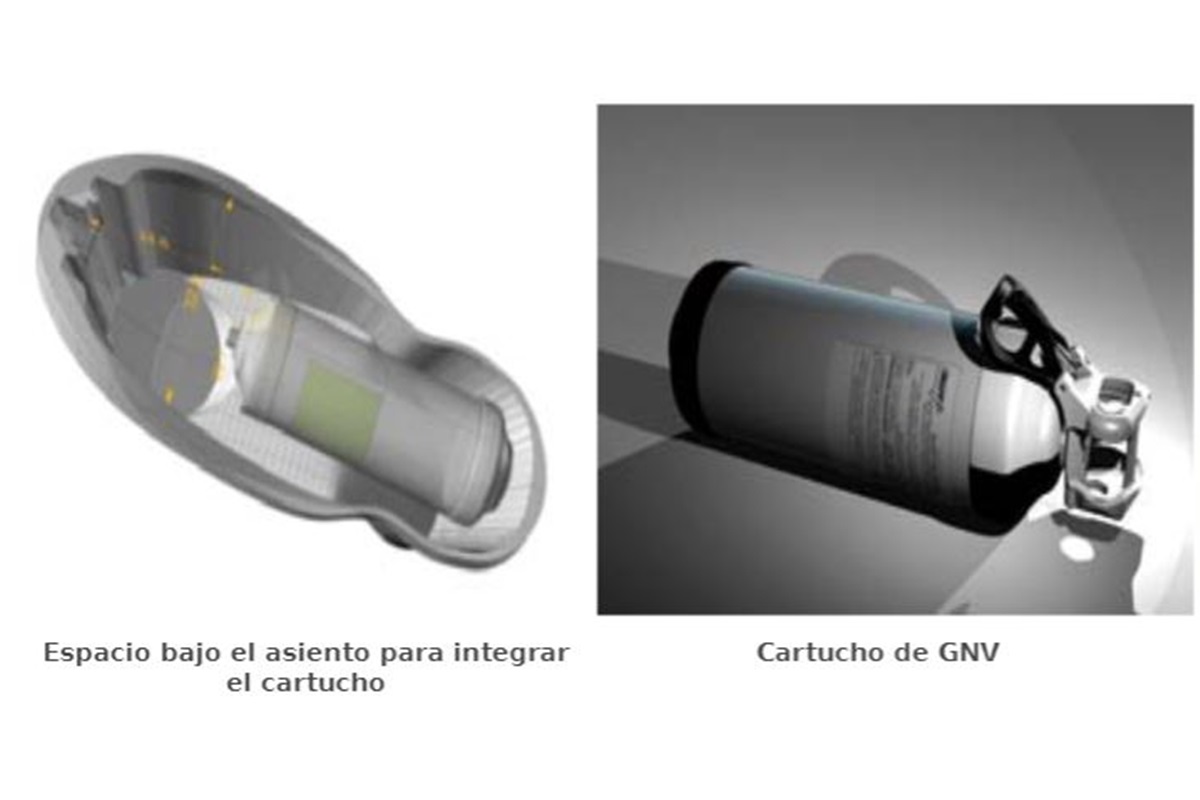
- Modification of the gap under the seat to install the cartridge safely and allow easy access to the replacement and filling area. This development was carried out together with the France Craft company.
- Use of CNG tanks or cartridges with a reduced impact on the total weight of the scooter. The tanks are made of composite materials and have an optimized transport system.
- Quick connection system, nestable, safe, ergonomic and easily industrializable, developed together with the Stäubli company.
The CNG XMAX in figures
According to the tests carried out by the company in charge of the project, the XMAX powered by both energy sources emitted 45 grams of CO₂ per kilometer in the normalized combined cycle, which At the time it represented a reduction of 26% compared to the equivalent gasoline model. It was also possible to emit a figure of only 35 milligrams of NOx per kilometer in the normalized combined cycle, 39% less than the standard XMax.
With a tested consumption of 2.58 m³ of CNG every 100 kilometers, The autonomy exceeded 55 kilometers running exclusively on gas and reached another 300 kilometers in gasoline mode.giving this XMAX hybrid a truly interesting capacity in urban and semi-urban environments. Although the idea seemed quite viable, that project was forgotten just a few years later.
Subsequently, there have not been many advances in this field. In fact, except in very specific places on the planet, mainly India and Southeast Asia, CNG-powered models do not have much traction. We wonder what would have happened if this Yamaha XMax with camping gas cartridges had finally been marketed… Leave us your opinion, thank you!