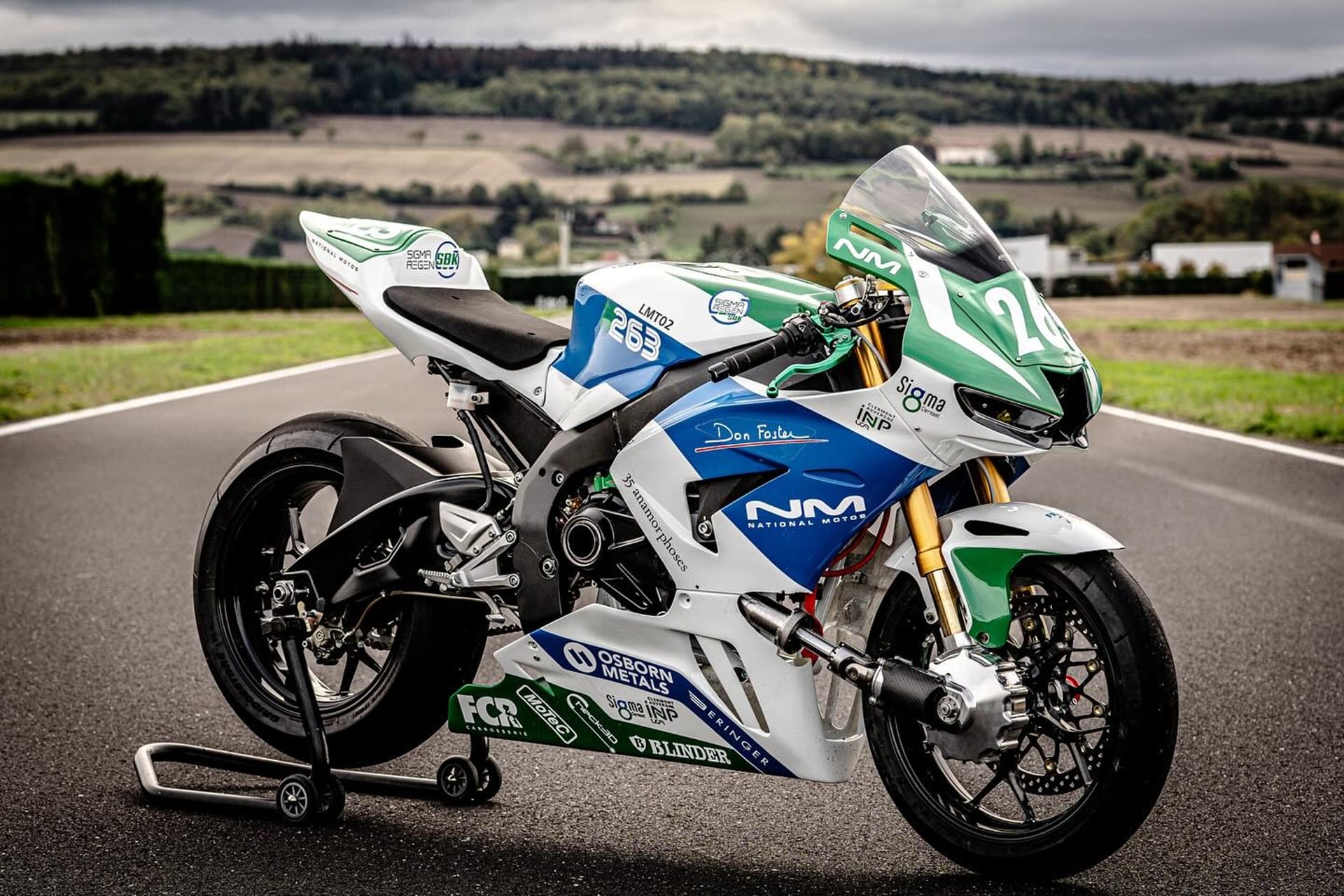
Can a superbike take advantage of braking energy in a much more efficient way and, in the process, become a two-wheel drive motorcycle? That is the question that a group of French engineers and students is trying to answer with one of the most original projects in recent years.
Its name is SIGMA Regen Superbike LMT02 and, although under its fairing you immediately recognize the silhouette of a Honda CBR1000RR-R Fireblade, its mechanics have practically nothing to do with the Japanese sports car.
The well-known four-cylinder gasoline engine has given way to a completely electric propulsion and a transmission that also allows the front wheel to be used. The result is an experimental motorcycle that not only aims to offer extraordinary performance, but also solve one of the major drawbacks of electric racing motorcycles: autonomy.
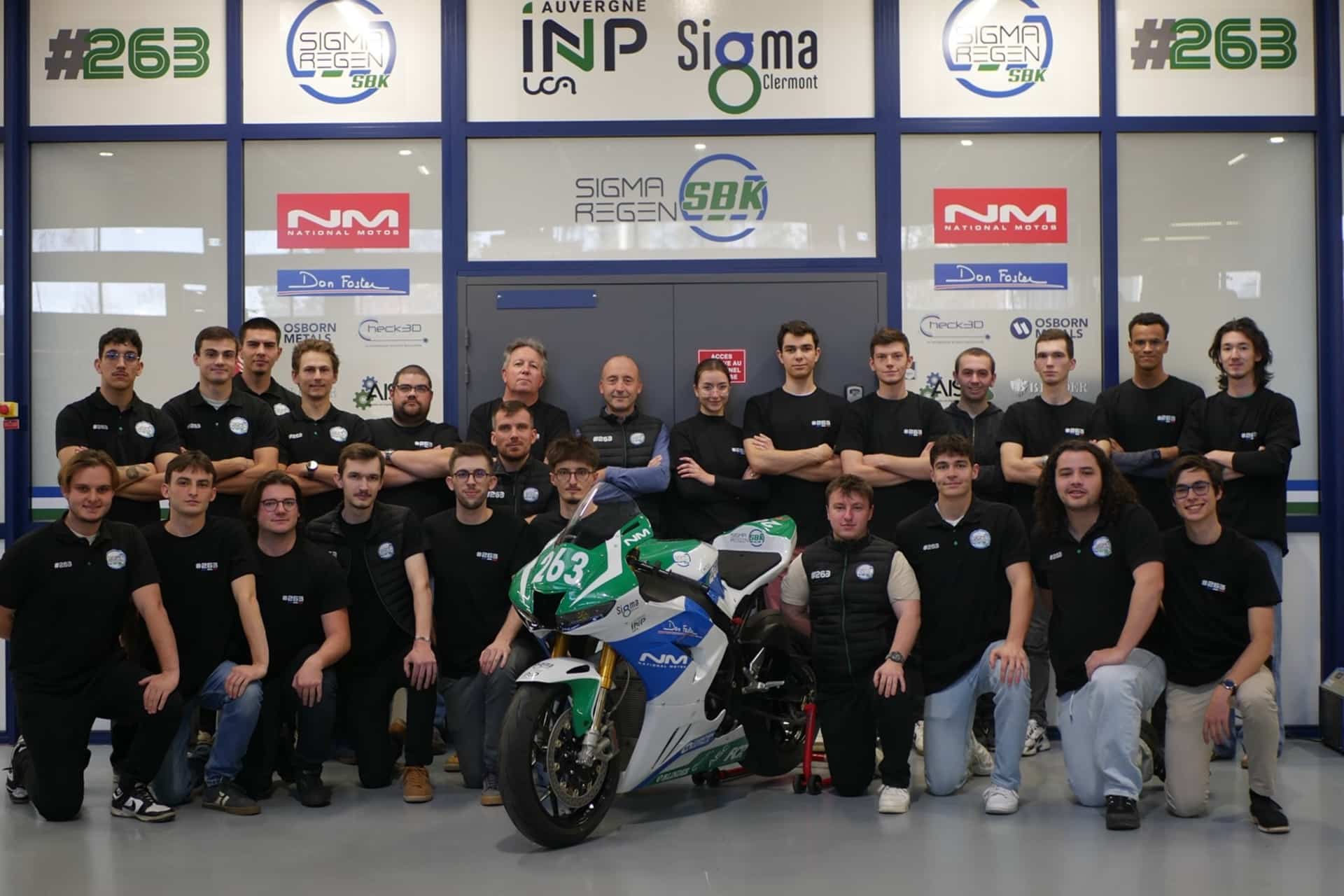
Behind this initiative is SIGMA Clermont, a French engineering school located in Clermont-Ferrand, whose students work alongside experienced engineers and specialists from the world of competition. The project also has the collaboration of National Motos, a structure closely linked to endurance racing.
The adventure began with the LMT01, presented in 2025, and now takes an important step forward with the LMT02, a fully functional prototype officially presented this month.
SRERA: the secret is in the front wheel
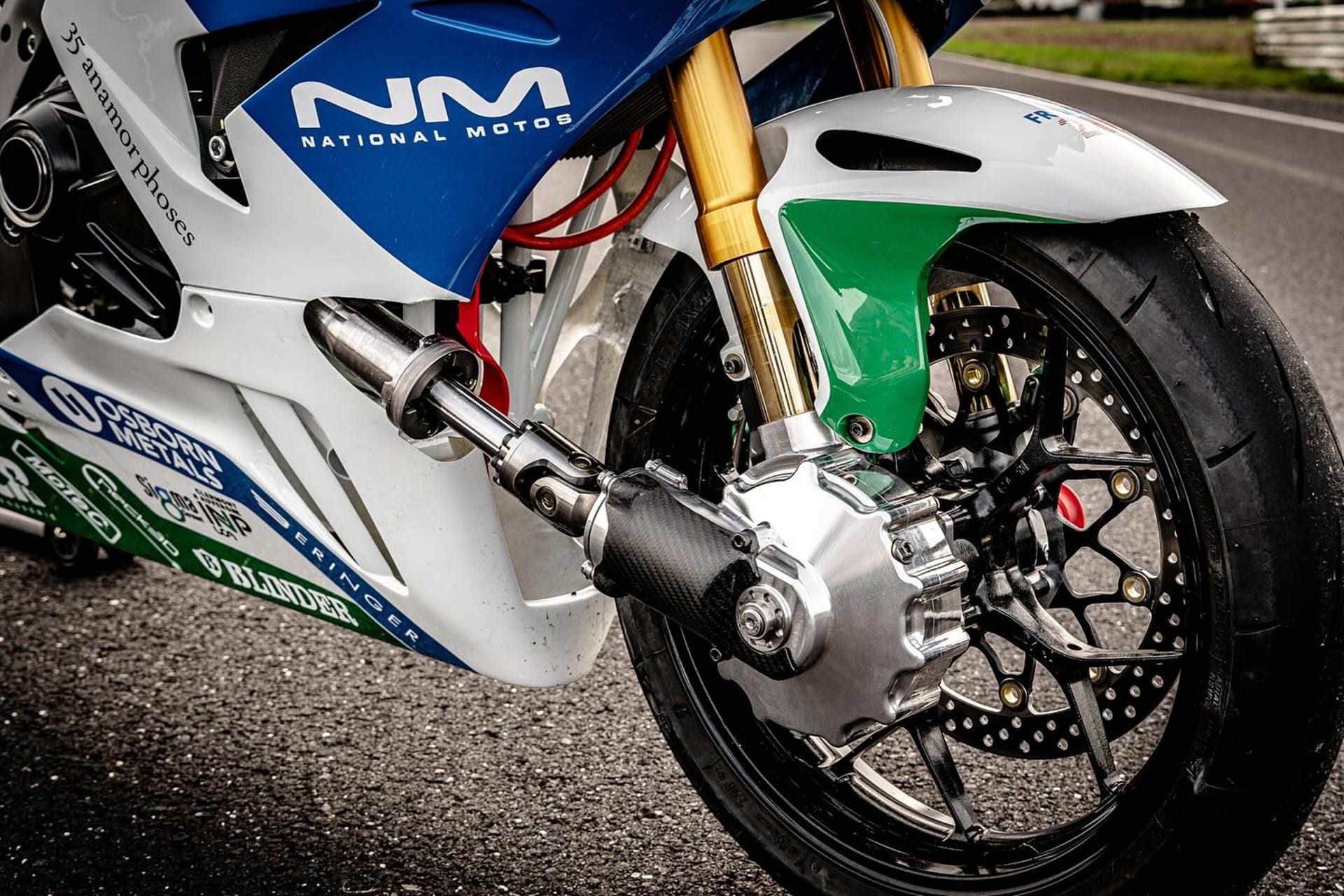
The main innovation of this electric Fireblade is called SRERA, acronym for Système de Récupération d’Énergie sur la Roue Avant, or front wheel energy recovery system.
The idea is based on a physical principle perfectly known to any motorcyclist: when we brake hard, the transfer of mass places a good part of the weight on the front wheel, while the rear wheel loses support. That’s why sports bikes use especially powerful front brakes. It is on that train where much of the effort necessary to stop the motorcycle is concentrated.
SIGMA engineers have decided to take advantage of precisely this circumstance to recover electricity during decelerations. Instead of limiting regenerative braking to the rear wheel, as is usually the case on electric motorcycles, they have developed a mechanism that also transforms part of the kinetic energy of the front axle into electricity that returns to the battery.
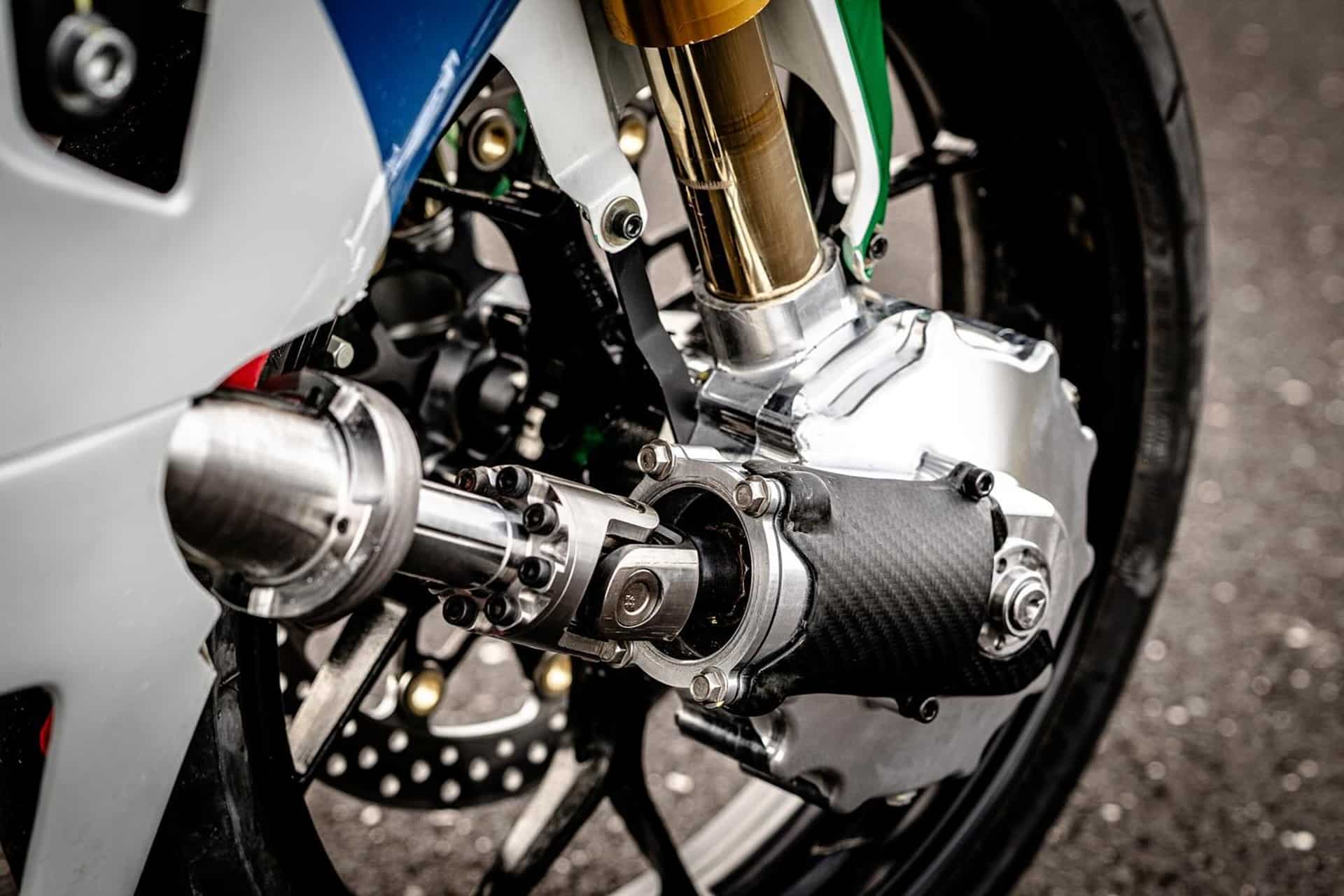
To do this, the motorcycle incorporates a front drive shaft, a solution similar to a cardan, which connects an electric motor located under the fairing to the front wheel. At the lower right end of the Öhlins inverted fork is the mechanism responsible for transmitting the movement.
This system allows it to work in two directions: recovering energy when the motorcycle decelerates and transmitting driving force to the front wheel when necessary. In this way, the SIGMA LMT02 also becomes an electric superbike with two-wheel drive.
The solution has its counterparts. The transmission installation takes up the space normally reserved for the second front brake disc, requiring modifications to the braking configuration. In addition, the assembly must function without compromising the steering, suspension or the behavior of the motorcycle when leaning.
Up to 33% energy recovered
The figure that draws the most attention is not related to power or maximum speed, but rather to efficiency. According to the development team’s estimates, the SRERA system could allow an amount of energy equivalent to up to 33% of the battery capacity to be recovered while driving.
This is a particularly ambitious objective that must still be validated in real competition conditions. The amount of electricity recovered will depend on factors such as the intensity of the braking, the route, the speed, the electronic management strategy and the capacity of the battery to absorb energy. On a circuit with strong decelerations, however, the potential is especially interesting.
Electronics also play a decisive role. It is not enough to connect a generator to the front wheel: it is necessary to precisely control the regenerative torque to avoid unwanted reactions that could impair stability, especially when the rider is braking at the limit and preparing to enter a corner. The challenge is even greater if we intend to combine this recovery with a front-wheel drive function.
The idea of a 2WD motorcycle, by the way, is not entirely new. Yamaha experimented years ago with its 2-Trac hydraulic system, even used in off-road competition. But translating this concept to an electric superbike, with much higher speeds and enormous precision demands, represents a different technical challenge.
From the current 45 HP to a 340 HP superbike
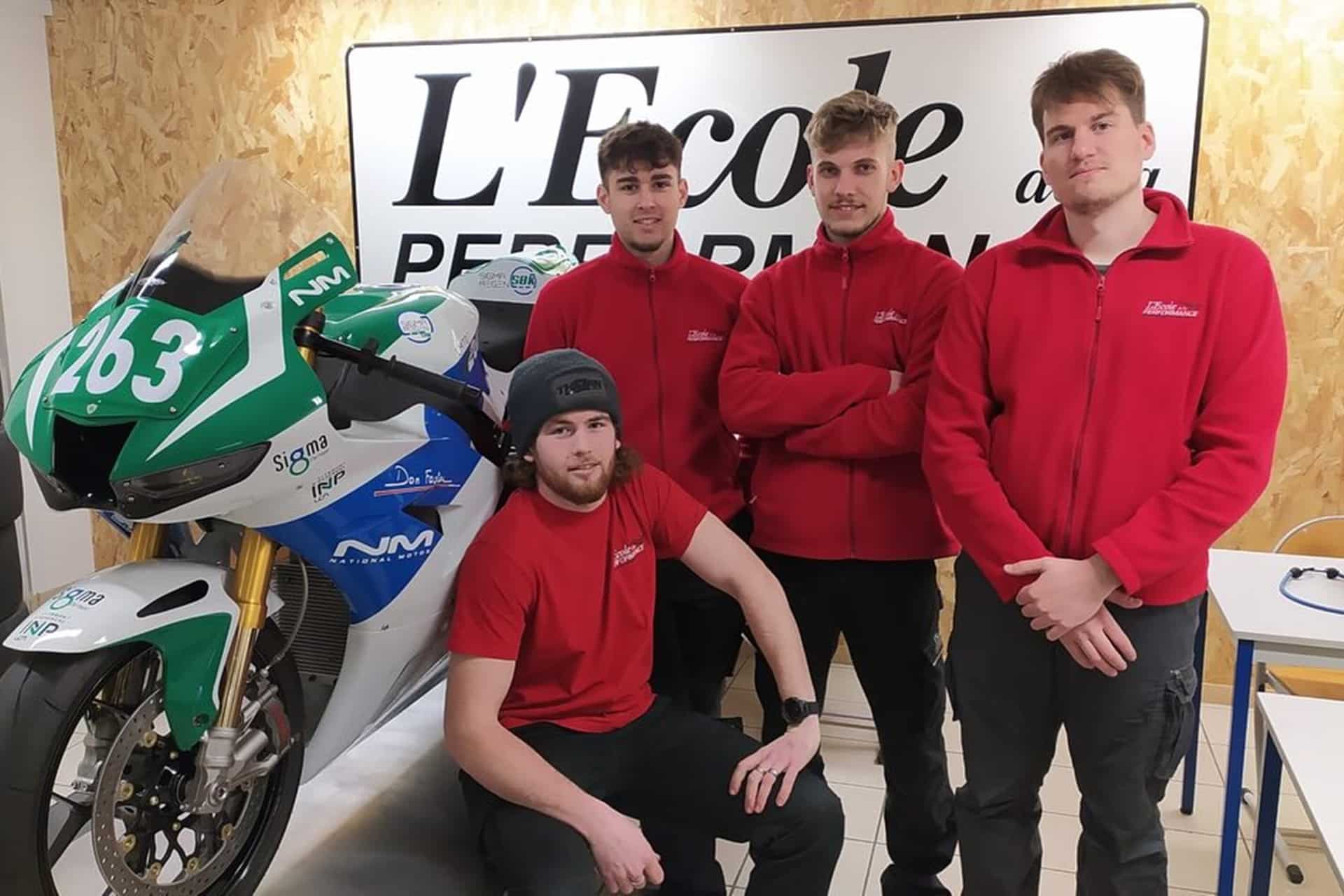
The SIGMA Regen Superbike LMT02 currently develops about 45 HP and reaches approximately 160 km/h, relatively modest performance for a motorcycle that uses a Fireblade as a base. However, its main purpose is not to break speed records, but to validate the operation of the energy recovery system, the front transmission and the electronic management.
The team is preparing a new development phase with prototypes of the LMR family. Among the objectives announced for the most advanced evolution, called LMR02, is an 800-volt electrical architecture and a maximum power of 250 kW, equivalent to about 340 HP.
A maximum speed of over 310 km/h is also contemplated, a figure that would place this electric motorcycle in the territory of the fastest superbikes.
The great challenge: finishing the 24 Hours of Le Mans
SIGMA’s ambition goes far beyond building an eye-catching electric sports car. The goal is to compete in the legendary 24 Hours of Le Mans motorcycle racing, with 2029 as the project’s reference date.
An electric superbike capable of developing 340 HP can consume enormous amounts of energy when riding at the limit. Even with a recovery system as advanced as SRERA, the electricity stored in the batteries will continue to be a determining factor.
For this reason, French students and engineers are also developing a rapid battery exchange system, aimed at reducing stops and avoiding the long times that a conventional recharge would require.