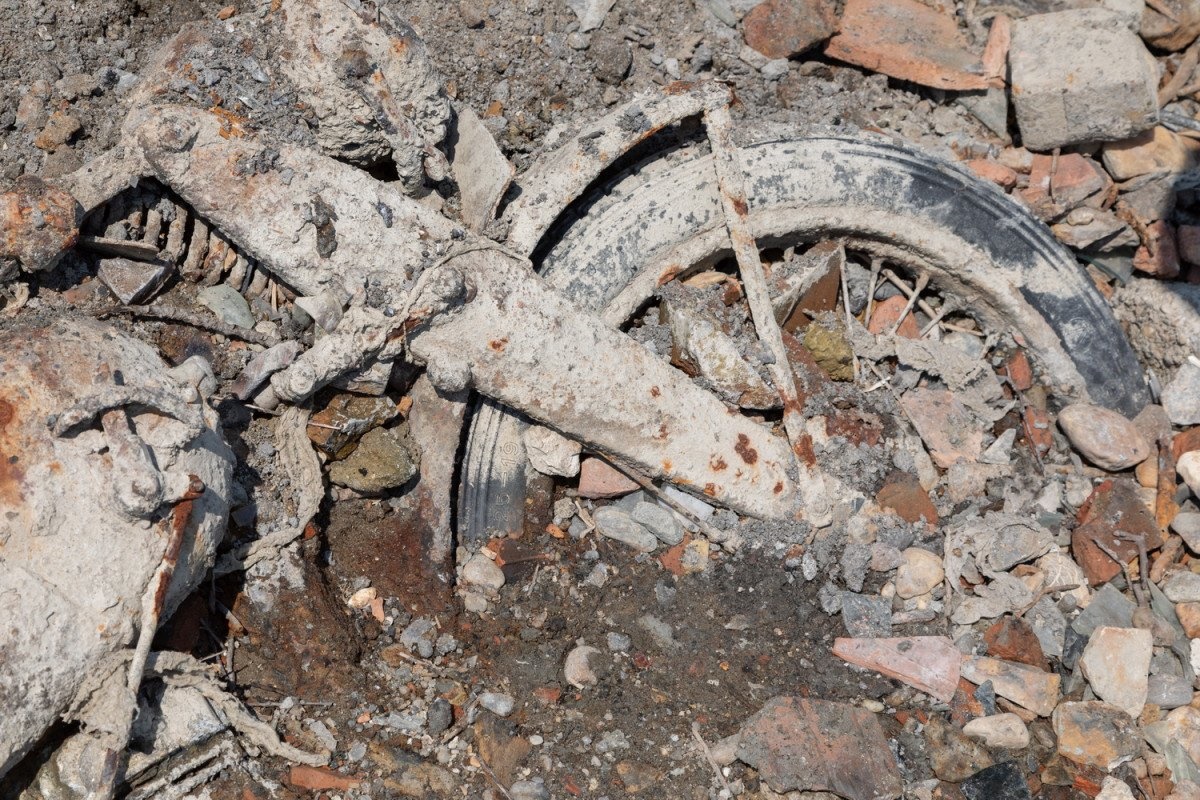
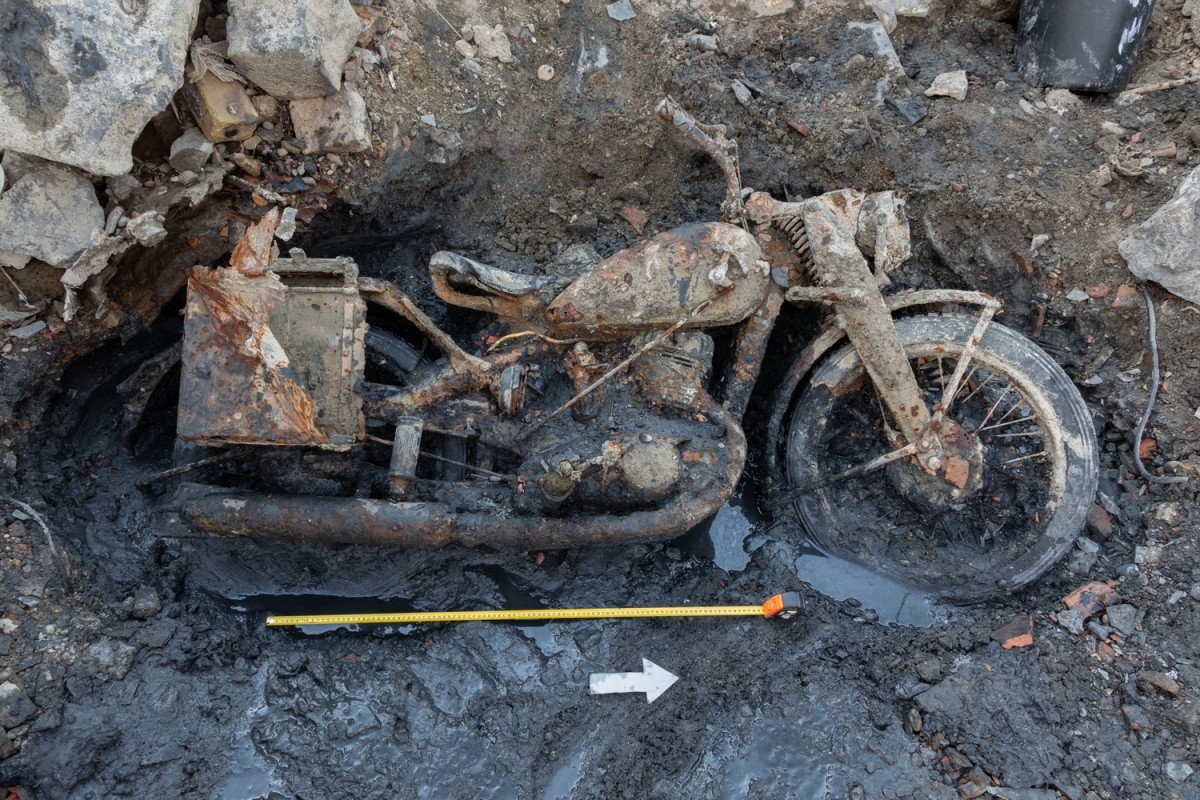
We all know that in river beds, especially if they are the size of the Danube, we can find objects of almost all kinds. What several members of the Institute and Museum of Military History of the Hungarian Ministry of Defense, is that in one of their expeditions they would end up finding the remains of a DKW NZ 350-1. We are talking about a mount widely used by members of the Nazi army during World War II.

The NZ 350-1 was not alone
Equipped with a single-cylinder cast iron engine of 346cc, The NZ 350-1 was capable of offering a final power of about 11.5 hp and could reach a maximum speed close to 100km/h. The mechanics were interconnected with an advanced four-speed gearbox, while the chassis was dominated by a rigid rear and a front equipped with pressed steel beam forks. According to some sources, it is estimated that approximately 12,000 units were manufactured between 1944 and 1945.
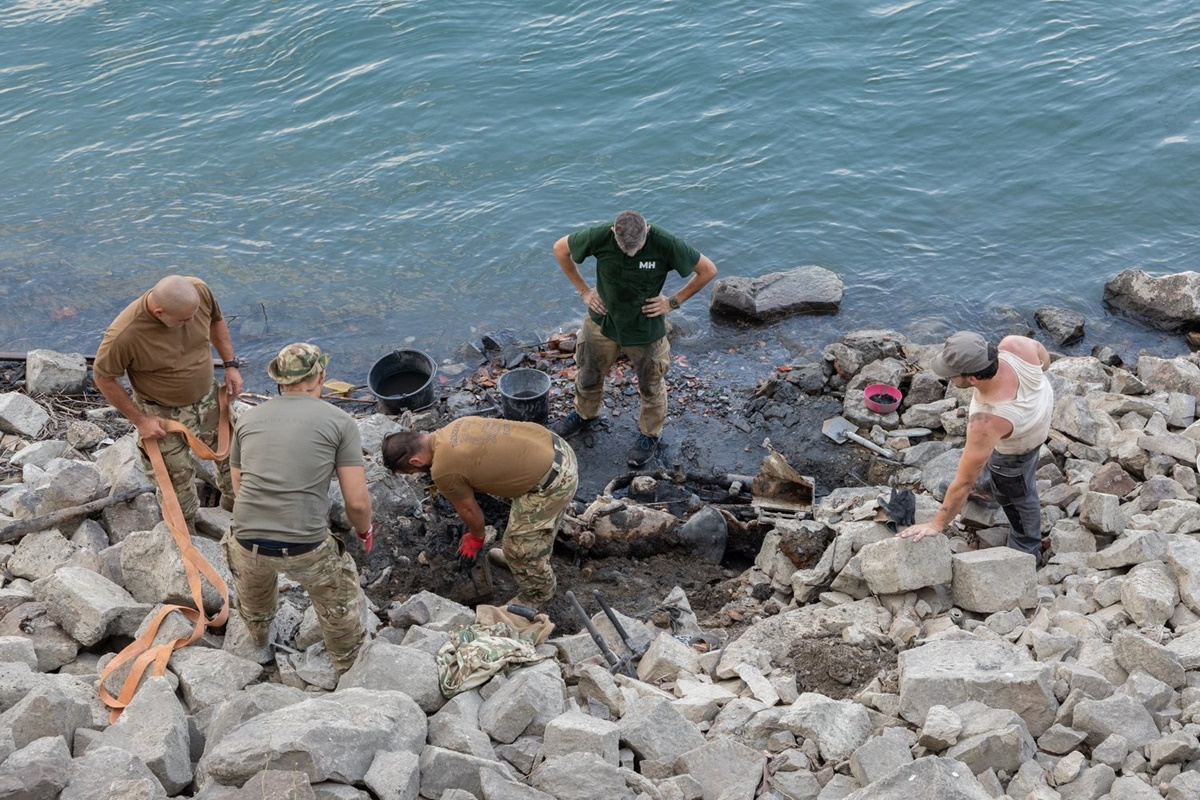
The official statement issued by the Hungarian army explains in detail how together with the DKW NZ 350-1 “Experts from the Institute and Museum of Military History of the Hungarian Ministry of Defense found TMi-35 mines, hand grenades and remains of artillery shells, as well as German and Russian infantry ammunition, animal bones and civilian ceramics.”
However, what is truly striking about the matter is the state in which this relic has been preserved despite having been buried in mud for eight decades: “more severe corrosion is observed in those parts that periodically emerged to the surface due to fluctuations in the water level”explains the team in charge of his rescue.
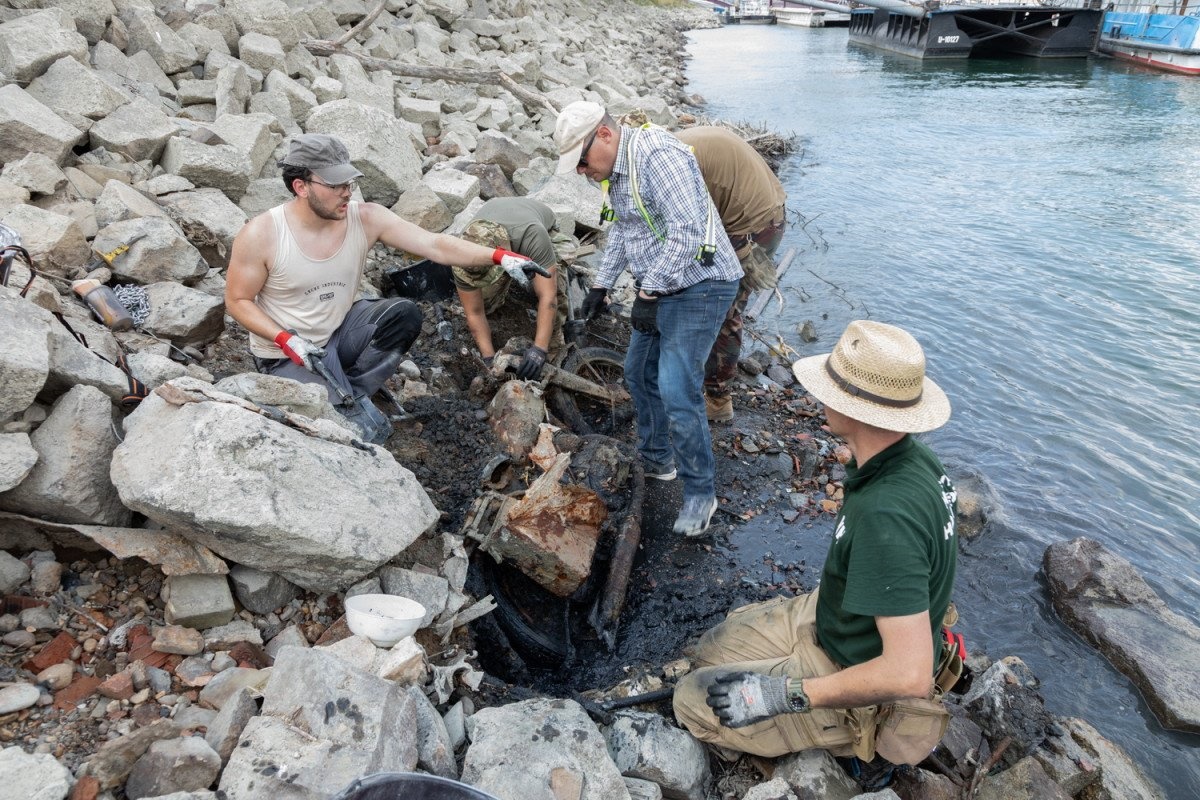
Another truly striking aspect of the affair was the fact that mainly German and Russian infantry ammunition, animal bones and civilian ceramics were found next to the NZ 350-1: “About six German plate guns were found on a support, as well as remains of hand grenades and artillery shells”confirm the members of the expedition.
Given the danger of detonation, before even trying to remove the DKW from the site, bomb disposal experts had to warn again about a total of ten German TMi-35 mines. Its removal and transportation required the temporary closure of the dock adjacent to the discovery site.
Now it’s time to restore it
The protagonists of this story conclude by explaining: “Due to the rocky, low-lying terrain and difficult access to the coast, and the weight of more than 200 kg accumulated by mud and water, it was not possible to tow the motorcycle to the shore. The Pest County Investigation and Rescue Service provided assistance: a research vessel arrived one hour after being notified and transported the motorcycle to the bank of the Danube in Pest.”
Once outside, it was transferred by vehicle to the hangar of the Institute and Museum of Military History of the Hungarian Ministry of Defense, where it will receive the necessary cleaning and conservation in the coming weeks, along with the other objects found. Without a doubt a movie story with a “happy ending”. We will closely follow future updates on the topic and the possible full restoration of the rescued NZ 350-1.