BSA Bantam 350 Test: Introduction
When we talk about BSA, we talk about a mythical brand. Founder of two-wheeled culture in the mists of time, it is ‘re-launched’ in our country through three new models. And I talk about ‘re-launch’ because Birmingham Small Arms (before motorcycles they built weapons) already appeared back in 2021 with the Goldstar 650.
Now it does so with another icon, the Bantam 350, which will be followed by the Scrambler 650, taking advantage of the Goldstar 650 platform, and an adventurous trail called Thunderbolt. BSA returns once again due to nostalgia, recovering the Bantam surname. The original dates back to 1948, after the victory of the Allies in World War II. As it was, the British ‘borrowed’ a German light motorcycle design, more specifically a DKV.
Thus the BSA Bantam was born: a simple motorcycle, accessible to the people of the time. This helped him quickly become a mass success. With 23 years on the market and 14 variants, it was the most popular motorcycle in the United Kingdom. 70 years later, it returns with the Bantam 350, which remains faithful to the philosophy of the original model, but adapted to modern times.

Simplicity is one of its key pillars, as well as its price. In fact, we can say that we are facing one of the heavyweights for the A2 license in this last sense; and its attractive neo-retro aesthetic is complemented by a truly knock-down price: nothing less than €3,592which places it even below some 125 motorcycles. That’s nothing.
With that price, the truth is that its rivals are going to have a worthy adversary. Starting at the bottom, we have the FB Mondial Flex 300 (€3,999); the Honda GB350S (€4,590); the Royal Enfield Guerrilla 450 (€5,397); the Husqvarna Vitpilen 401 (€5,599), and finally, the Triumph Speed 400 (€5,745). As you can see, in terms of pricing, BSA has done a wonderful job adjusting the price of the Bantam 350. In fact, it’s a company secret kept under lock and key.
BSA Bantam 350 test: Technical characteristics and equipment
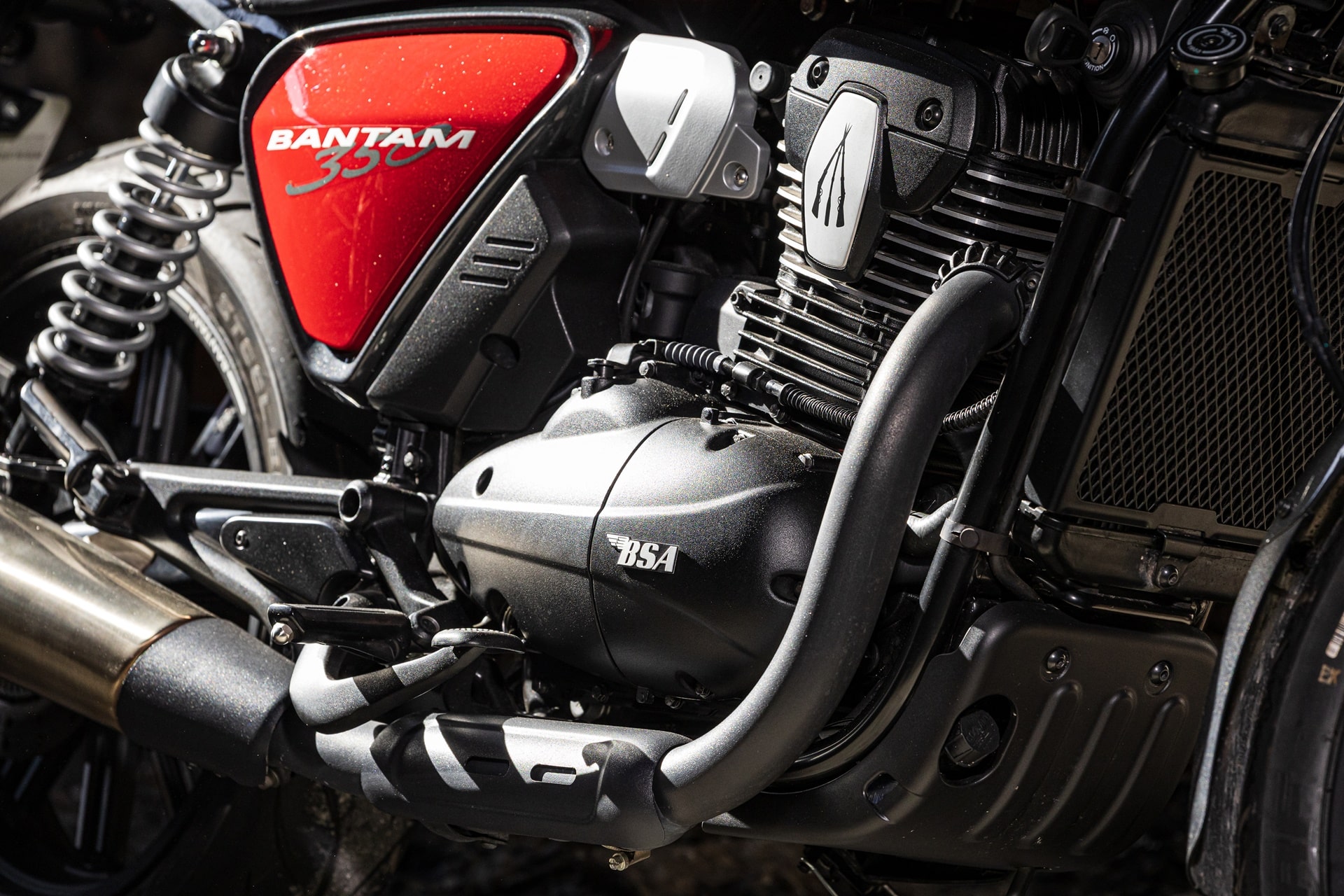
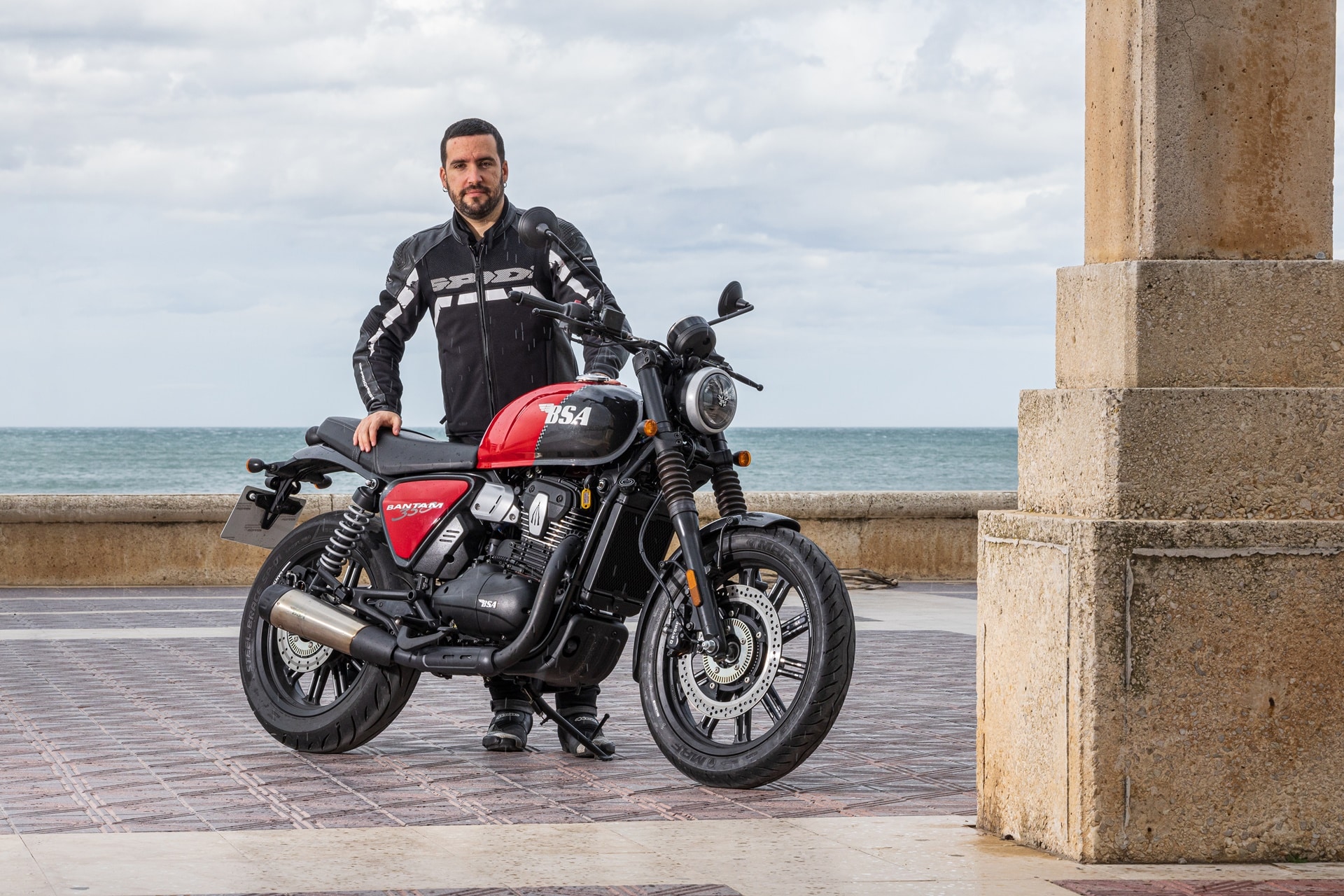
In terms of design, the new BSA Bantam 350 is a reinterpretation of the original Bantam, with touches such as the teardrop-shaped fuel tank, a widely padded seat with contrast stitching and, of course, the Union Jack. We also have a black finish for the entire engine area, protection for the fork or a double suspension scheme.
The objective is to recall the original model through a more current prism and the result speaks for itself. A motorcycle with attractive aesthetics that can be used both for everyday use and for enjoying the weekend. On a mechanical level, the BSA Bantam 350 relies on a 334 cc single-cylinder block of its own development (BSA now belongs to the Indian giant Mahindra), liquid cooled, which extracts a power of 29 HP at 7,750 rpm and a maximum torque of almost 30 Nm at 6,000 rpm.
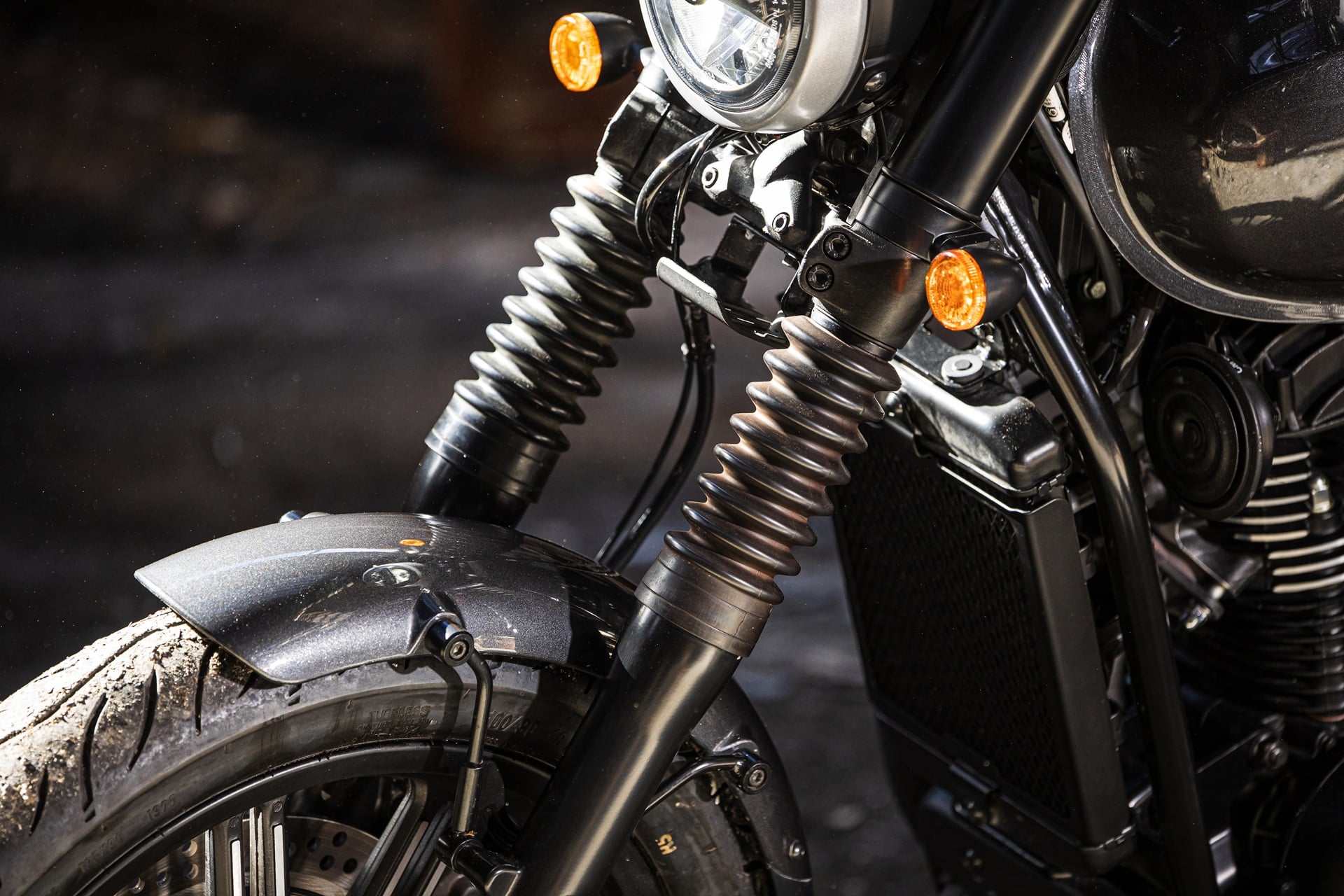
That simplicity that I referred to before is also present in this section, so we do not have electronic systems beyond the dual-channel ABS system that is mandatory on motorcycles of this type. And what about the cycle part? Well, we have a steel tube frame along with a conventional fork with 135 mm of travel. At the rear, it uses a double shock absorber system with 100 mm of travel and the possibility of adjusting the spring preload in several positions.
To brake, a four-piston caliper bites a single 320 mm disc, while behind a single-piston caliper does the same with a 240 mm disc. Finally, we have a wheel configuration of 18 and 17″, respectively, along with tires signed by the Indian manufacturer MRF in sizes 100/90 and 150/70.
The instrumentation follows the same line: it is simple, but with all the necessary information, that is, time, autonomy, temperature… However, I would have liked a little more brightness on the TFT display; And if the sun shines directly on it, it is difficult to see the information clearly.
BSA Bantam 350 Test: How It Goes
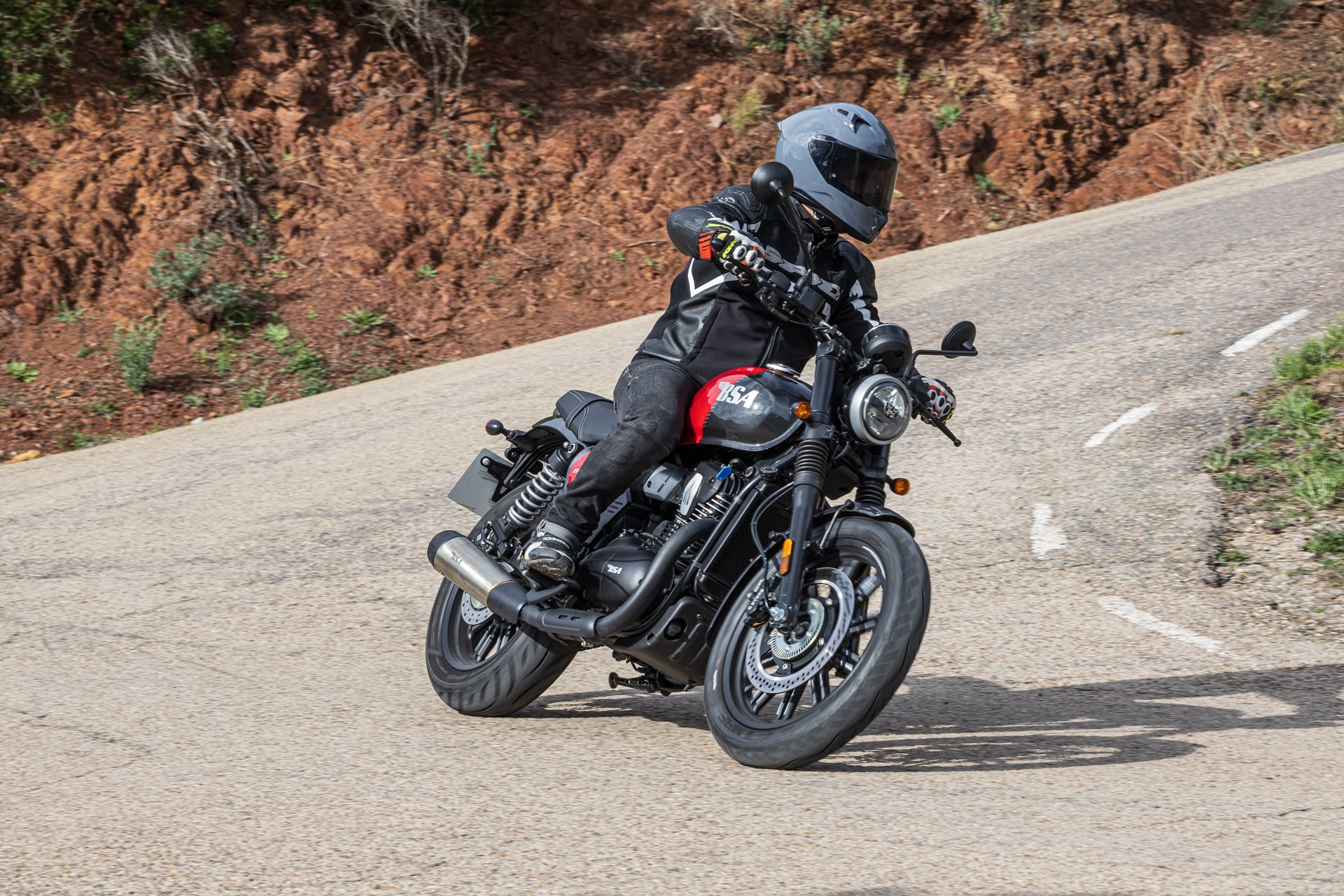
Accessibility is another of the basic pillars of this BSA Bantam 350. Its seat is placed 800 mm from the ground and Its curb weight is 185 kg. (and yes, counting on the 13 liter tank). Without a doubt, figures that open the ban for small motorcyclists, as in my case, with a height of 1.68 m. The driving position is very comfortable: arms slightly bent, back straight and legs forming an angle of almost 90 degrees. The perfect recipe to devour kilometers.
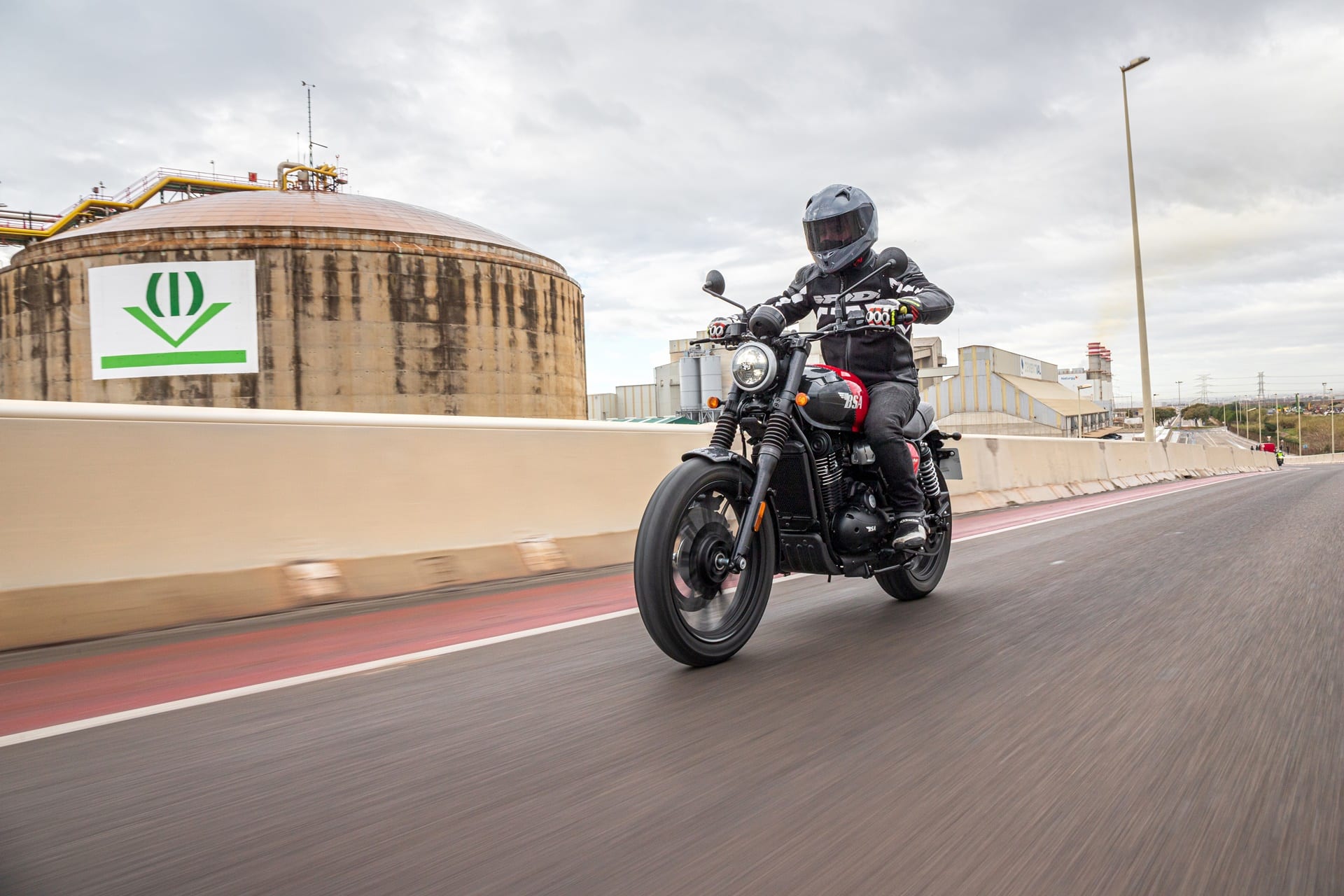
From the first meters, the engine’s behavior is extremely calm, which is accompanied by a gas response at the same altitude. This makes shifting gears rewarding, without noticing any kind of jerk. With its 29 HP, the power is deployed in a very staggered manner, so now you understand the solution of not equipping traction control.
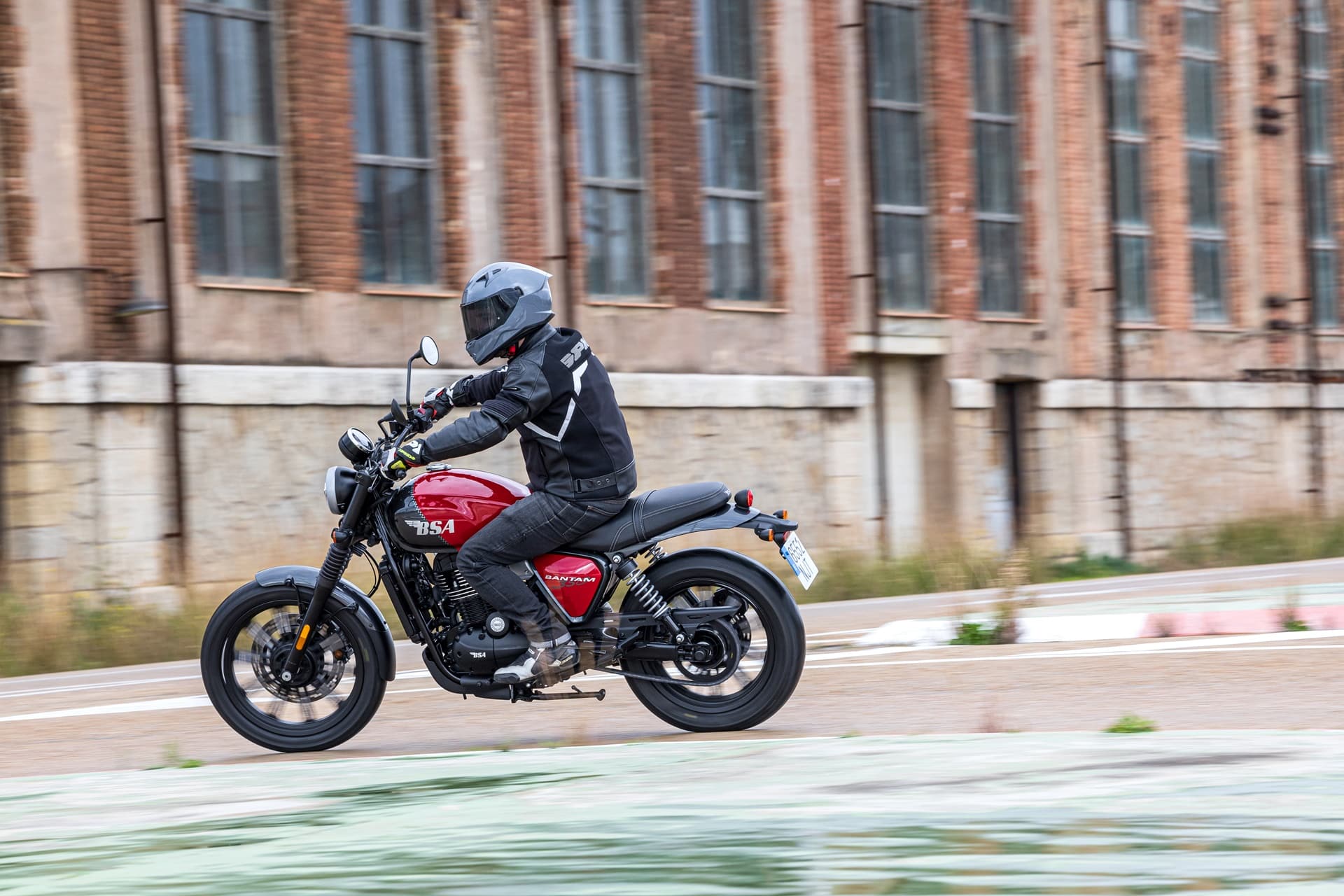
Thus, it is perfect both for those who travel their first kilometers on a motorcycle and for those who want to use this Bantam 350 as a daily motorcycle. It is around 8,000 rpm when I notice more vigor in this single-cylinder block, but again, in a smooth way. Only when we bring the engine to the edge of the ignition cut-off do we notice especially notable vibrations in the area of the footpegs.
Not in the controls or in the mirrors. The development is more than successful, allowing a maximum speed of 140 km/hdepending on the brand. Given the adverse conditions during the test around Valencia, with a lot of wind, we could only reach 135 km/h. Even so, it is a cruising speed more than enough to move safely on the highway. Taking advantage of this, the aerodynamic protection is practically zero, but it is the price to pay for naked type motorcycles.
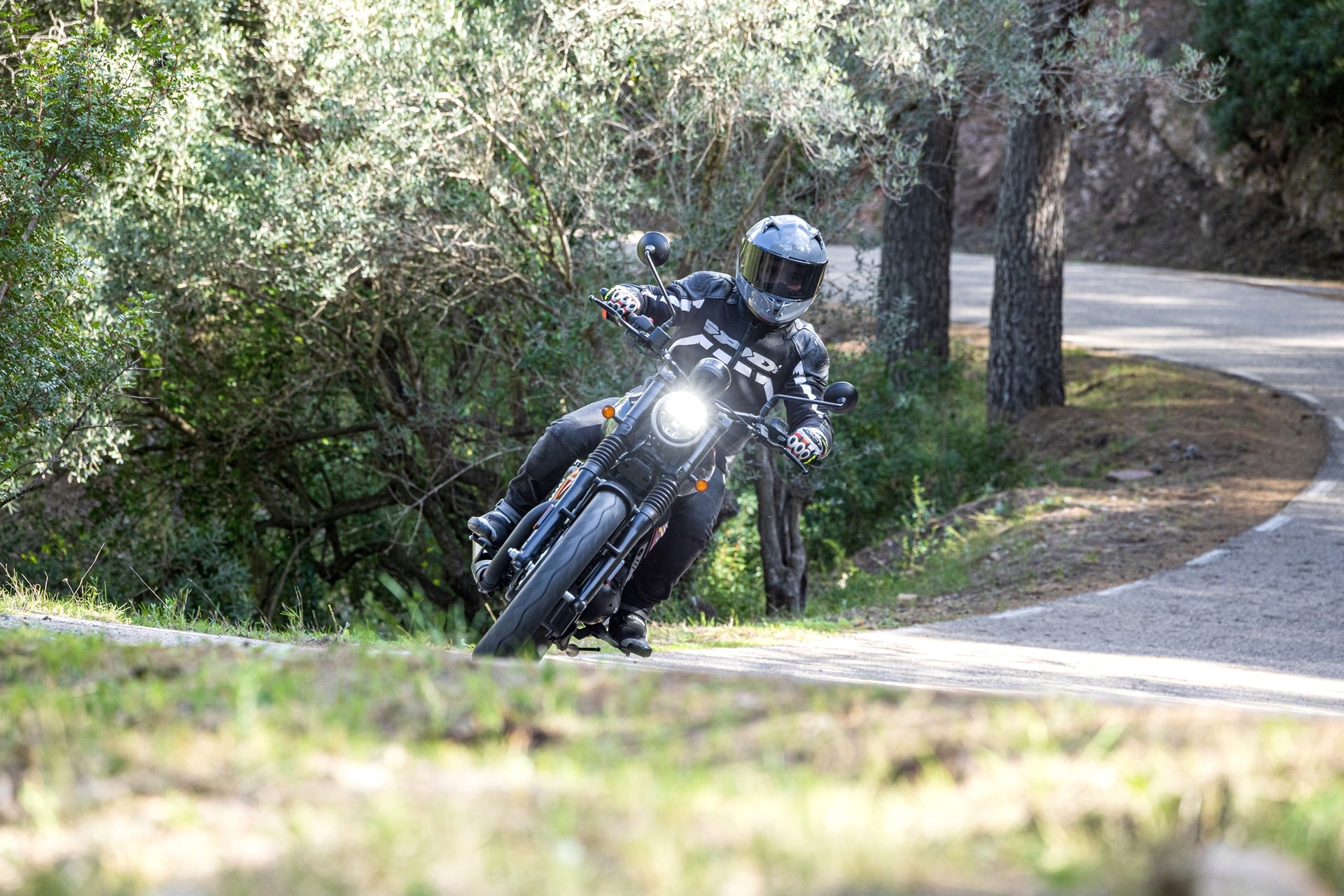
As for the suspensions, their setting is neutral, with a balance between comfort and hardness. It must be clear that the objective of this motorcycle is not to make a fast lap on each route, so the balance leans towards comfort, correctly filtering out the irregularities on the asphalt. In somewhat happier rhythms they respond well, although they have their limit. Thinking about those who are going to be accompanied, you can play with the preload of the springs of the two shock absorbers.
The brake system has pleasantly surprised me. Signed by Bybre, they have a good bite in the first mm of lever travel and a modularity that allows braking of all types. In fact, its performance is above the capabilities of the motorcycle, which is always appreciated and greatly increases safety. As for the ABS, it is not at all intrusive (neither the front nor the rear).
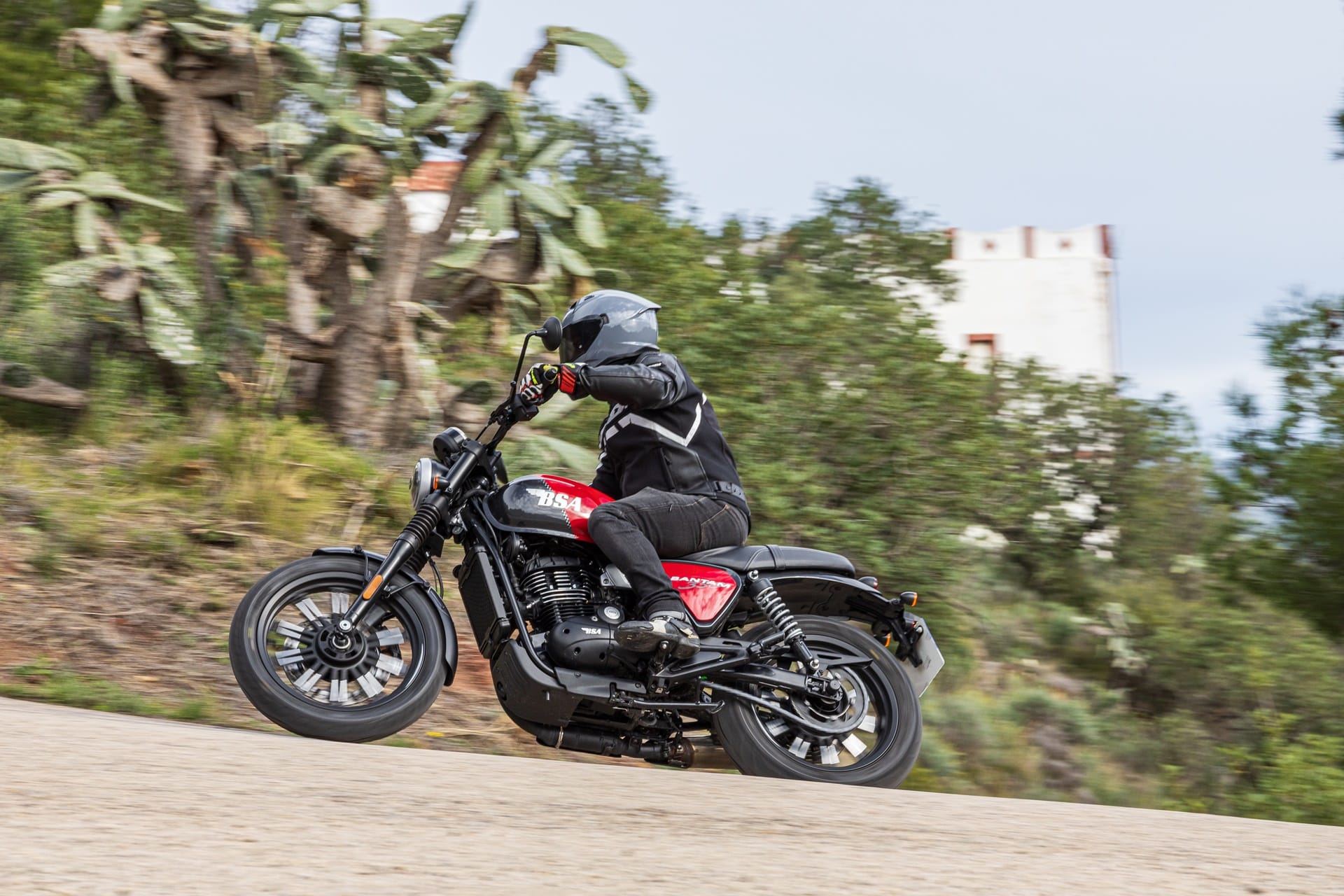
It doesn’t even come in under hard braking. Only by being real beasts with the handle or lever will we see how the ABS comes into play. In the tire section, MRFs can raise the eyebrows of those who have not heard of this brand. Rest assured because this BSA Bantam 350 works well. As long as you understand what this bike is made for.
In the same way as the suspensions, these tires demonstrate good grip in all types of conditions; And we ride on dry, wet and even humid areas. The response of the MRF was correct, without scares or loss of traction. We will have to see how they behave in very hot conditions and, above all, how they respond to overheating. But, in general terms, they are tires that more than meet this motorcycle.