
I must admit that when I was aware of the official presentation of the DaxAI QijiThe first question that came to mind is “What sense does such a thing have in the world of mobility?”… Subsequently analyzing the device carefully, I have to admit that it has its own merits. Let’s see, I highly doubt that I will end up galloping on the back of one of these, neither in this nor in three more lives.
However, I assume that lovers of new technologies look with expectant eyes at these types of inventions initially designed for the transportation of people. Another very different thing is when they will be truly usable and, above all, how many people on the planet will have access to their services. Although these are aspects still to be deciphered, today we can present the main technical aspects of this “robotic equine made in China”.
An upward trend
In recent months, we have learned how this trend to develop less unconventional vehicles is growing within the automotive sector. Last year, Honda, in a strange mix of motorcycles, robotics and video games, announced the “Honda Koraidon Project” to the world. Based on the commitment to monozukuri (the art of manufacturing) conveyed by the Toyota Miraidon, it uses self-balancing technology that allows it to “walk” on four legs and stand on two wheels.
Subsequently, Kawasaki surprised us with the Corleo, a robotic equine that has supposedly been developed for one purpose: “allow people to travel safely to places that were previously inaccessible.” On the technical side, it stands out for equipping, among others, four legs that work independently, hooves with a structure divided from left to right and a 150 cc hydrogen engine.

DaxAI Qiji X1 AND XS: two versions, a common approach
Recently, DaxAI Roboticsa Chinese company which still does not even have an official website where they offer details about their latest invention, presented the DaxAI Qiji at the 2026 World Robotics Conference in Beijing. Emulating a configuration similar to that of the Corleo, it comes in two different versions; one of them only articulated by legs and another with wheels at its ends.
From some local media they claim that both the Qiji X1 Point-Foot and the Qiji XS Wheel-Foot They have already started exclusive global pre-sales on the Chinese online product platform JD.com. Through a three-year strategic cooperation agreement, it opens “a new stage in the large-scale commercialization of heavy-duty integrated intelligence for the consumer”they conclude.
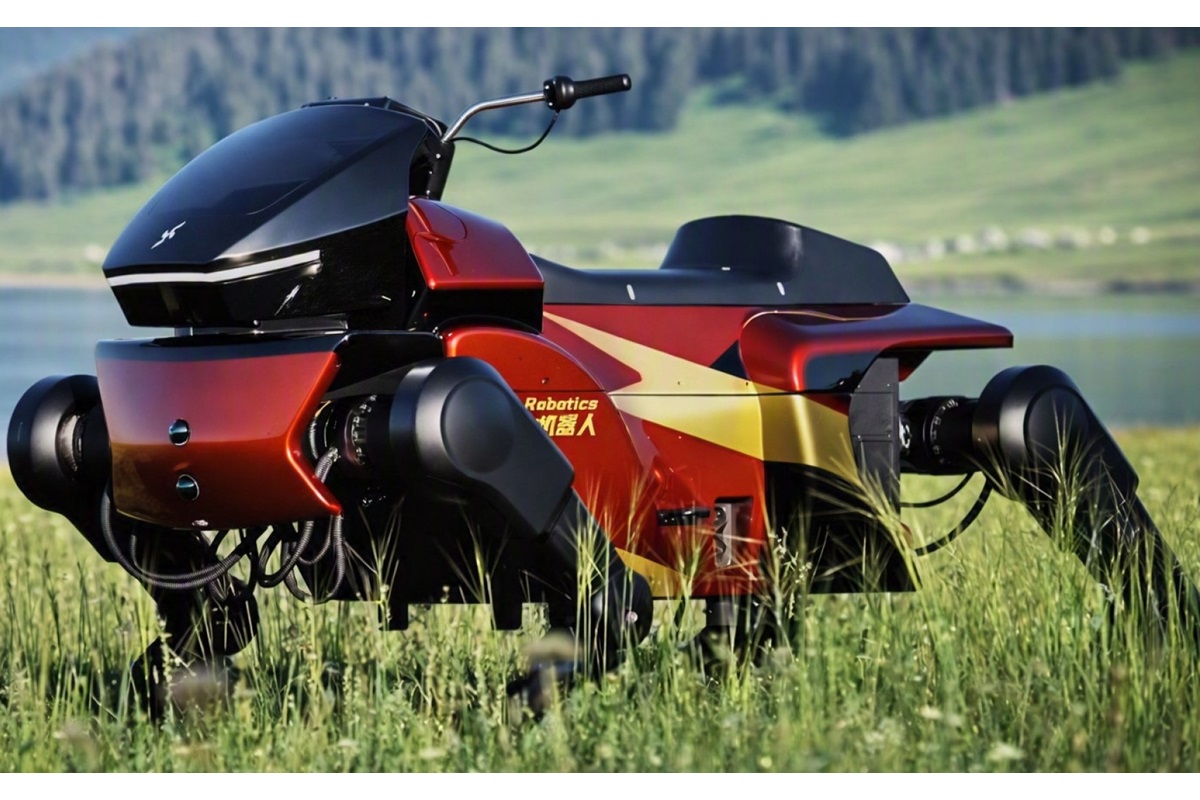
Beyond the details in charge of preparing this agreement, we have the technical aspects that surround both models. While the Qiji X1 is presented as an off-road performance platform, the Qiji XS has a design that qualifies it for on-road use. For the Qiji X1 the brand declares a weight of 300kg and a maximum speed from 7 to 10 km/h. Comes equipped with a high voltage battery 165V and offers a 40 km autonomy. Its maximum torque is 1,400 Nm and has a load capacity of up to 300kg.
For its part, the “Qiji XS robotic horse” approves a weight in running order of 320kg. “Reaches a maximum speed greater than 40 km/h and one 60 km autonomyachieving a perfect balance between speed and off-road capability”they explain from the Chinese website. In addition, it has different driving modes and incorporates:
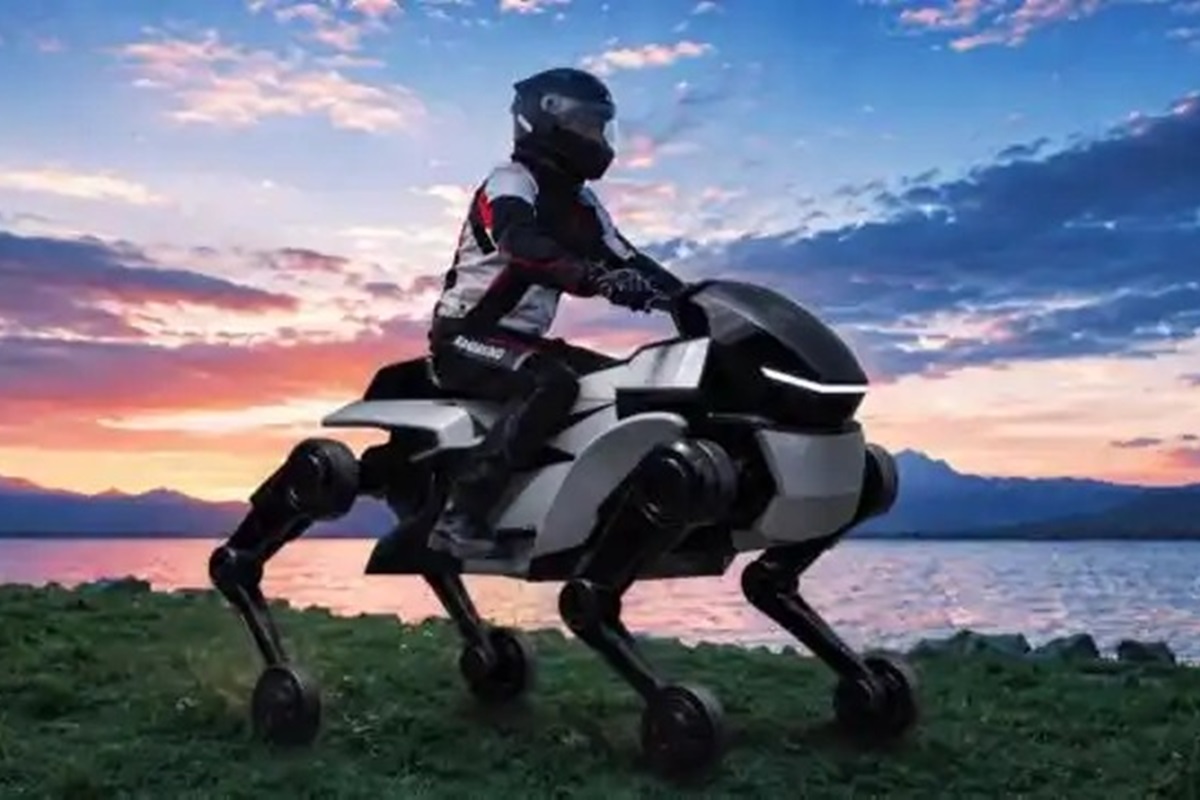
“A dual-mode dynamic decoupling control system, which effectively solves the common industry problem of vibration at high speeds, achieving an optimal balance between extreme speed performance and excellent off-road capability,” they conclude.
Price and availability
The colleagues at Motorrad Online go one step further, as they confirm that Deliveries of the first units of the model will arrive at the end of this year. “The base price of the X1 version is expected to be 289,000 yuan, or approximately 37,000 euros. The XS version, more sophisticated and with folding wheels, will be consequently more expensive, probably between 40,000 and 50,000 euros”they conclude.