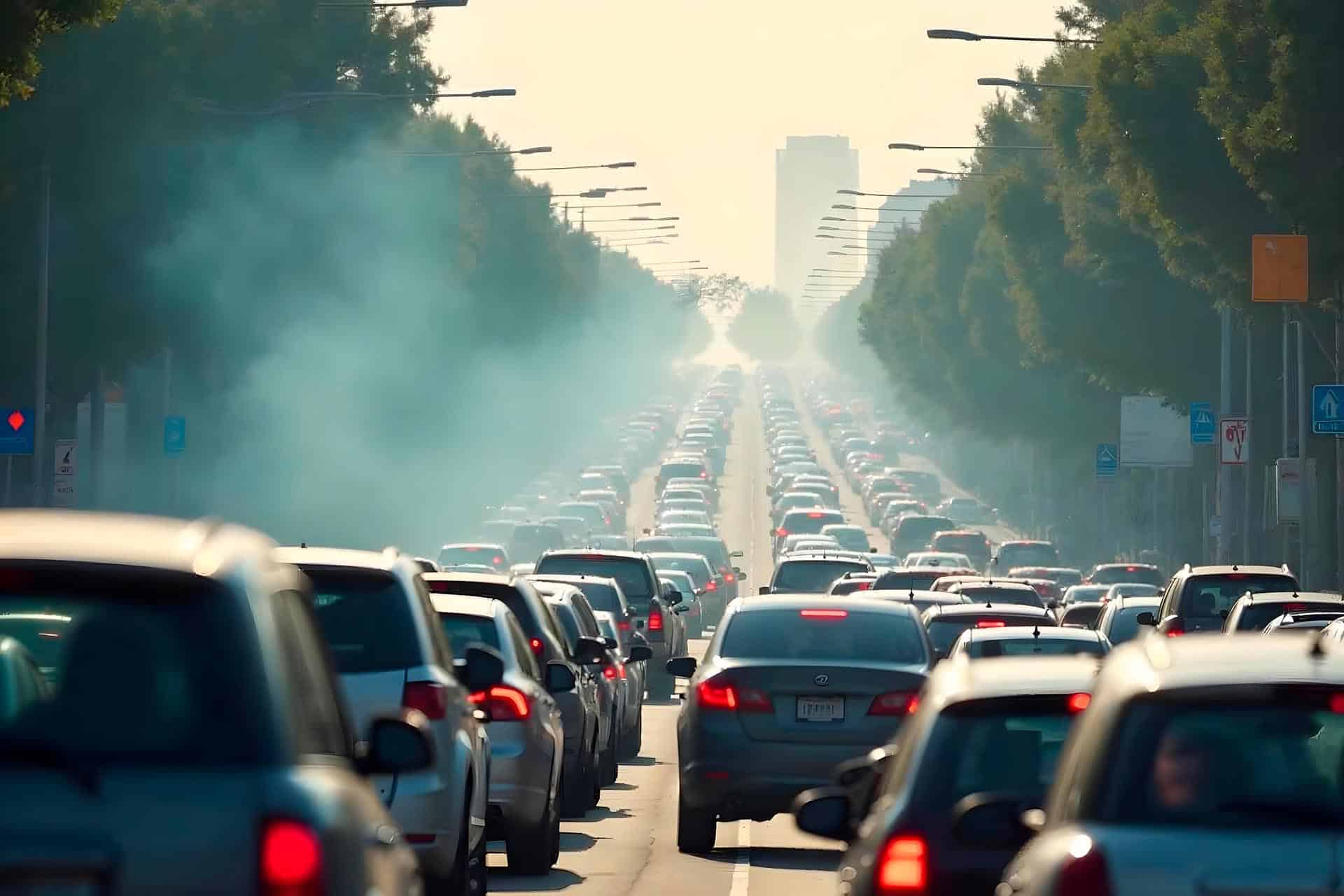
That large cities are on the brink of general collapse is not a surprise. Although in the midst of the digital age one might think that everything would be simpler, and that the infrastructure would be much better, the growth of cities is promoting the opposite. This is the feeling that one can have if one approaches large urban centers anywhere in the world and, of course, in Spain.
And a consequence of unstoppable overcrowding is that it is more complicated to move and circulate. No, it’s not your feeling. In general terms it is getting worse in that sense, even in public transport. This is what is reflected in the ranking that TomTom has prepared for yet another year thanks to the hundreds of billions of journeys collected on its devices during 2025.

The general trend is overwhelming, because the level of global congestion grows five percentage points, going from 20 to 25%. The ranking also reveals something that anyone who moves regularly will also have noticed and that is that rush hour is no longer a specific interval of time, but is extended and depends on the city and the road; There is congestion at almost any time of the day.
And the fact is that cities have slightly changed their habits and, in general terms, teleworking is noticeable. Mondays are at almost pre-COVID levels, but Tuesdays, Wednesdays and Thursdays have increased noticeably, while traffic has decreased on Fridays.
In absolute terms, Mexico City leads the congestion ranking with 75.9% and an average speed of 17.4 km/h, causing each user to lose 184 hours a year. Even so, CDMX is one of the few that improves its ratio. Behind us we have Bengaluru, in India (74.7%), Dublin, Ireland, (72.9%), Lodz in Poland 72.8% and Pune, also in India 71.1% congestion.

Spanish cities do not improve in general either, but they are very far from the “Big Five”
You have to go down to 200th place in the global ranking, almost halfway through the table, to locate the first of the Spanish cities. It is Valencia, which worsens its records compared to 2024 in congestion with 41.7% and an average speed of 20.9 km/h, causing a loss of 95 hours a year.
Close in the global ranking and second in the Spanish ranking is Barcelona, with 41.1% and 109 hours lost, Madrid in the middle of the table with 38% and 98 hours and Palma de Mallorca (276) with 37.1% and 63 hours lost. Our peculiar top5 congestion in cities is completed by Vitoria with 34.9% that neither improves nor worsens compared to last year and where 62 hours are lost per year. A total of 25 Spanish cities appear on the list and, yes, with Málaga, Santander, Gijón, San Sebastián and Bilbao improving slightly in congestion. Something that, given the national and global panorama, is not bad at all…