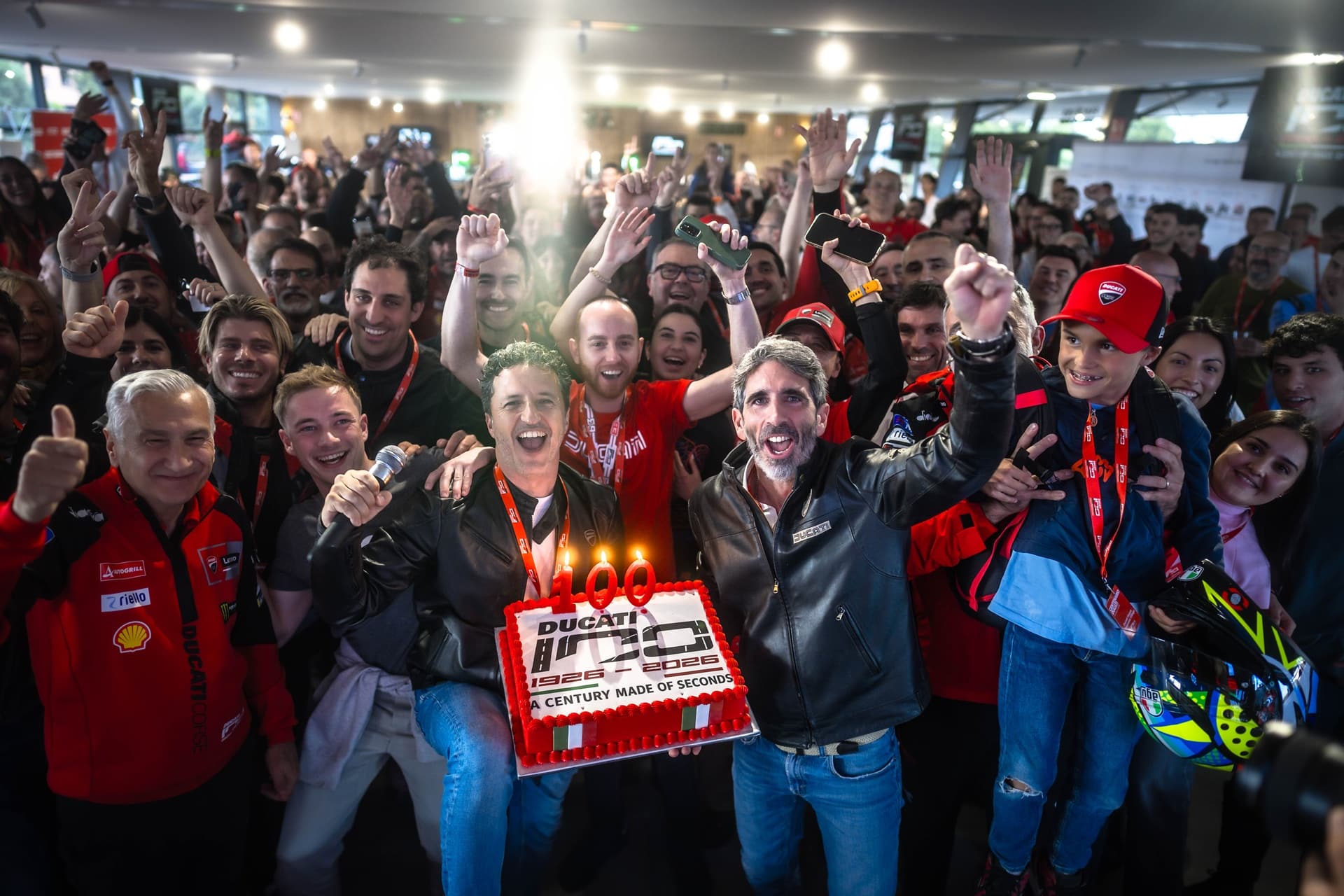
The MotoGP Gran Premi de Catalunya was much more than a race for Ducati. The Borgo Panigale firm took advantage of the weekend in Montmeló to turn the Circuit de Barcelona-Catalunya into a meeting point full of history, emotion and brand pride. On the occasion of its centenary, Ducati Spain and Portugal organized a series of exclusive activities aimed at customers and fans of the brand, bringing together hundreds of Ducati fans around the same idea: celebrating one hundred years of motorcycling with the unmistakable character of Ducati.
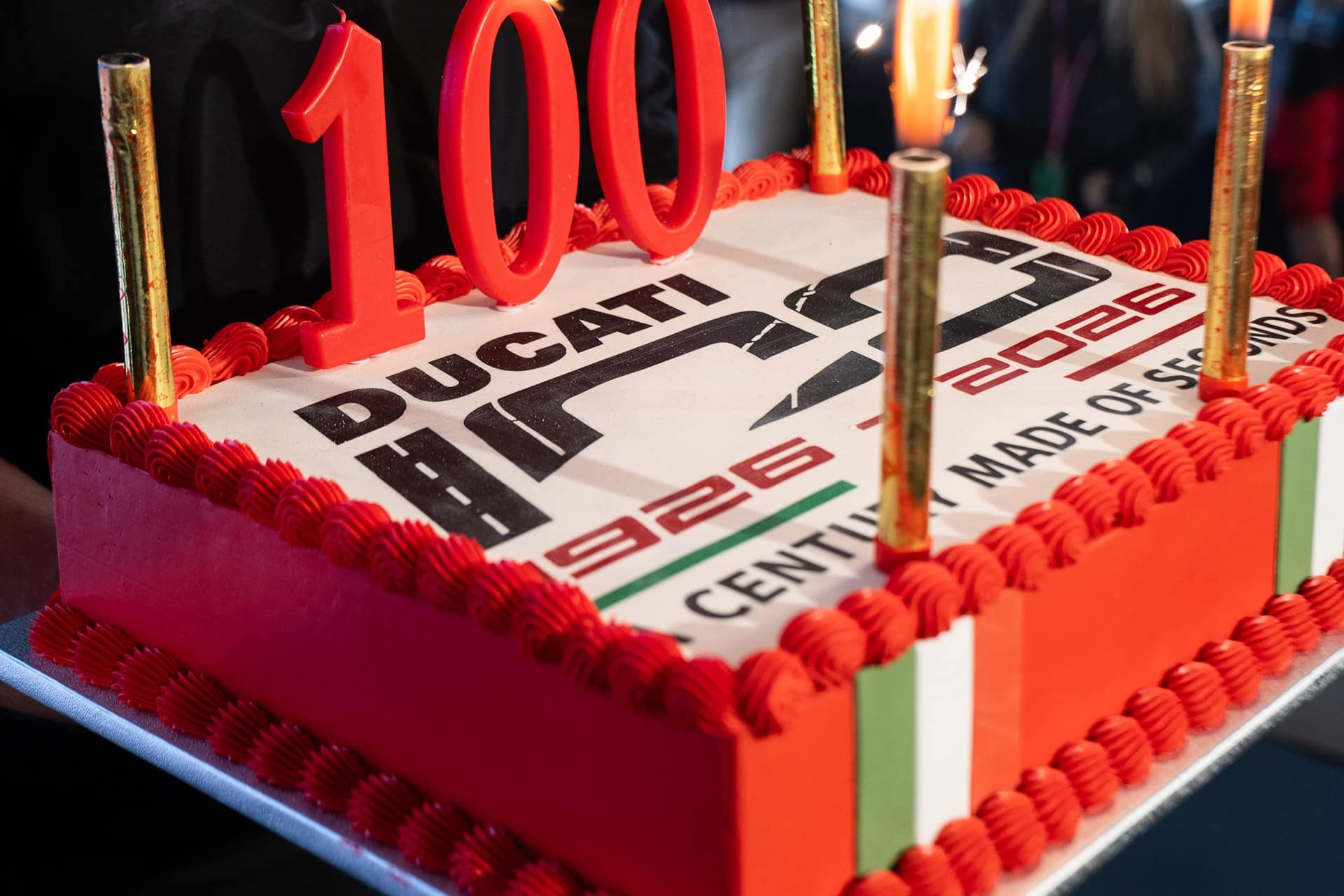
This was the red party with which Ducati celebrated 100 years
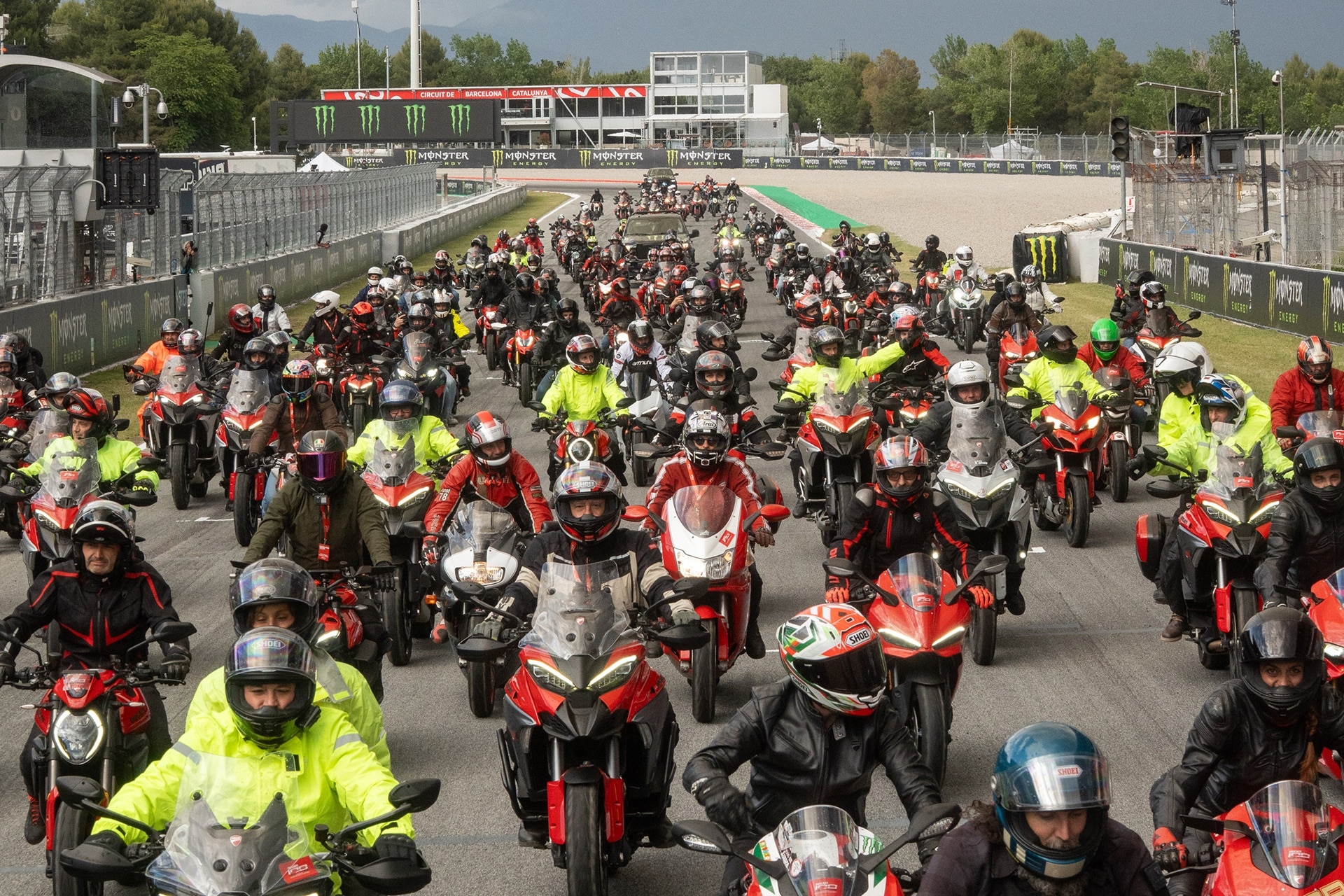
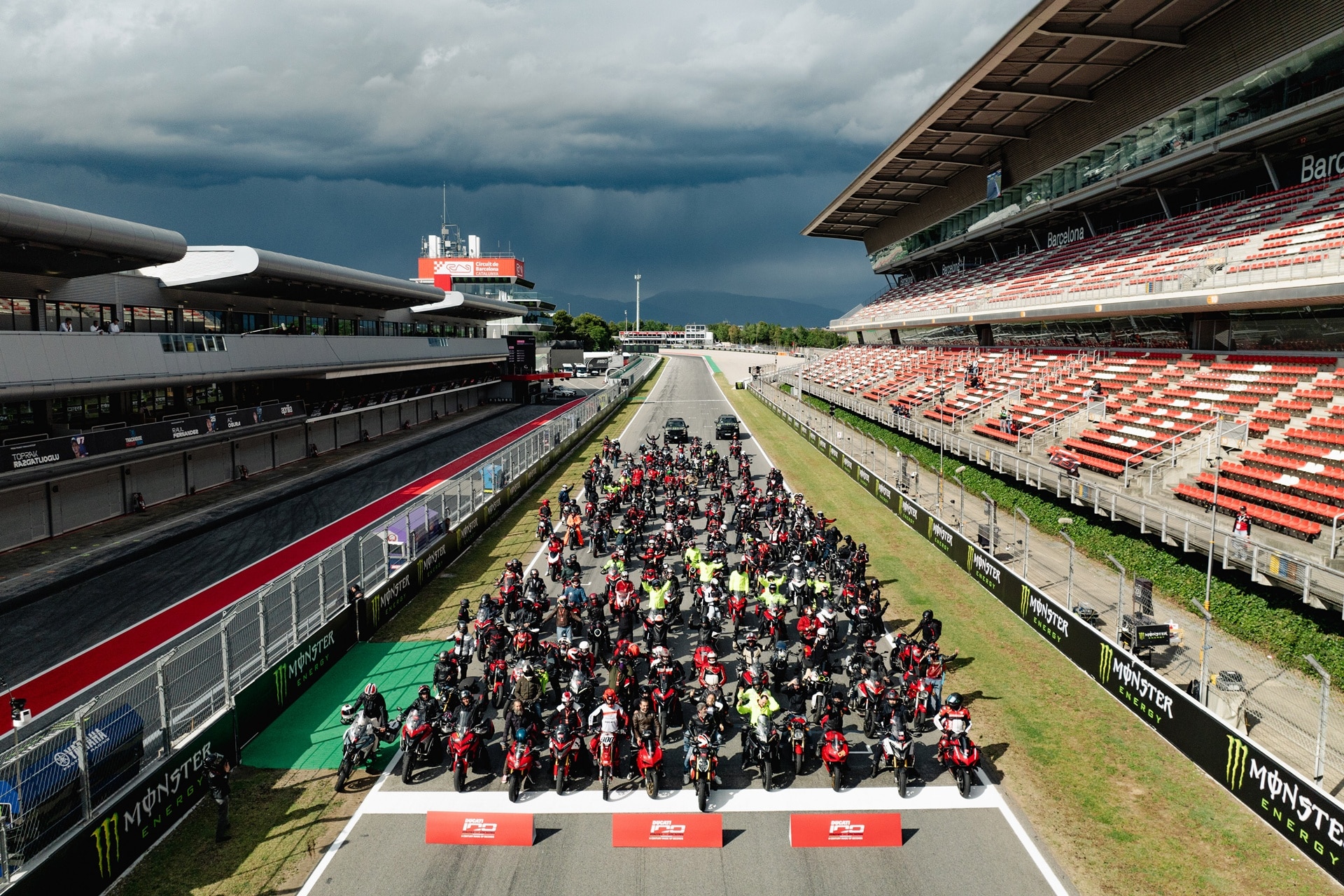
The most symbolic activity of the weekend took place on Friday, when a caravan made up of 150 motorcycles and 250 participants accessed the Catalan track to complete an exclusive two-lap ride. It was not just any round, but a celebration on the asphalt, with motorcycles from different generations sharing the track in one of the most recognizable settings in international motorcycling. For any Ducati fan, riding in Montmeló during a Grand Prix already has a special component; Doing it within a commemorative caravan for the centenary elevates the experience to another dimension.

The delegation was led by Francesco Milicia, vice president of global sales and after-sales at Ducati, and Carlos T. López Panisello, general director of Ducati Spain and Portugal. Both accompanied the participants on a day that served to strengthen the bond between the brand and its community. Because Ducati is not just a factory of sports, naked, trail or high-performance superbikes. Ducati is also a way of understanding the motorcycle: Italian design, technical precision, racing heritage and a very strong personality that has built a loyal community around the world.
After the shoot, the participants enjoyed a private party at the Ducati House – Panorama Village, the space that the brand once again enabled during the Grand Prix as a nerve center for clients, guests and fans. Nearly 1,800 attendees passed through there throughout the weekend, consolidating this enclave as one of the most active places to experience the Ducati atmosphere within the paddock and its surroundings.
The Ducati House not only functioned as a social meeting point. It also became a small time capsule thanks to a special exhibition with several models representative of the 100 years of history of the Italian brand. An exhibition that combined current motorcycles, loaded with technology and performance, with authentic collector’s pieces directly linked to some of Ducati’s most brilliant chapters in competition.
Among the motorcycles on display, the Panigale V4 R and the Multistrada V4 RS stood out, two models that represent modern Ducati very well. The first is the most extreme expression of Superbike DNA taken to the street, with technical solutions born from track experience and a focus clearly oriented towards maximum performance. The second interprets that same spirit from a more versatile perspective, mixing high-level performance, advanced electronics and touring capacity with the sporty seal that characterizes the Borgo Panigale house.
Along with them, the exhibition allowed us to contemplate historical models of enormous emotional and sporting value. One of the great protagonists was the 1982 Ducati 900SS Replica Mike Hailwood, inspired by the legendary victory of the British rider in the Tourist Trophy on the Isle of Man in 1978. That feat deeply marked the history of Ducati and reinforced the image of the brand as a manufacturer capable of shining in one of the most demanding and legendary stages of world motorcycling.
Also present was the 1974 Ducati 750 Sport, a direct heir to the motorcycle that won the 1972 Imola 200. That victory was a turning point for Ducati, not only because of its sporting importance, but because it helped consolidate the L-twin architecture and the technical identity that for decades has been one of the brand’s great differentiating features.
The third historical gem was the Ducati 851 S-3 Superbike 90 with an 888 engine, a machine closely linked to Ducati’s success in the World Superbike Championship. Its role in winning the 1991 world title makes it a fundamental piece to understand the dominance that the Italian firm would begin to build in the category of production derived motorcycles. Those Superbikes laid the foundations for a sports saga that still remains a reference for fans today.
With this celebration in Catalonia, Ducati once again demonstrated that its history is not explained solely through figures, titles or iconic models. It is also explained through the passion of those who fill circuits, travel the roads and keep alive a very particular motorcycle culture. Ducati’s centenary brought together motorcycles of yesterday and today, managers and clients, collectors and amateur riders in Montmeló, all united by the same sound, the same red color and the same way of experiencing the motorcycle.