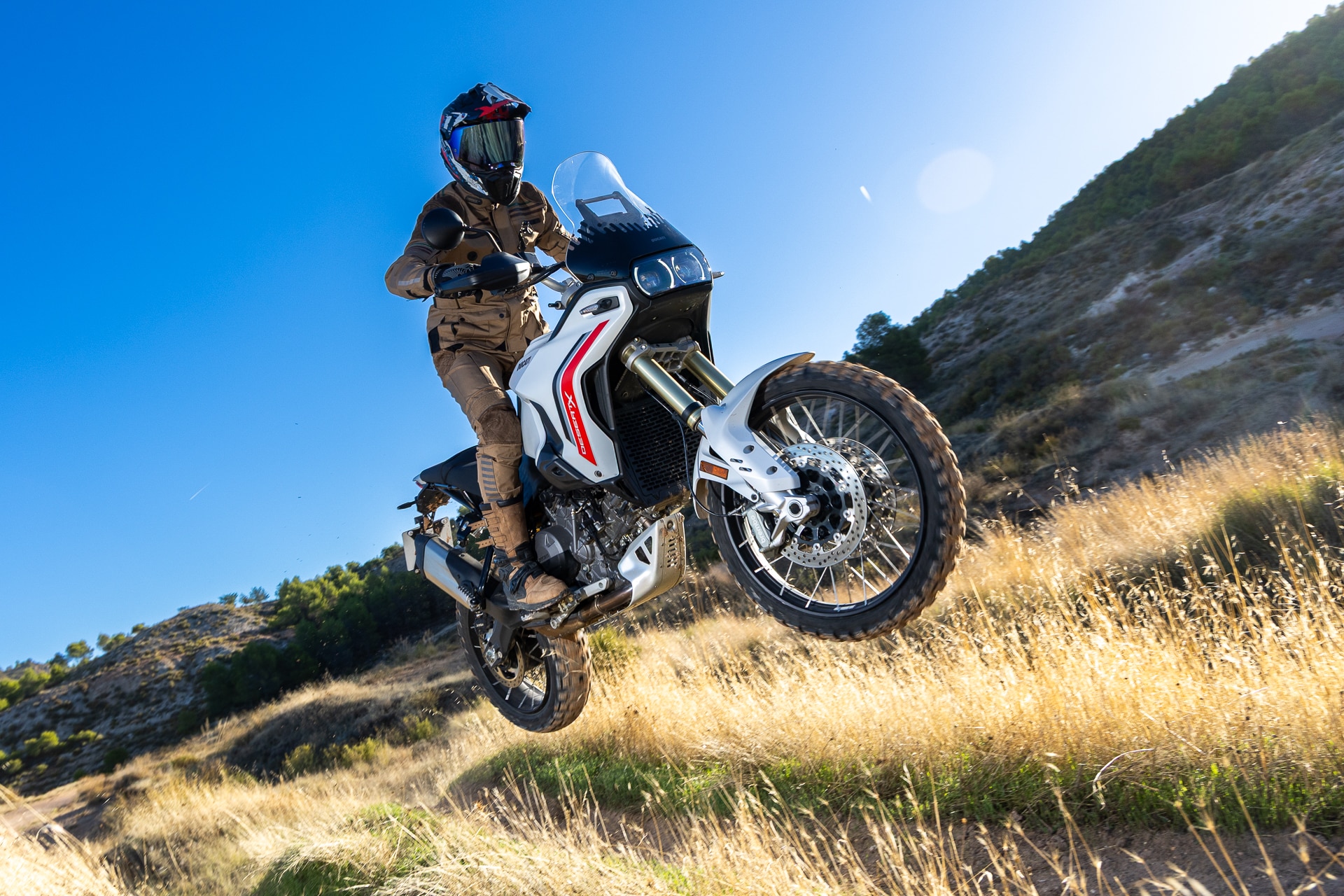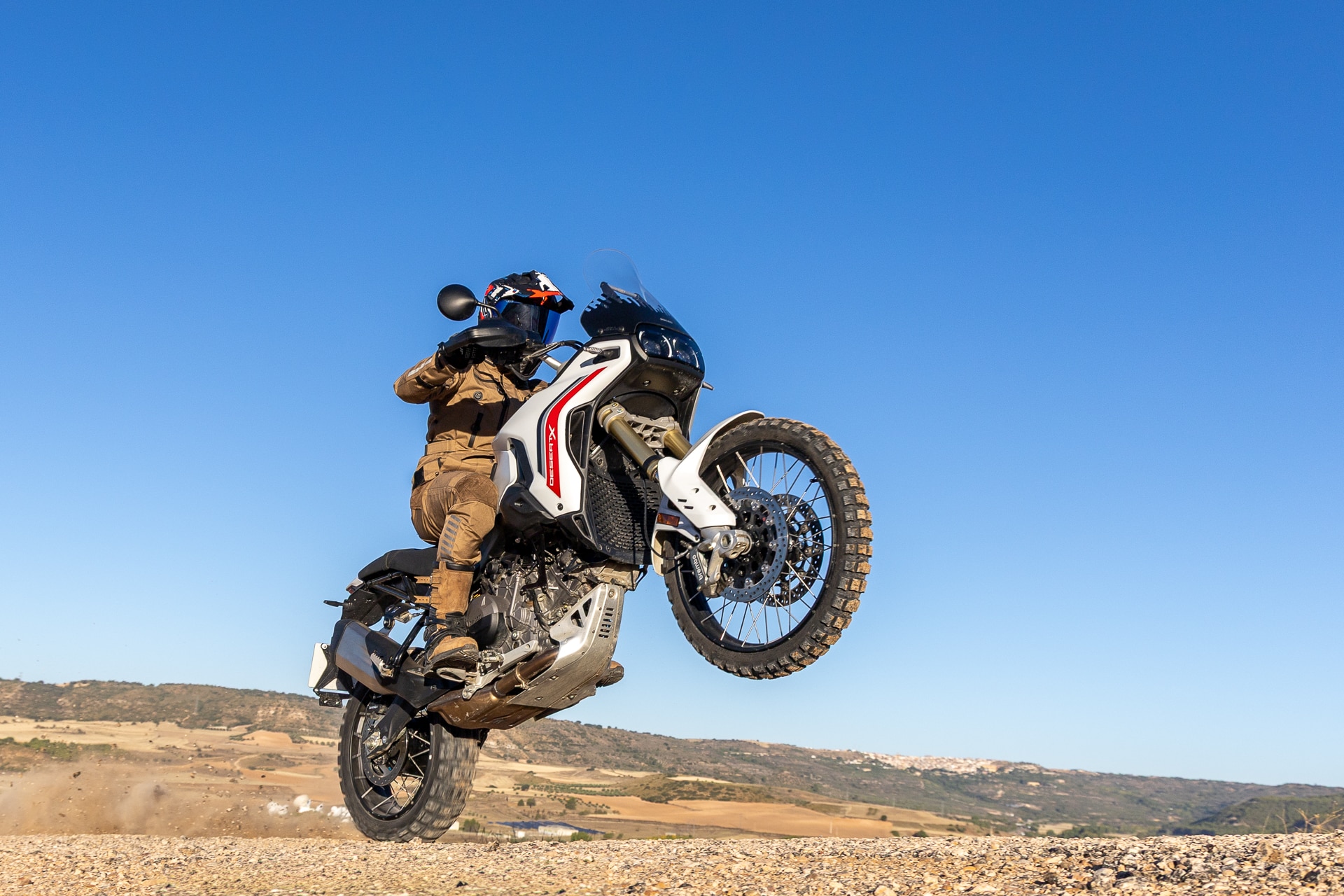
Normally, when you decide to buy a motorcycle, you assess the use you are going to give it (if it is countryside, road, city…), what features and features you need (more or less engine, more or less suspension travel, seat height…) and if you can afford it based on your budget. But there is a factor many times more important than the previous ones: that you feel identified with the motorcycle, that it is a projection of you or the life you would imagine having.
Well, in 2022, when the first model of the Ducati DesertX was released, many of us felt identified because we had high performance in the field and on the road, combined with a neo-retro aesthetic with very clean lines, which was equally suitable for going on a rally at a high pace or going for a drink in the city center.
Now, in 2026, everything changes completely. It is a completely new motorcycle, but it maintains the original design, which is inspired by the Cagiva of the 90s, although it also presents some changes in this section.
Ducati DesertX test: technical characteristics and what changes

The engine is now the brand’s variable valve timing V2, the same one we tested in the new Ducati Monster, but with different settings. In the DesertX, the 890 cc produces 110.3 HP and 92 Nm, practically identical figures to those of the previous version’s engine, but delivering that power and torque at lower revolutions, with 70% of the torque available from 3,000 rpm.
This engine has conventional springs in the valves, abandoning the desmodromic system so characteristic of the brand. Among the advantages of this new engine, in addition to the thrust at lower revolutions, the maintenance intervals stand out, which extend up to 15,000 km or 2 years for oil changes and up to 45,000 km for valve adjustment.
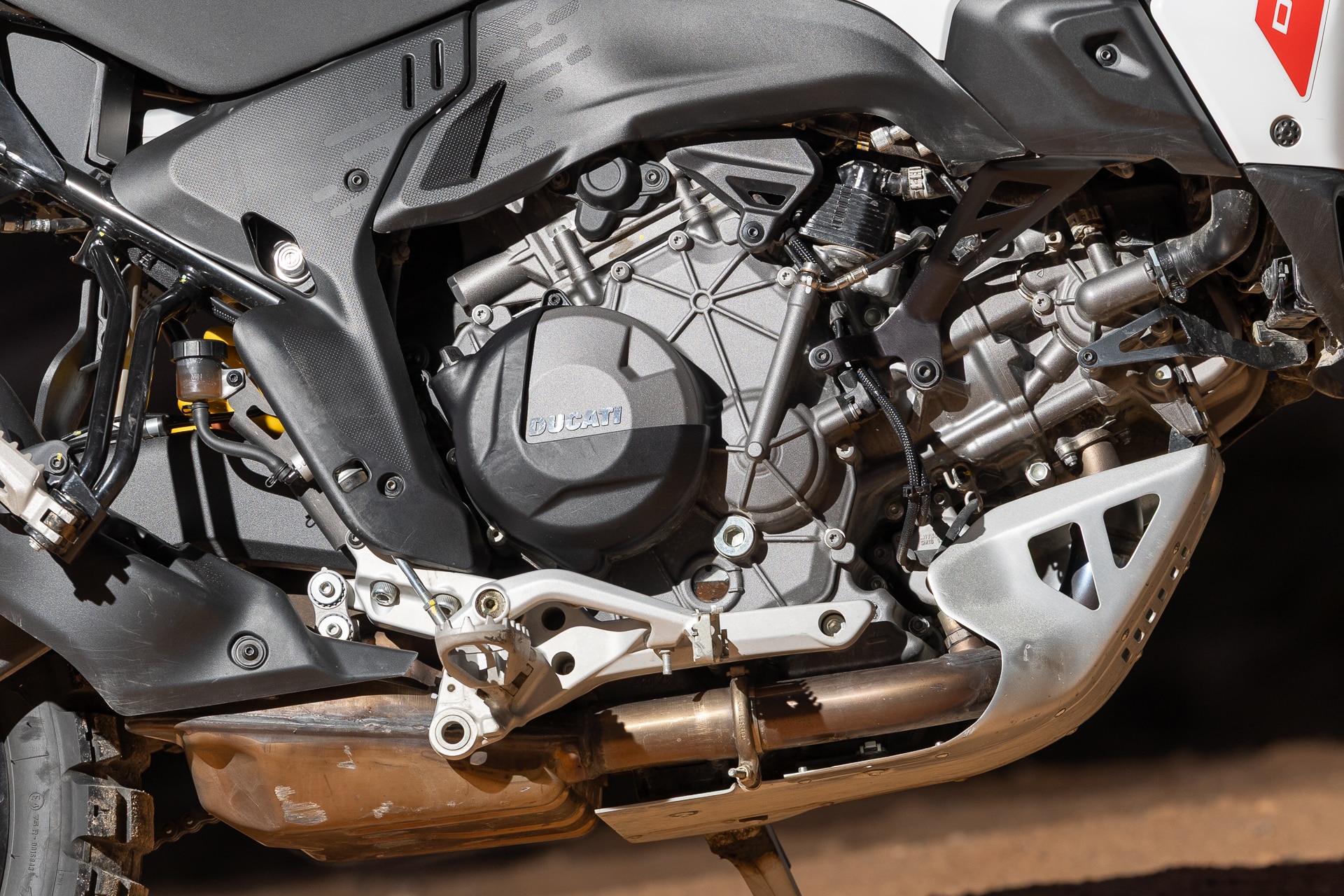
The gearbox has been revised: the first four gears are shorter for technical off-road areas, while the sixth is longer to reduce vibrations and consumption on the highway at maintained speeds. Many of the improvements, such as those we will see later, are aimed at improving performance in the field.
The chassis is also completely new and abandons the steel multi-tubular system, also characteristic of the brand, in favor of an aluminum monocoque chassis, in which the air filter box and the engine are used as structural elements. The only thing left of visible tubes now is the subframe, so it still maintains that hallmark. Access to the air filter has also changed, which is now from the top of the seat, which improves river fording capacity and reduces the entry of dirt.
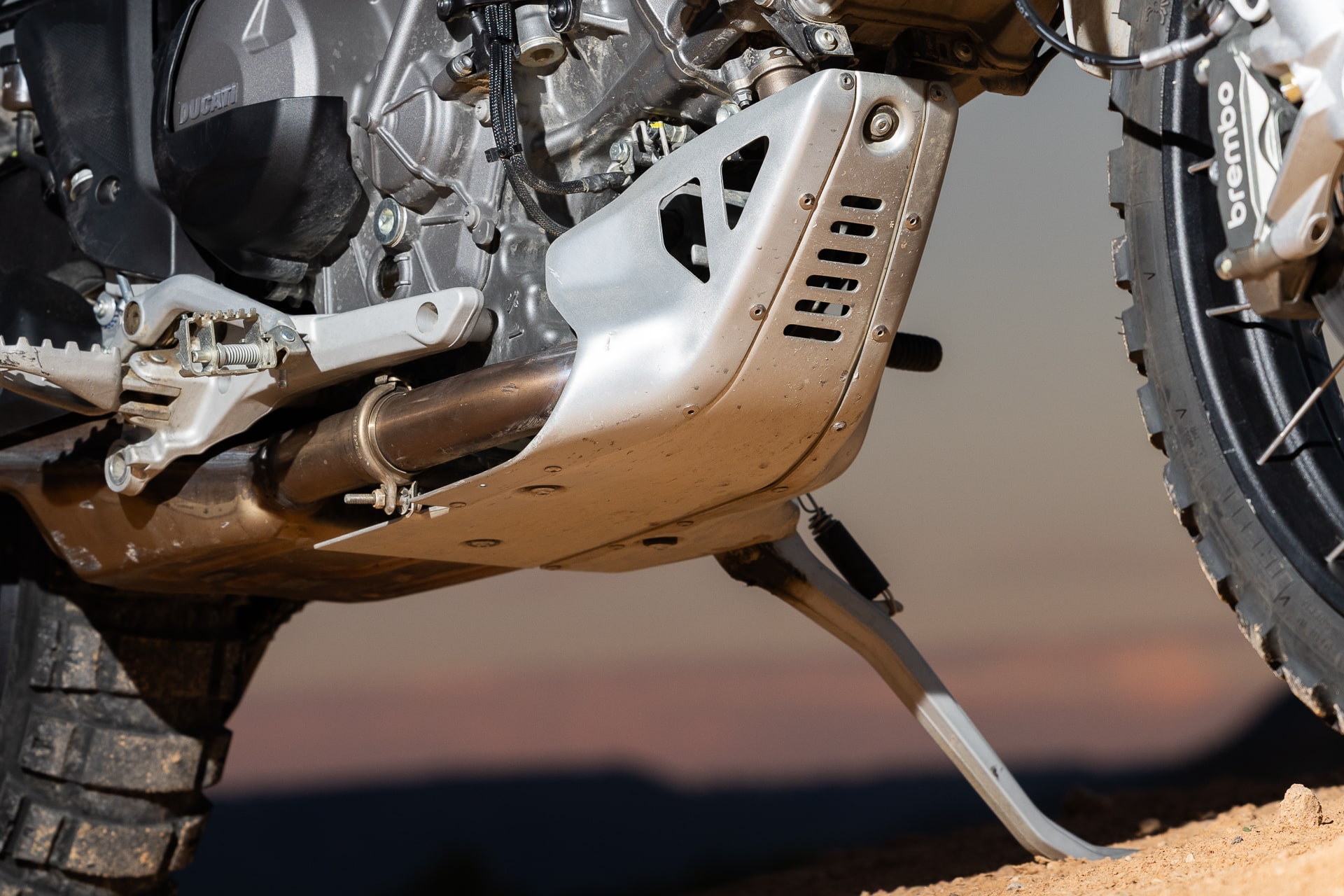
The riding position has also been repositioned, with the footpegs slightly further back and the handlebars and seat moved forward. This offers better support for the front axle, which improves handling on land, both standing and sitting, and makes the bike more agile on the road. The tank now has a capacity of 18 liters, 3 liters less, so we lose autonomy, but it is narrower, so we gain control and comfort in the knee area.
In addition, we can mount an extra 8-liter rear tank as an accessory, which is very well integrated into the set. The seat, in the standard position, is at 880 mm and can be raised to 900 mm with the high seat or lowered to 860 mm with the low seat. We can reach 840 mm with the low seat and the low suspension kit. The curb weight remains at 209 kg, 4 kg less than the previous version.
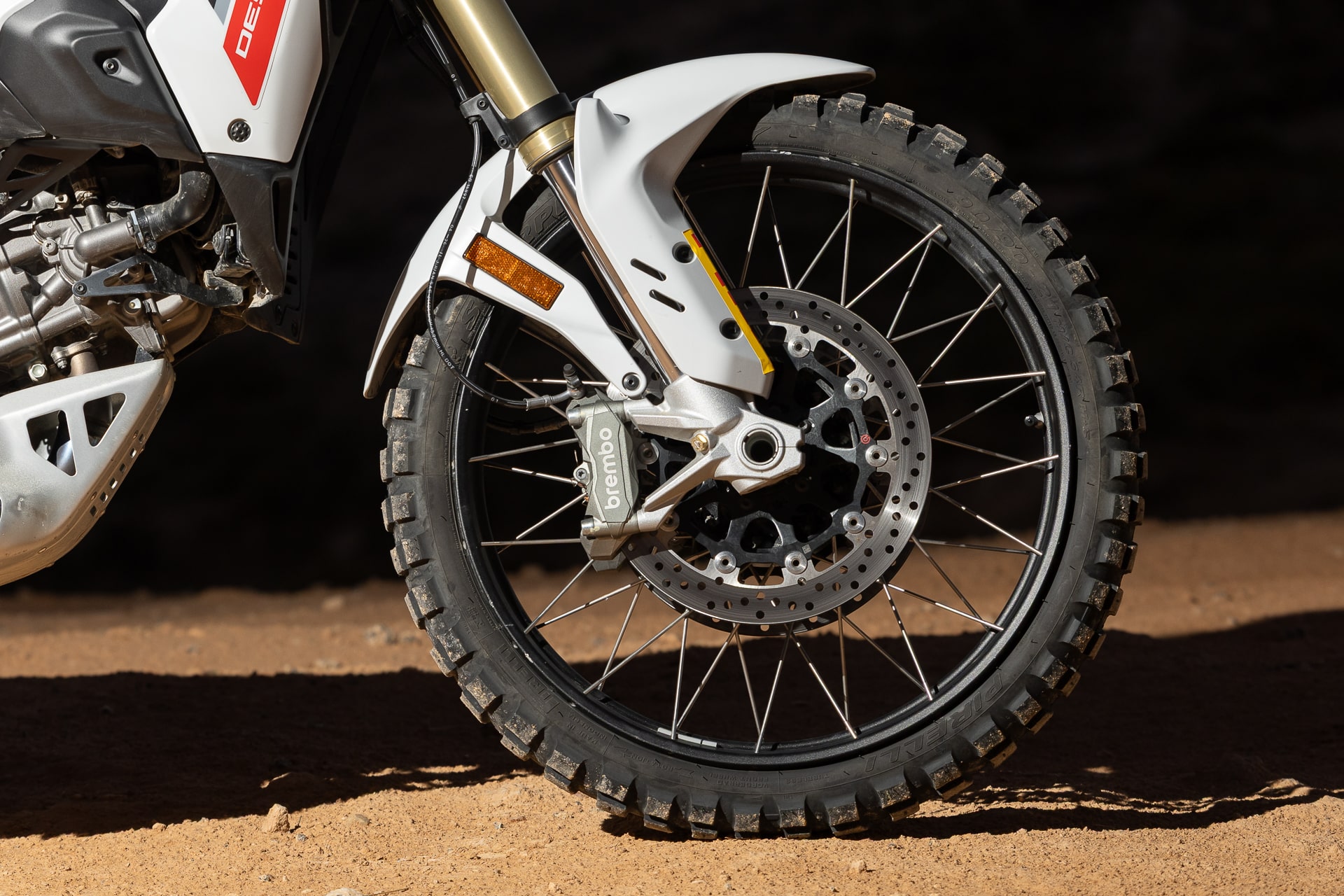
It has fully adjustable KYB suspensions on both trains, with a 46 mm diameter fork and 230 mm travel, and a rear shock absorber with remote preload and 220 mm travel. The rear shock absorber now mounts linkages, something important in the field, since a lot of traction is gained thanks to the progressiveness they provide depending on the position of the wheel.
But the big news is that they are mounted on the upper part of the swingarm, something that we had not seen before and that frees up height to the ground and protects the system more. Regarding the size of the wheels, we have 18 inches at the rear and 21 inches at the front, as it could not be otherwise on a motorcycle so focused on off-road. It is the basic thing in any self-respecting dirt bike.
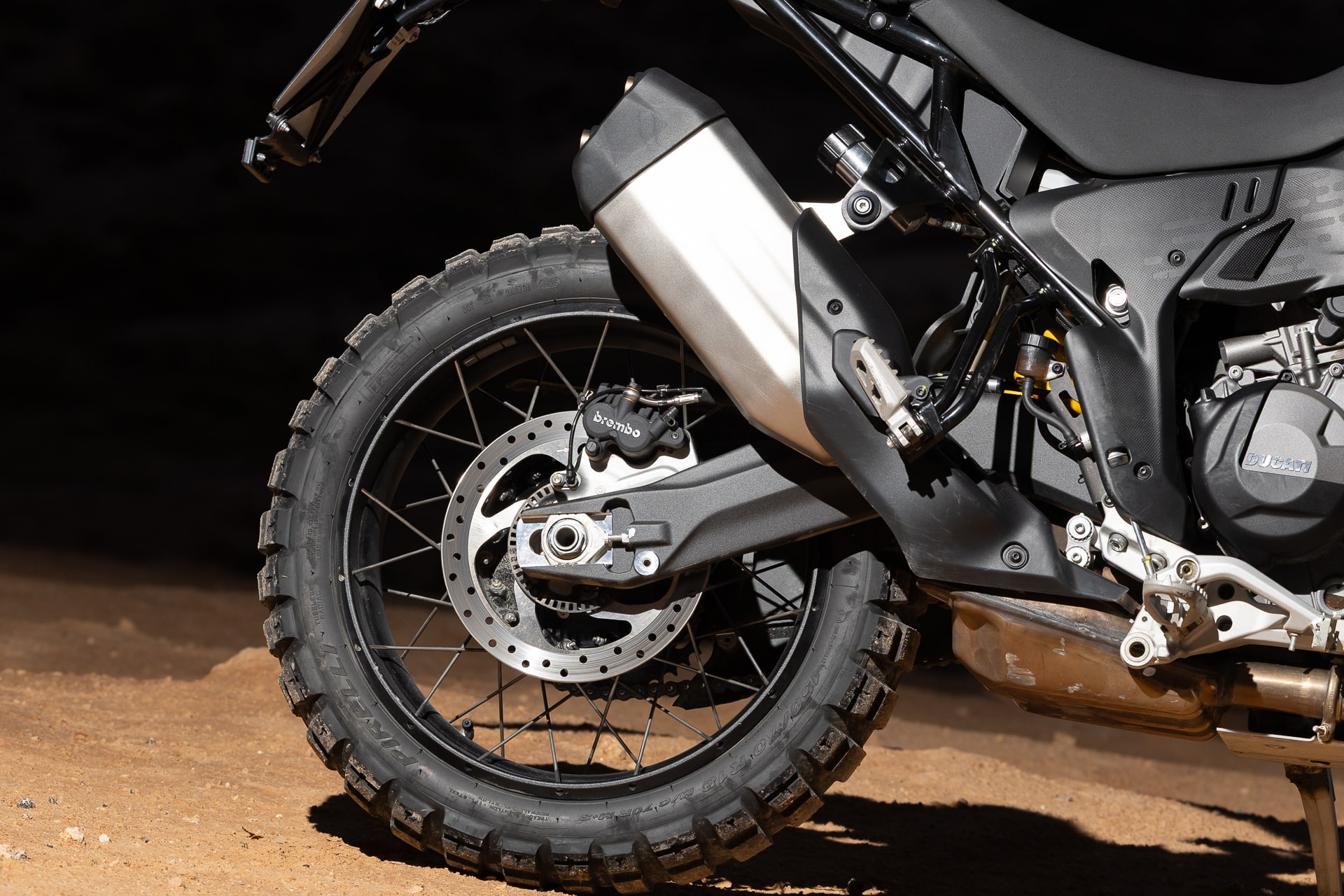
In the brakes section, it uses radial Brembo M4.32 calipers, but the diameter of the front discs is reduced from 320 mm to 305 mm. This change seeks greater benefits on the field and fewer hits. I can tell you that this loss of diameter is not noticeable on the road thanks to those almost Superbike calipers.
The instrumentation is provided by a 5-inch horizontal TFT screen (16:9), which abandons the vertical format and frees up space to mount GPS, tablets and roadbooksso fashionable lately. The controls are also new, with a new petal-shaped joystick on the left grip to manage the menus. It also has cruise control and two USB ports as standard.
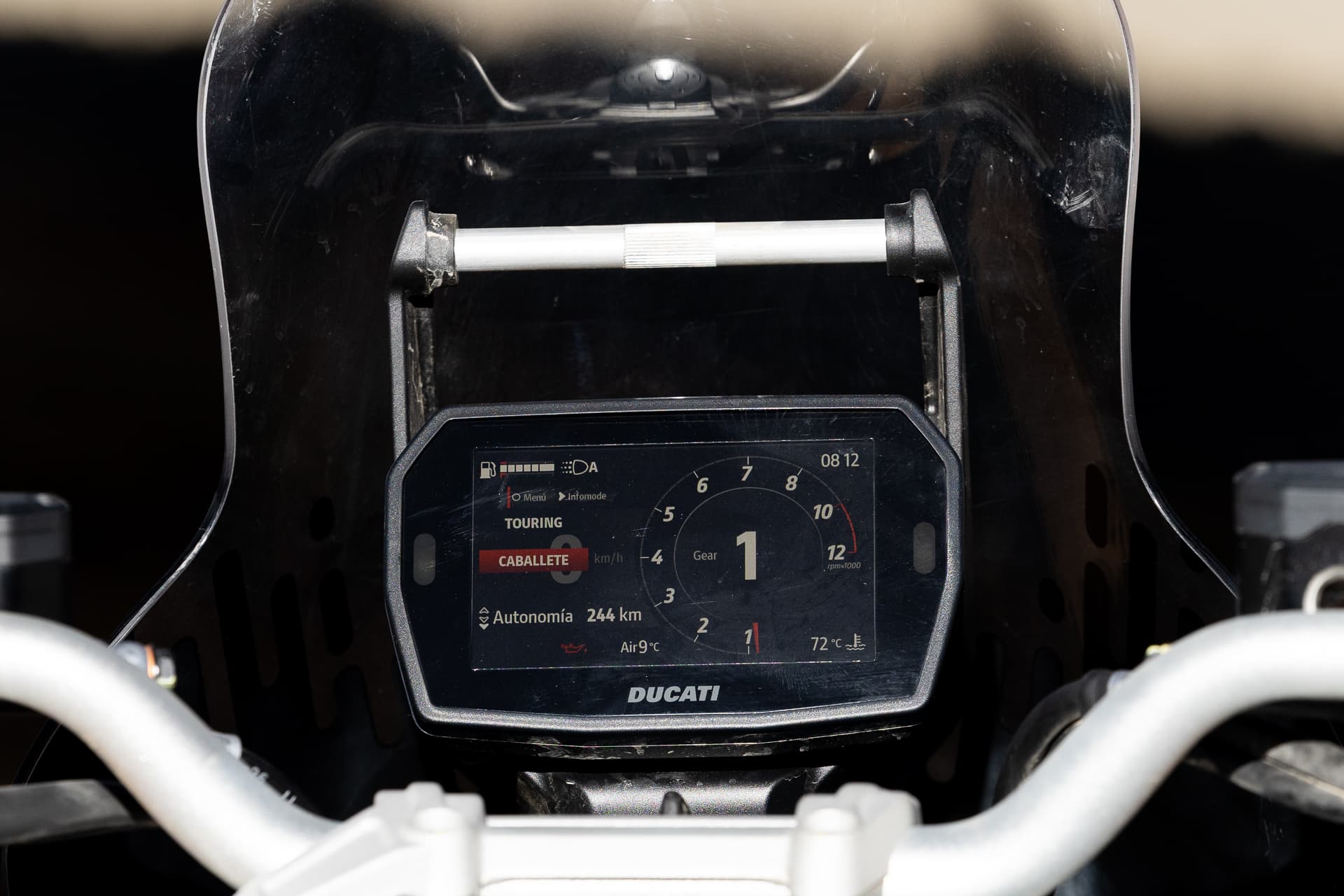
As far as electronic aids are concerned, thanks to the six-axis IMU and the electronic accelerator, it has six driving modes (Sport, Touring, Urban, Wet, Enduro and Rally), cornering ABS with four levels and disconnectable in off-road modes, traction control with eight levels of activation, anti-wheelie with four levels, engine braking with three levels and quickshifterwhich now has the sensor inside the engine and not in the gear shift lever, to avoid bumps and mud in the system.
It is important to highlight the number of configuration levels of each electronic aid, which allow us to play with very subtle nuances and allow us to really configure the motorcycle to our liking. And, even more, we can configure all the modes to our liking: they are not predefined modes, but we can create our own driving modes.
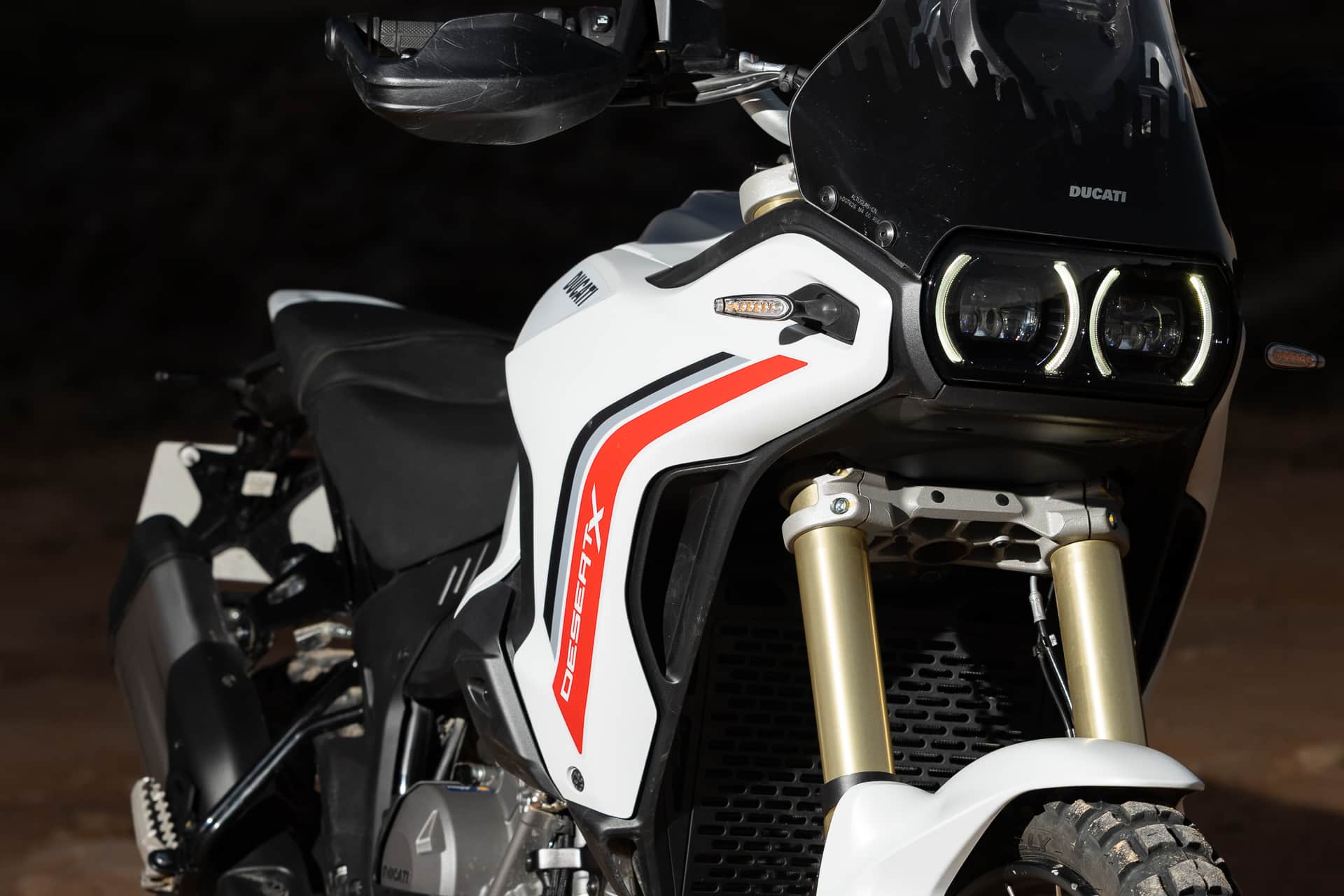
In the 2026 design, the new tank stands out, now with a different shape and more black plastics, as well as the double front headlight with a retro aesthetic, which is no longer completely round, but is framed by two straight lines. The shape of the fairing also changes, integrating two new side openings to channel cold air towards the legs and dissipate heat from the engine.
The side plastics that protect the tank are now replaceable, so if we have a fall, we will only have to change those parts. The front fender can also be replaced with a high one without having to adapt the hoses. It is something that everyone who wants to go out into the countryside should do, since the fender stuck to the wheel can prevent us from moving forward when there is mud.
Ducati DesertX test: this is how it behaves
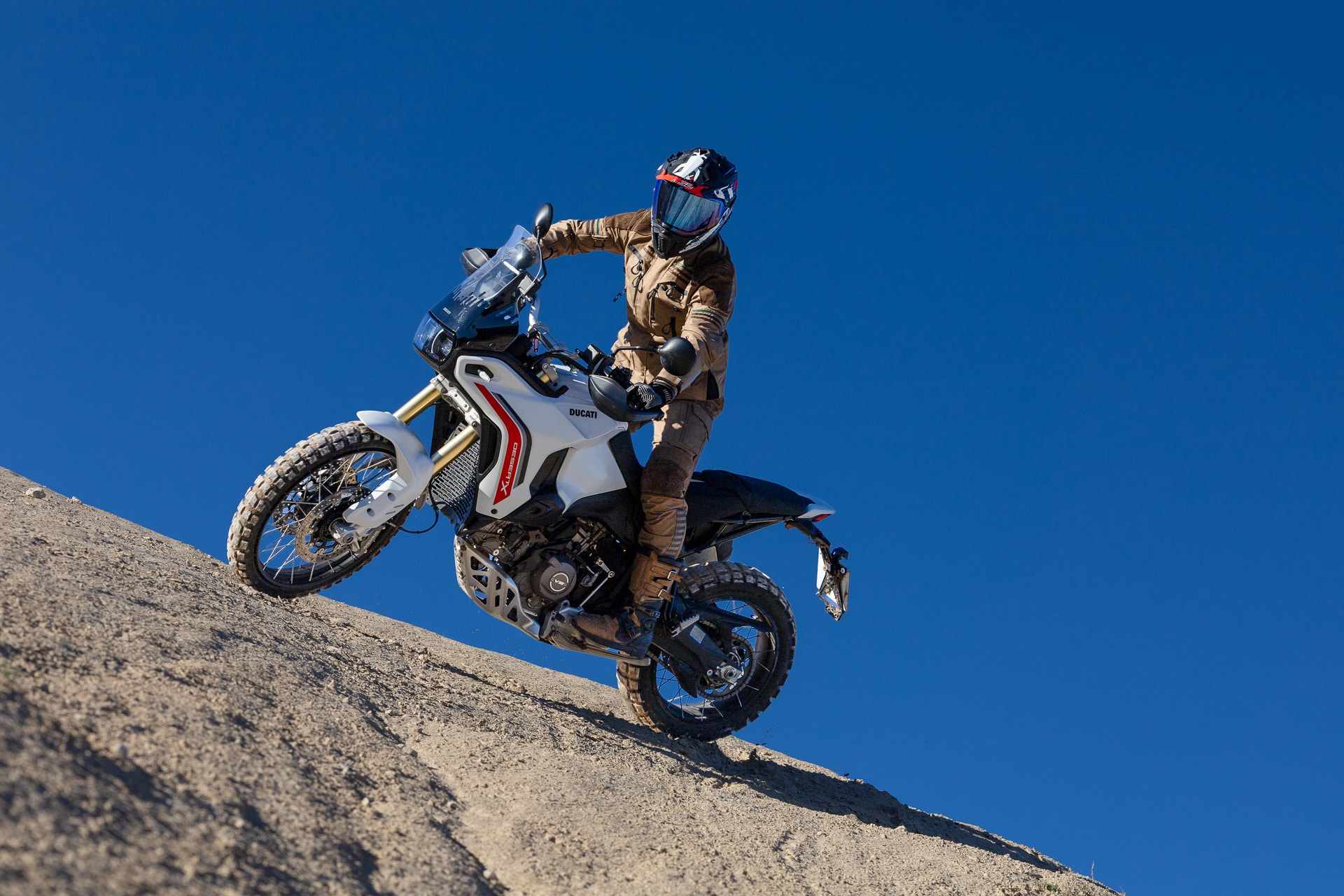
As soon as we got on, we realized that it is a powerful motorcycle, but not too big. The size is just right, from my point of view, for a trail motorcycle: we have aerodynamic protection and comfort, but without losing handling in the field. The handlebars are high, but it is comfortable, and we reach the ground well with our 1.80 m height.
When we start rolling, the first thing that stands out are clearly two aspects: the manageability of the unit and the capabilities of the engine. The driving position is comfortable; The hands and legs are at distances that allow us to be relaxed, although we would choose the high seat if we could, since it offers advantages in control of the motorcycle in the field and in comfort on the road. But this depends on our height, of course…
The engine pushes from very low with great ease, with really good bass. Even if we are forced to drive below the optimal speed, the engine comes out forcefully in any situation. This is very positive for off-road driving at a certain level, because we need that extra traction sensation that is more easily found at that engine speed. Then it continues with very linear mids and highs typical of a sports bike.
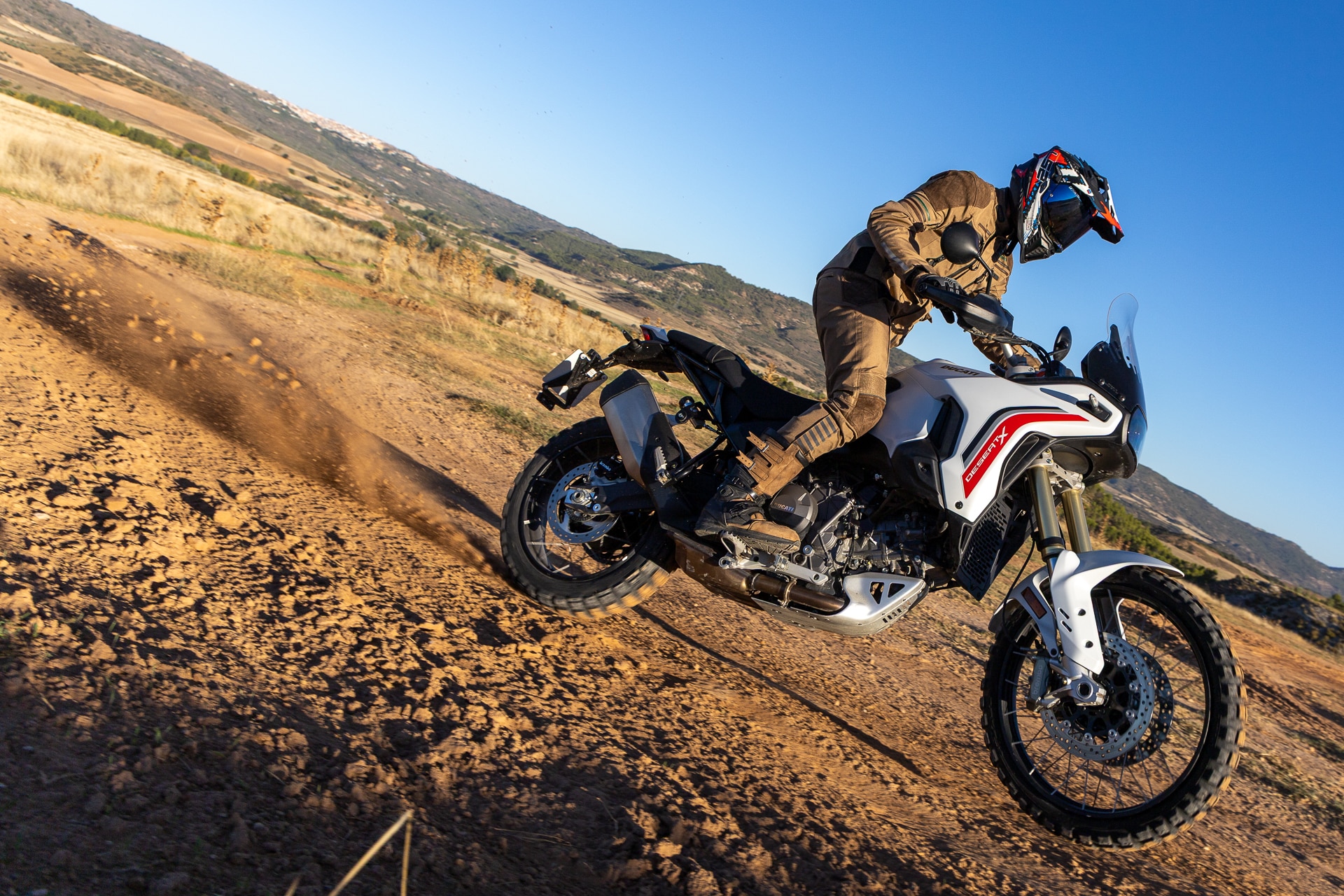
In this way, we have an engine with very good low-end for complex sections of the field, mid-range that we can use in any area because they do not have gaps or falter at any point, and high-end with plenty of power if we want to have fun making curves on twisty roads. Furthermore, the quickshifter It is very fast and the shift lever actuation is very smooth, which makes it even more fun to link gears at the top of the tachometer.
And this is one of the virtues of the DesertX since it was released: the breadth of the range of good sensations it can give us, which, from our point of view, is one of the largest in the segment. It is very good on difficult terrain and also on asphalt roads when we are going fast. Plus, it’s comfortable. Normally you have to choose one thing or the other, but here you have it all.
The same thing happens with the cycle part as with the engine: we have a very agile assembly, but at the same time very stable. On twisty roads, it corners very well and we receive a lot of information from the asphalt, so we can really enjoy sporty driving.
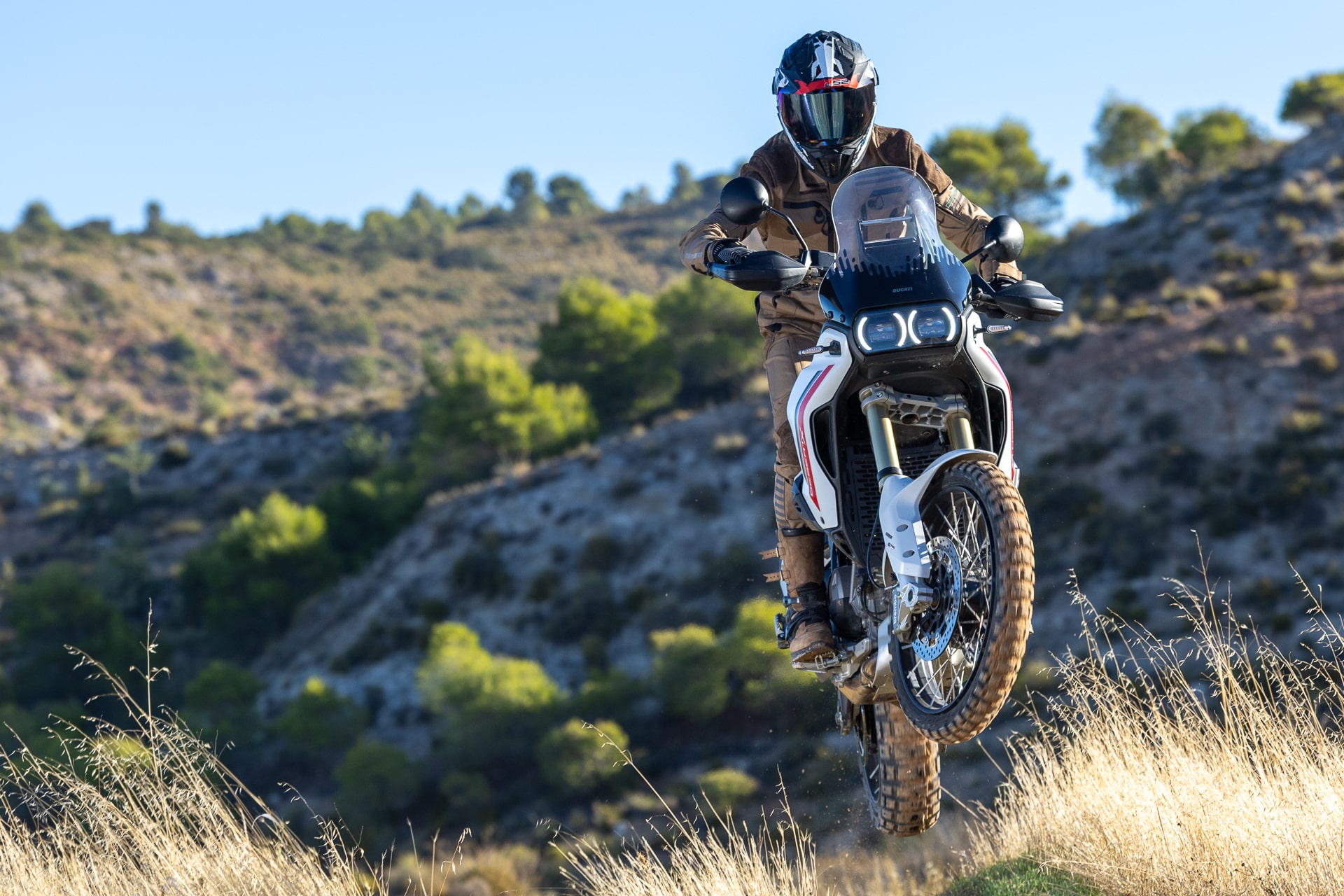
Although here we do notice a soft first suspension travel, it is at the right point to help us enter a curve on the road and, later, be able to go very comfortable and very fast in the field. The suspensions, both due to their rigidity and the progressiveness of their travel, operate very cleanly.
This first soft section means that we can go on broken roads with ease, but, if we increase the pace, as the suspensions sink further, the progressivity is very clearly noticeable. The touch becomes harder, which gives us the ability to go fast in all types of situations. The performance of the shock absorber has also surprised us, because the inverted linkage system has done a very good job both in the field and on the road.
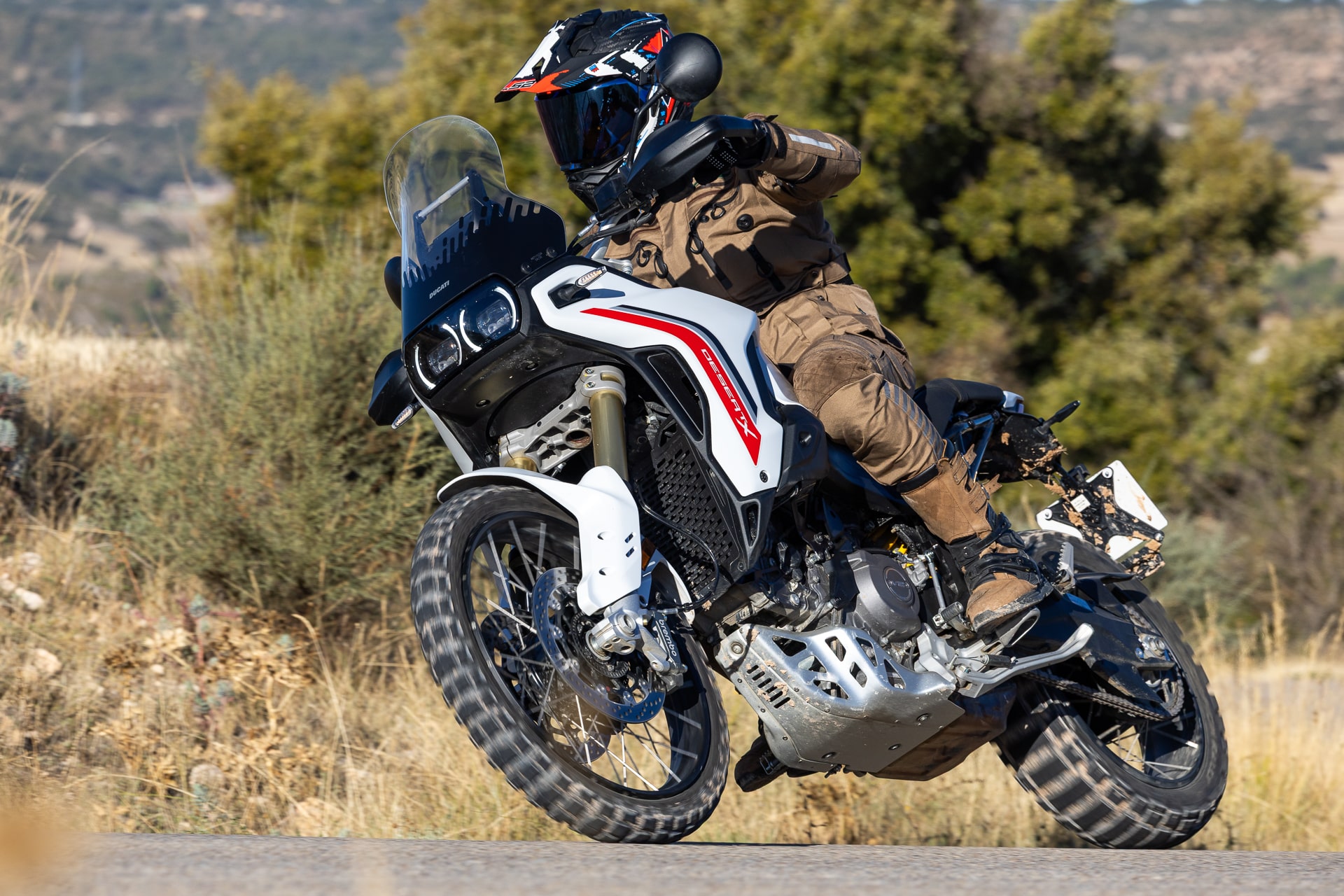
Another point to highlight is that, in the field while standing, the motorcycle feels extremely agile, both due to the weight distribution and the chassis and suspensions, but also, above all, due to the narrowness of the central part, which means that we can move as if it were a much smaller motorcycle. This translates directly into greater control and much more enjoyment of off-road driving.
The brakes are very good, both in terms of feel and power. With a single finger we can stop the set on the road during braking typical of sports driving without problem, with a very direct and soft touch that is always pleasing.
One part that we did not like while driving in the field was the shape of the shift and brake levers, since, many times, when we have our legs close to the chassis (basic driving technique in the field), when moving the levers, whether to brake or to shift up or down, we do not operate them in the area that we are supposed to touch, but before, because they stick out a lot. This means that we have to change the touch, since we do not activate them with the part of the foot with which we usually do it.
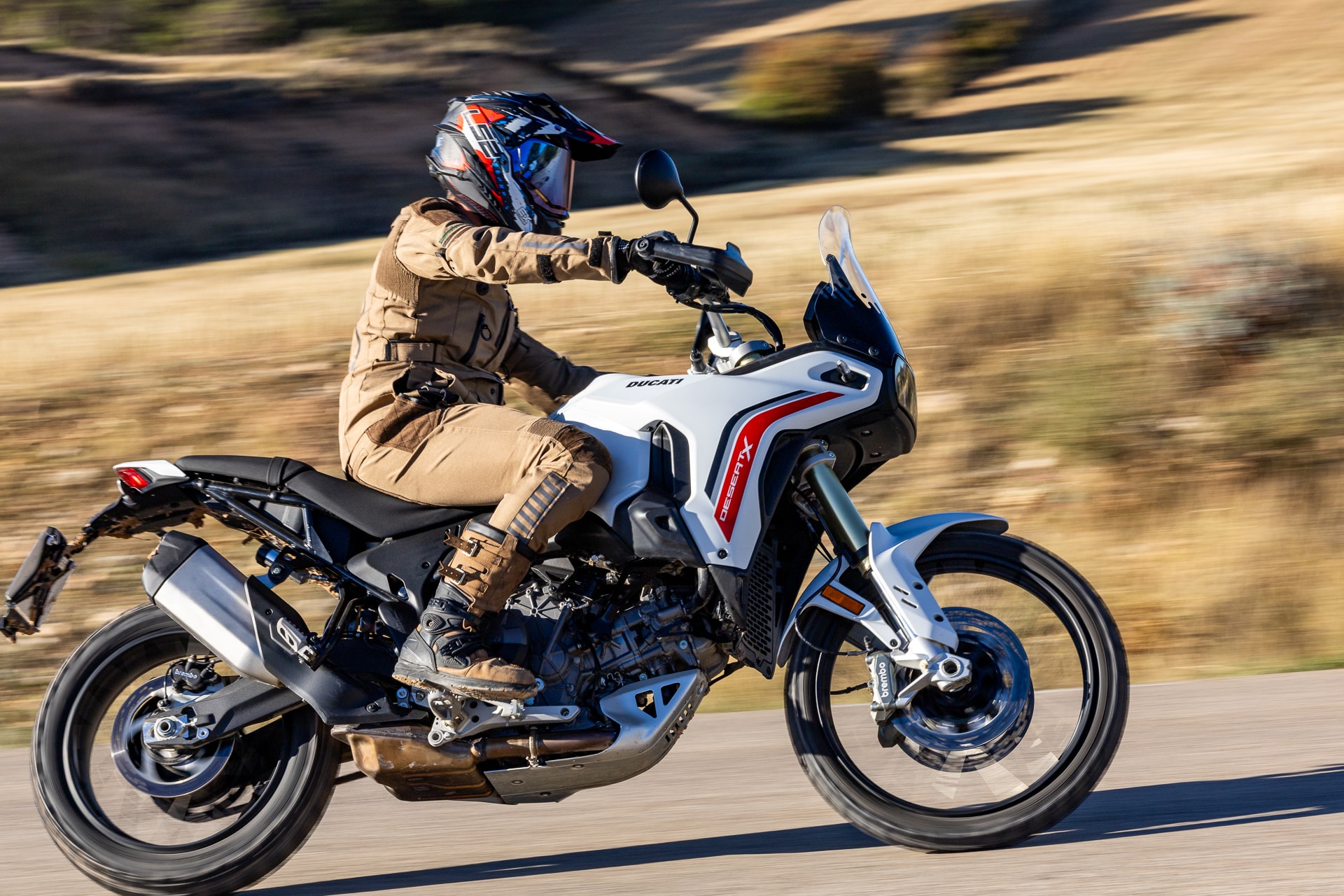
Regarding the electronics, it is very successful, both for the levels and configuration possibilities and for the way in which the systems intervene: they are not abrupt, but progressive. In the field we still like to disconnect everything or leave only the traction control at level 1, but, with so many activation options, all users will surely find their sweet spot.
On the road, with knobby tires, it is enough to adjust the different aids depending on our pace and the condition of the asphalt. They will act exactly as we ask, gently and without even knowing it. In addition, all these adjustments are made quickly and very intuitively from the left pineapple, and are clearly displayed in the different menus.
On the highway, at maintained speeds, there are no excessive vibrations due to the engine speed. We have good aerodynamic protection and the seat is quite comfortable, so it also performs well in this use.