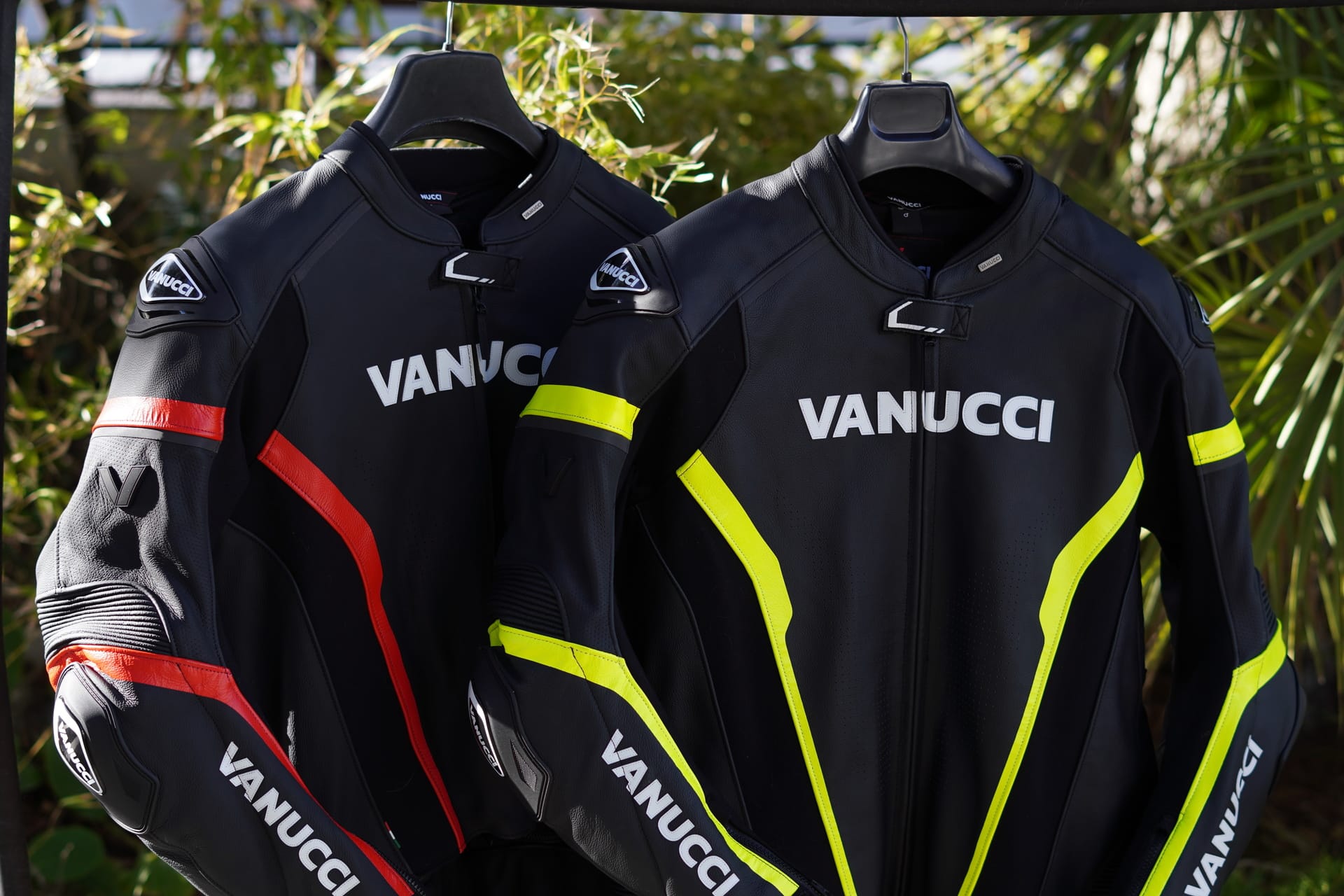
Leather motorcycle suit: one piece vs. two pieces
There are two types of jumpsuit, one-piece or two-piece. The one-piece ones prioritize safety and are intended for sports driving. Being one piece means fewer seams and zippers; This, in turn, leads to a better fit and lower weight. A two-piece jumpsuit has a zipper that joins pants and jacket, so that both garments can be worn independently.

This modularity is key to the versatility necessary when it is intended for all uses: city, routes, short trips and why not, circuit runs and trackdays. It provides a quality that is often not taken into account, such as the possibility of taking off the jacket when going to the bathroom. In one-piece suits, rather than being a nuisance, it is almost better to take off the suit before going to the bathroom to do “major waters”, even more so in the case of non-approved bathrooms…
Manufacturing materials
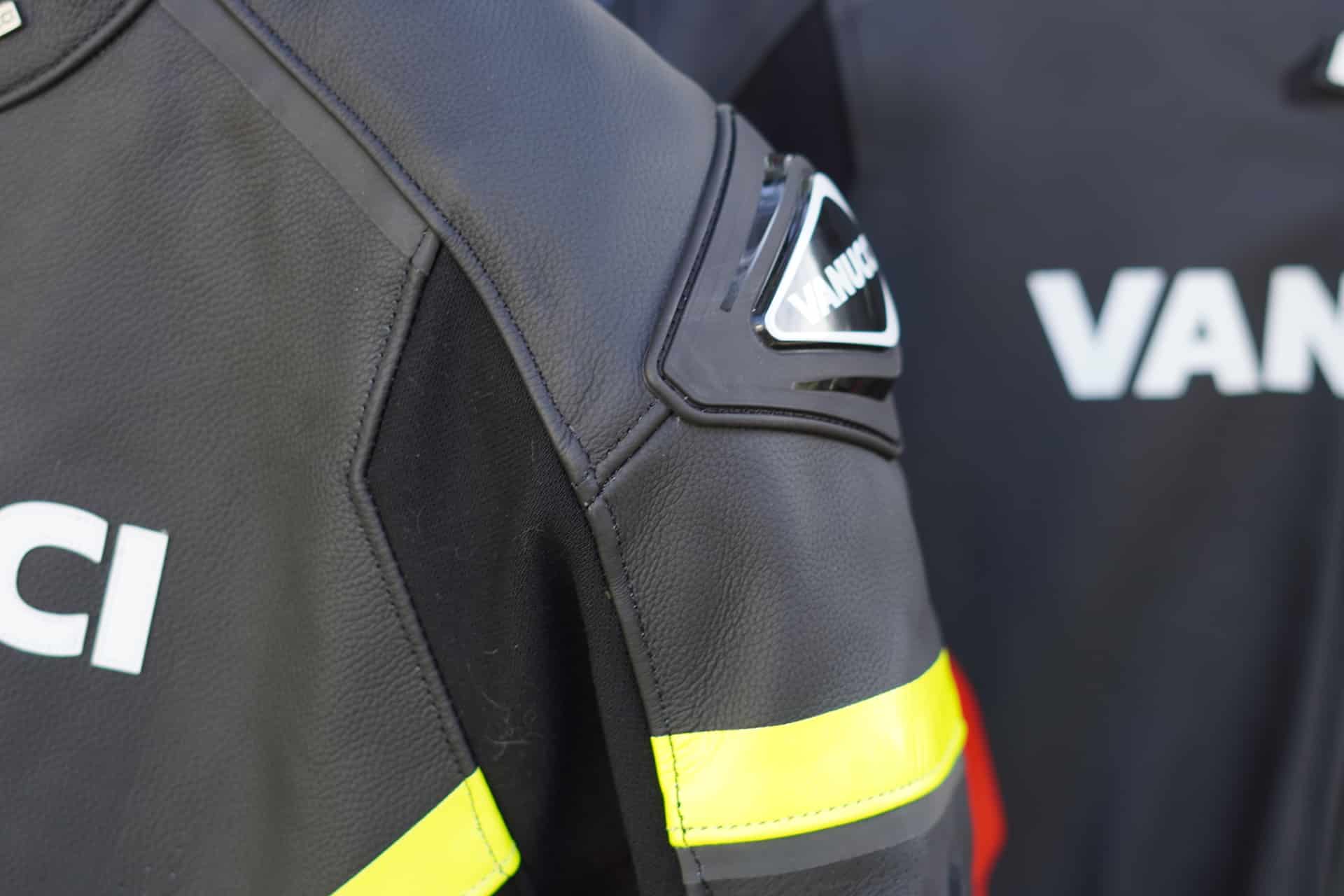
The quintessential material for the exterior of a suit is leather. If you look closely, competitive motorcycle riders have worn leather suits since the beginning of time. The reason is that leather offers the best relationship between abrasion resistance, weight and durability. After all, leather is skin. A leather suit is a second skin that must adapt to your contour to protect your own skin.
There are two types of skin: cow and kangaroo. Cow meat is the most widespread due to its performance/price ratio. The kangaroo one is somewhat thinner and lighter for the same protection capacity, but its price is much more expensive. There are very advanced synthetic materials, such as Cordura, suitable for tourism clothing, but when it comes to guaranteeing the best protection features, leather has no rival.
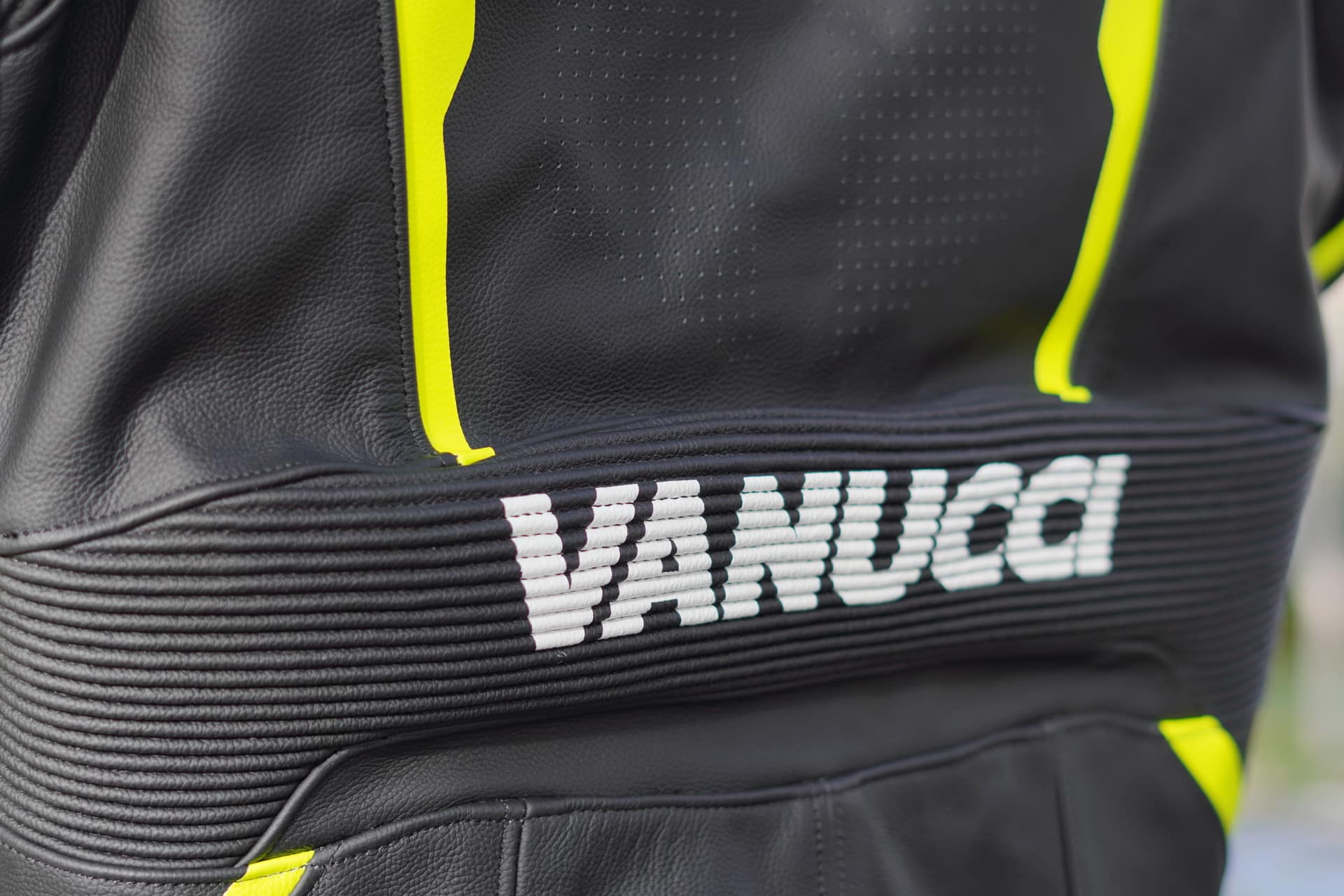
The suits have reinforcements in key areas, with materials such as Kevlar in the most exposed areas, along with Stretch in the joints so as not to reduce the protection capacity in the most exposed areas.
Protections
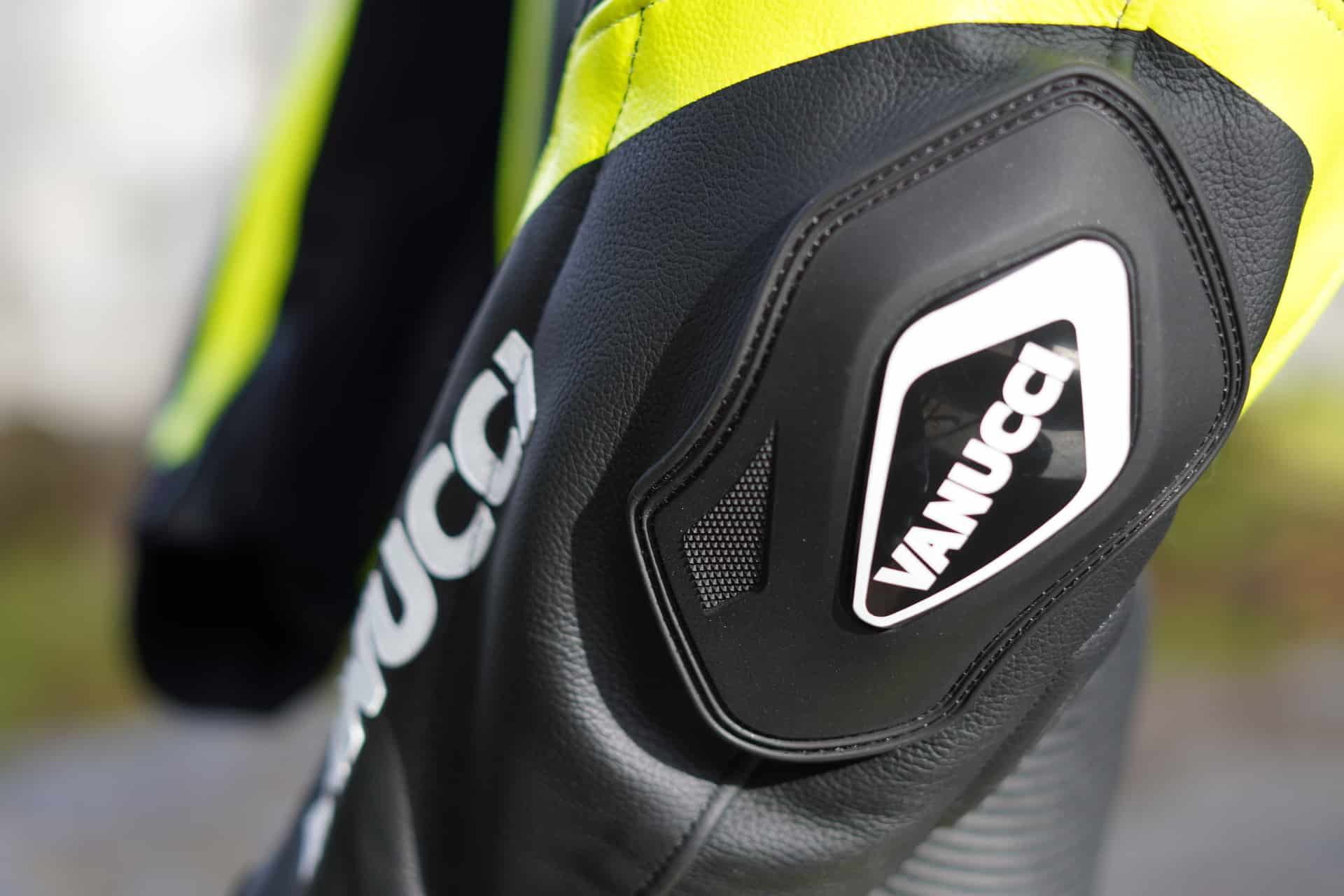
Maybe not years ago, but it can be said that, currently, all leather suits have built-in level 1 or 2 protections (EN 17092 regulations) on the elbows, shoulders, hips and knees, apart from the sliders. If the suit does not include a back protector, you will need to bring accommodation to install one.
Just because it doesn’t come with it doesn’t mean it’s not important, quite the opposite: you can choose to assemble one model or another, depending on your preferences. There are those prepared to fit into the intended accommodation, with more or less thickness, but there are also those that cover more space in the space between the cervical and lumbar, becoming firm to your body by means of a belt.
A chest protector is also highly recommended, which is installed before closing the zipper of the suit.
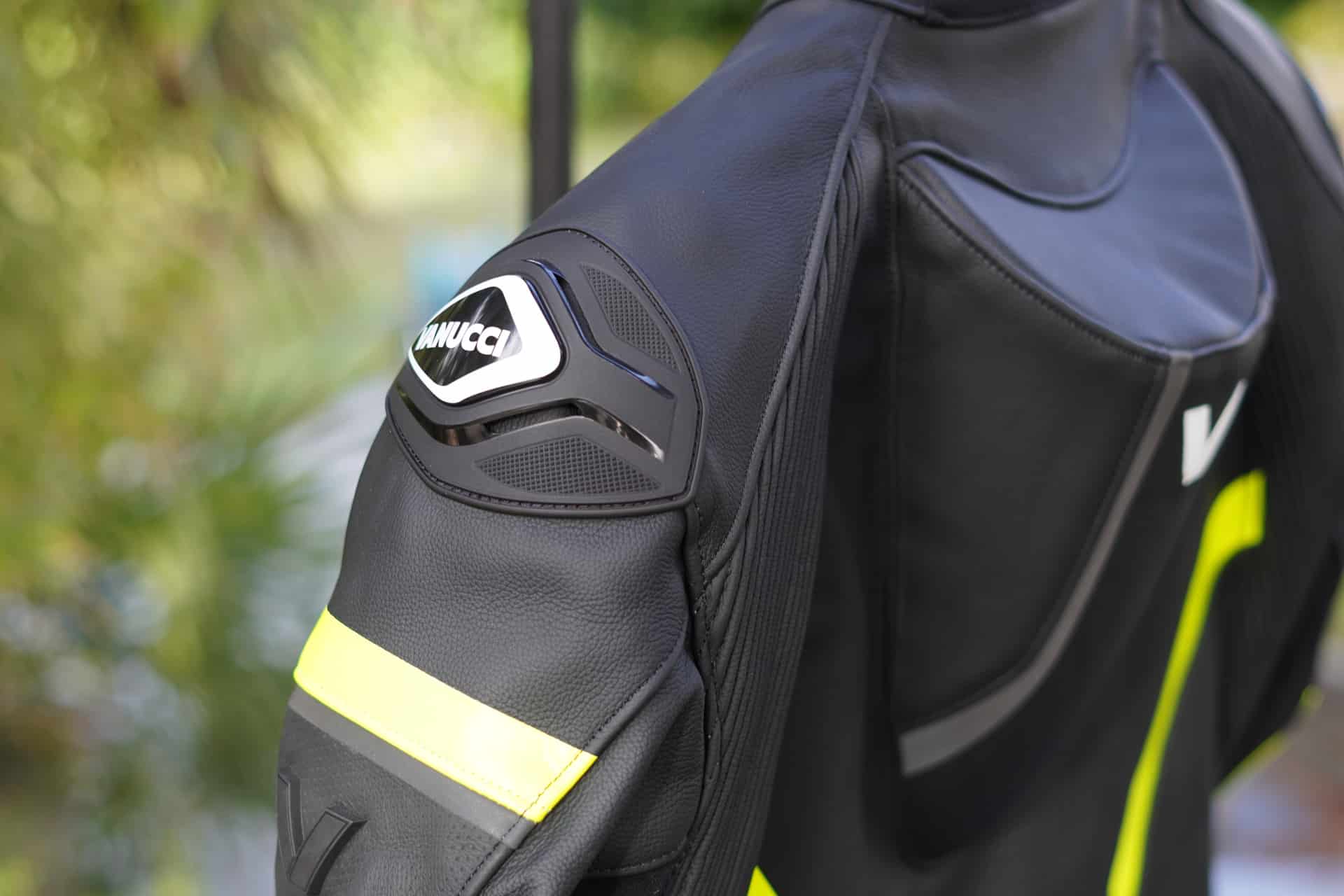
In a higher section are the suits that include an airbag system, mandatory in the MotoGP World Championship, which by means of gyroscopes and detectors detect when an impact with the ground is going to occur, inflating before it occurs. Once activated, it takes a while to deflate and will have to be activated again before using it again.
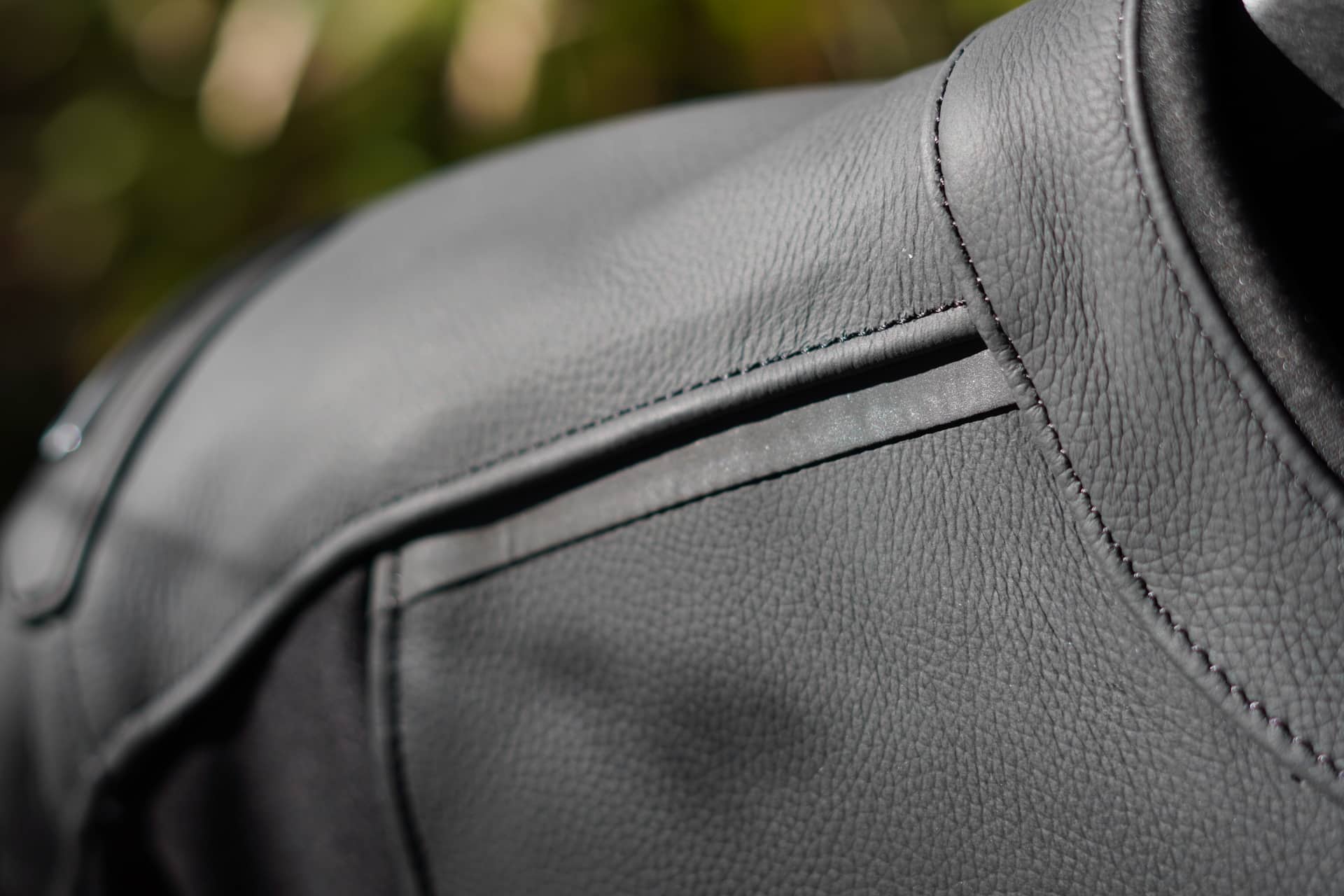
Stitching and reinforcements in critical areas
Where there are protections (critical areas) there must also be reinforcements in the surrounding areas in the form of double (or triple) seams. The same goes for the internal seams, which must be perfectly finished so that they do not compromise comfort while driving or protection in the event of an accident.
It is advisable that a suit fits well so that it does not move in the event of an accident, but it is inevitable that at certain points there will be some displacement that, depending on the fall, can cause friction and/or burns. If a poorly finished internal seam sticks out, it can do a lot of damage.
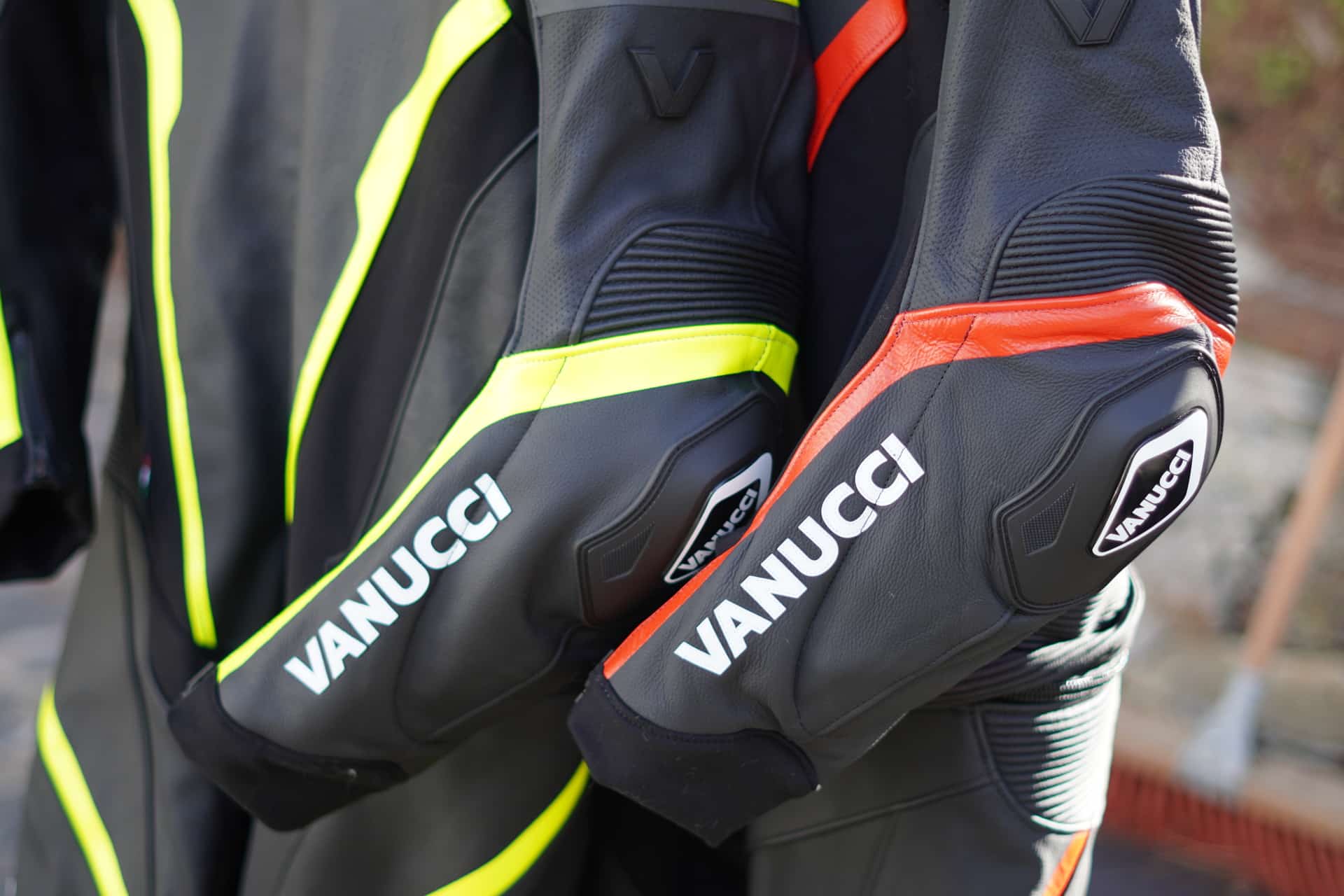
Stretch zones and flex panels
For a jumpsuit to fit our contour, it must have elastic fabric in the less exposed areas (inner arms and legs), as well as flexion panels – the aforementioned stretch – in the areas of the joints and lower back. It is important to try on a jumpsuit before purchasing it and check that everything fits in place and performs its function.
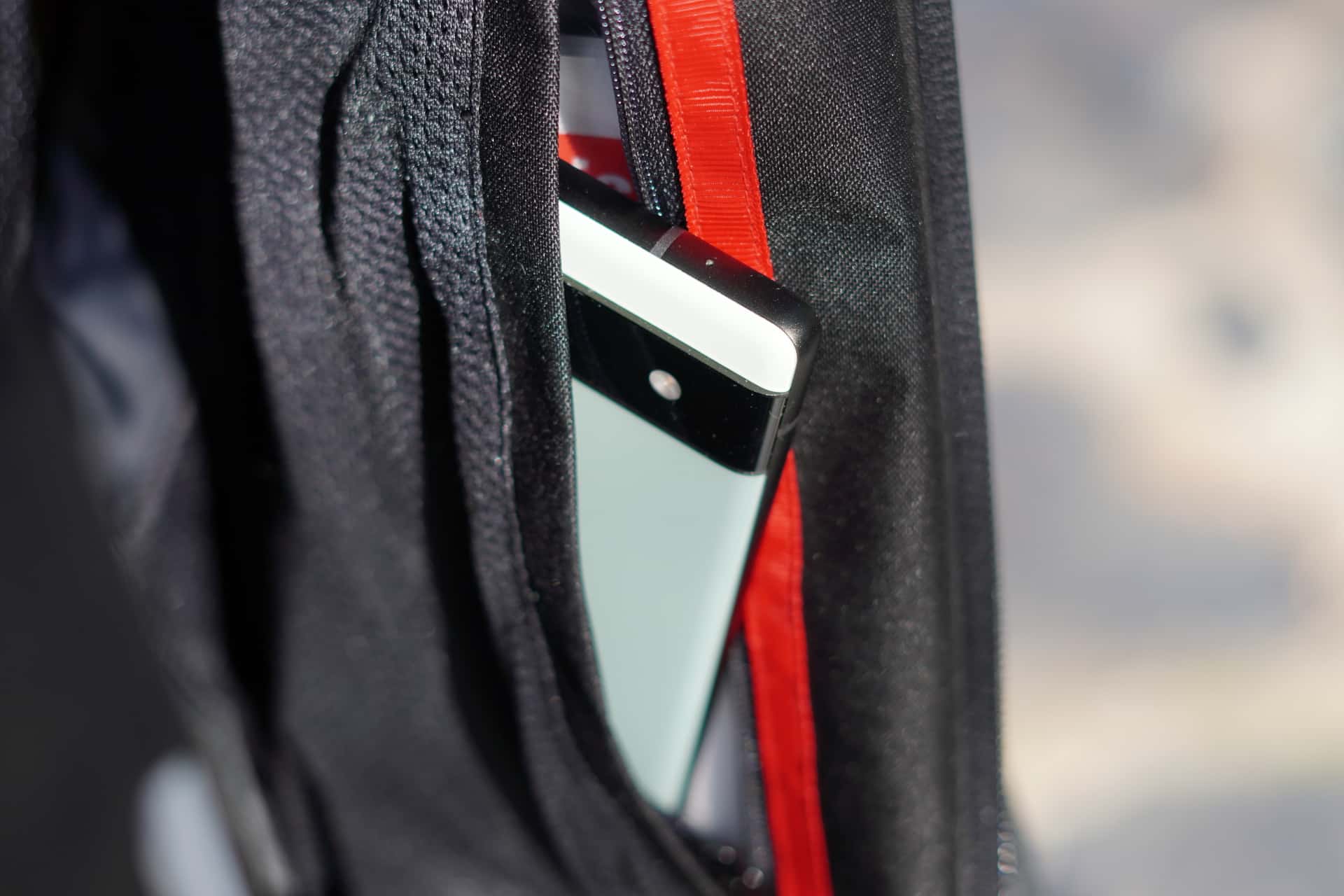
Settings and ergonomics
It is important that a suit fits snugly to prevent, like a helmet, looseness and shifting in the event of an accident. That is why it is essential that it has adjustments, whether through Velcro, zippers or other systems, at the waist, wrists and ankles. If you feel comfortable standing upright, it will probably be too big for you. It is necessary to notice some tension, since the mode is designed to be comfortable on the bike.
Of course, a one-piece is not the same as a two-piece; In both cases, you will have to take into account what the position on the bike will be, or better yet, try it on on the bike to be sure that the fit is appropriate.
Ventilation and thermal comfort
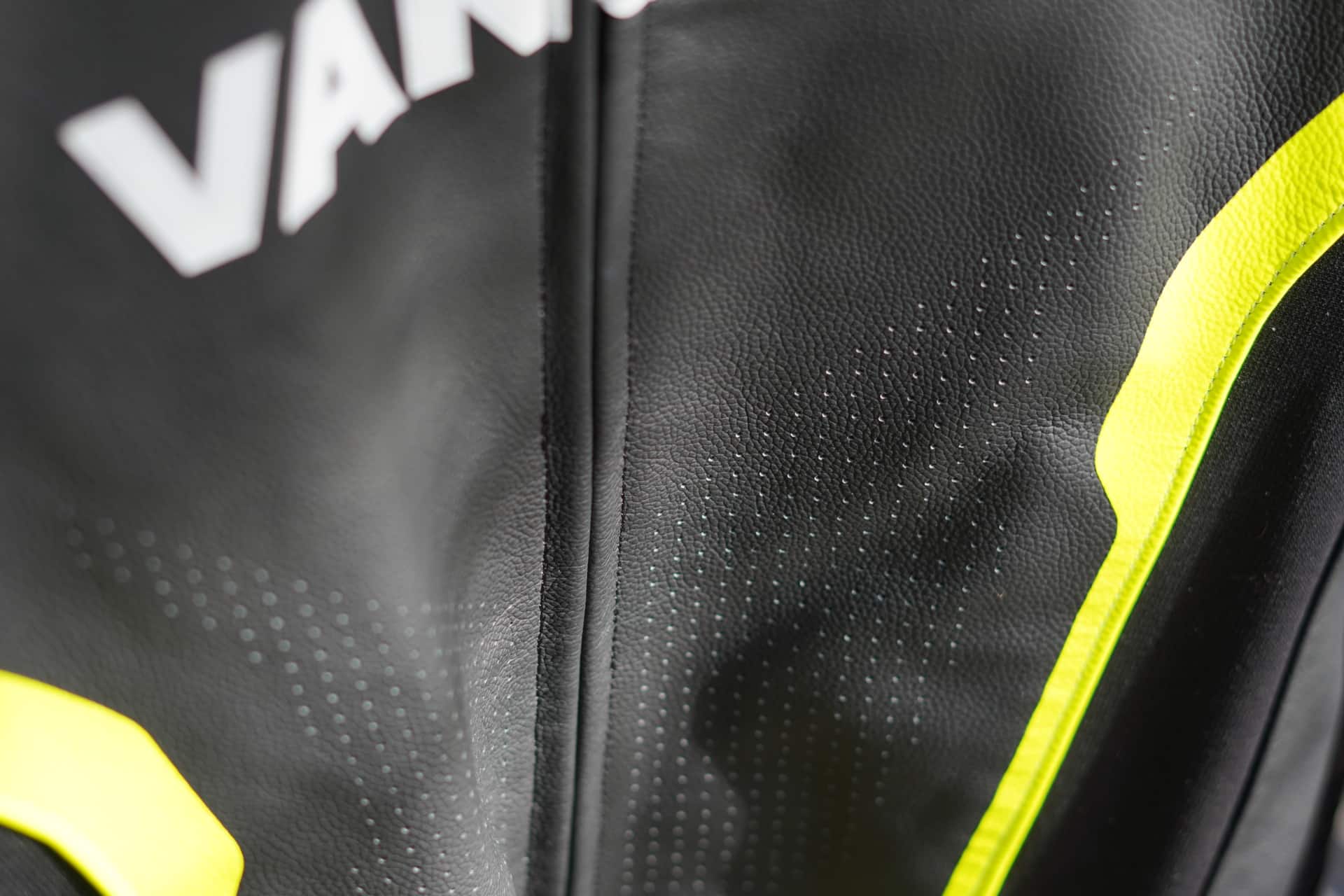
Protection is as important as thermal comfort. There are winter, mid-season and summer suits, depending on the perforations or microperforations in the leather. You have to take into account what you are going to use it for and at what temperatures. A jumpsuit is hot in summer. If it is not perforated, you will sweat endlessly. On the contrary, driving in winter with a perforated jumpsuit is a Chinese torture.
Fortunately, there are intermediate solutions. Microperforations, like those on the Vanucci VSM4 (one-piece) and VSM5 (two-piece) jumpsuit, from the Louis distributor and accompanying this article, allow ventilation in summer. It is highly recommended to wear a lycra undersuit in hot weather to make it easier to put on and take off. It facilitates the operation and prevents the internal lining of the suit from becoming sweaty.
In winter, it is advisable to use thermal technical clothing, thin in thickness, but that protects from the cold, since the elastic panels and microperforations do not act as windbreakers that leather does.
Zippers, joints and structural details
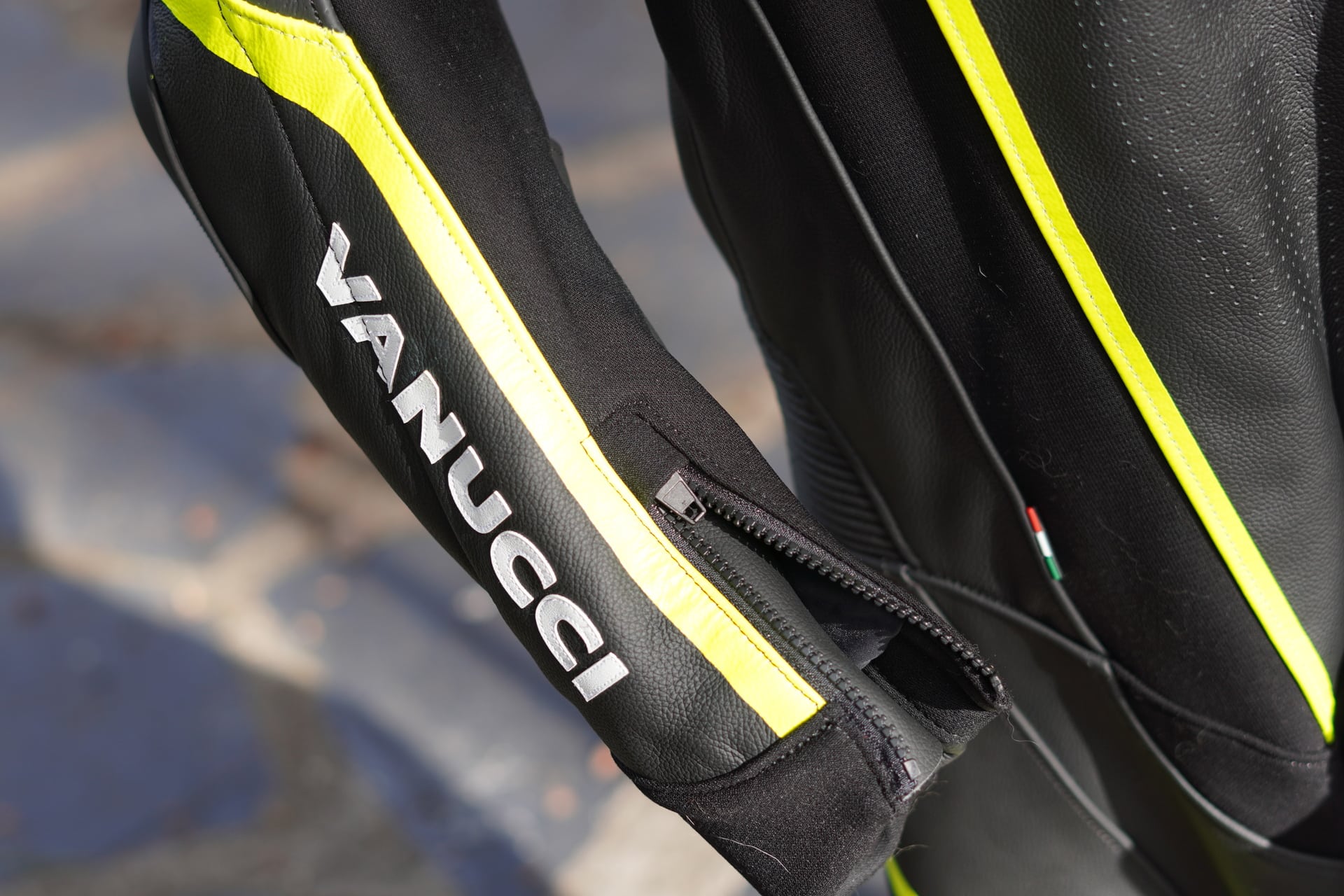
We have talked about the importance of adjustment systems. Just as important as those are the zippers, Velcro or loops that act as structural elements. In a two-piece it is very important that the zipper that connects pants and jacket is well sized, but also that its operation is smooth and does not offer resistance.
Not long ago Fabio Quartararo’s zipper came loose in the middle of the GP, opening his suit and causing a dangerous situation, so pay attention to the closing security systems.
Recommendation according to the type of user
If you’ve come this far, you’re probably already clear about what type of jumpsuit you need. As with motorcycles, there are people who use an RR or a maxitrail to get around the city and they are delighted. The same thing happens with overalls: you can buy whatever you want, it’s about being protected. But we are talking about an expensive acquisition that will last a long time, so it is recommended that it adjust to your needs.
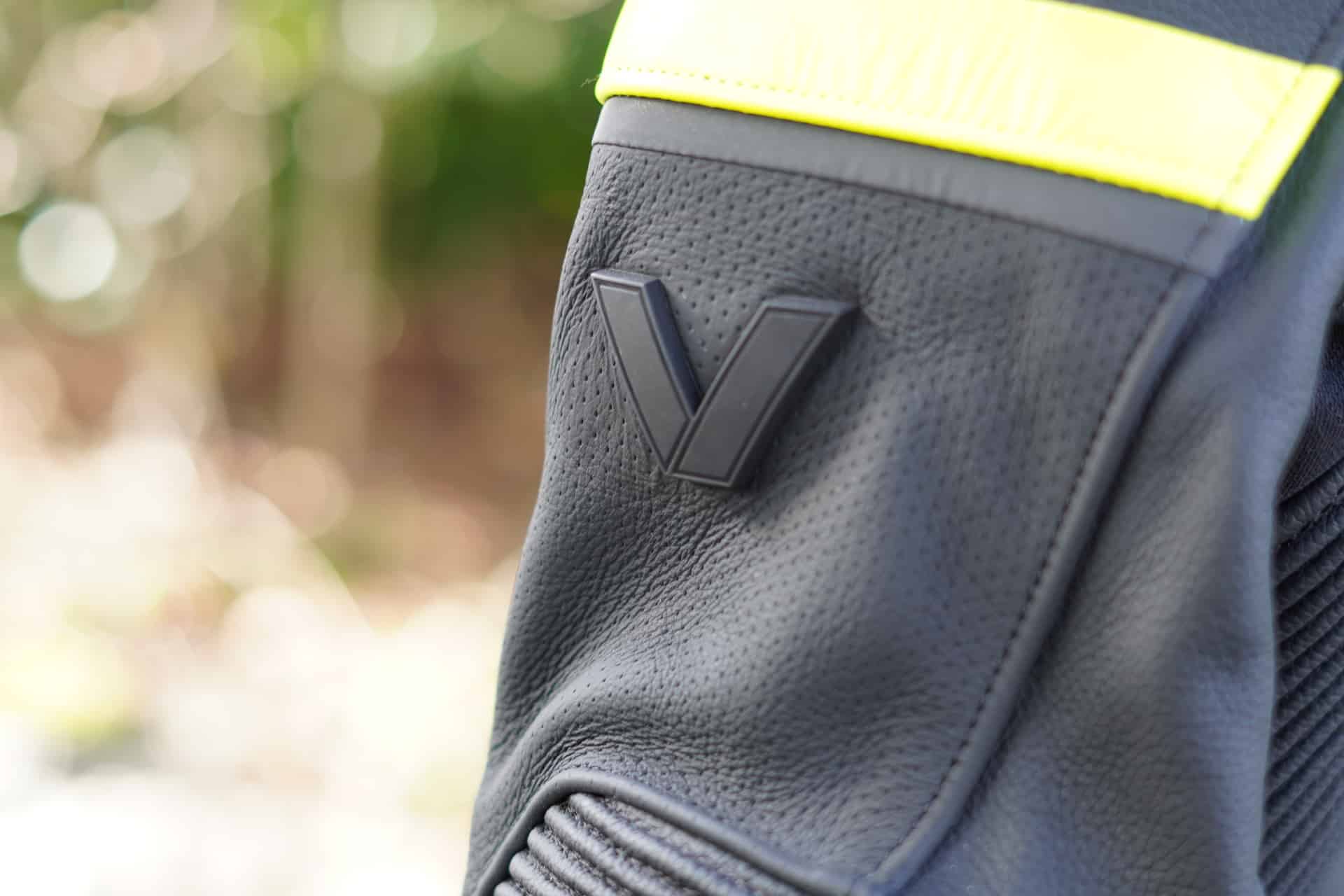
As a summary, if you prioritize performance and aerodynamics because you usually frequent the circuits, a one-piece is the most suitable for you. Since we don’t usually ride on circuits in winter, we can specify that the best thing for burns is a perforated or micro-perforated one-piece, like the Vanucci VSM4.
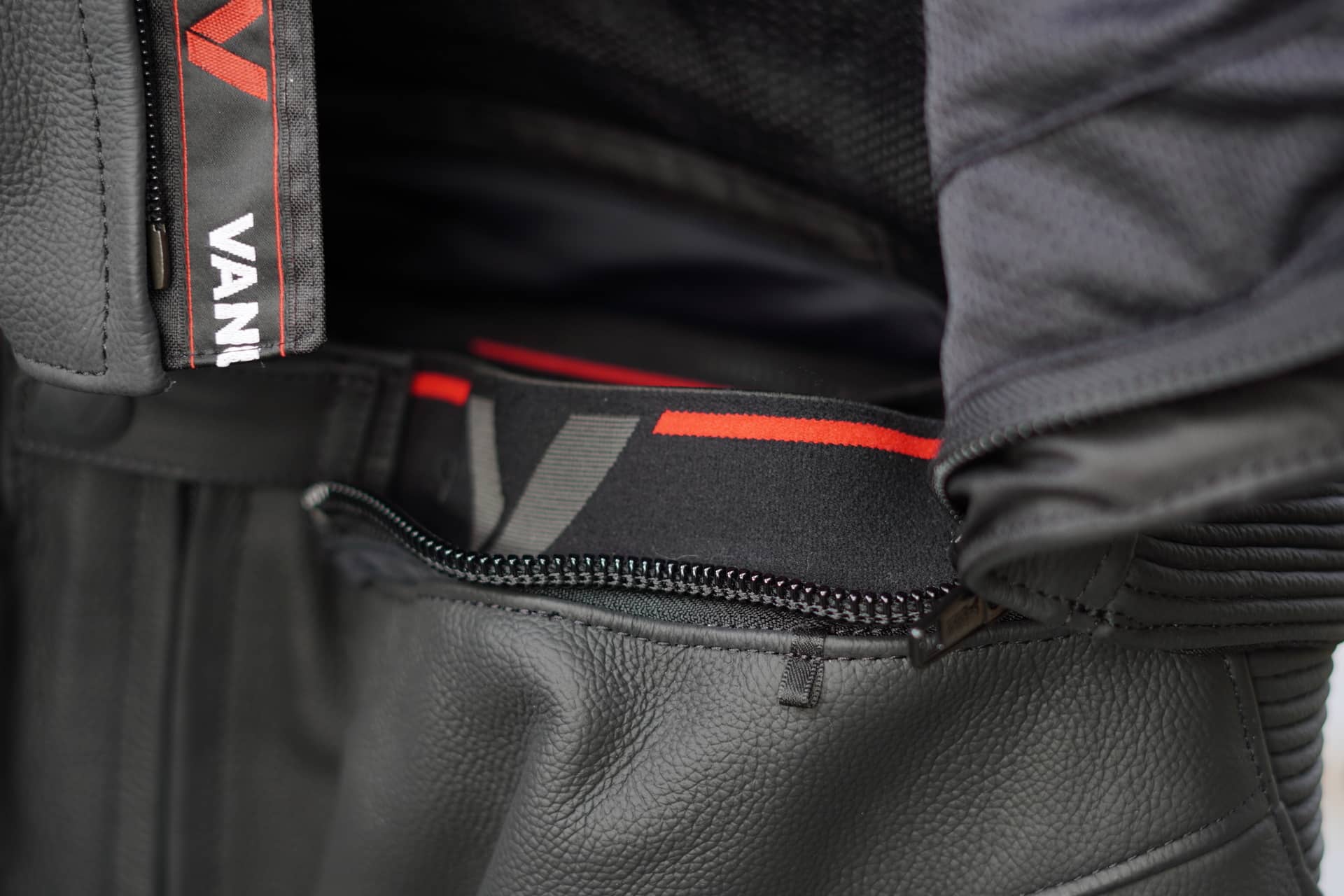
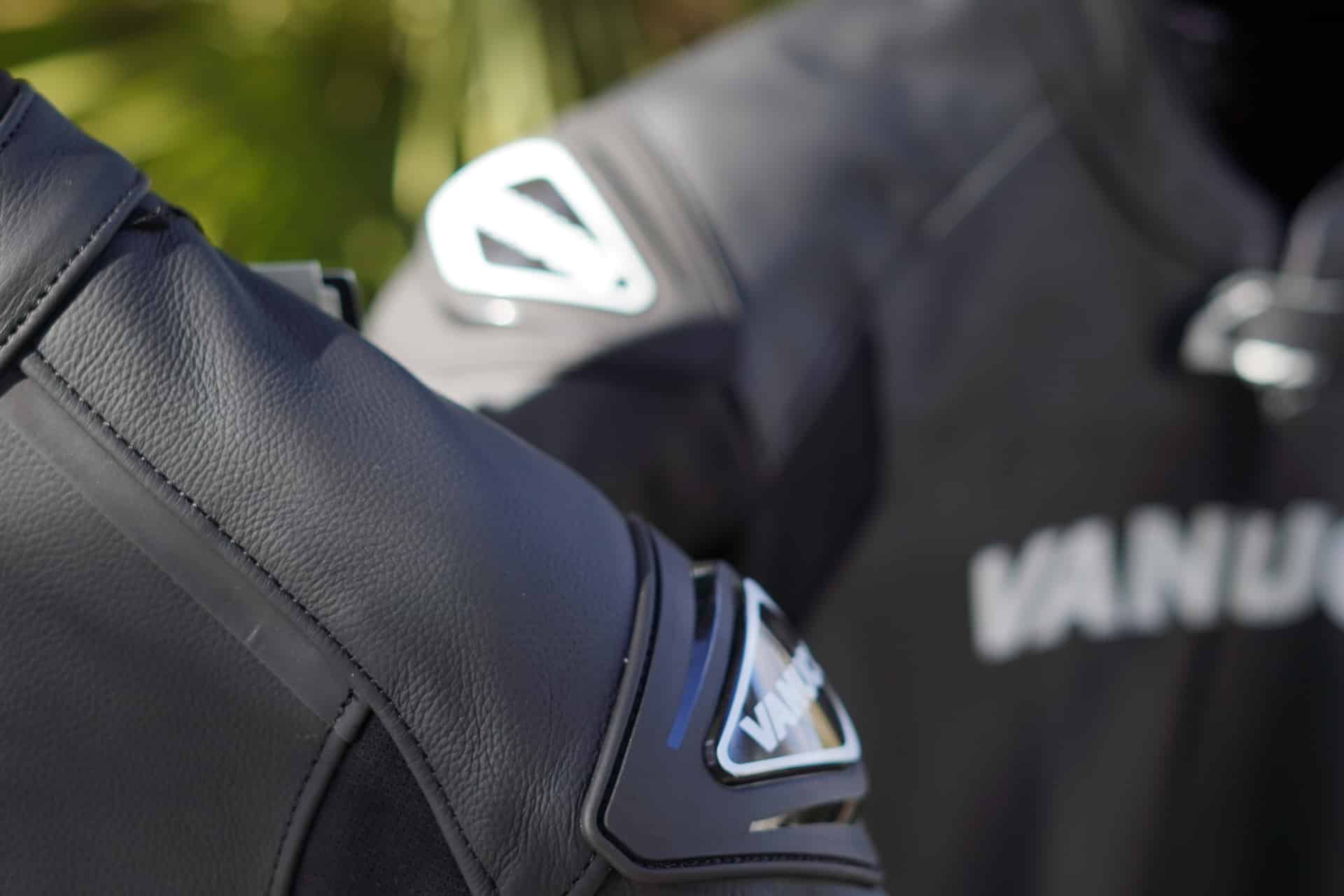
If your relationship with the motorcycle is more general and includes trips, routes and from time to time you enter the circuit to take a course or to brush off the cobwebs, a good two-piece like the micro-perforated Vanucci VSM5 that you see in these lines will do you a great service. In either case, I recommend that you include back and chest protectors, as well as a lycra undersuit in summer and technical underwear in winter.
Sizes and special care
We do not want to forget those that do not fit into the normal sizes, either due to contour or the size of the extremities. Since a leather jumpsuit must have a precise fit, if you don’t feel comfortable in the options on the market, there are many options to have a custom jumpsuit made.
The base prices are not as expensive as the ratio between a ready-to-wear suit and a tailored suit, although as in everything, there is no ceiling above. The important thing, in any case, is to be well protected.
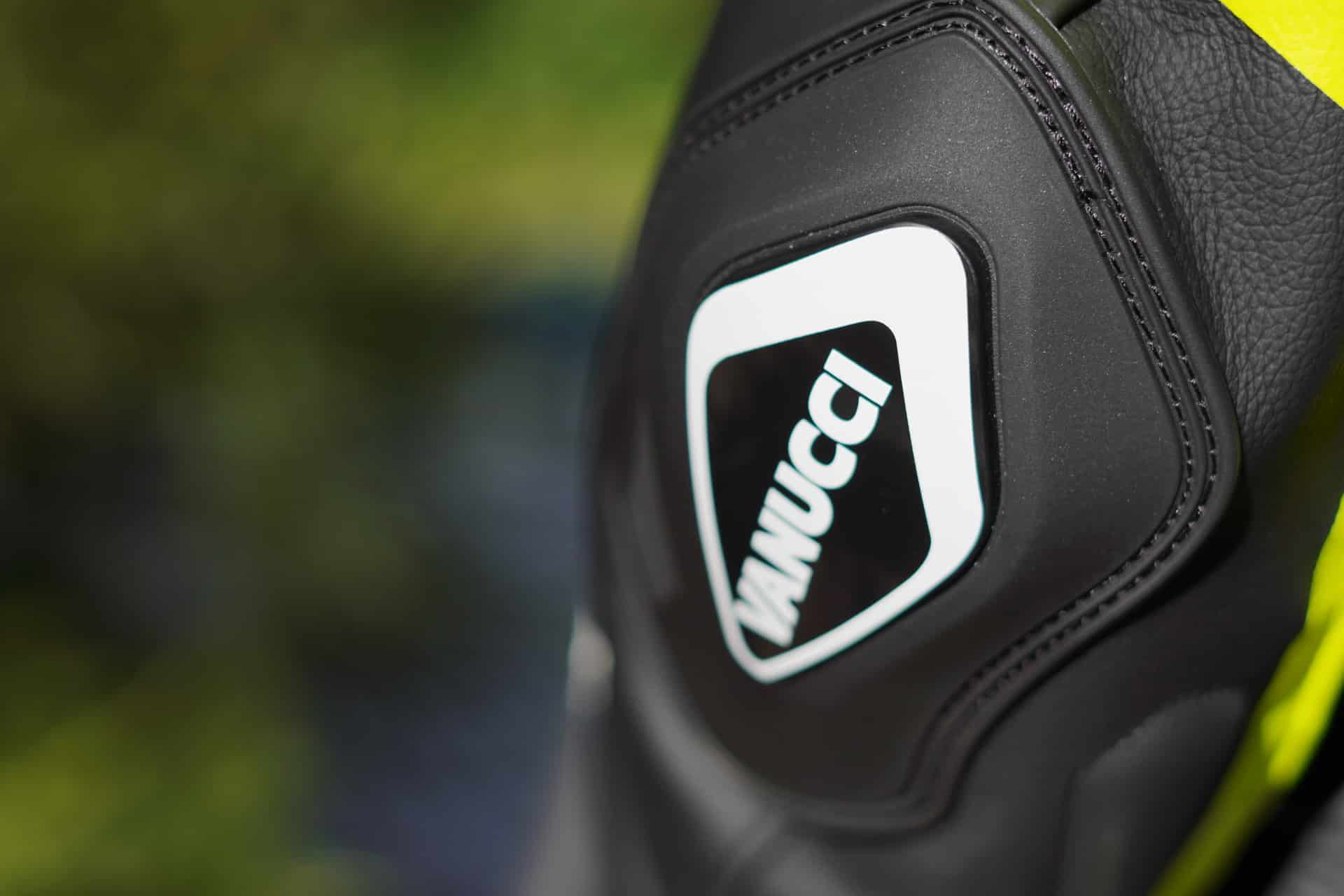
Finally, a well-maintained leather suit should last for many years – as long as you do not change size. Care is basic: mosquitoes and dirt are removed with a soft, damp cloth. There are those who apply moisturizing cream after each use; Once a year would be enough.
If the lining is not removable, it can be washed with a cloth soaked in water with a neutral soap, rinsed and dried. If you wear lycra underwear and/or technical underwear, you will not only get in (and out) of the suit easier, but you will prevent the inside from getting dirty.