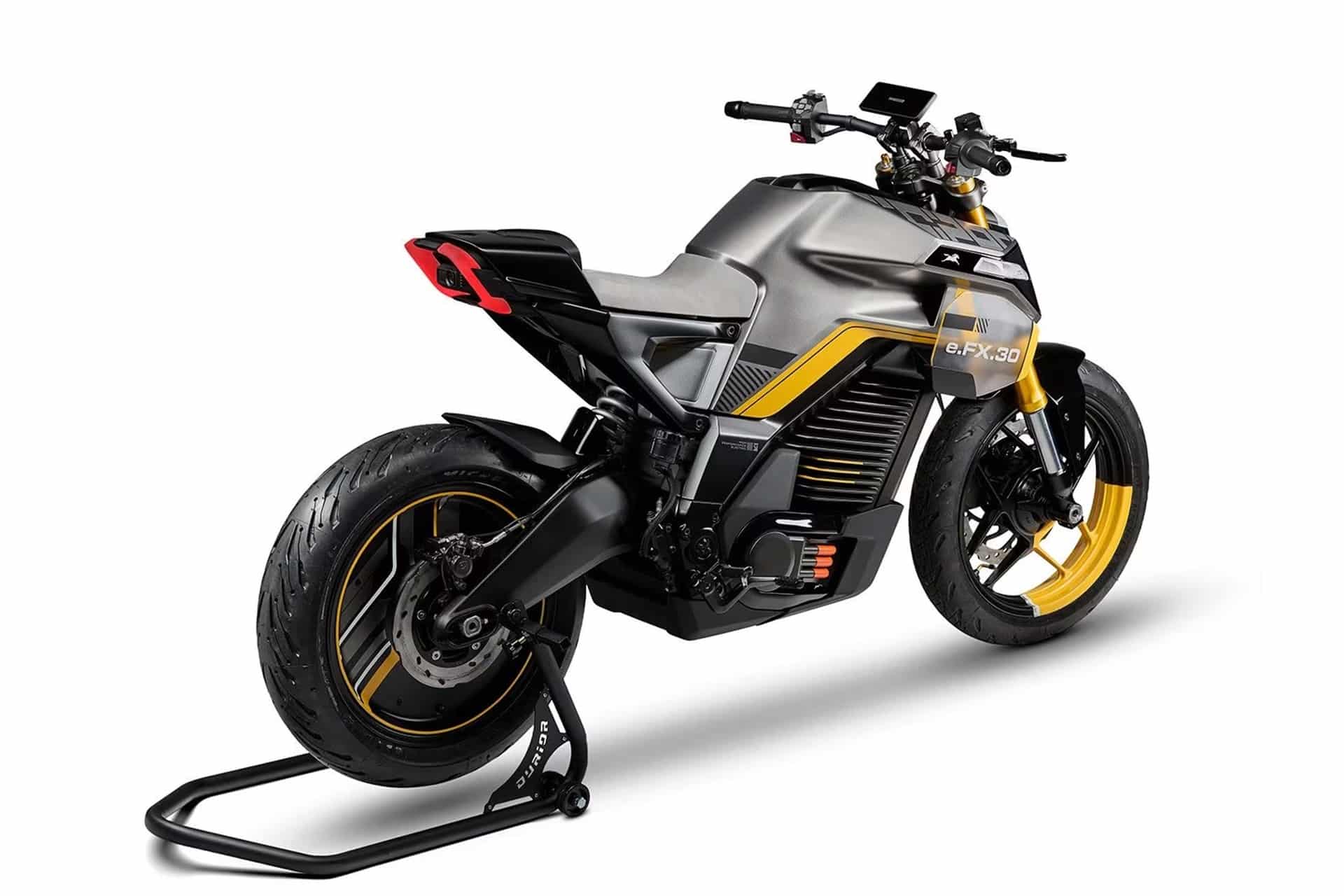
The R&D department of TVS Motor is working at full capacity in recent times. One of their latest innovations is this eFX 30 concept presented last November on the occasion of the Milan show. Along with it, two other futuristic prototypes were also unveiled:
- The Tangent RR Concept: A super sports car with a radical look, with a composite monocoque chassis and an orientation clearly inspired by competition.
- The RTR HyprStunt Concept An urban naked, fun and agile, designed for both daily use and stunt fans.

We spoke to you about the latter just a few days ago when we were aware of the recent patent registration regarding a possible series model. Everything indicates that the brand could already be working on its final street version, probably with the intention of replacing the current Apache RTR 310.
TVS eFX 30: What we know
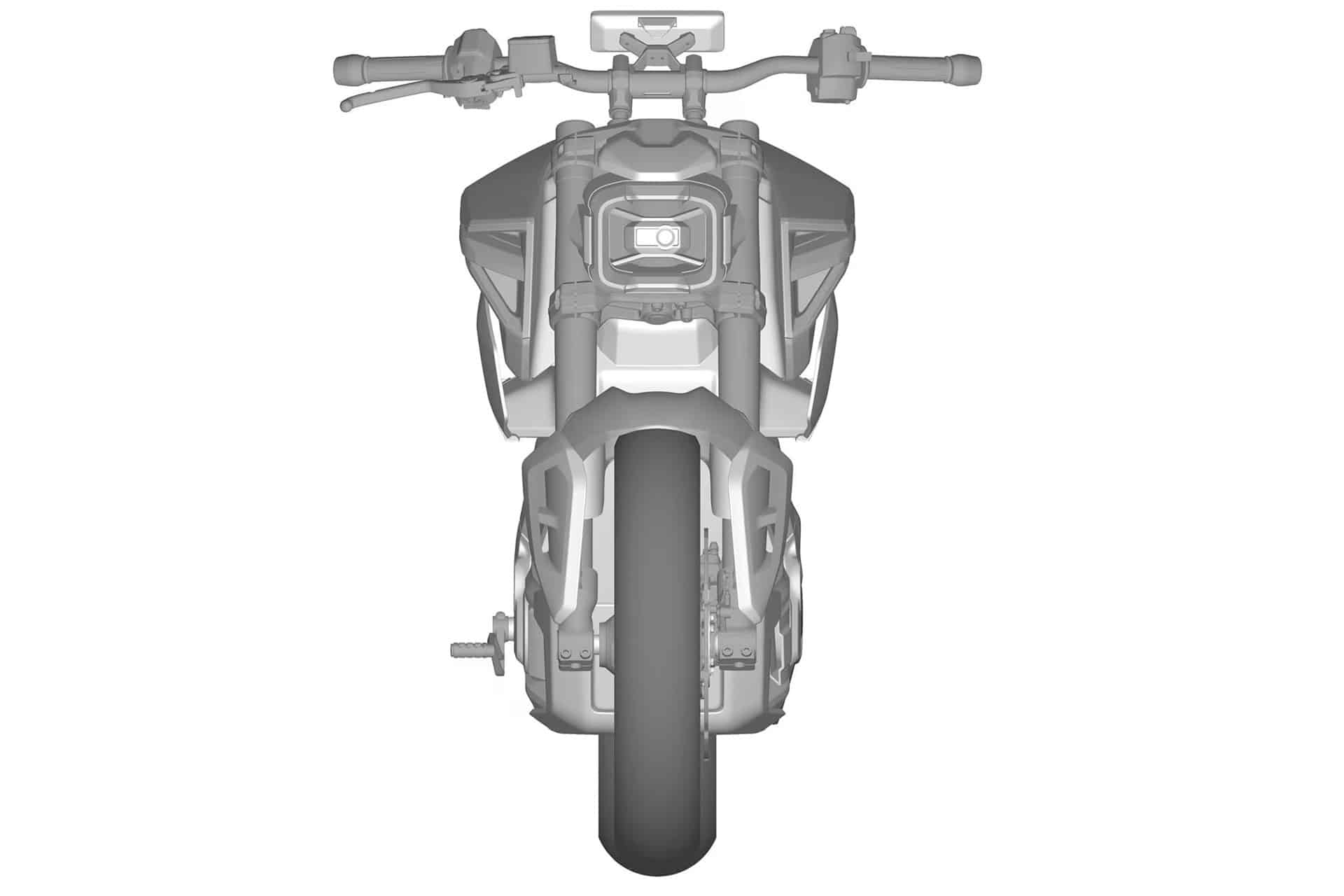
Something similar happens with this eFX 30 concept that now takes center stage again after the leak of some of the images presented by TVS before the patent registry, realizing what they would be up to within the plug-in segment. Although the project seems to be in an initial phase, given that the CAD designs do not have basic elements for driving and a mandatory homologation (footpegs, turn signals, mirrors, etc.), we can now get an idea of what could be to come.
What is seen, and which is more than likely to end up being part of the final design, are key elements characteristic of a model of this type, such as:
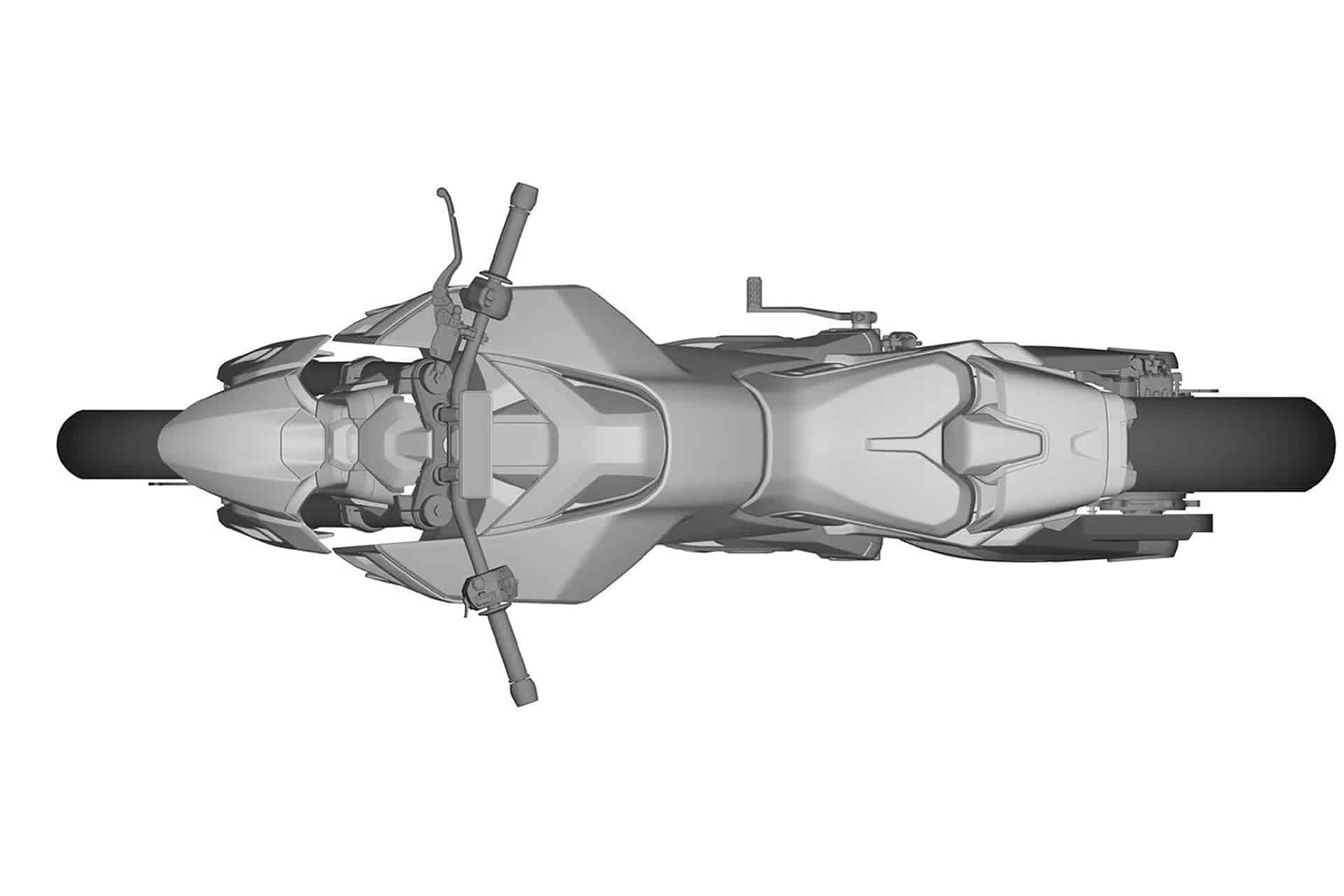
- disc brakes
- inverted fork
- Double beam chassis
- Rear lenticular rim
- Battery pack installed in central position
- Belt final drive
- Rear swingarm in cast aluminum, etc.
If it becomes a series model, the TVS eFX 30 is very likely to end up incorporating complete equipment at the level of its range sisters and foreseeably its possible direct competition: Full-LED lighting, TFT color screen, front radar, driving modes or regenerative braking, among others.
It is important to note that TVS has all the information collected at the time by Norton through the ZEN (Zero Emission Norton) project. Then, together with six other partners (Delta Cosworth, HiSpeed, Formaplex Technologies, M&I Materials, INDRA and Warwick Engineering Group (WMG) of the University of Warwick), they sought to produce a supply chain of electric motorcycles based in the United Kingdom, in addition to strongly promoting employment in the sector.
Ultimately, as the British company stated: “Create an electric motorcycle that combines Norton design DNA with sporty performance, long range and low weight.” Perhaps that moment has arrived for the future development of the TVS eFX 30 and it is more than evident that the future model will follow a good part of the precepts included in the decalogue of the aforementioned ZEN project, although we seriously doubt that, if it is produced in series, it will end up being manufactured in the United Kingdom.