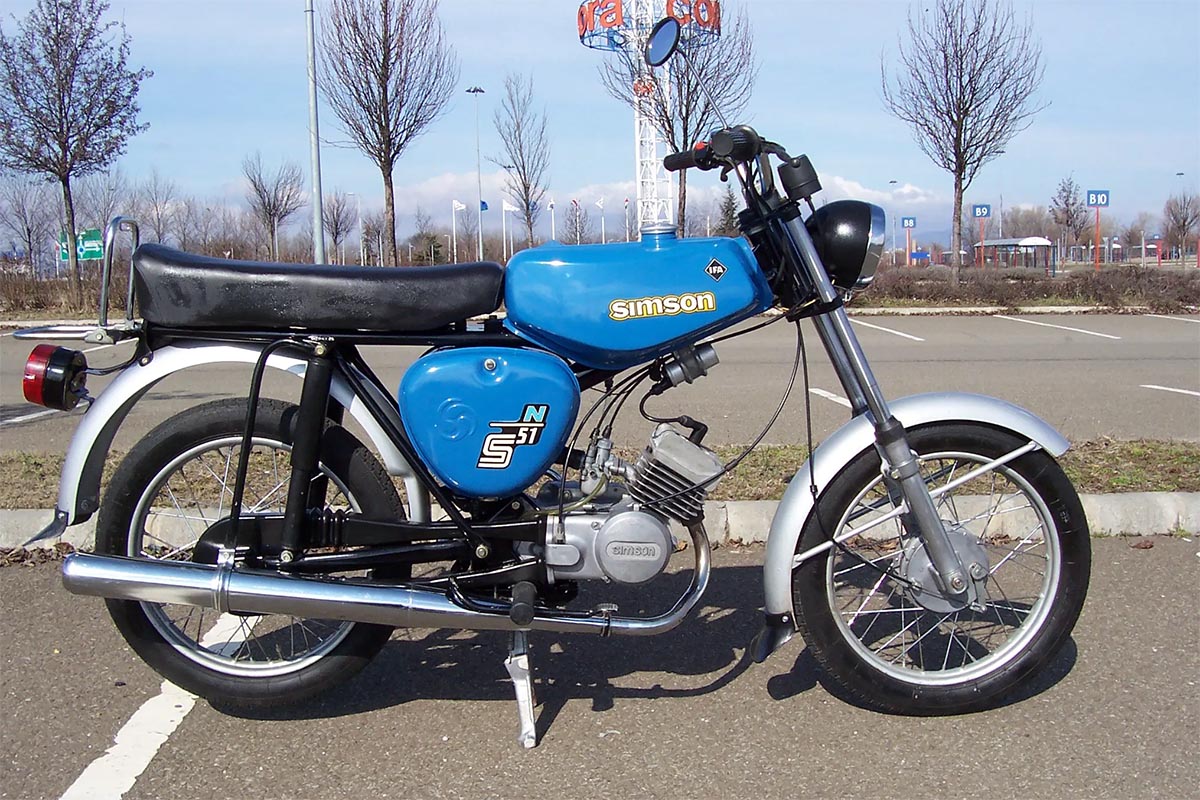
In Germany there are mopeds from more than forty years ago, with drum brakes and a chassis that no one would accept on a new motorcycle today, which can legally travel at 60 km/h. They are the Simson Schwalbe and S51, manufactured in the former GDR, which retain that privilege thanks to the transitional provisions that were maintained after reunification. Meanwhile, a 50 cc scooter fresh from the factory, with disc brakes, good tires and LED lighting, cannot pass 45 km/h by law.
This contradiction is the origin of a proposal that was born in Saxony and that has taken an important step. On November 20, the Bundesrat, the chamber that represents the 16 German states, approved the resolution presented by Saxony and supported by Thuringia that asks the federal government to promote a review of European regulations in Brussels.
Of course, it is important to note that no law has been approved and nothing changes on the roads for now. What we have before us is a political request that, if Berlin endorses it, will open a debate in the European Union that could last a long time.
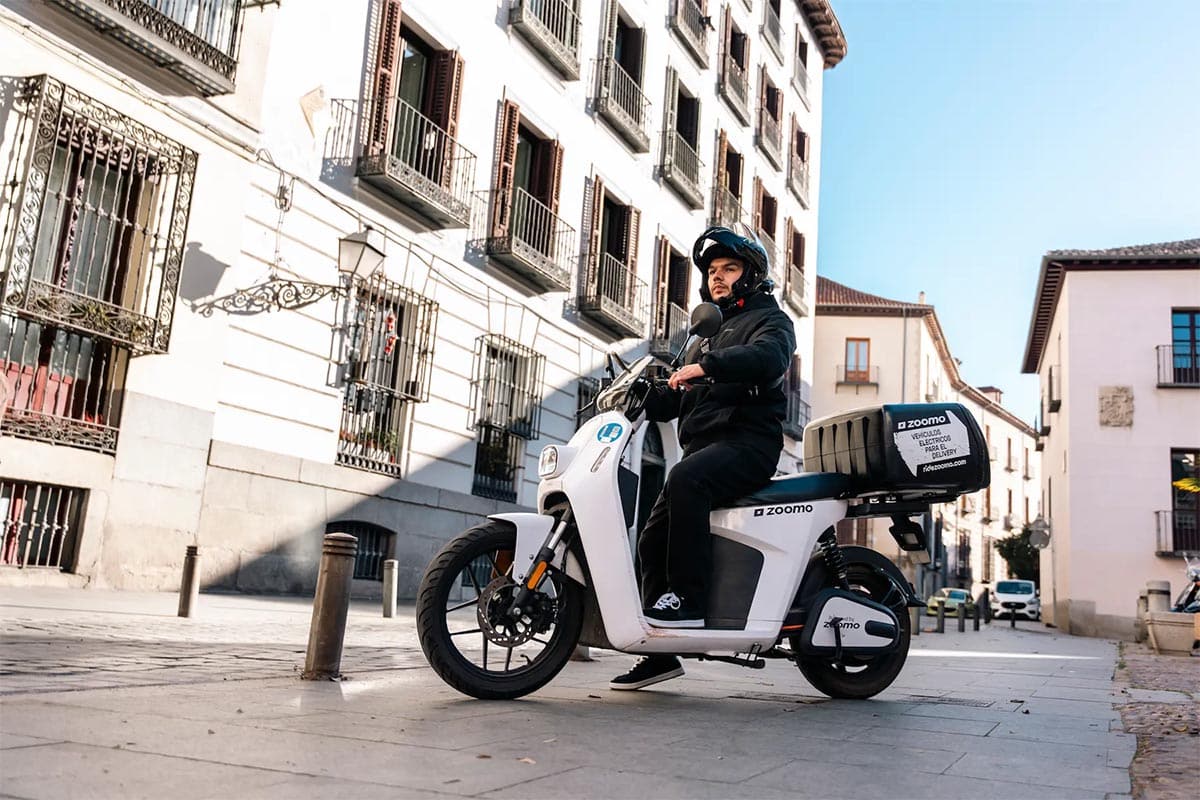
The entire change would revolve around EU Regulation 168/2013 and the proposal would affect two-wheeled mopeds (L1e-B), that is, the traditional 50 cc and their electric equivalents; three-wheeled mopeds (L2e), and light quadricycles (L6e), where there are microcars.
The idea is that manufacturers can approve these vehicles for 60 km/h without having to move to another category. On paper it seems like a simple change of figure, but it is not.
Nor would it be an automatic transmission for those who already have a moped. Each vehicle is approved with specific characteristics, so if the standard changes, adapting those already registered would depend on what the new regulation says, on each model and on the procedures that are established. We would not be, at least for now, in a process that would consist of removing some stops or changing a part and leaving the workshop already at 60 km/h.
Do faster mopeds equal safer mopeds?
The most striking argument of the proposal is precisely security. In the city, and even more so with so many streets limited to 30 km/h, the maximum speed of a moped hardly matters. On the road it is a different story: going 45 km/h with cars traveling at 90 causes hasty overtaking and, too often, without respecting the lateral distance. Anyone who has taken a 50 on a highway knows what we are talking about.
Furthermore, a moped capable of going 60 would be much more useful outside of cities, where distances to school or work are greater and public transportation is not always an option.
Now, the German document itself admits that it is not proven that the 45 km/h limit has a relationship with accident rates, nor that raising it will reduce it. And physics is not forgiving: at 60 km/h, a vehicle has around 78% more kinetic energy than at 45. Less speed difference with traffic, yes, but also stronger hits when something goes wrong. That is why the key would not only be in the limit, but in what is required of these vehicles to be approved at that speed, starting with the brakes.
If the proposal goes ahead, the moped market, which has been losing ground for years, would have an argument to become interesting again. And not only for the 50 cc gasoline ones, but also for small electric scooters and microcars, which with 15 km/h more would make a lot of sense outside the city. There is a long way to go, but after many years of being penalized by legislation, perhaps mopeds can have a new opportunity.