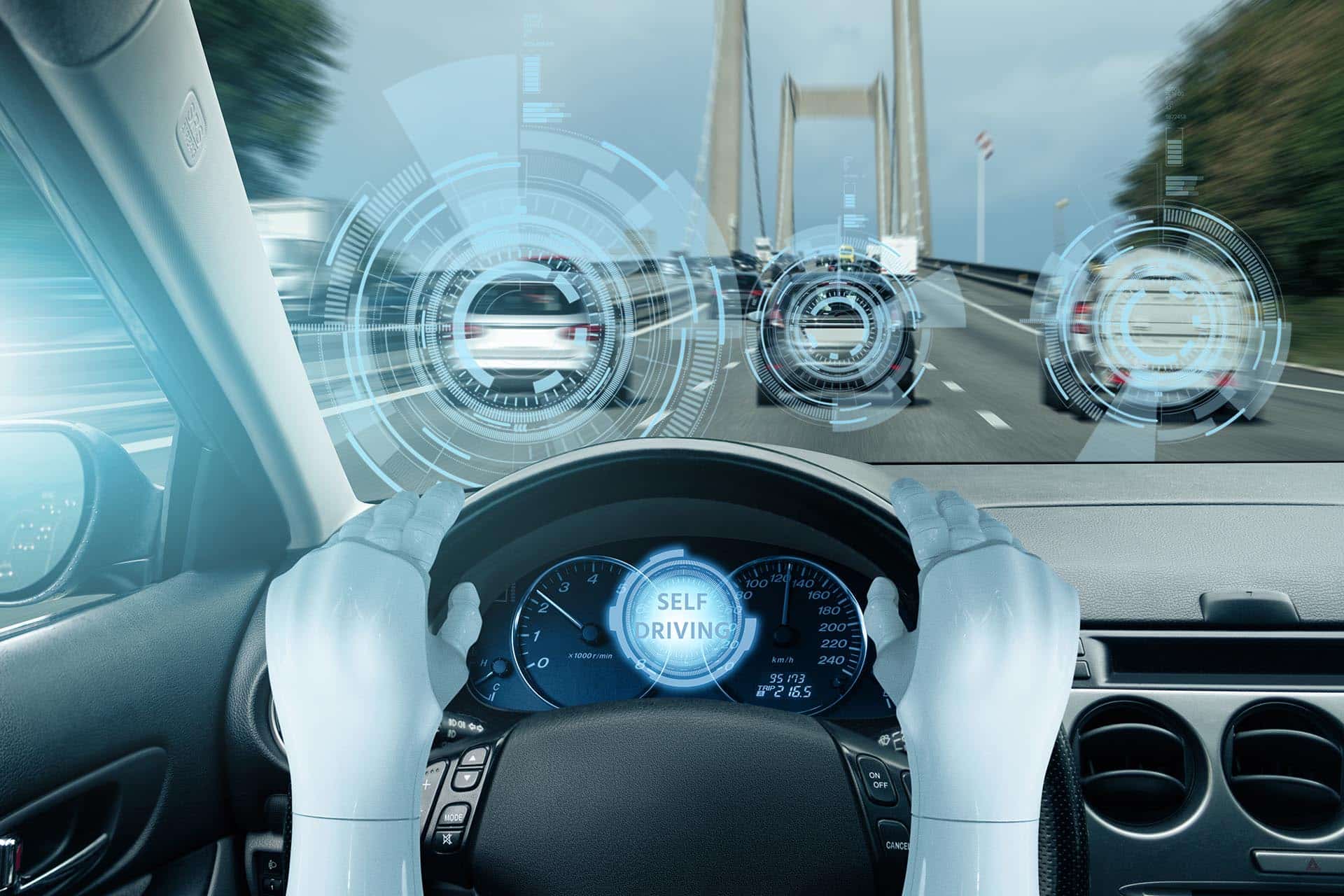
In recent times we are seeing how autonomous driving is one of the great objectives of the automotive industry. For some it is the logical and inevitable step in both public and private transport, but for others to reach this objective it involves risks, as we are seeing, and more when the regulations are not clear. In the United Kingdom, the discussion between both points of view has gained strength, after the government’s announcement to advance the first taxi services and buses without driver to spring of 2026.
The advance in the plans has surprised the motorcycle collective, which has reacted with a unanimous voice. The Motorcycle Industry Association, together with other entities such as the National Motorcyclists’ Council and the Motorcycle Action Group, has asked that errors of the past are not repeated, and that the vulnerability of the users of the two wheels is taken into account.
In a scenario in which motorcycle manufacturers try to make their way to safer and sustainable mobility, the advancement of tests with autonomous cars is perceived as an unnecessary risk. Although the key point of this whole situation is to know if the regulation will be able to offer sufficient guarantees for all the users of the roads.
It should be noted that the implementation project, called Act 2024 vehicles, set the start date of the first autonomous services by 2027. But the change of opinion plans to accelerate this implementation, with the consequent risk of the most vulnerable users being affected, as it has happened since in different points of the world the autonomous driving has been introduced.
Not defining well the concepts required to autonomous driving is the big problem
Among all the voices against this acceleration in the implementation, for example, that of Craig Carey-Clinch, executive director of the NMC, which has been clear when warning that the deadlines should not be forced, taking into account that the security principles are not fully developed and applied.
That same “but” puts the MCIA, which has made it clear that it does not oppose innovation, but insists that motorists and cyclomotor users cannot be out of security standards. They claim clear technical requirements, periodic controls, transparency in the data and a real approach to equity. Without those bases, the coexistence between motorcycles and autonomous cars runs the risk of becoming a problem rather than a solution.

Meanwhile, the Motorcycle Action Group has been much more forceful pointing directly to the law they consider ambiguous, because it requires that autonomous vehicles behave as “attentive and competent human drivers” without defining what that really means. Taking into account the problems that are with human conduction, that type of definition sounds only to political rhetoric and not a real regulation.
But this dispute that is taking place on British soil is nothing more than the advance of what should be regulated in the rest of the world, European Union and Spain included and that, at least for the general public, continues to generate doubts. For now in our territory, 100% autonomous vehicles are not allowed, so it is an issue that should be faced with the same fears and doubts as always.
And it is that the legislative part and road safety control is usually in the hands of political and non -technical profiles, as we have suffered for a long time in Spain.