Continental ContiSportAttack 5 test: Introduction, positioning and rivals of the Continental ContiSportAttack 5
In the formulation of any tire, we seek to improve levels achieved in previous models in the factors that we see in performance spiders: Grip (dry and rough), Agility, Stability, Precision, Braking and Durability. It must be taken into account that, in addition, these improvements must be noticed in different motorcycle models.
Continental has taken a leap forward in the requirements, introducing two concepts into the equation once we move to the circuit: they do not require a change in pressures to enter the track; They also do not require the use of heaters between runs, as they are capable of maintaining the tire temperature for a long time.
With these new features and as a summary, the ContiSportAttack 5 (CSA5) can be defined as the sports-touring evolution of the SportAttack family, which offers greater grip in dry and wet conditions, heats up faster, is better in stability at high speed and provides greater progressiveness in behavior, while maintaining, if not improving, the useful life compared to the CSA4.
And you can go from your home garage to your favorite pit lane without changing pressures. This is how you read it.

The positioning is that of a sports road tire capable of defending itself on the circuit. In fact, Continental claims the ratio is 80/20 in this regard. The question is, how is it possible that the CSA5 can change scenarios without changing pressures?
The answer lies at the origin of Continental’s philosophy, a company in which chemists and engineers are at the origin of each of the products. They do not replicate market behaviors, but come to their conclusions on their own during the development of their products. The vast majority of its rivals use different compounds in the manufacture of motorcycle tires. Continental no.
It’s been just 3 years since we broke down the ContiSportAttack 4 on Soymotero.net (and which you can see here). The German brand already used a single compound (BlackChili), with the particularity that the degree of vulcanization varies in the center and on the sides of the tire, prioritizing traction and longevity in the center and grip on the shoulders.
In a CSA4/5 you will not see the transition from one compound to another that can be seen (and sometimes noticed) in bi-compound tires. In this article we will see what factors allow the versatile behavior of the CSA5 and make it a tough rival to the competition, which includes tires such as the Bridgestone Battlax Hypersport S23, Dunlop SportSmart mk4, Metzeler Sportec M9 RR, Michelin Power 6 or the Pirelli Diablo Rosso IV.
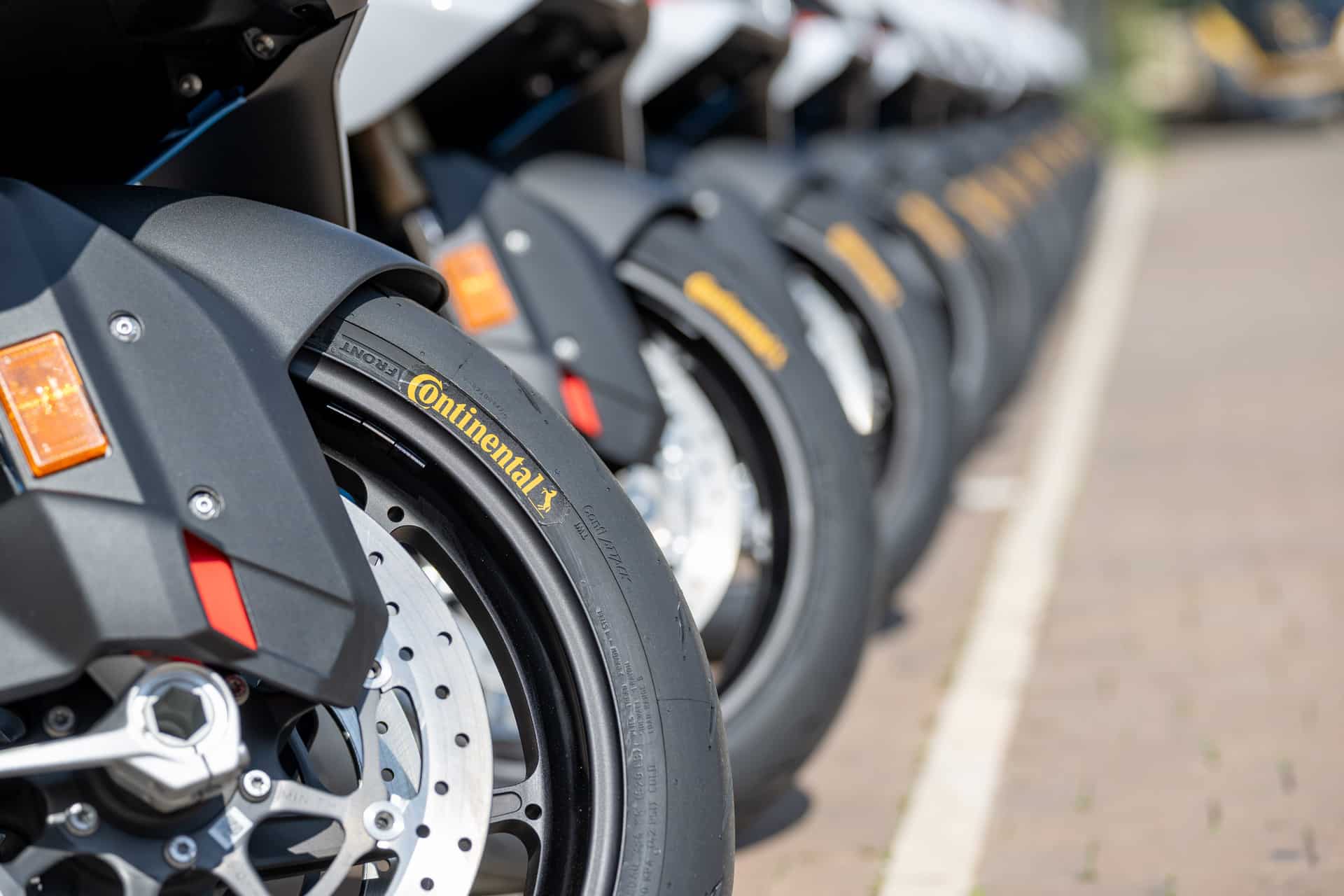
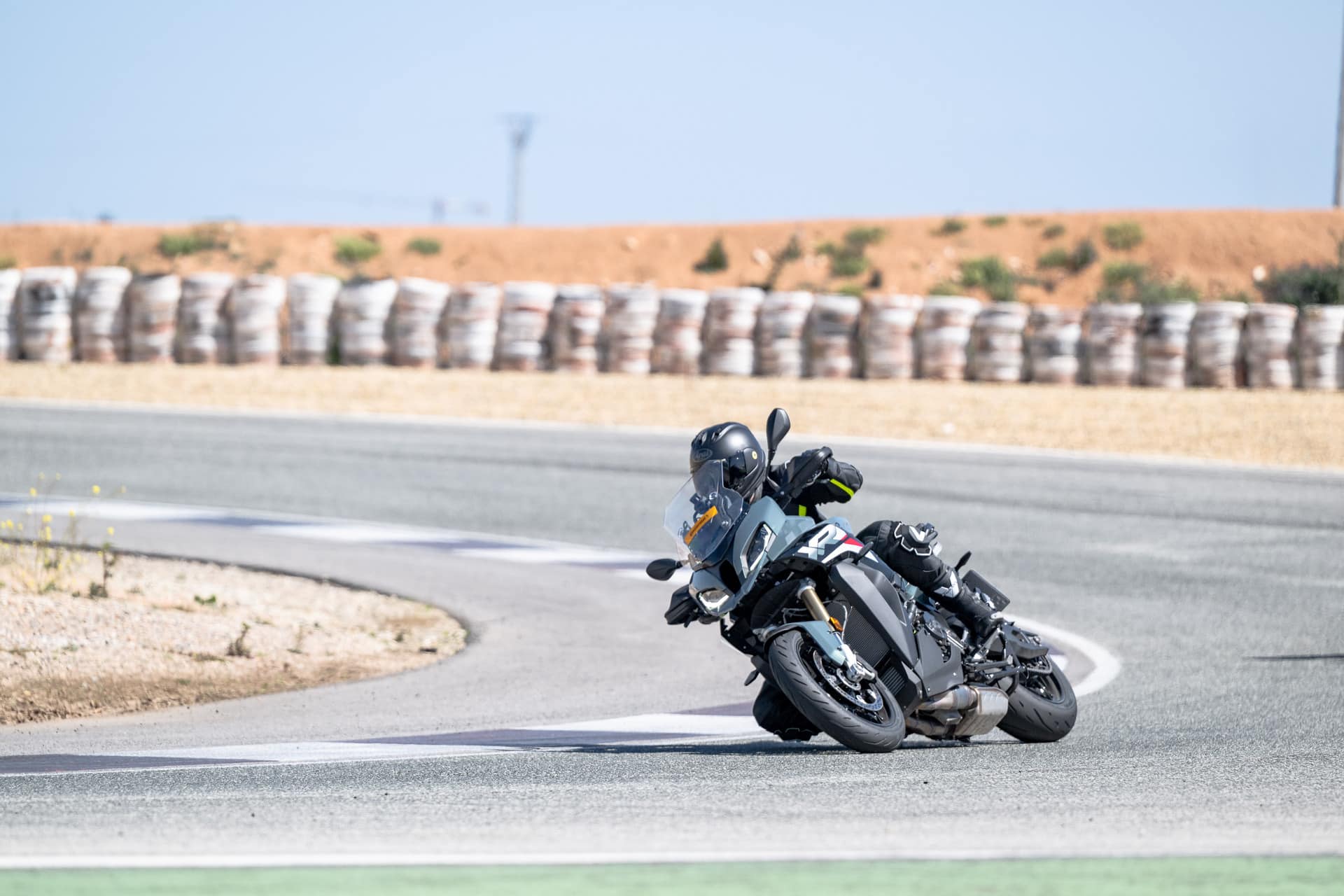
Continental called us in Murcia at the international presentation of the Continental ContiSportAttack 5 to be able to ride with it on the road and to be able to access the Cartagena circuit with the same motorcycle without touching the pressures. This initially put more than one on guard, not conceiving that such a circumstance could be possible. The motorcycles? BMW S1000XR and BMW S1000RR. The plan promises.
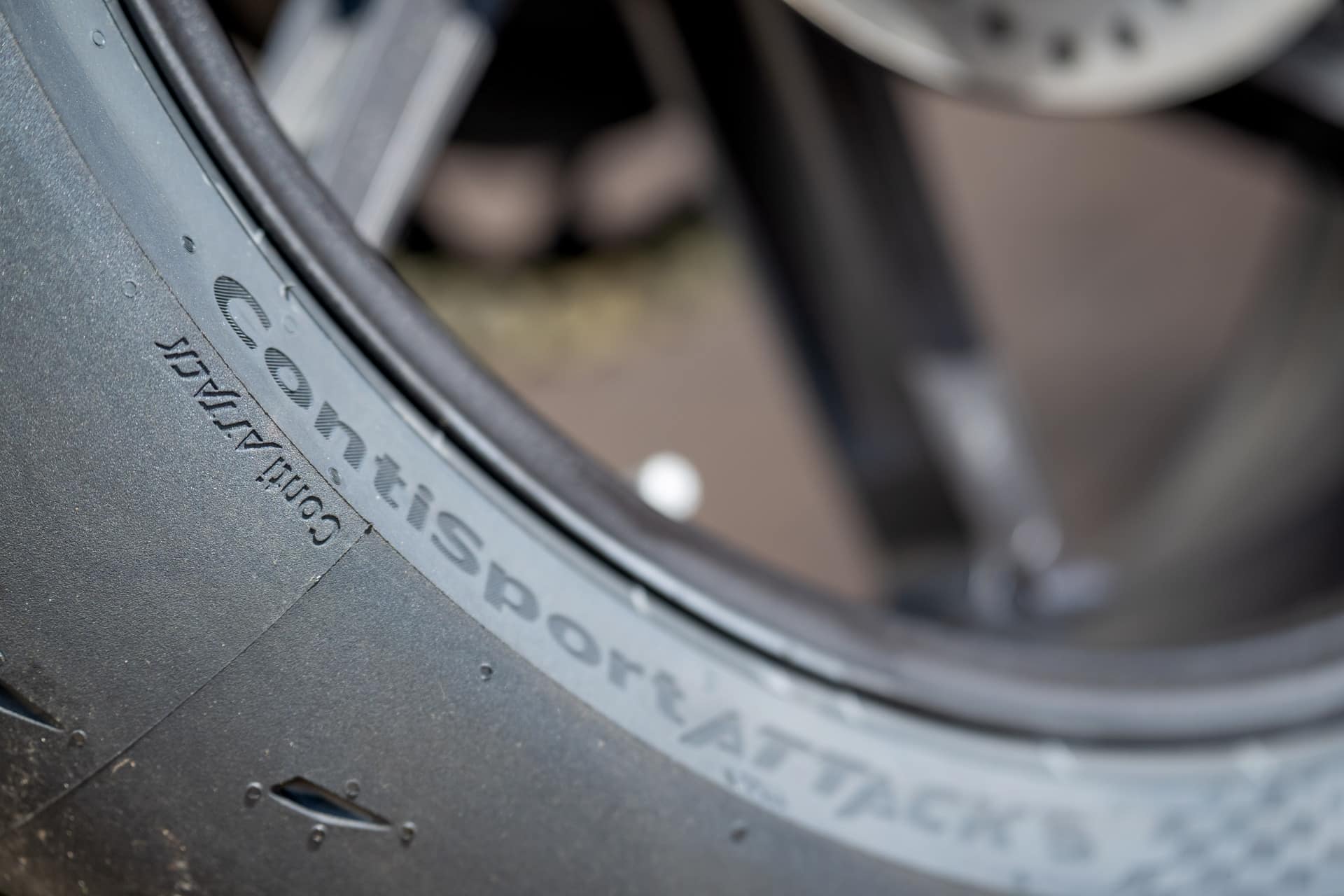
Continental ContiSportAttack 5 test: Technical characteristics of the Continental ContiSportAttack 5
All the improvements announced in the previous section have been made around three points: Compound, drawing and casing. The BlackChili compound has been optimized. The CSA5 maintains the philosophy multi-compoundbut introduces a revised formulation, with new polymers and next-generation silica that balances cold grip, wear resistance and wet traction.
The thickness of the compound in the central band has also increased, since it reduces the time it takes to reach useful temperature, offering high friction from the first meters and maintaining consistency in wider temperature ranges.
It has also improved durability and abrasion resistance on the sidewalls to reduce wear due to aggressive leaning, with a better compromise between grip and mileage than in the CSA4. We can attribute to the changes in the compound the safer starts and traction in cold, greater confidence in corners from the entry and better behavior in the rain without notable loss of useful life.
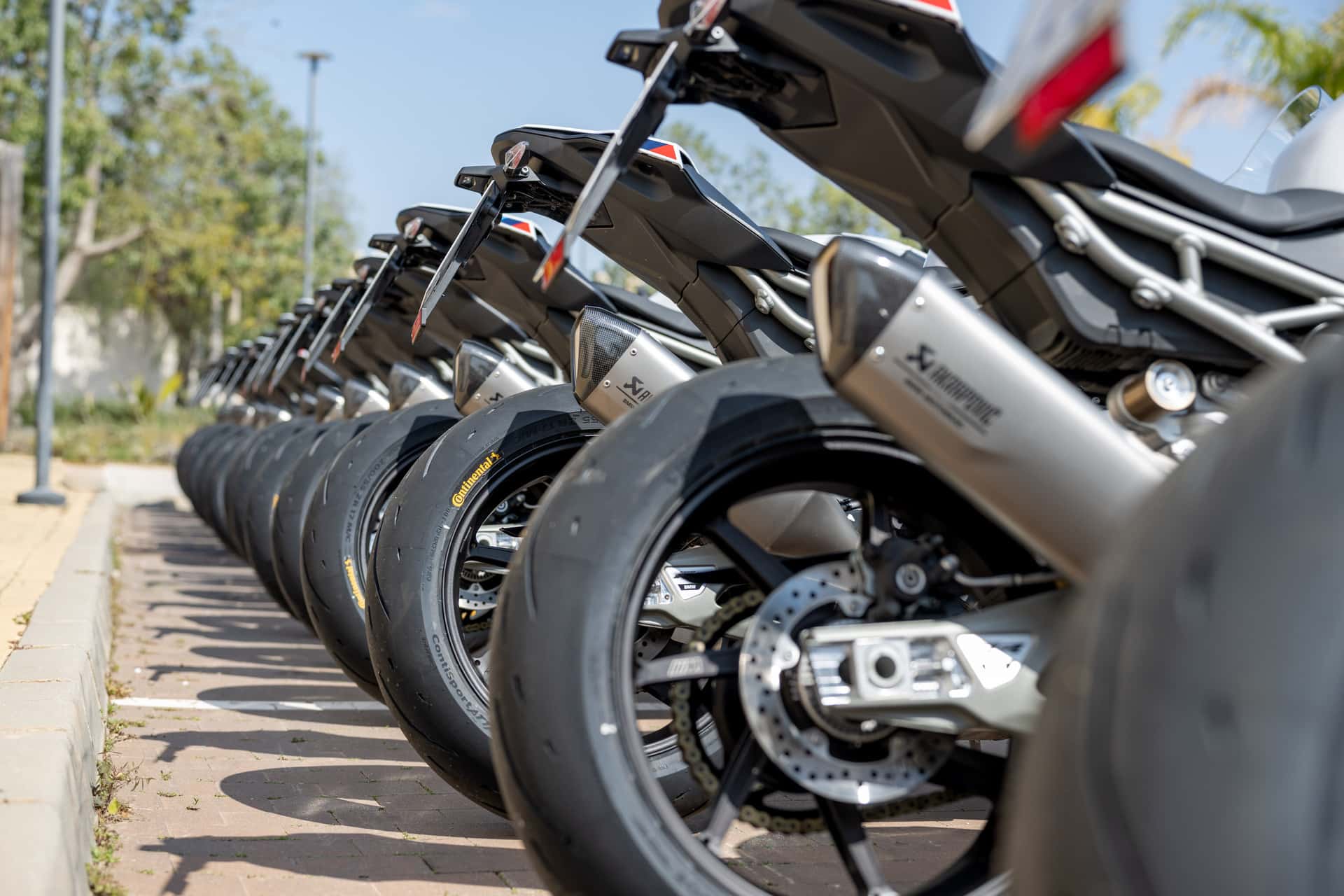
The drawing and evacuation pattern has changed. The CSA5 features a pattern with optimized channel geometry to evacuate water more effectively—revised angles and widths compared to the CSA4—to reduce aquaplaning and to improve wet grip. On the other hand, there are bands without a pattern where it is most necessary to increase the useful support area, seeking to improve lateral stability and response when requesting a change of direction.
Also notable is the inclusion of microgroovesthat is, micro grooves in the grooves to increase grip edges on uneven and wet asphalt. At the same time, the transition from the central area to the flanks – also between flanks – has been improved, with a design that smoothes the transition from the central part to the lateral support area, offering a more predictable support path in progressive inclination.
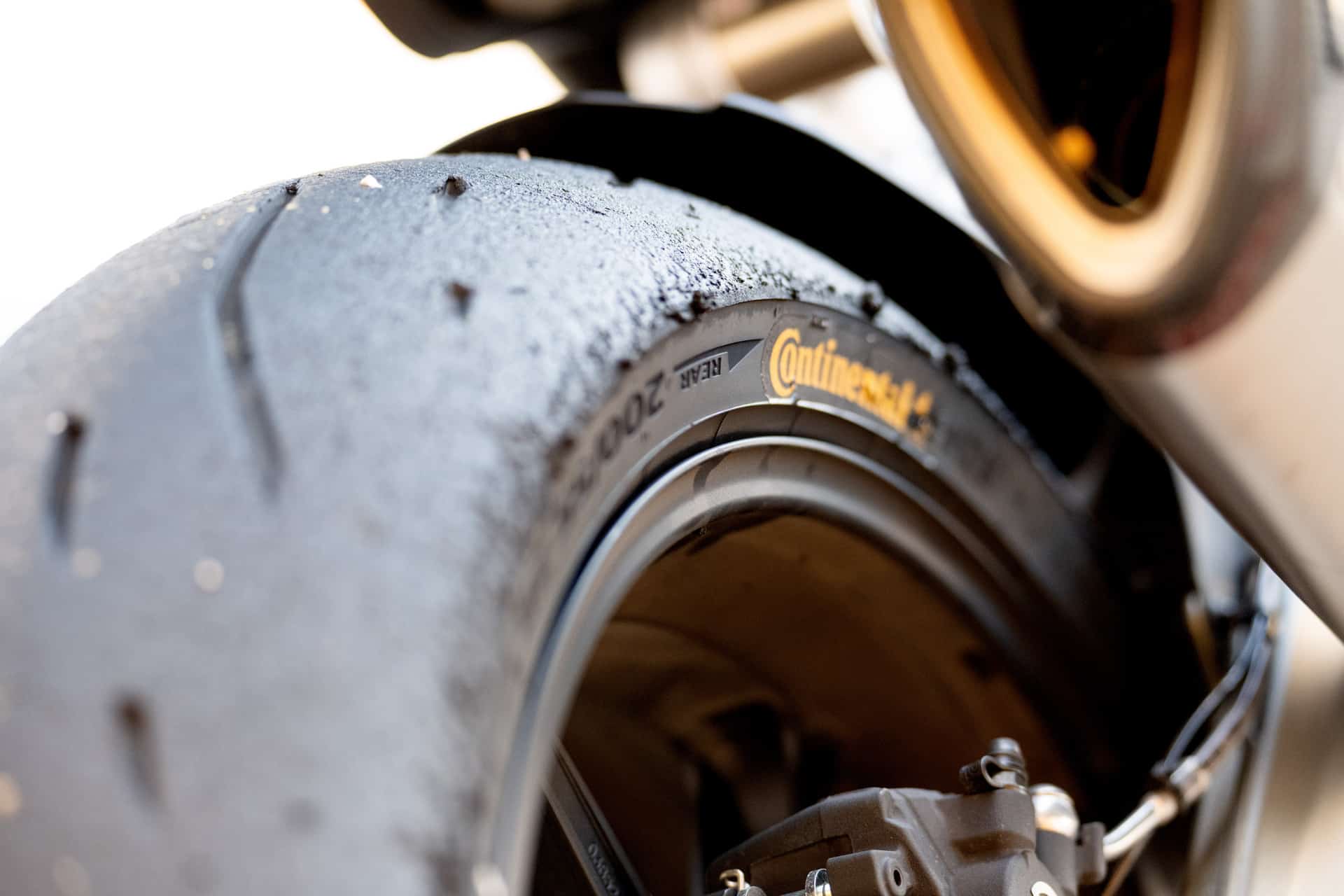
But perhaps the new construction of the MultiZone Belt. The steel rings are closer together in the central area of the tire, spaced out on the sidewalls. Thus, the tire is more rigid in the central part, necessary for stability when braking (especially in the front tire) and the casing feels softer on the flanks, necessary to have more contact surface when leaning and better perception of what is happening at that moment.
The new arrangement of layers and materials (fiber reinforcements and readjusted belt angles) improve high-speed stability, directional precision and also the feedback.
Continental ContiSportAttack 5 test: How the Continental ContiSportAttack 5 performs on road and track
The excellence of the CSA5 sounds great on paper; You just read them, just as we heard them the day before the planned route during the technical talk that the Continental engineers gave us. When they commented that it was not necessary to adjust pressures to enter the track, I got the feeling that it was a way of speaking.
In the informal chat after the presentation, we realized that it was not even a suggestion: the next day, we would ride on the Cartagena circuit with the same bike and the same pressures as during the route. It is the best way to show that, more than a way of speaking, it is one of the characteristics of CSA5.
The bikes available, the BMW S1000XR and BMW S1000RR, are at the top of the sports bike population pyramid. With 170 and 210 HP respectively, they are a sample of what the CSA5 can do. Since the previous route was more than 100 km, I tried to get an S1000XR for it, not so much for the comfort – that too -, but because its geometry and ergonomics are more appropriate when it comes to demanding a tire on the road.
Since there were going to be 4 rounds on the circuit, I would try to get an S1000RR for the last two rounds. In this way, with the XR you could see the contrast of the same tire in the same pressure conditions on the road, and immediately after -lunch-, on the track. I would spend the last two runs demanding the CSA5 on the track on the back of the RR.
He said that life is what happens while you make plans; My plans didn’t go as I expected. Yes, I was able to get an It was more uncomfortable than dangerous, in any case unfortunate in a tire test and of course, not suitable for the circuit.
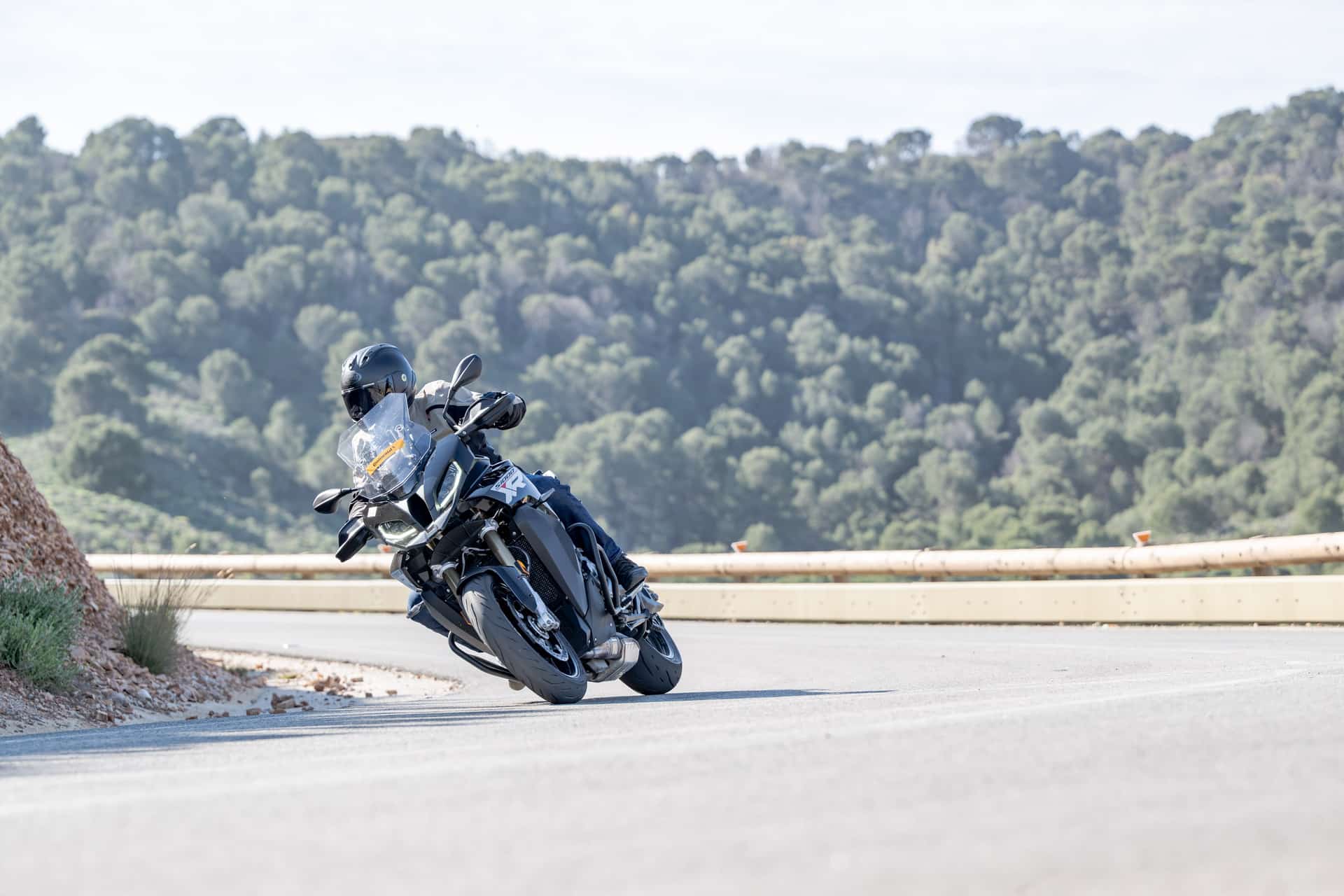
That does not mean that I could not feel – when there was no need to brake – that it is a comfortable tire, in the sense that it filters irregularities very well, thanks to the combination of more rubber in the central part and a more flexible casing on the sides. It provides comfort where that of suspensions ends at cruising speed. It is also agile when entering a curve, but without “falling” into it.
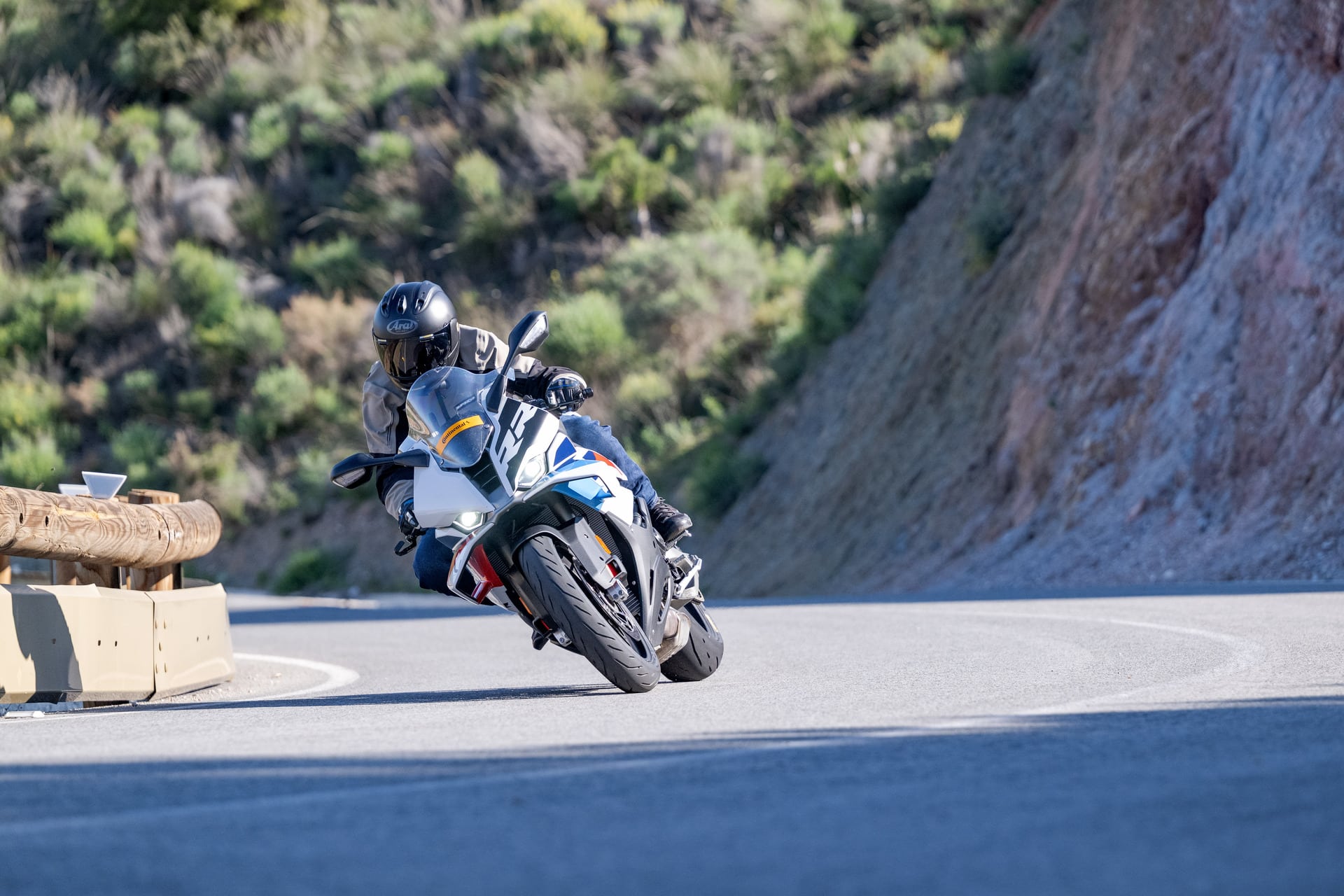
At the first photo stop I was able to try out an XR and an RR, both with brakes in good condition. From there, I was able to test the CSA5 with full knowledge of the facts, since I could now ask the front axle without suspicion, feeling its ability to be stable under the strongest braking. It is a noble and easy tire, which gives information about what is happening in the front axle. The rear tire accompanies at all times, although it will be on the circuit where performance will be required, especially when pulling with the motorcycle inclined.
The promised road-circuit consistency is also present on bumpy roads, where – with obvious caveats – it maintains its shape very well in terms of grip and sensations. Like all sports tires, CSA5 give their best on smooth, well-paved surfaces.
The interesting thing is that these good characteristics are maintained on bad surfaces (we were not able to test them in the wet), as part of their personality, which indicates that the design of the MultiZone Belt It fulfills its purpose from the inside out. On the straight they absorb the bumps. With the motorcycle tilted, the contact surface increases, providing grip and information.
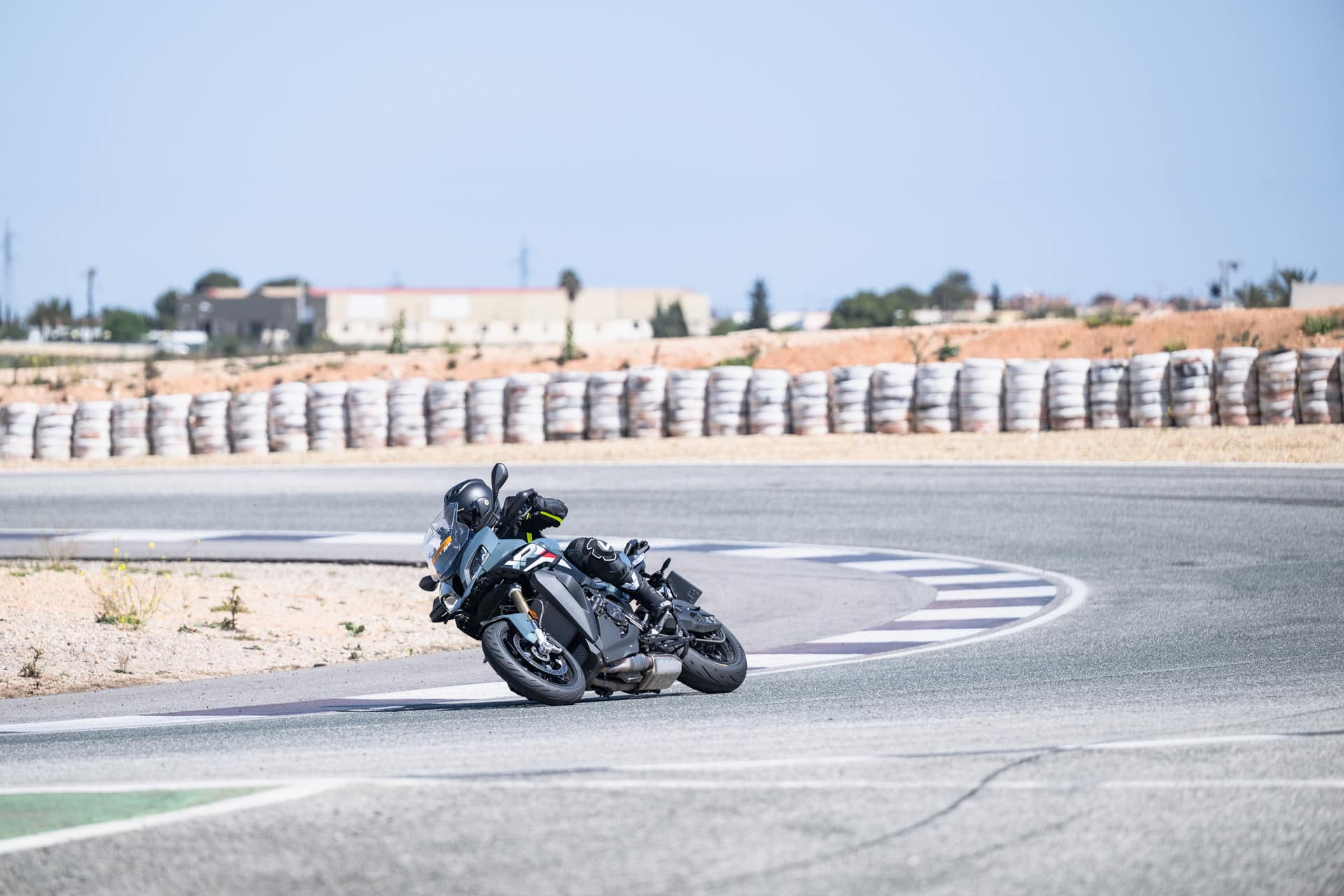
We finally reached the track. In the first two rounds at the Cartagena circuit, I was able to go out on the track with an unscathed S1000XR. I have to confess that the issue of pressures did not occupy my mind for even a second after the third corner.
It is the first time that I enter the track with street pressures (2.5 front, 2.9 rear when cold) and from the first moment, barely warming up, I was able to feel complete confidence, to the point that the inclination limits were placed by the footpeg warning devices in the foreground, to be defined by the increasingly shrinking footpeg.
What I was able to detect is that the inclination limits of the CSA5 on a BMW S1000XR are well above what can be asked of it on the road, being able to offer the performance of a very sporty tire. In the most savage braking situations it maintains the type perfectly, while, with the non-intrusive traction control, it allows progressive sliding with real-time information, that is, it transmits what is happening at that moment, without ambiguities, so that you act accordingly.
The third batch touched on the S1000RR. Bigger words. In the two previous rounds with the Unfortunately, the round was interrupted twice.
At least, I was able to verify in the two entries on the track that the Dynamic Pro mode of the RR suited the tires better than the Race Pro – more aggressive -, being able to achieve better traction in the wildest openings. Also true is the CSA5’s ability to maintain the temperature between runs, capable of eliminating the heaters from the equation when you approach the circuit to remove the carbon.
I would have liked to be able to ride more with the CSA5 on top of the Bavarian missile, but for reasons beyond Continental’s control, there could not be a 4th round and I was left with honey on my lips, aware that I had not crossed the limits of the tire with such a device.
What is clear is that it improves the magnificent CSA4 that it complements, because both will coexist for now in the Continental catalogue, yes, at different levels.