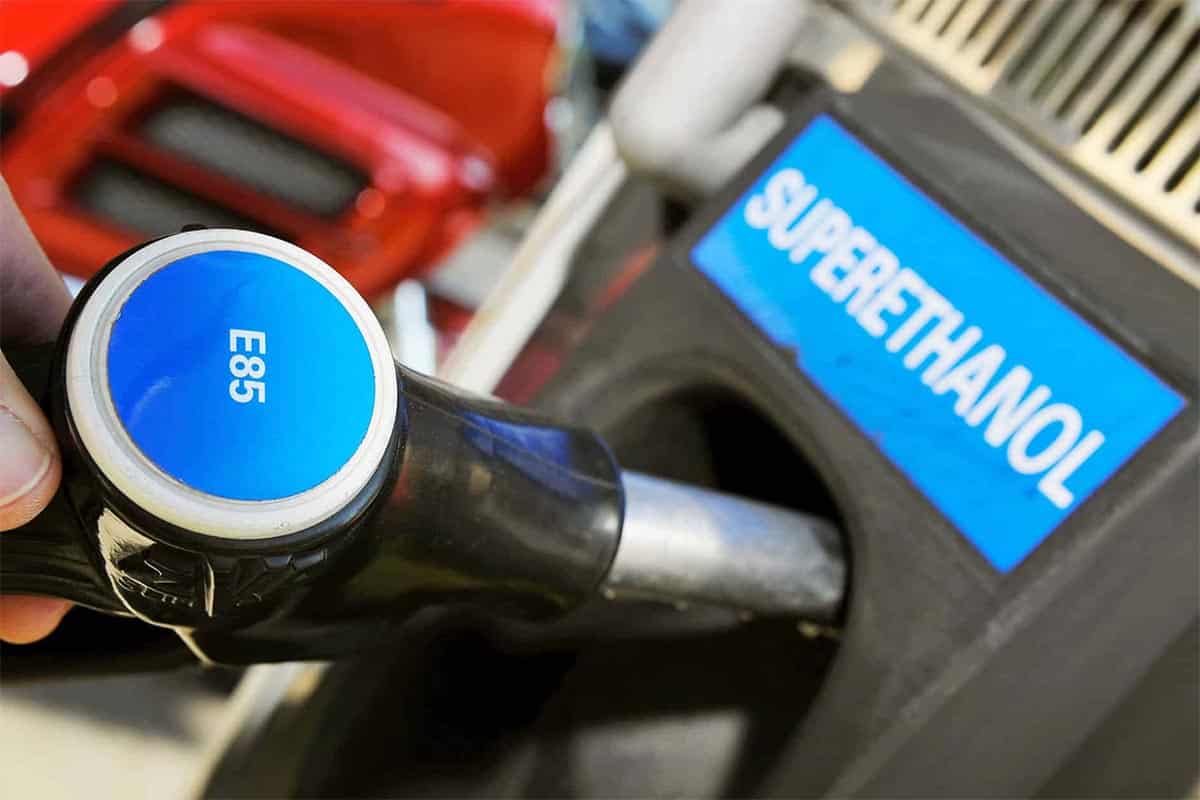
France continues to advance in alternatives to traditional fuels, and has now taken an important step towards the approval of Superethanol-E85 in motorcycles and scooters. A possibility that has been implemented for years in cars within the French country, and that could also end up having influence in other European markets if the process is accepted on a commercial level.
This step comes after several months of joint work between motorist associations, conversion kit manufacturers and representatives of the French bioethanol sector. Until now, the big problem was that motorcycles and scooters were left out of any possibility of official homologation, something that had existed for years for cars.

Now, the French Government has confirmed the opening of the procedure that will allow work on the approval of E85 conversion kits for two-wheeled vehicles. Of course, the process is not yet completely closed. As explained by the sector itself, part of the technical and regulatory framework necessary for these conversions to be officially legalized still needs to be developed.
What is Superethanol-E85 and what advantages and disadvantages does it have?
Superethanol-E85 is a fuel composed mainly of bioethanol and gasoline. Depending on the conditions and time of year, the proportion of ethanol can reach up to 85%, hence its name.
As we said, in countries like France it has been used for years, especially in cars, largely for a fairly simple reason: the price. E85 usually has a significantly lower cost than conventional gasoline, since it costs approximately half as much. A compelling reason that has undoubtedly favored its popularization.
In addition to the price, there are also other aspects that are considered advantages. One of them is that ethanol has a high octane number and, in certain cases, it can work correctly even in high-performance or turbocharged engines.
However, the E85 also has important limitations. The first is increased consumption, since the engine needs to burn a greater amount of fuel to achieve the same performance. It must also be taken into account that not all engines are prepared to work with high percentages of ethanol without damage.
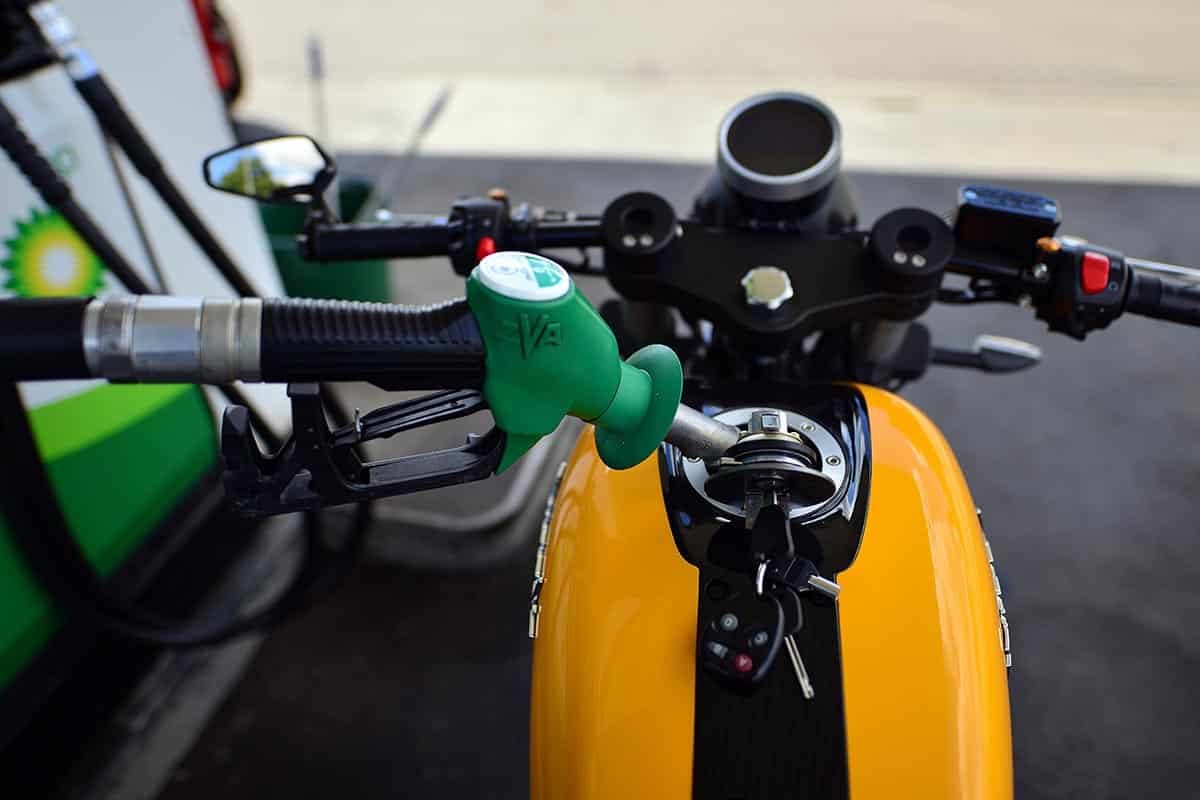
Another obvious drawback also appears on motorcycles: space. The tanks are much smaller than in a car, and an increase in consumption directly affects autonomy, something especially important on long journeys. For all these reasons, in most cases, using E85 on a regular basis requires electronic modifications or specific conversion kits capable of adapting the operation of the engine.
In Spain, meanwhile, the situation remains quite different. Currently there is no specific approval for E85 kits on motorcycles and scooters, nor is there a clearly defined technical framework.
In automobiles, certain modifications can be legalized through technical reforms and ITV, although the system is far from being as simple or widespread as in France. Furthermore, the infrastructure remains limited and finding service stations with E85 continues to be relatively complicated in much of our territory.
That is why, although the French movement is important within the sector, it still seems early to think about a similar implementation in the Spanish market. For now, E85 remains a fairly minority alternative, although it seems that interest is growing and, there is no doubt, it is an intermediate measure between traditional gasoline and total electrification.