
What you will find at a public motorcycle auction
A motorcycle auction brings together in a single portal hundreds of lots that previously belonged to insurers, financial entities or individuals. Each good comes with its own history and that history marks the final price that a buyer ends up paying. A new participant often imagines chaos like in old movies. The reality of a modern public auction is much more orderly and transparent. The entire process can be done through the internet.
For those looking to compare options before deciding, A Better Bid car auctions offer direct access to a wholesale catalog with more than three hundred thousand available vehicles, including motorcycles, without requiring a dealer license. The platform works as an authorized Copart broker and allows you to register for free, choose a membership and bid online from any country.
How a vehicle auction works step by step
The procedure usually follows a fixed order. First the lot is published with photos and technical data. Then a period opens where each interested party can make an offer above the initial price. At the end of that period, the organizing entity will close the bidding and award the good to the participant who submitted the highest bid, a moment that usually generates a lot of excitement among the public that follows the closing.
Many people wonder how these dynamics work when everything happens on screen and not in a physical room. The answer is simple. The system registers each offer in real time before an audience connected from different countries, shows the highest bid to all participants and updates the figure automatically until no one wants to surpass the previous offer.

Type of auction and modalities of participation
There are different types of auction depending on who organizes the process. The judicial auction arises from an embargo (a court can seize a vehicle before putting it up for sale) and is usually announced in the official bulletin known as BOE. The traditional public auction manages real or personal property through a state agency such as the tax agency. Real estate auctions typically follow a different schedule than vehicle auctions.
In the case of private auctions aimed at vehicles, the most common modality is to bid openly, although some platforms also allow the option to buy directly without competing against other users. Each modality has its own pace and it is advisable to choose the one that best suits the interested party’s available time.
Requirements before bidding in an auction
Before bidding, you must meet certain basic requirements. The first is to register on the chosen site and provide the personal data that the platform requests to verify identity. The second requirement almost always includes a bond that supports the participant’s ability to pay.
An additional detail that many users overlook is reviewing the conditions of participation of each organization. Some auctions require a fixed deposit, others ask for a percentage of the starting price. They all set a strict limit to pay the amount once the offer is won.
What to check before bidding on a lot
Before offering money for any lot, it is advisable to carefully review the details of the auctioned property. The mechanical condition, mileage, visible damage and legal title of the vehicle are valuable items that a serious buyer always consults before setting a maximum amount.
It is a good idea to have a short checklist on hand.
- Recent photos of the property from various angles
- History of claims or declared damages
- Title papers and their legal status
- Vehicle location and estimated transportation cost
- Payment term and commissions included in the final price
That list helps ensure that the participant does not get carried away by the fast pace of a live session and avoids paying more than the actual market price of the good.
The role of exit value and final price
The starting price of the good is the point where any auction starts and almost never coincides with the final price, a fact that marks the real starting value of each lot. From that number, each bid goes up in small increments until a single bidder is the winner.
It is common for a high-value asset to receive many offers in the last seconds, so it is advisable to set a personal limit in advance and not get carried away by the emotion of the moment. The price almost never drops again once the sale is closed, so that simple habit avoids paying more for a lot that could cost less on another portal.
Deposit and payment method
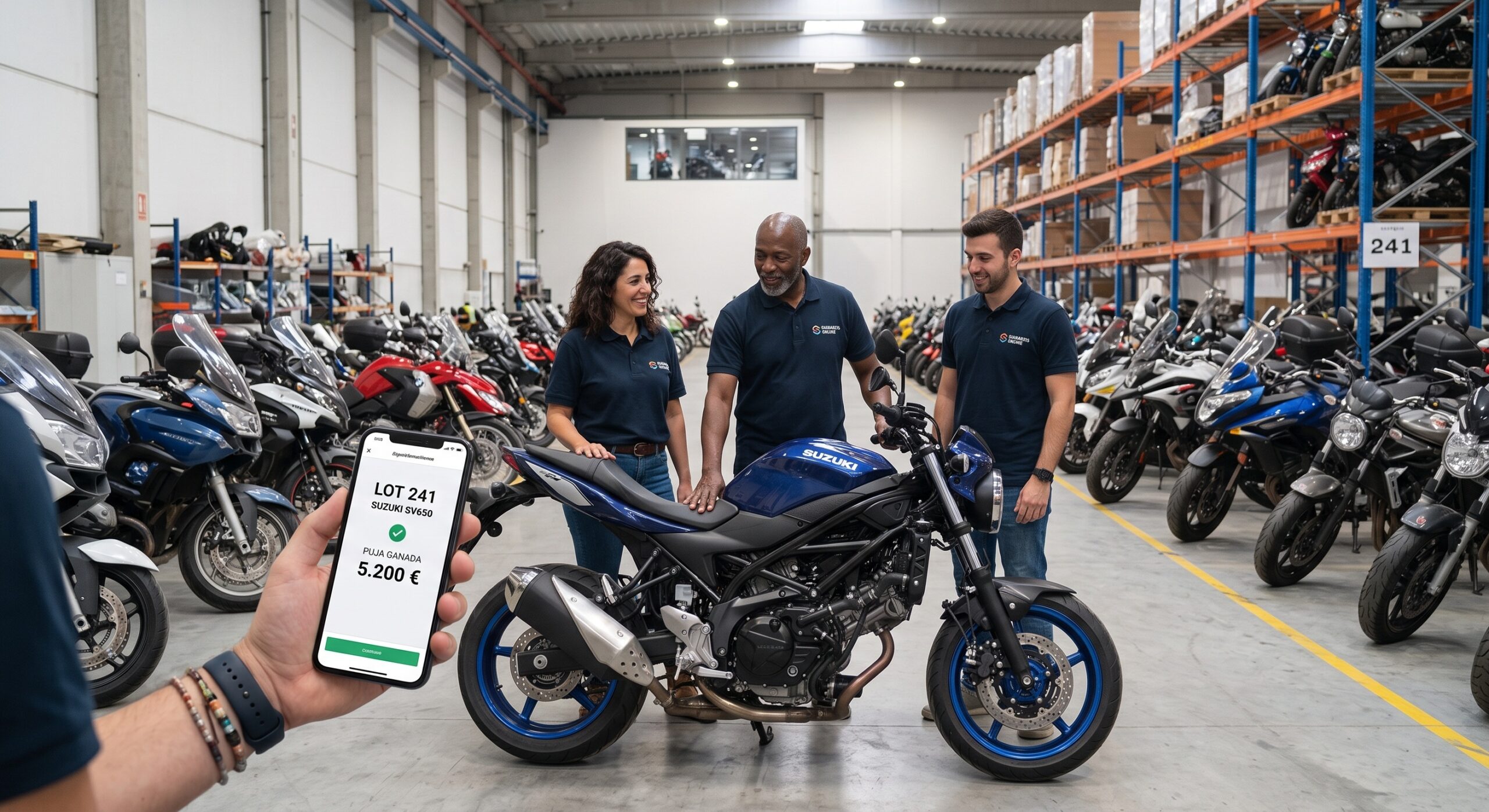
Most agencies that conduct an auction ask for a deposit before accepting any bids. This deposit works as a guarantee and is usually returned if the participant does not win any vehicle during the day.
Once the property has been awarded, the buyer must pay the remaining amount within a short period of time, almost always between one and three business days. Some platforms accept credit card, transfer or external financing. It is advisable to consult each option before registering.
Commissions and additional expenses
The price advertised on the screen is rarely the true cost of the good. Almost every auction usually includes management fees, public portal fees and sometimes the corresponding taxes depending on the country of the interested party.
To avoid surprises, it is advisable to ask the company itself or an external manager for advice before bidding for the first time. That extra step helps you calculate the total cost of the good and decide with real data instead of assumptions.
Procedures and allocation of the lot
When the bidding ends, the agency must notify the winner of the result and deliver the necessary documentation to transfer the asset. The paperwork usually includes a bill of sale, lien release certificate, and the vehicle’s original title.
A buyer who decides on an international motorcycle auction also needs to manage the shipment and, depending on the destination, some additional customs procedures before driving the vehicle.
Final Tips Before Bidding
Participating in an auction can save quite a bit of money compared to market value. That only happens when the participant arrives prepared. Reviewing the property, setting a bid limit and understanding the complete procedure are steps that help the highest bidder also be the most satisfied buyer.
With well-planned prior research, any interested party can find a motorcycle in good condition among the auctioned goods without overpaying or getting caught up in an impulsive last-minute bid. This care allows you to make a safe purchase and close the deal with confidence. Even a private seller can learn from the process before putting his or her own vehicle on the market.
Frequently asked questions
Can I participate in an auction without previous experience?
Yes, most portals are designed so that a beginner understands the process from the first registration and participates without complications.
What happens if I win a bid and can’t pay on time?
The deposit is usually lost and the lot returns to auction, so it is a good idea to set a realistic budget before bidding.
Do auction motorcycles have a warranty like those from a dealership?
No, most are sold as is, so reviewing photos and history before bidding is key.
Is it better to bid in the last seconds or do it before?
Each participant develops his or her own strategy, although setting a prior limit usually avoids paying more for the thrill of the closing.
Is an online auction useful for purchasing goods outside of one’s own country?
Yes, many platforms allow you to bid from any country and then organize the shipment of the good to the final destination.