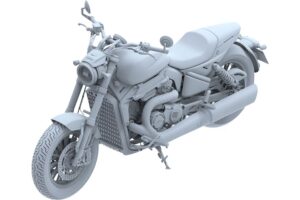
QJMotor It once again demonstrates that innovation in engines does not always consist of adding more cylinders. The Chinese firm has patented an engine in the United States that, at first glance, “looks like a V-twin, although in reality only one of its cylinders participates in combustion.” The second cylinder is occupied by “a piston that does not burn fuel or generate power.” Your mission is much simpler: move integral with the crankshaft to compensate for the forces produced by the main piston and reduce the vibrations characteristic of single-cylinder engines.

The patent, which we already suspected, published by the United States Patent and Trademark Office on August 27, 2026, comes from a project that Qianjiang Motorcycle, parent company of QJMotorwhich began registering in China in 2022. Subsequently, a PCT international application was filed before reaching the US procedure.
A V-twin that really isn’t
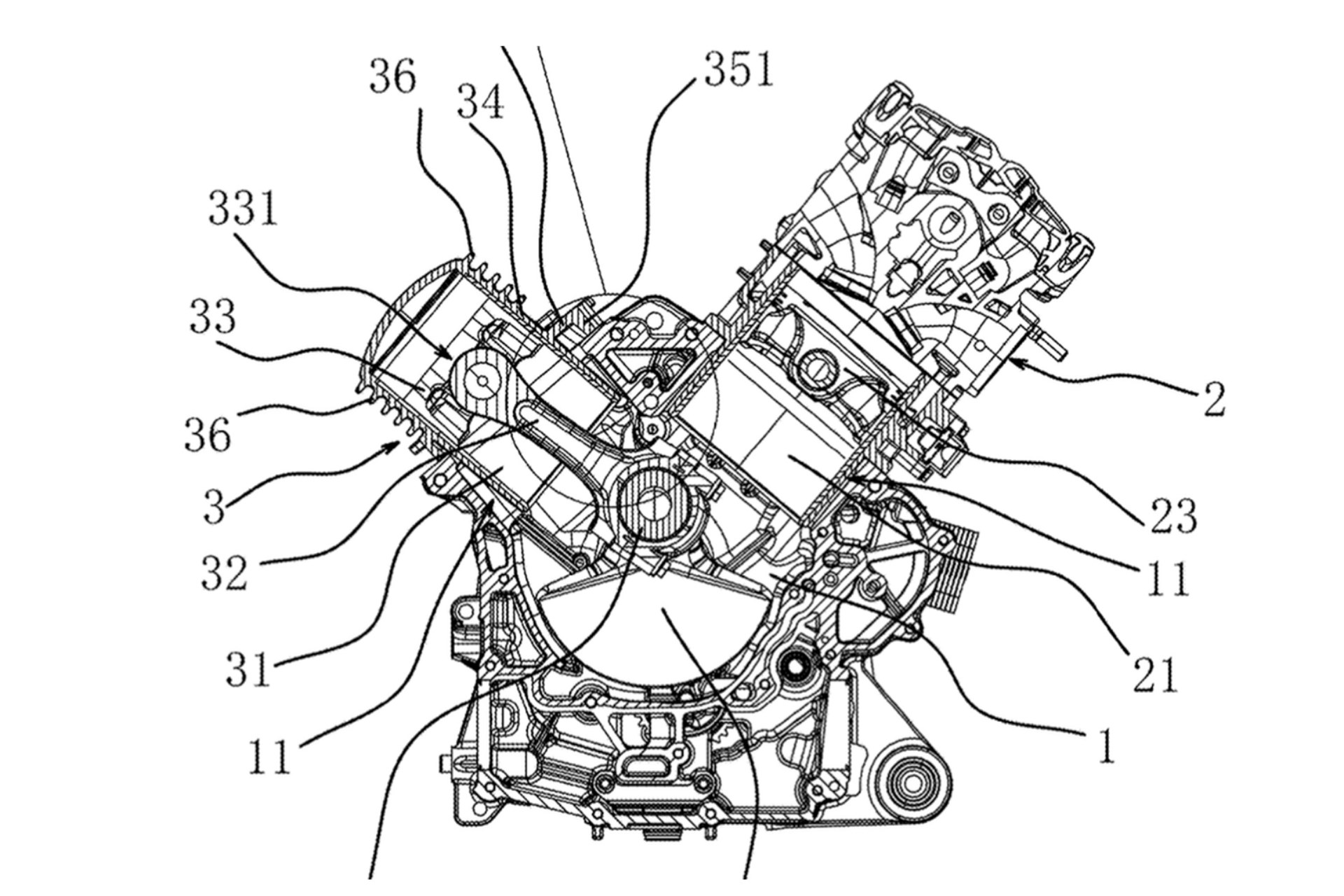
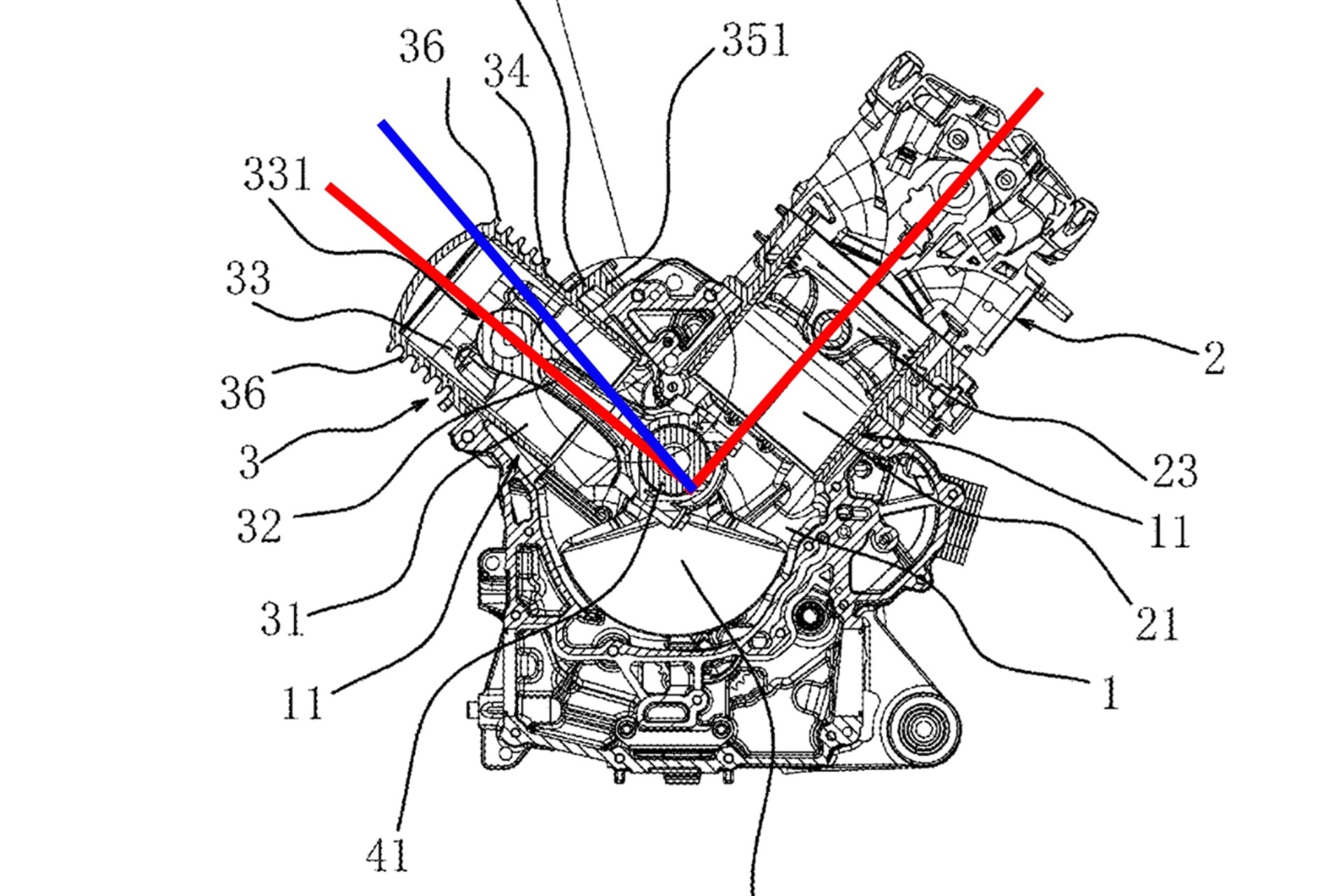
The idea is as simple as it is strange. The crankcase has two cylinder housings forming an 80º V. In one we find the conventional cylinder, with its piston, combustion chamber and all the elements necessary to produce power. In the other there is a balancing cylinder. Its piston is connected to the same crankshaft through a second connecting rod, but it never participates in combustion.

QJMotor He has even drilled a through hole in that second piston. This way, air can pass through it and there is no compression or pumping during its movement. The piston simply moves up and down, reproducing some of the forces of a second cylinder and helping to compensate for the vibrations of the first. Furthermore, this piston does not need rings, since it does not have to seal a combustion chamber. This reduces friction and also the resistance that a conventional piston would introduce.
The key to QJMotor is in the geometry
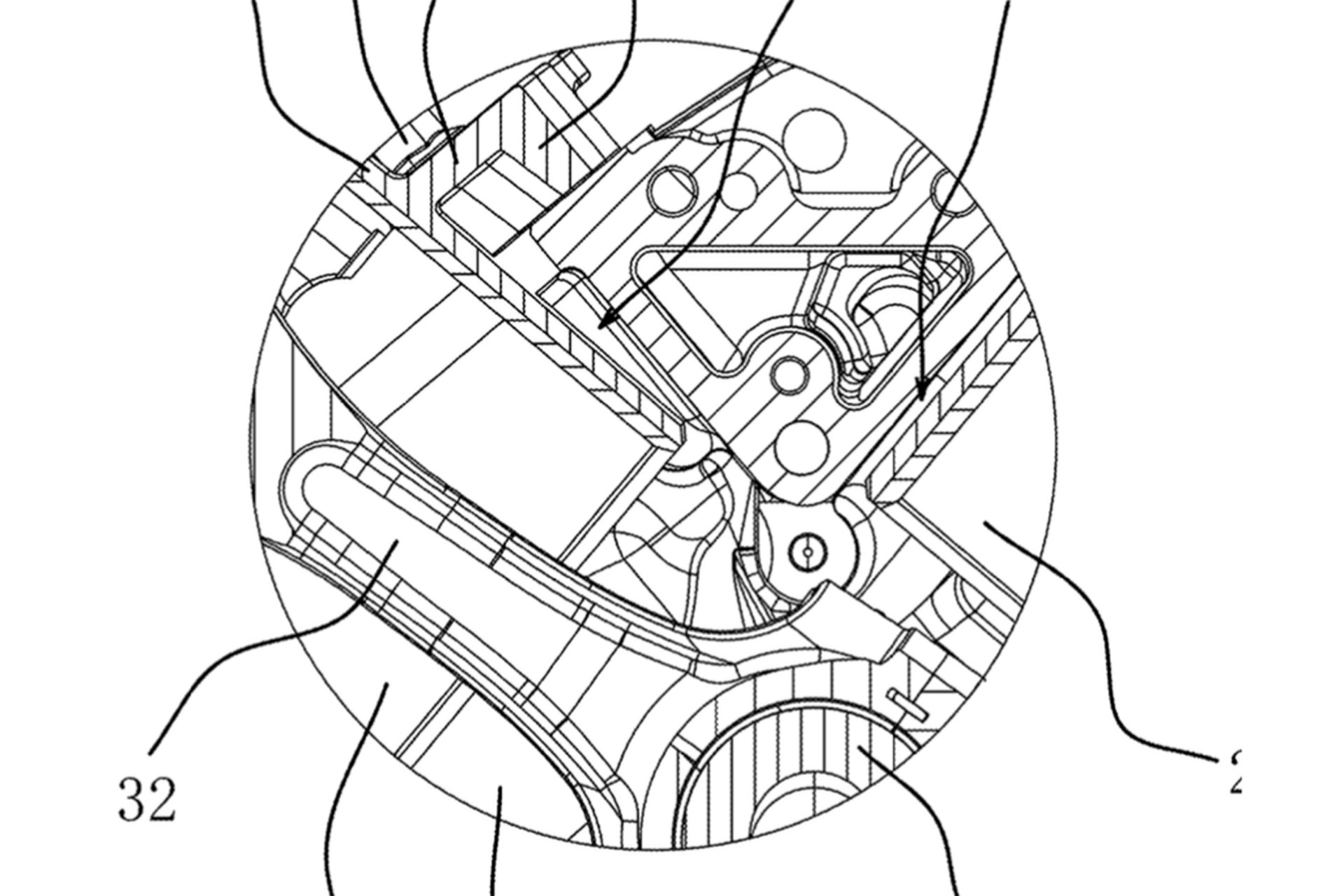
The most interesting thing about the patent is not only the use of a fictitious piston, but how QJMotor He has designed his position. Although the 2 crankcase housings originally form an 80º angle, the balance cylinder is installed in a different orientation. Its axis can be placed perpendicular to that of the combustion cylinder, increasing the balancing effect.

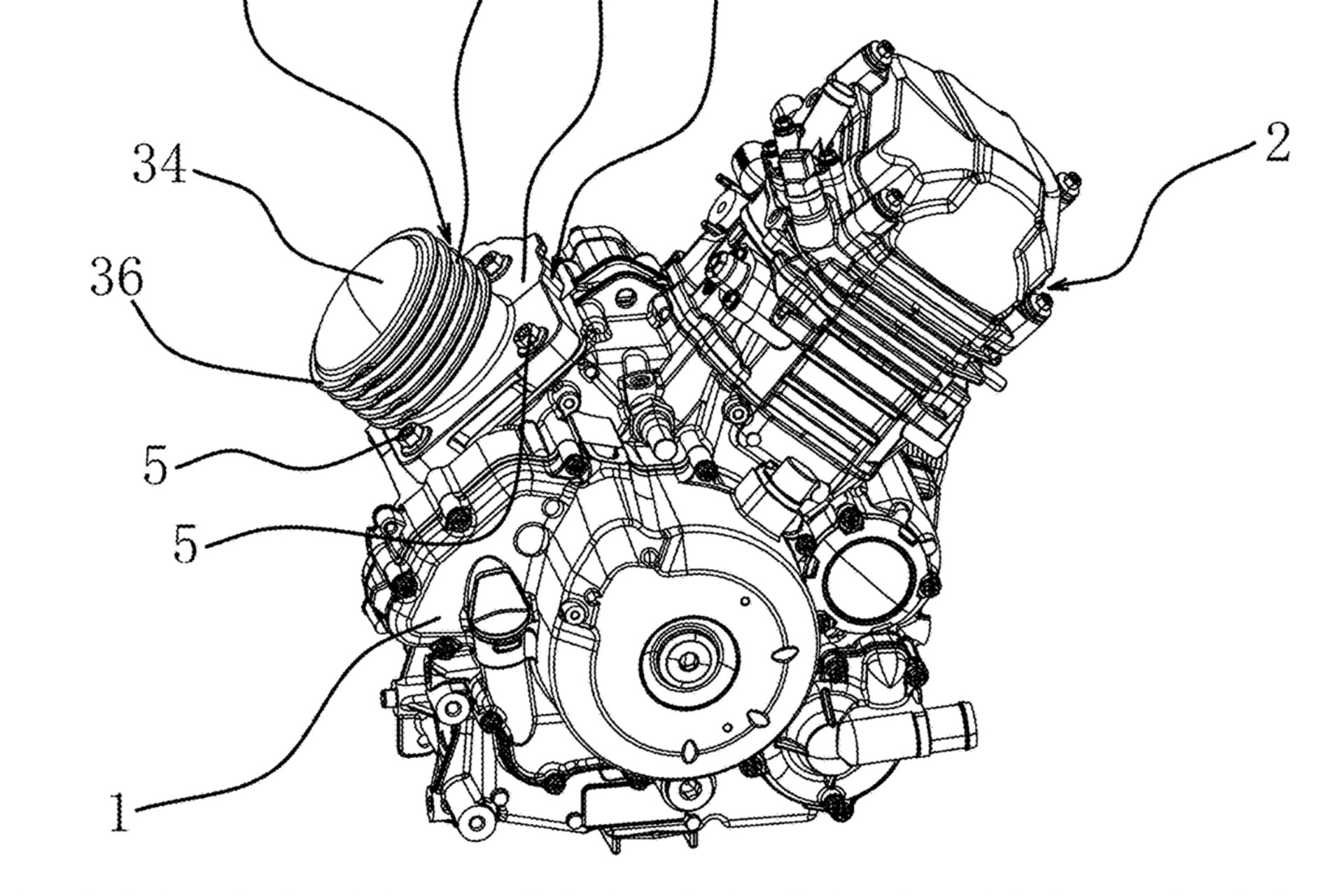
To achieve this, QJMotor It uses an independent connection base that is fixed to the crankcase using a flange. The balancing cylinder can thus adopt a different position without having to completely redesign the engine block. The patent itself indicates that one of the objectives is to take advantage of components from an existing multi-cylinder crankcase to reduce manufacturing costs, while improving the balance of a small displacement propellant.
“Why not use a balance shaft?” Here is precisely the reason for this invention. Single-cylinder engines have a simple, light and relatively cheap construction, but their main drawback is vibrations. A common solution is to install a balance shaft, although this adds parts, gears, weight, complexity and cost.
An idea that Ducati has already used
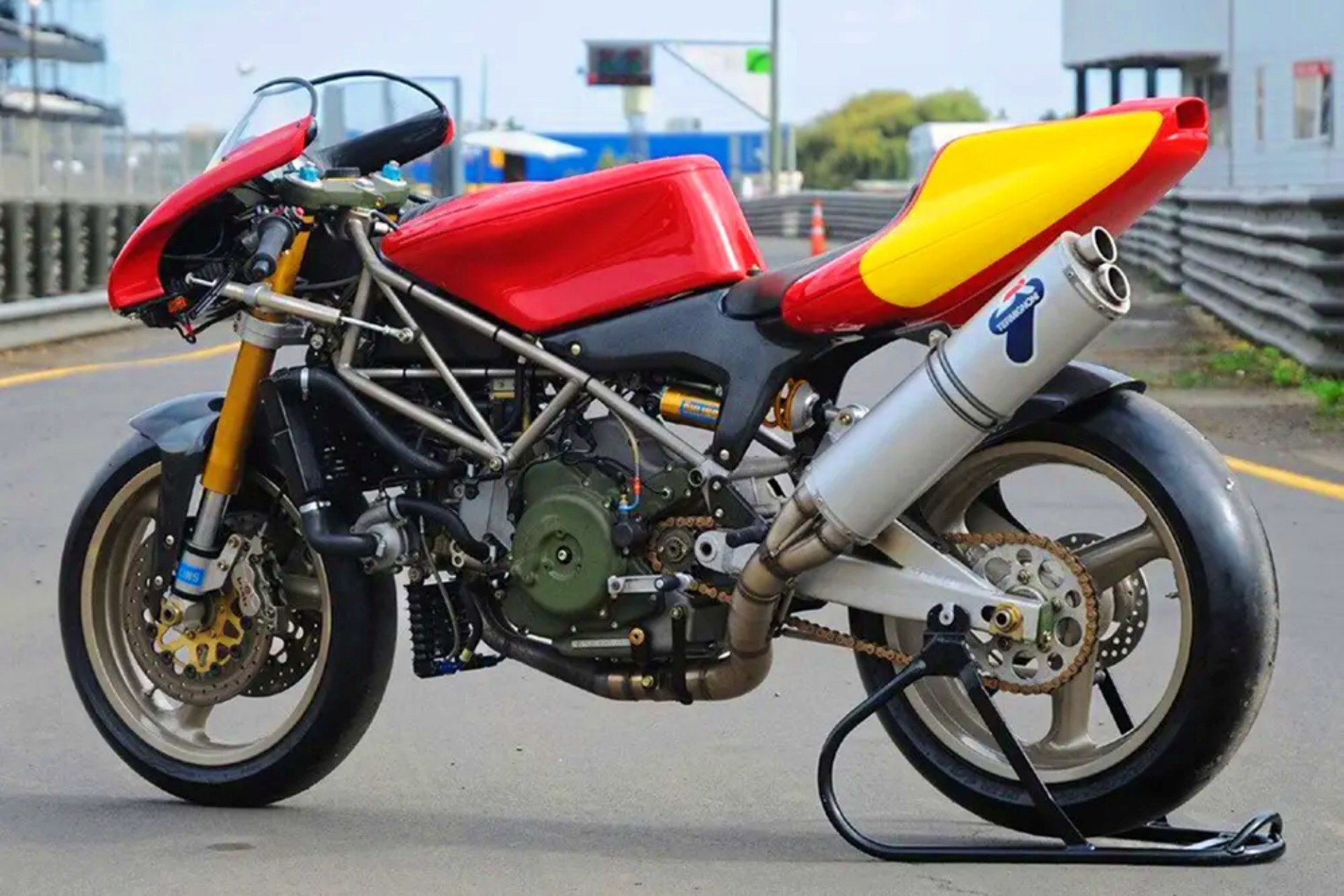
Although it may seem completely new, the concept has a particularly interesting precedent. During the development of the Ducati Supermono from the 90s, Massimo Bordi experimented with a very similar solution. The project was based on the architecture of a V2 and used a second moving element to imitate the mass of the missing piston and achieve a single-cylinder capable of rotating at a high speed.

The patent of QJMotor Now it recovers that concept with its own execution and, above all, much simpler from a mechanical point of view. But,what engine could be hiding behind? Here we enter speculative territory. The patent does not specify a specific displacement nor does it identify the engine that could use this technology.
The fact that it uses an 80º V architecture is striking, since Qianjiang It has V-twin engines close to this configuration. However, there is no confirmation that the patent will end up becoming a production propellant.