The search for more sustainable materials is opening up paths that a few years ago seemed like something out of science fiction. The motor industry has long been experimenting with natural fibers, recycled materials and alternative compounds to reduce the environmental impact of its products. Now, scientific research has put the focus on a rather unexpected protagonist: a small bee that manufactures a substance with properties similar to those of some conventional plastics.

The discovery comes from a study published on November 2, 2026 in the scientific journal Proceedings of the National Academy of Sciences (PNAS), under the title “Rapid soil degradation of a cross-linked, semicrystalline polyethylene-like polyester produced by Colletes bees“The work, developed by researchers from several American universities and led by Jonathan P. Cooteanalyzes the material that certain bees use to line the underground chambers where their larvae develop.
The interesting thing is that this compound has structural and thermal characteristics similar to those of polyethyleneone of the most used polymers in the world, but shows very different behavior when it remains in the natural environment. While conventional plastics can persist for decades or even centuries, the polyester produced by these bees undergoes considerable degradation in just a few months.

The secret is in the cellophane bees
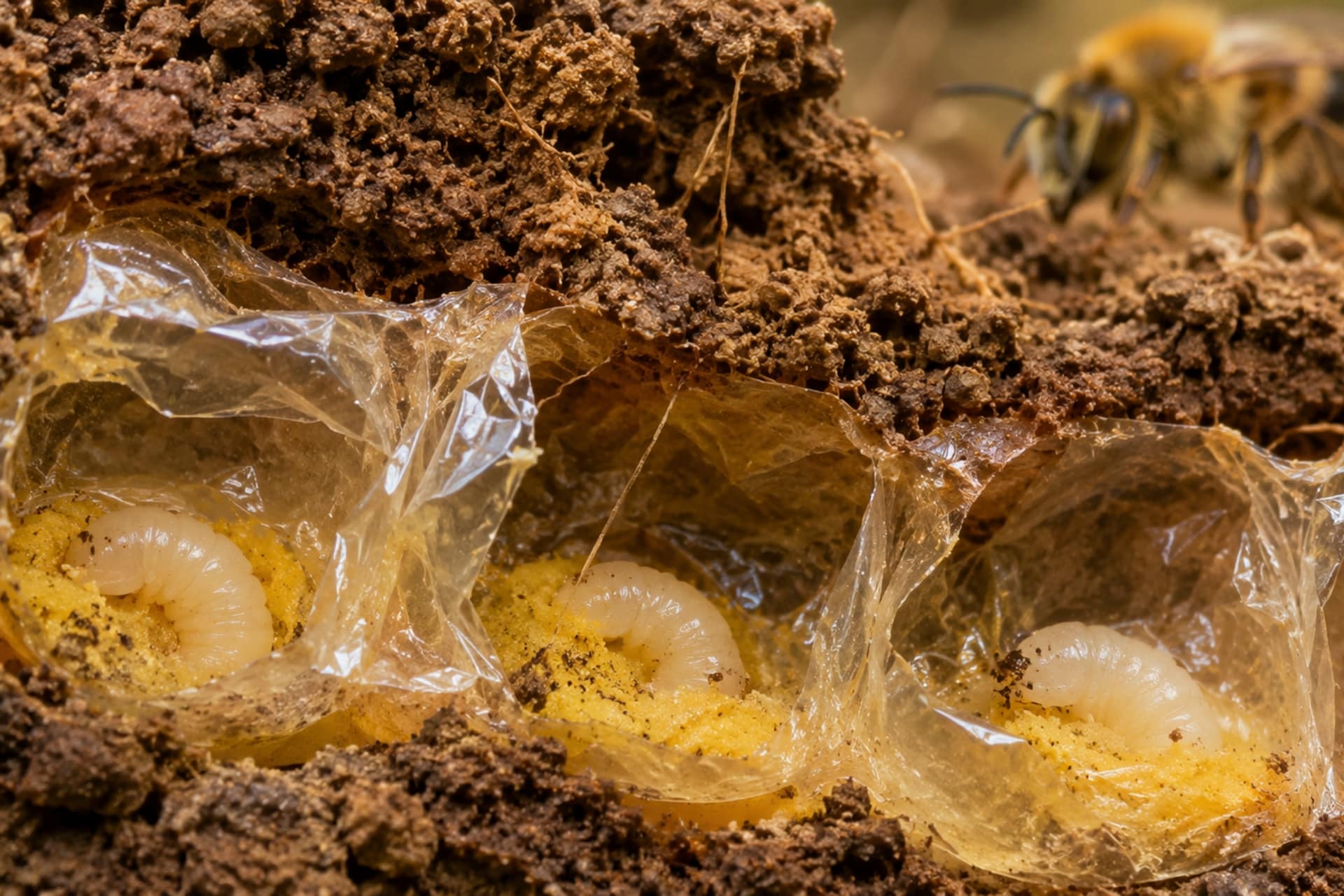
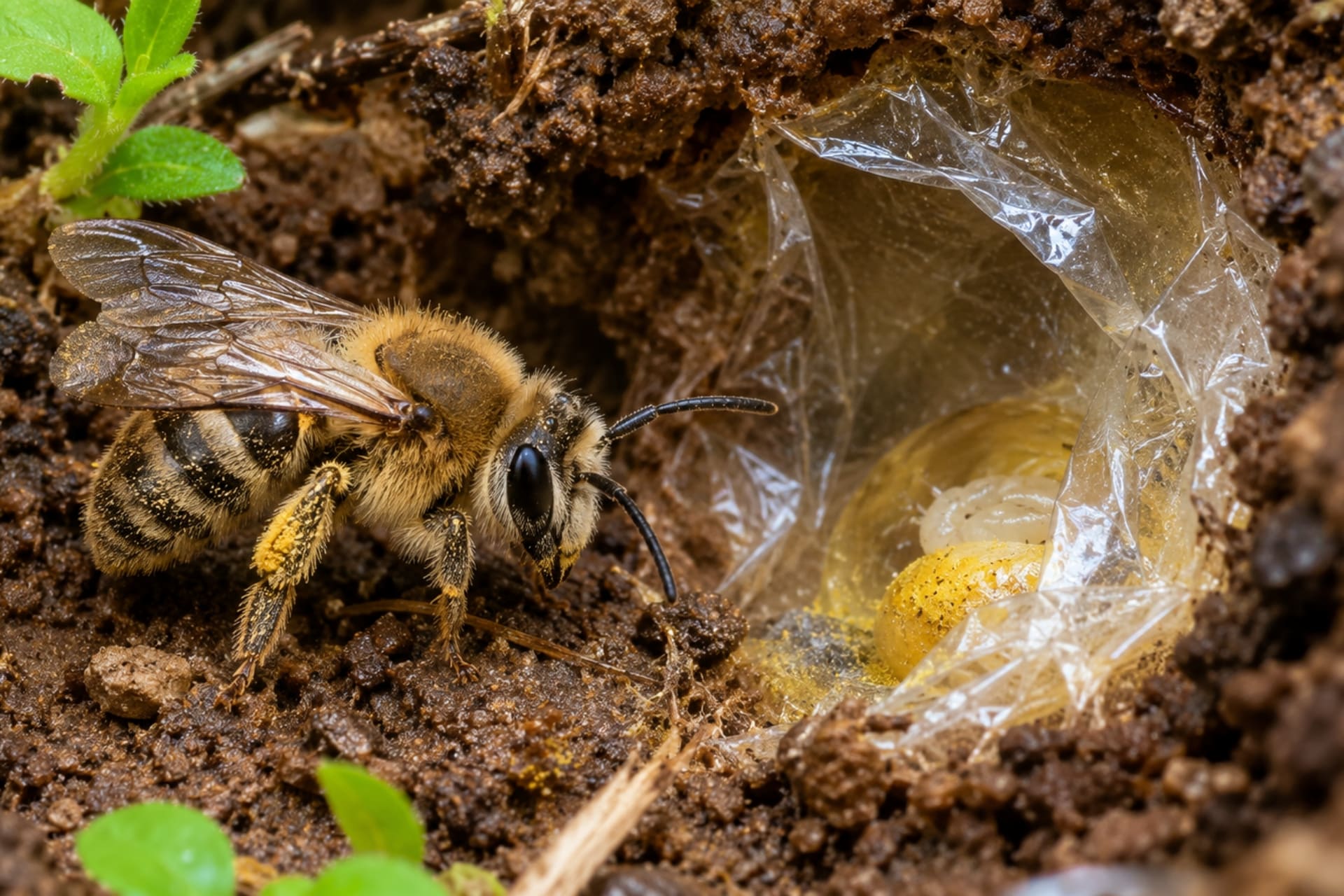
The protagonists of this research belong to the gender Collets and, specifically, the species Colletes inaequalispopularly known as cellophane bee. These are solitary insects that build their nests underground and prepare small individual chambers to lay eggs and store food for their future larvae. And, to protect these spaces from humidity and soil conditions, females cover the interior walls with a thin, waterproof and resistant film. At first glance, the coating is reminiscent of cellophane, hence the popular name of these insects.
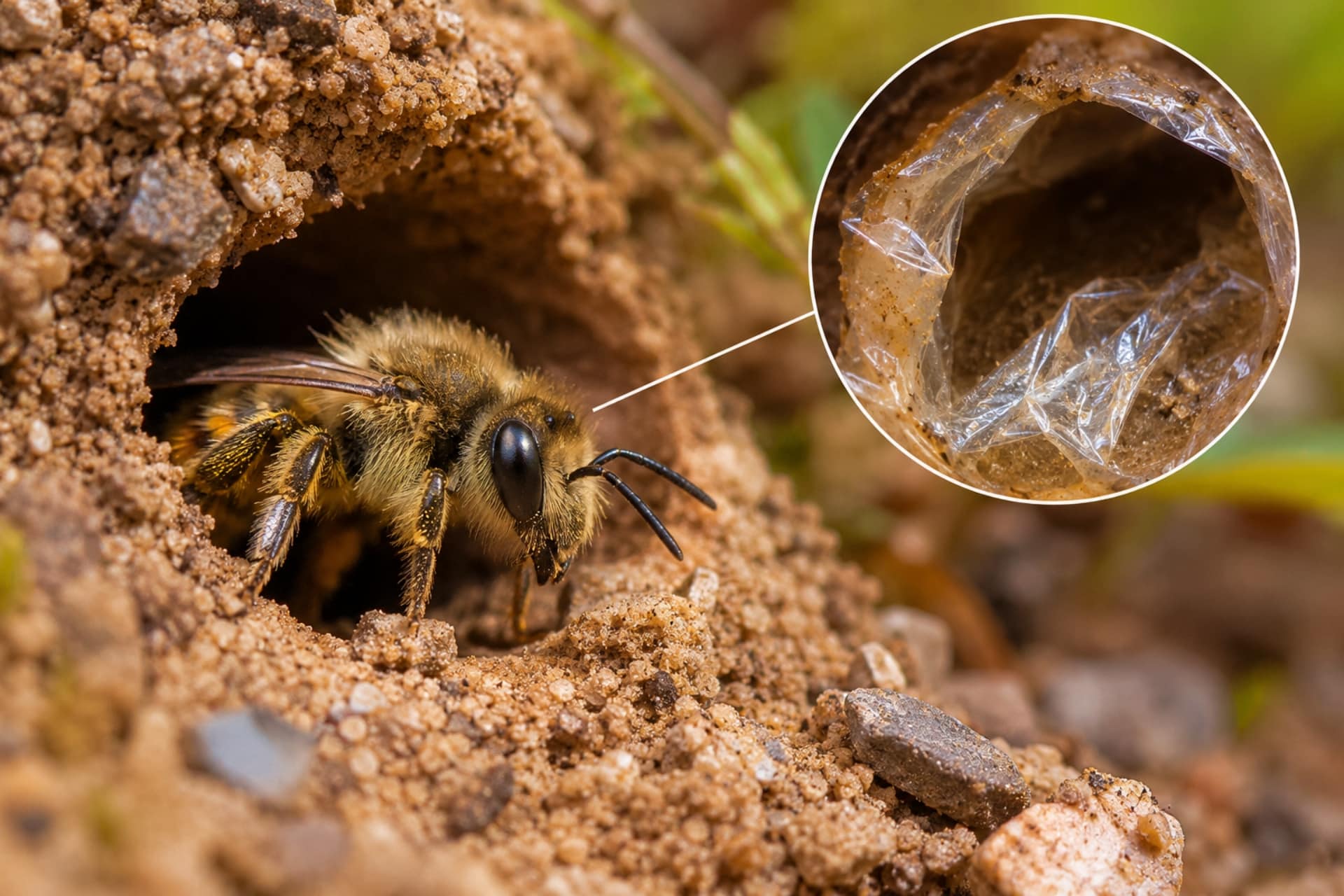
However, its composition is much more interesting than it seems. Researchers have identified a natural cross-linked and semi-crystalline polyester, with a structure that has similarities with polyethylene. The fundamental difference is in their chemical behavior: «incorporates ester bonds that can be attacked through degradation processes«, something that does not happen in the same way with the structure of conventional polyethylene.

The scientific team studied samples from nests collected in Tennessee and checked how their composition evolved after remaining buried. The results were especially striking: polyester represented approximately 73% of the weight of the coating when it was fresh, but that proportion dropped to 40% after 4 months on the floor. Furthermore, the transformation does not end there.
At around 7 months, the liners were starting to show cracks, while after around 11 months they had become brittle and could crumble when handled. And, it is precisely this degradation capacity that has aroused the interest of researchers. The material retains interesting properties during its use, but does not remain indefinitely in the environment once its function has ended.
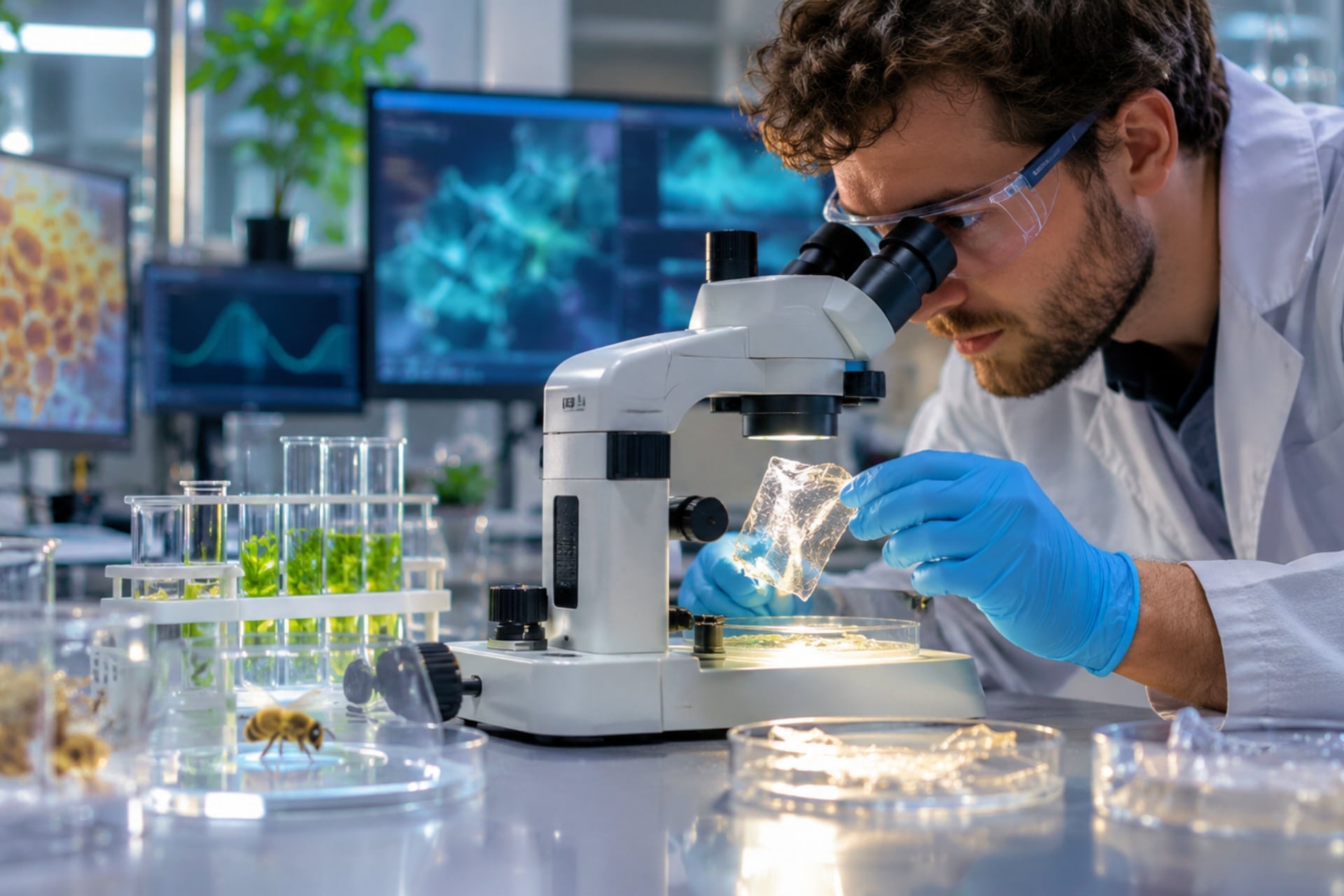
Can it replace conventional plastic?
The question is inevitable, especially if we take into account the enormous dependence of the industry on plastic materials. From packaging to interior linings, fairings, protections, ducts and numerous technical components, polymers are part of virtually any modern vehicle. The problem is that finding biodegradable alternatives is not easy. It is not enough to develop a material that disappears quickly: it must also maintain the necessary mechanical resistance, stability, impermeability and thermal behavior throughout its useful life.

This is where the bees polyester can provide especially valuable information. Scientists have observed that its structure combines a crystalline organization similar to that of polyethylene with chemical characteristics that facilitate its degradation. One of the hypotheses studied by the team is that certain enzymes, including esterases, could contribute to breaking the chemical bonds of the material. Its particular internal organization would also influence, which could leave some bonds more accessible to water, microorganisms and enzymes present in the soil.
For now, researchers need to better understand these mechanisms to try to reproduce them artificially. It is not about raising millions of bees to make plastic, but about studying how nature has managed to combine resistance and biodegradability in the same material.

From Suzuki flax fiber to the materials of the future
This research fits with a trend that is also beginning to gain prominence in the world of 2 wheels. Manufacturers are looking for alternatives to traditional materials without giving up the performance required by competition and daily use. A recent example is found in suzuki and his GSX-R1000R of the project CN Challengewhich has incorporated components made with natural flax fiber compounds developed together with Bcomp and Trasand which we have spoken to you about on several occasions. Yes, in the 2026 edition of the Suzuka 8 Hours, the Japanese sports car used this type of material in elements such as the fenders, side fairings, tail and spoilers.
The technology of Bcomp It combines natural fibers with reinforcing structures and resins to obtain light and rigid pieces. According to the company, its manufacturing can reduce CO₂ emissions by up to 85% compared to certain carbon fiber components used in competition.

The proposal that arises from the study of bees is different, but complementary. While linen composites seek to replace certain synthetic fibers in the manufacture of parts, natural bee polyester could serve as a model to develop new polymers capable of retaining their properties during their useful life and subsequently degrading under normal environmental conditions.
This could have applications in packaging, coatings and other products currently made with long-lasting plastics in the environment. In the longer term, it could also open up possibilities in the automotive sector.