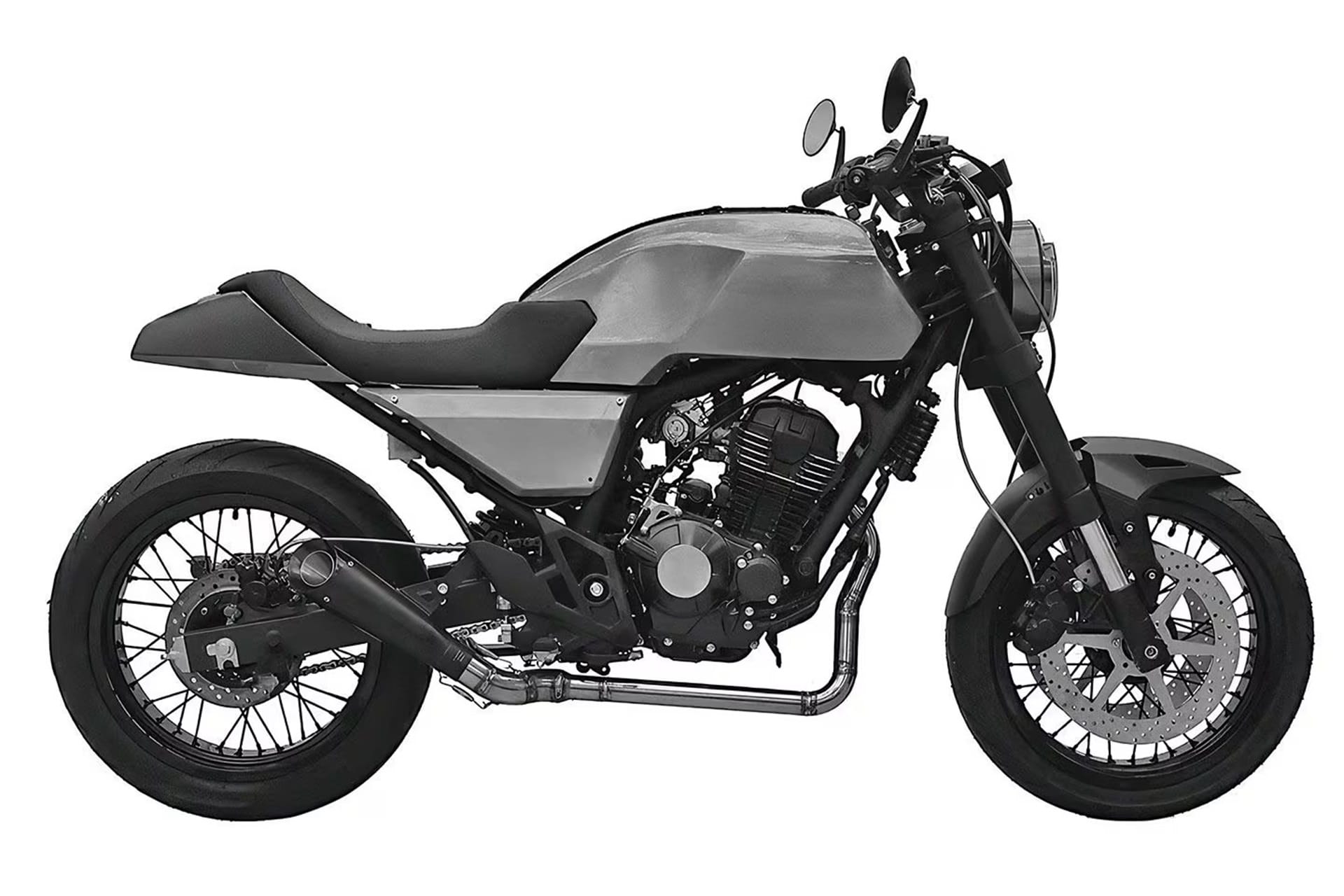
A new Honda Café Racer model seems destined to become a reality if we are guided by the latest photographs from the patent registry recently presented by the brand itself. In them we can see, unlike what is usual in these cases, images of a prototype in a really advanced state of development. All this makes us think that it could be ready for production sooner than we imagined.
And it makes all the sense in the world if we are guided by the latest steps taken recently by the golden wing firm. For example, the official launch of the new Honda GB350S 2025, equipped with a single-cylinder air-cooled engine, a motorcycle that stands out for its classic design and high technology. Also for the registration of the acronym GB 500, a mythical acronym within the brand.
Honda Café Racer 300: What we can expect
Now, after the leak of the aforementioned images of a Honda Café Racer model in the form of an initial prototype, everything indicates that the Japanese firm could be working on expanding its range of vintage-looking models, including an option of this style for the segment. low-medium displacement.
According to Cycle World, although the publication occurred in Japan, it seems that the design of this future Honda Café Racer is the result of Honda’s R&D department in Brazil. This idea arises from the propeller that appears to be installed in the prototype in the images, the same one that currently powers characteristic models of the Brazilian market such as the XR300L Tornado or the new Sahara 300.
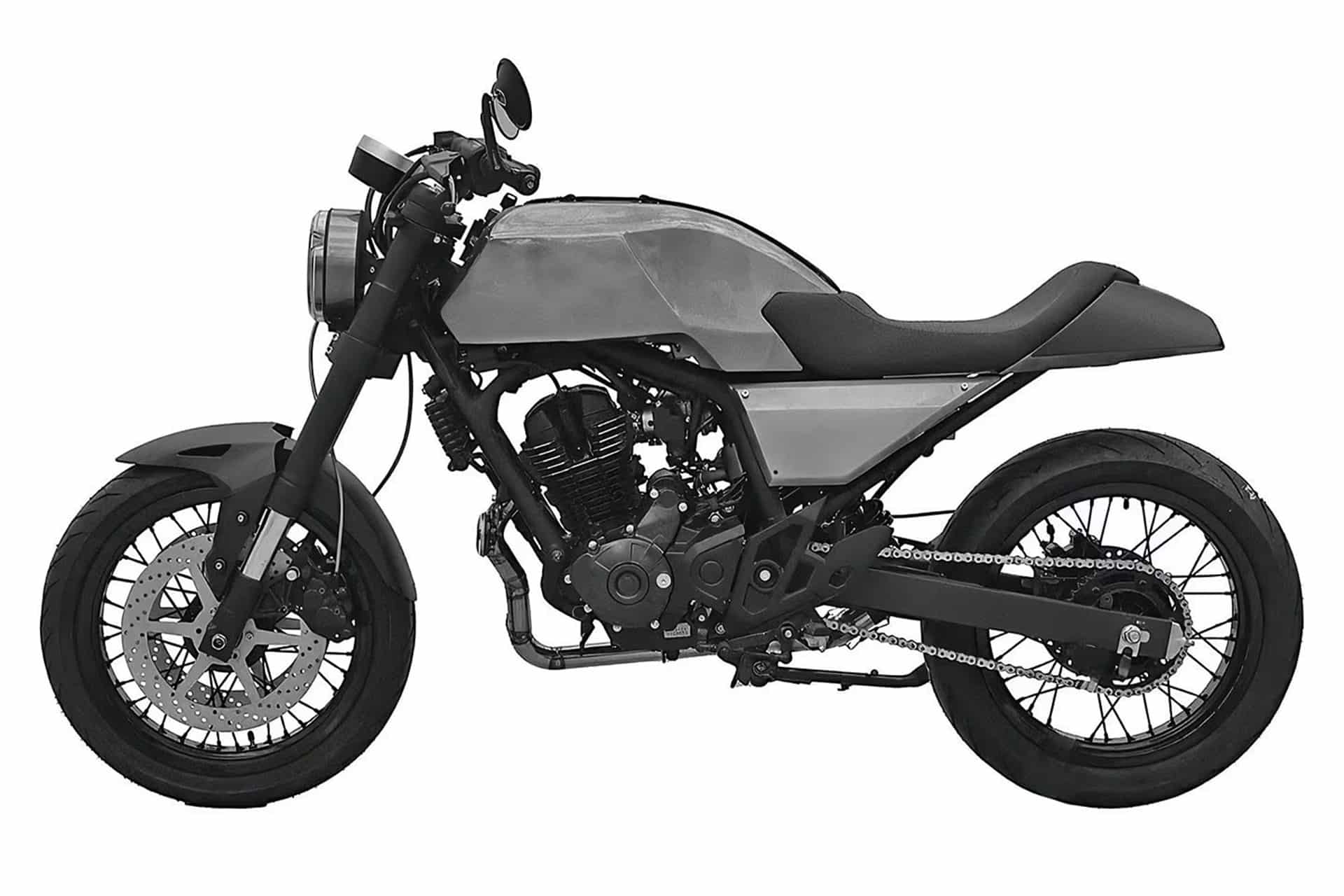
On the technical side, we are talking about an air-cooled propeller that has internal dimensions, in terms of diameter and stroke. 77mm x 63mm. This delivers a final power of 25 HP at 7,500 rpm and 26.4 Nm of maximum torque at 5,750 revolutions. In the cycle part, this Honda Café Racer model seems to use a good part of the elements already existing in the CB300F Twister, a sporty naked variant.
However, unlike the latter, the prototype in the images sports an inverted front fork, as well as a double front braking disc, although this does not make much sense in a model with these characteristics and features. For its part, the exhaust system, although it exhibits a configuration similar to that of the naked, does not use equipment designed to exceed current emissions regulations.
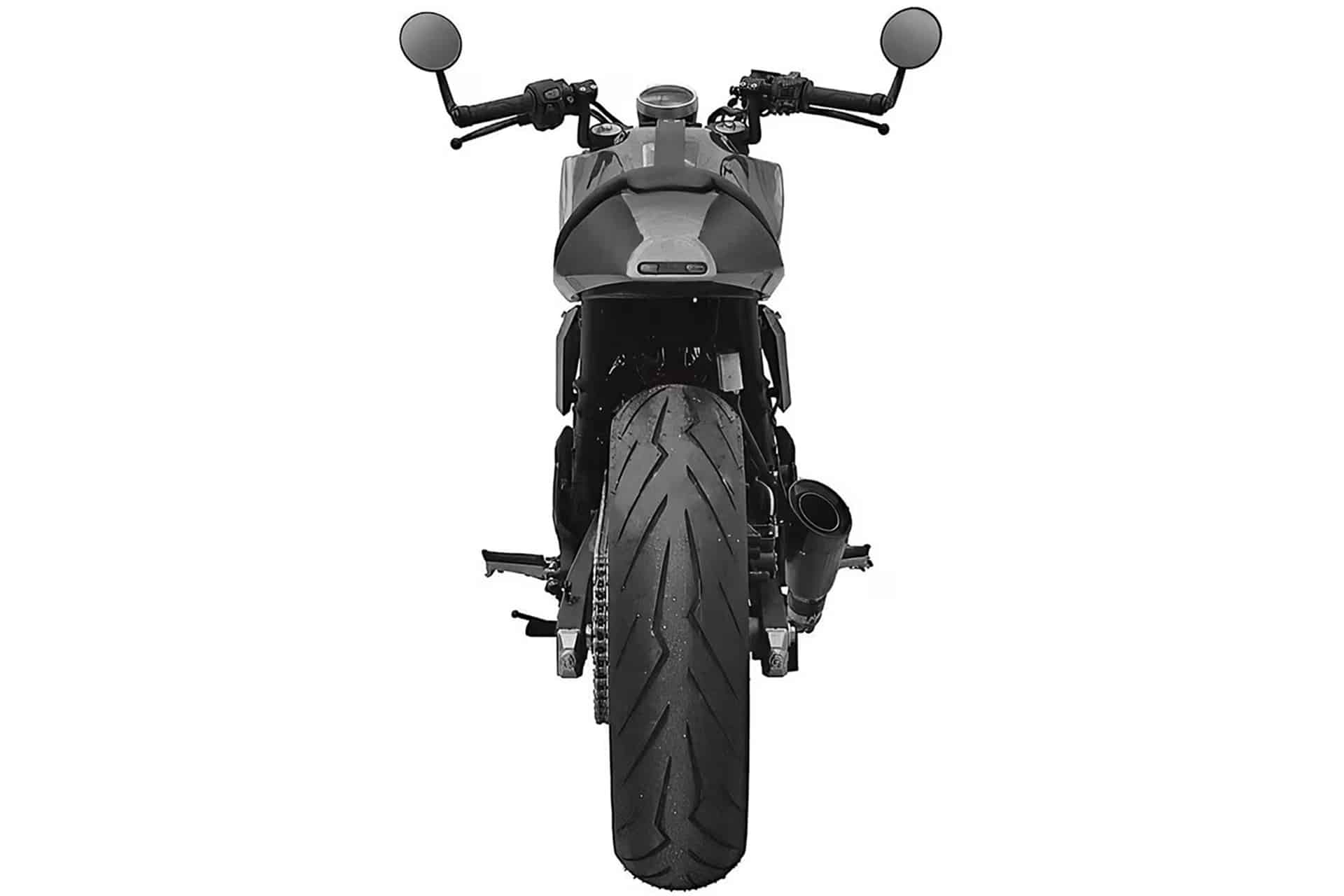
These key aspects confirm that, initially, we are facing an exercise in style, although this is not very far from a final version of this more than likely Honda Café Racer. Beyond the technical resources in use, we also find some easily recognizable equipment elements, such as the front headlight, the same one mounted on the latest version of the Rebel 300. This includes four individual LEDs within the main circular structure.
It is clear that, in order to become a series model, this Honda Cafe Racer still needs to adjust and adapt some of its components according to the needs of the current market and the demands in the form of regulations. In any case, we bet that it will not take long for the Japanese brand to give us some clues about what could be about to happen, regarding this issue, in a short period of time.