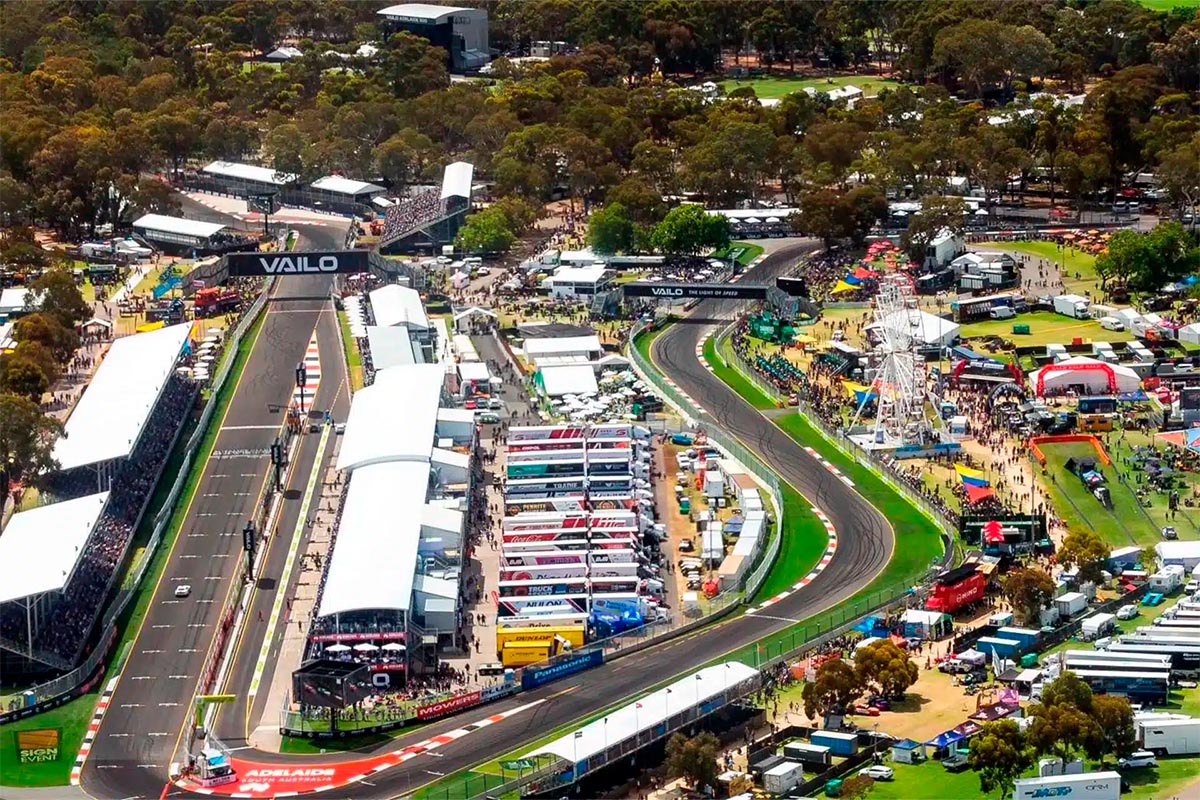
Although the Australian GP changes from Phillip Island to Adelaide it will still be a peculiar event and instead of the seagulls and various fauna approaching the asphalt what will be nearby in the new Adelaide Circuit will be the buildings and the city itself as it is located in one of the city’s parks.

This aspect is what has been met with frontal rejection by some of the citizens of Adelaide who have organized to demonstrate against it and create a platform to avoid not the GP itself but the reforms required by the adaptation of the track and which would entail the felling of several hundred trees.
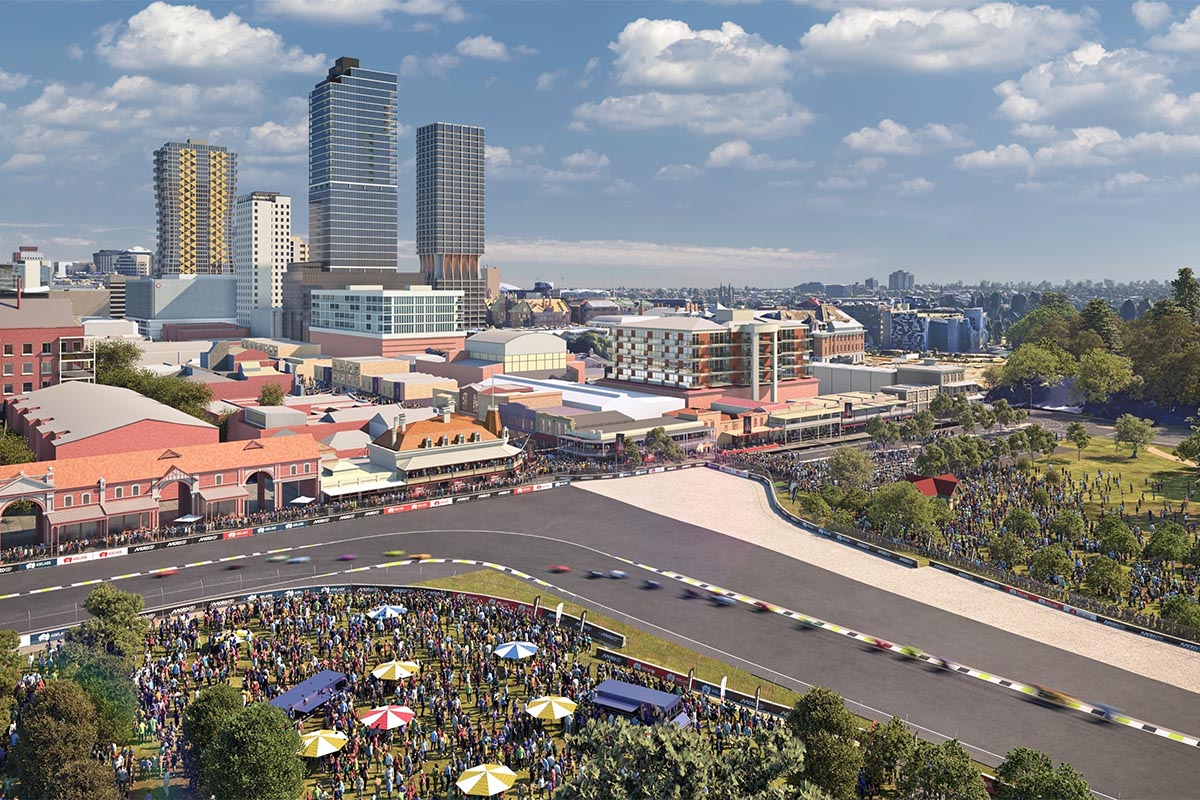
Even so, the project continues forward with an estimated investment of around 96 million dollars and with the commitment to replant many more trees than those cut down. But leaving aside the environmental and local controversy, focusing on the purely sporting part, there were doubts about what called itself “the first urban MotoGP circuit.”
The Adelaide Circuit will be urban, but because of its location and not because of its characteristics
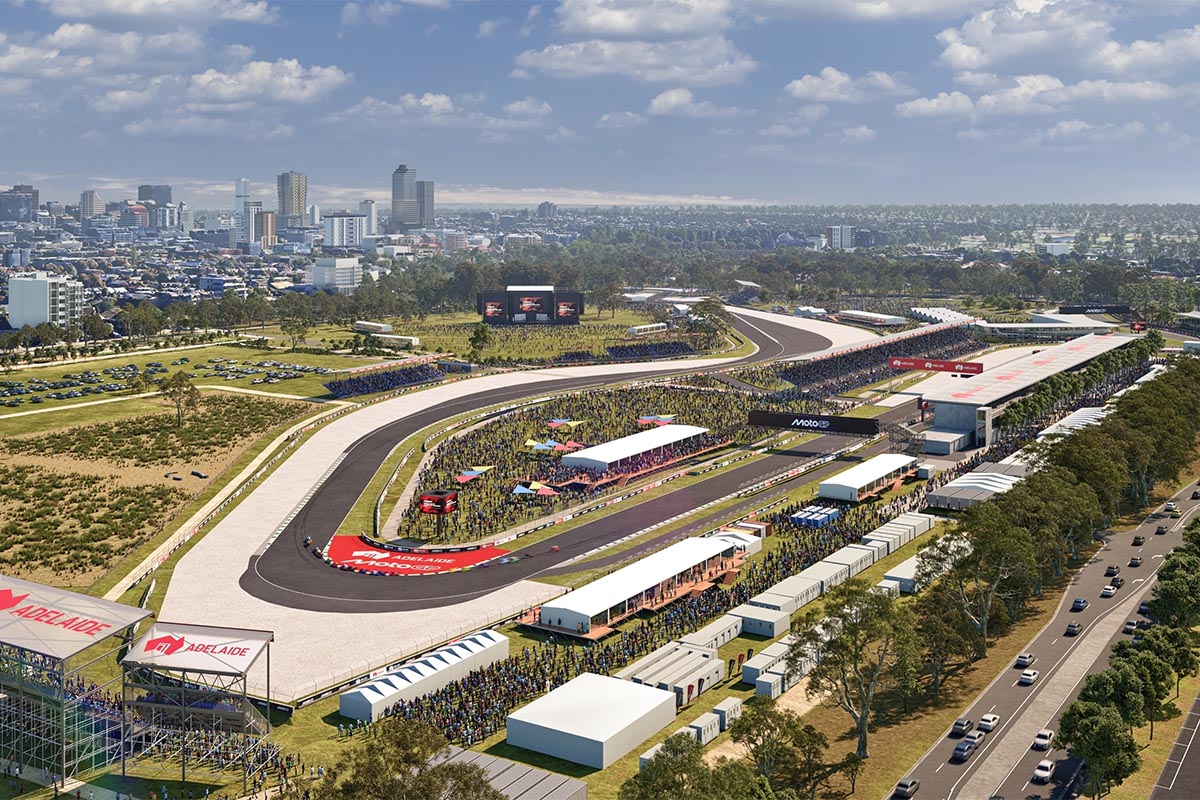
The main one, obviously, was security and that what is known as a street circuit does not seem compatible with the security measures required by MotoGP. So the official presentation of the project that will bring MotoGP to Adelaide is a first starting point to get to know the track which, although still in the same park as the F1 track, would be largely adapted and closer to a permanent track than to an urban one.
The track will be 4.13 kilometers, becoming one of the shortest in the championship, with 15 corners, quite a few escapes (at least in the video) and two chicanes that can be the only conflict point in case of a fall when the bike and rider can return to the track. It is estimated that the top speeds of MotoGP will be around 343 km/h and that the lap will be around one minute and 26 seconds.
FIRST LOOK 🇦🇺
Experience every turn, straight and braking zone of the proposed Adelaide layout 🏍️#MotoGP pic.twitter.com/V8MYEqKMIM
— MotoGP™🏁 (@MotoGP) August 30, 2026
What is certain is that both the MotoGP Group and FIM, and the event promoter, the Government of South Australia, are satisfied with the project. The truth is that, as we said, this first video, despite being a simulation, clears up certain doubts about security and leaves us with a track that will be fast and fluid.
Carlos Ezpeleta, deputy CEO of MotoGP Group, declared: “We have spent many months working closely with the FIM and our colleagues in Adelaide to design a MotoGP circuit that is exciting and, most importantly, safe.
We are incredibly proud of what has been achieved and are confident that it will offer a completely new and exciting experience for our drivers, teams and fans. From day one, we have worked closely with local stakeholders to ensure the circuit delivers positive community and environmental outcomes alongside world-class racing.
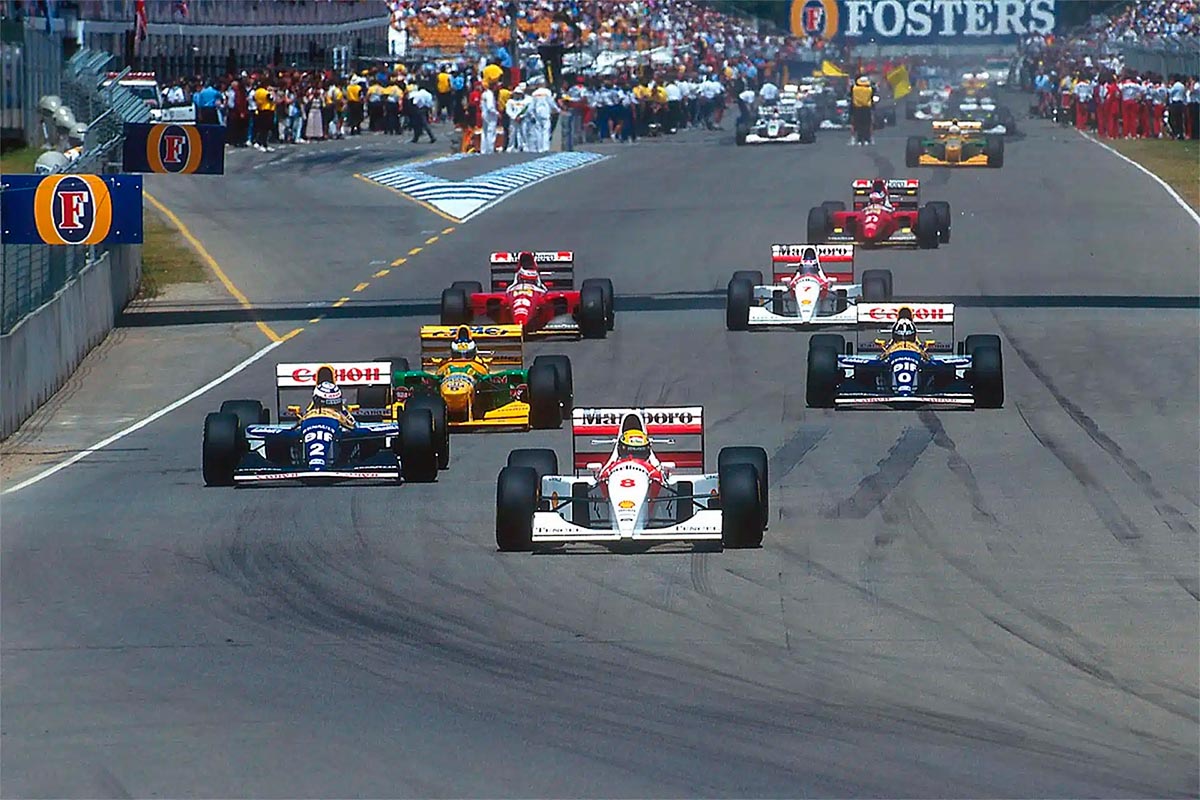
“We understand that a project of this scale will create some inconvenience, but our aim is for the people of Adelaide to feel proud to host MotoGP and truly connected to the event.” For his part, Pete Malinauskas, as Prime Minister of South Australia, added: “For more than 40 years, the Adelaide street circuit has generated some of the most famous images in motor sport.
Mansell’s burst tire. Senna and Prost on the podium after Senna’s last F1 victory. Craig Lowndes winning from the last place on the grid. Jason Bright’s spectacular rollover in Turn 1. In its new era, we will deliver something truly world-class, blending speed, safety and spectacular racing for both MotoGP and Supercars, bringing tens of thousands of visitors to our city and state, and projecting South Australia to a global audience of more than 630 million people.”