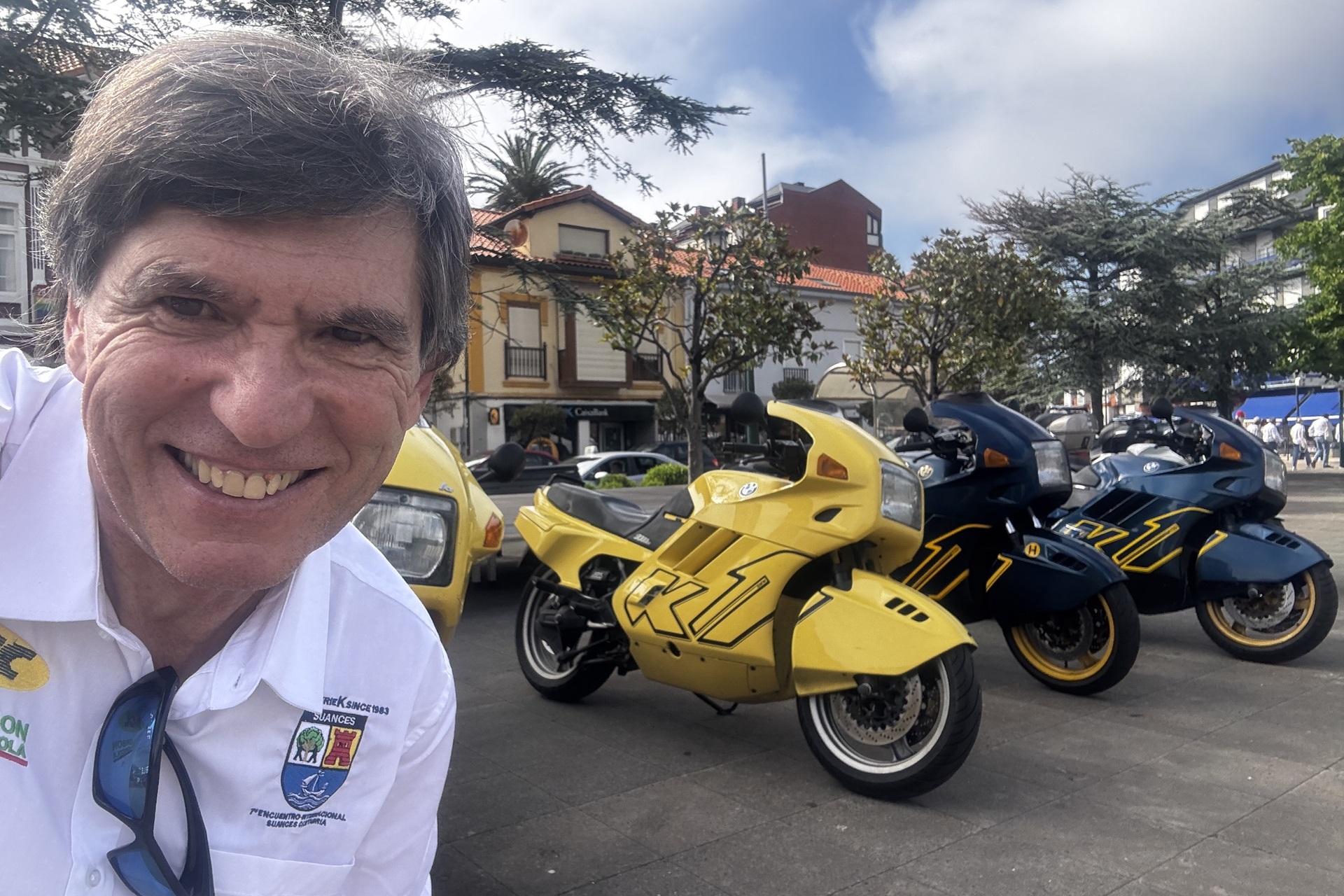
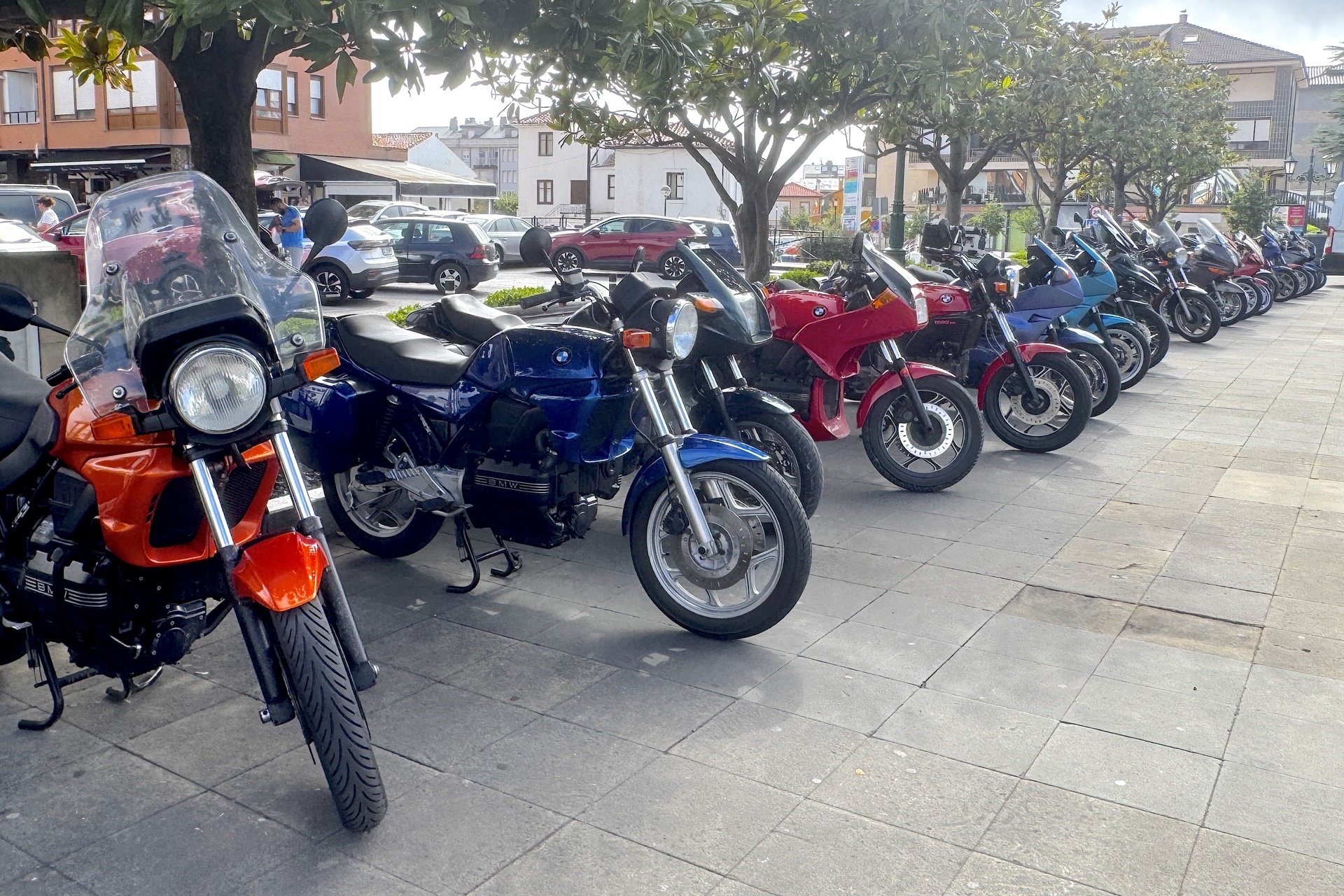
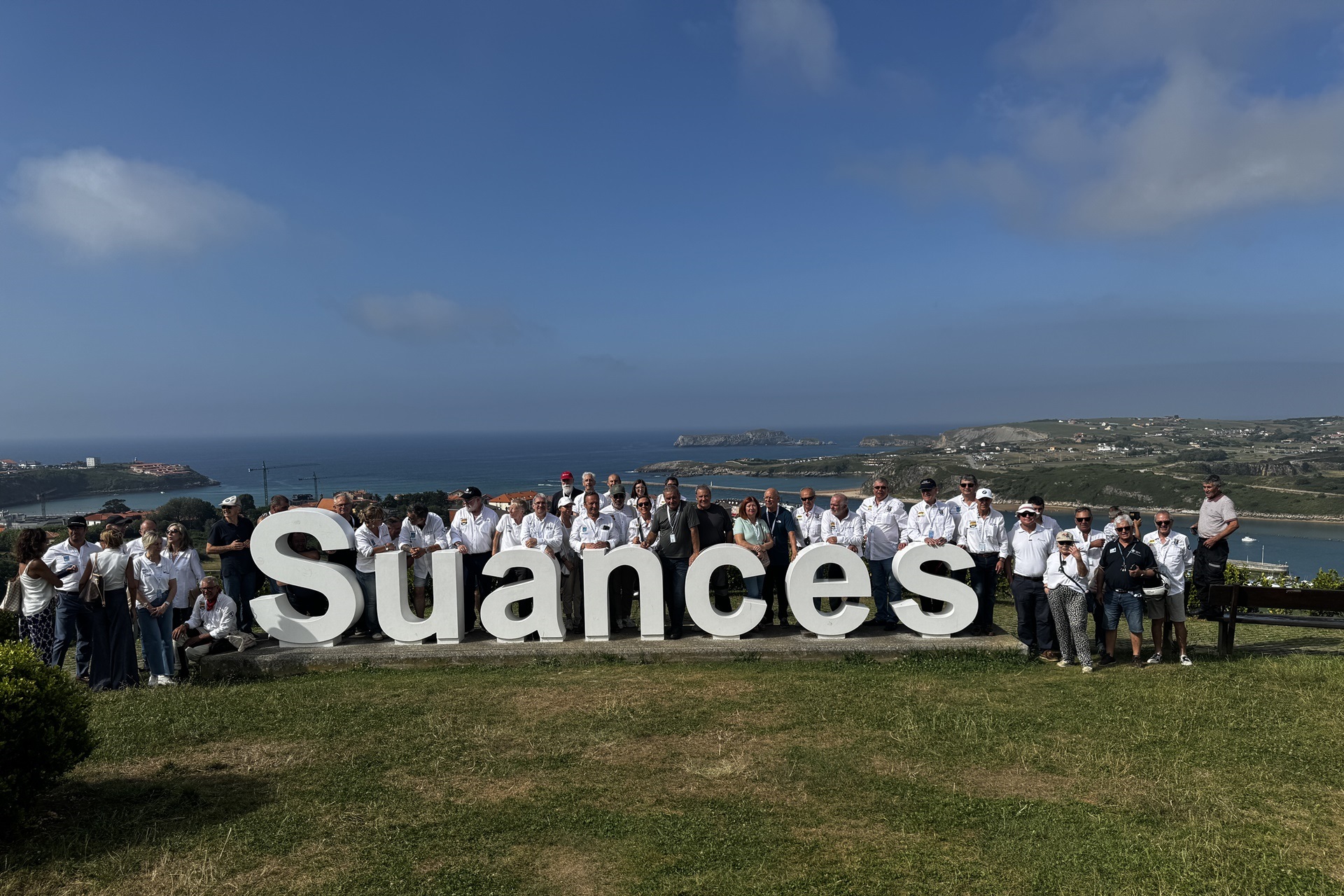
Convened by Salvador Illa and with impeccable organization, more than 50 units of BMW K models motorcycles in their versions 75, 100, 1100 and 1200 they met in the beautiful town of Suances (Cantabria) to live days of brotherhood and share memories around the German multi-cylinder.

History of the legendary BMW K saga
It was 1983 when BMW put a revolutionary motorcycle on the market: the K100. Until then, BMW had been considered a very traditional brand, not very innovative, although in reality it had always been historically evolving all aspects of motorcycles in terms of suspensions, transmissions, chassis and accessories. Everyone, in the musically famous decade of the eighties, associated the German manufacturer with a flat twin opposed twin engine, its very representative boxer engine. A classic.
Nobody could expect that, suddenly, it would present a four-cylinder motorcycle with injection, liquid cooling and, to differentiate itself from all the then powerful Japanese manufacturers, its engine did not have the four cylinders vertical or V-shaped or more or less inclined. “I had them lying” horizontal to the ground and aligned along the motorcycle. It produced 90 HP with a completely new configuration that, according to legend, had its origins in a European utility vehicle that had this unique structure, in order to save space under the hood.
Carburetors were in the process of extinction, electronic injection would prevail in the future and BMW knew this from its extensive experience in automobiles, as did ABS brake systems, which the K were the first motorcycles in the world to use. To further distinguish his new motorcycle, the engine would be self-supporting (it served as part of the chassis), and it would have a square exhaust pipe and, on the K 75, a triangular one.
Too many changes for the traditional Bemeuvistas and many new features for the motorcycle world in general. That new arrangement evolved and had different family branches over 22 years. From the original K100 (1983) to the latest K 1200 GT (2005) the family diversified into two main branches: 100/1100/1200 four-cylinder and K75 three-cylinder. In the large four-cylinder models, the S, RS, RT, LT and GT series multiplied the offer and, in addition, the K75, which had basic versions C, S, and RT.
More than a decade later (2016) the K1600 with six cylinders appeared, although this model was not present at the historical meeting. Too modern. The K models also competed in endurance with a prototype designed by the brilliant engineer Antonio Cobas, who won the Spanish endurance championship in 1985, and above all they were the motorcycles preferred by the authorities for patrol and escort duties due to their resistance and reliability.
Police and gendarmes from around the world said that the best motorcycle they had ever had was the K75 RT, which was not the fastest, nor the most stable, nor the one that braked best. But it was an absolutely unbreakable motorcycle, always ready for service with just the push of the start button. Of all the K versions, the most revolutionary was the 1988 K1.
Quite a style exercise from the German manufacturer. Almost completely faired including the front wheel and a generous tail with glove box. ABS brakes, spectacular colors and self-limiting power of 100 HP became an icon of the brand, and today it is one of its most desired models by collectors. The K1s were very well represented at the meeting with various models and in all the original colors.
All K in Cantabria
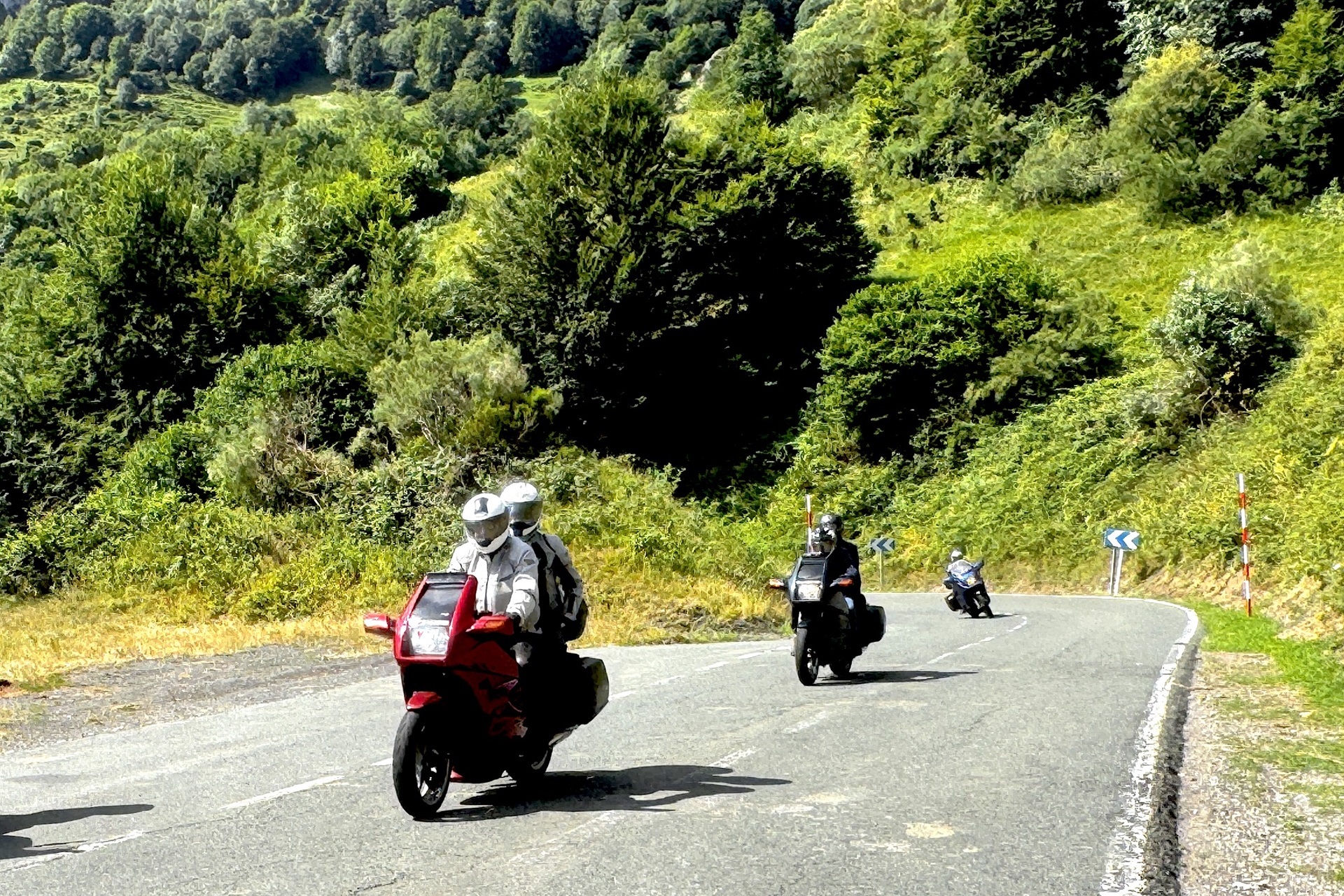
Practically all versions and models of the BMW K met at Suances at the end of June 2026 to share not only memories, but also a beautiful and long route through the Picos de Europa. First a little along the coast passing through the exterior of such beautiful and monumental towns as Santillana del Mar and Comillas, and then inland through the recently completed renovation and paving of the Hermida gorge.
This canyon, undoubtedly one of the longest and most impressive in the entire Cantabrian mountain range, is currently impeccable. New asphalt and expanded layout. An unmissable experience for anyone who enjoys discovering unusual corners of Spain. In Potes the ascent to another of the mythical mountain passes began. The port of San Glorio, where almost at the top you have to stop to take the obligatory photo at the Mirador del Corzo.
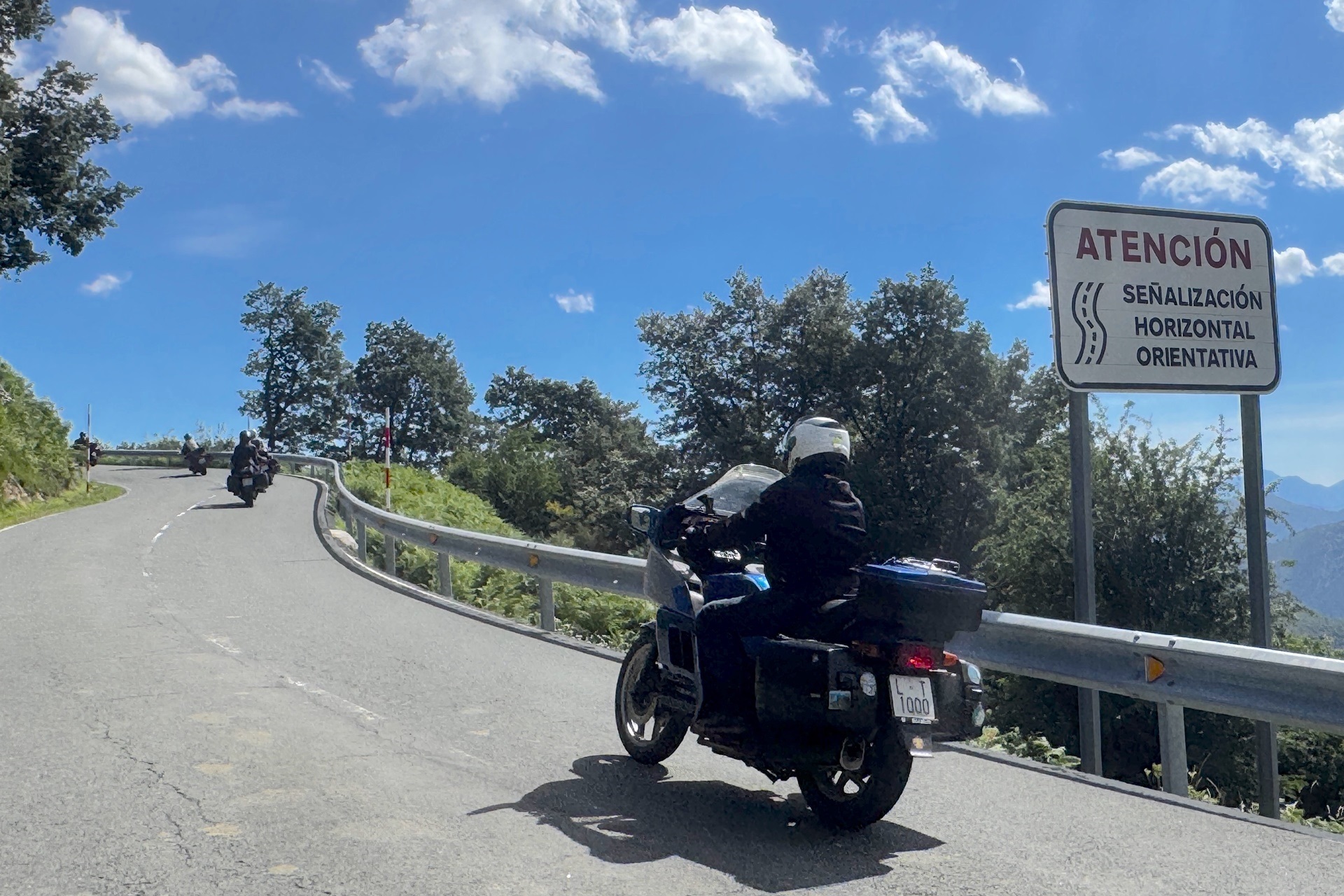
I have passed here dozens of times, but I have never seen so many motorcycles in both directions enjoying the hot Cantabrian spring. Some of us still climb a little further, to the Bear viewpoint on the Llesva hill, which is reached by a short detour that starts in the San Glorio port itself.
Until Riaño through the Tierra de la Reina region, the road is less twisted although it still has continuous curves. The return south from Riaño through the Pontón port and the Beyos gorge through which the Sella river runs. Another great natural spectacle, in which nature surrounds the traveler and in this case the K caravan, whose characteristic whistle bounced off the nearby walls. As it could not be otherwise, an Asturian fabada awaited the participants in Covadonga and the quiet return to Suances through the no less spectacular Cares gorge.
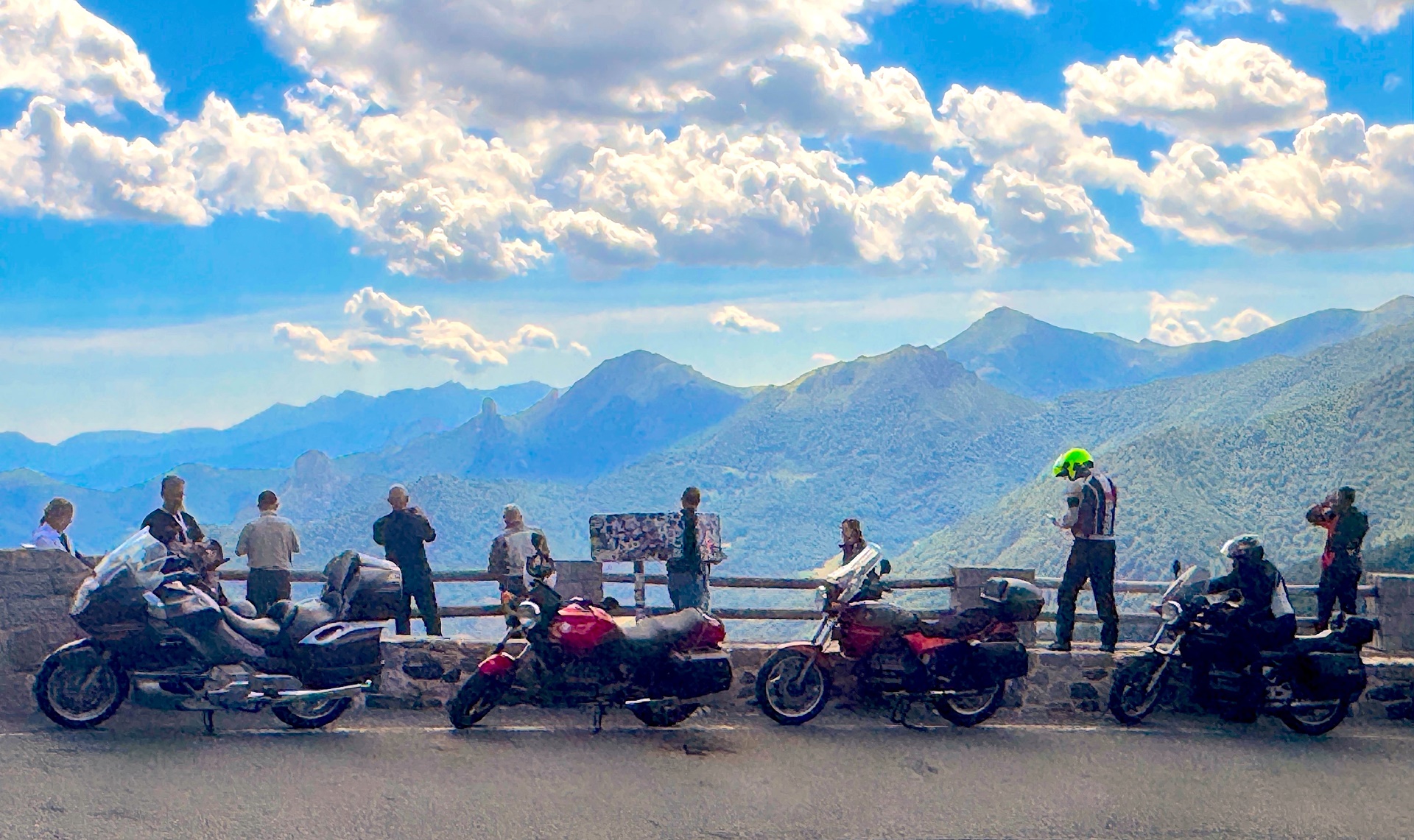
a long 350 km route of non-stop curves in which none of the already very old motorcycles had to need assistance. The K participants, many with more than 40 years of life, continue to demonstrate their reliability. Participants from different Spanish communities, but also from Portugal, France, Germany and even Ukraine made this event a truly international meeting.
The classic motorcycle meetings show that the Spanish fans already have many decades of passion, and now that some of the great manufacturers begin to celebrate their century of history, the Spanish make and model clubs already have their own identity card and recognized international prestige. This is the case in BMW of the K Clubs and BMW R 90 S.
If you want to know the entire history, sport and technique of BMW K motorcycles, in the book 100 years BMW Motorrad you can find all the information by clicking here.