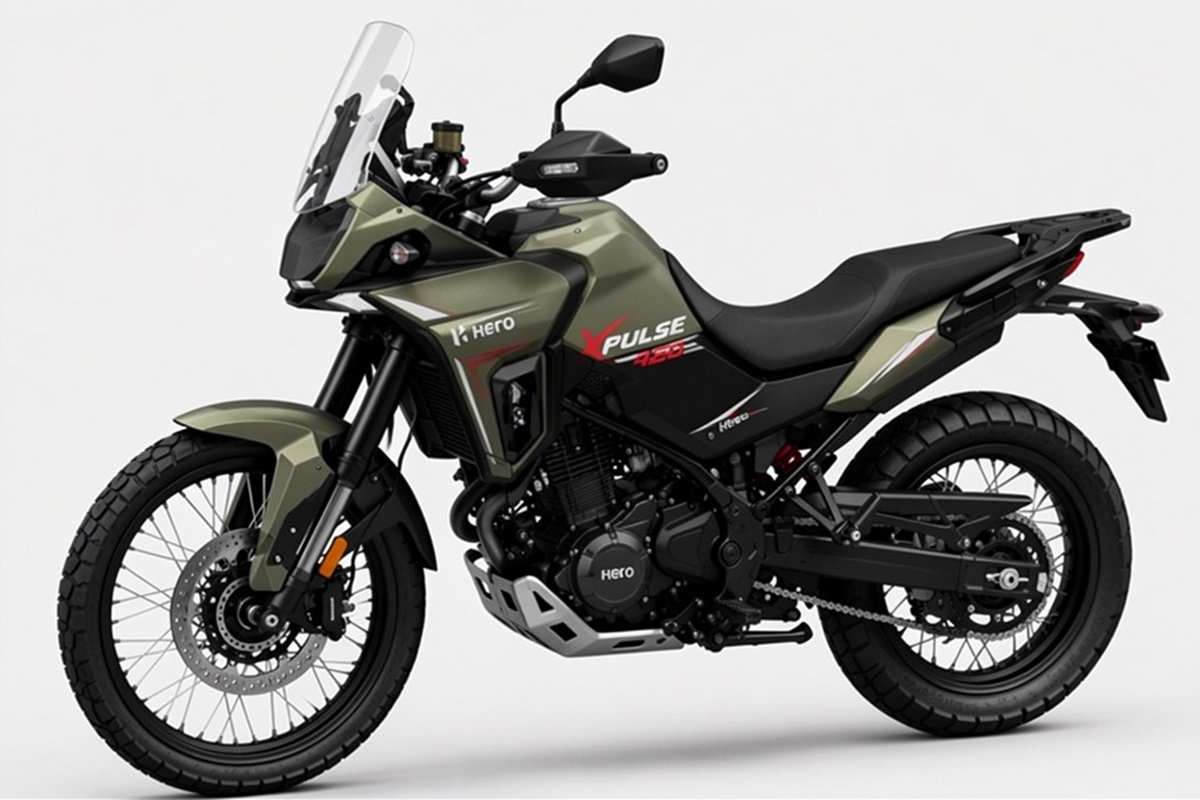
Just a few weeks after being spotted in full testing on the icy peaks that make up one of the high mountain passes in Ladakh, the long-awaited Hero XPulse 420 is once again being shown in public very close to that same area.
Once again, the long-awaited adventure model of the powerful Indian business group offers us a vision of the main technical aspects that will end up shaping its final configuration.

The XPulse 420 and its importance for Hero MotoCorp
In the last two seasons, Hero MotoCorp has taken a step forward in terms of overall performance of its models. In this context, the XPulse 420 is proposed as the company’s future flagship, thanks to raising the bar in terms of performance compared to the frames that make up its current range. Not only that; With it, a new stage of industrial development opens at all levels within the brand.
Comparisons are odious (or so they say) but if we draw on them we can understand the commercial importance that the new Hero model will have, inside and outside India. Just by taking a look at its younger sister, the XPulse 210, we can understand de facto what the Asian firm is at stake with its long-awaited XPulse 420. A mount that directly rivals emblems of the medium-displacement trail category such as, for example, the renowned Royal Enfield Himalayan 450, the KTM 390 Adventure or the Kawasaki KLE500 or the recently arrived BMW F 450 GS. But also to the new wave of trail models for the A2 such as the Morbidelli T502XR, Moto Morini Allthrike, the CFMOTO 450MT or the QJ SRT 450RX, among others.
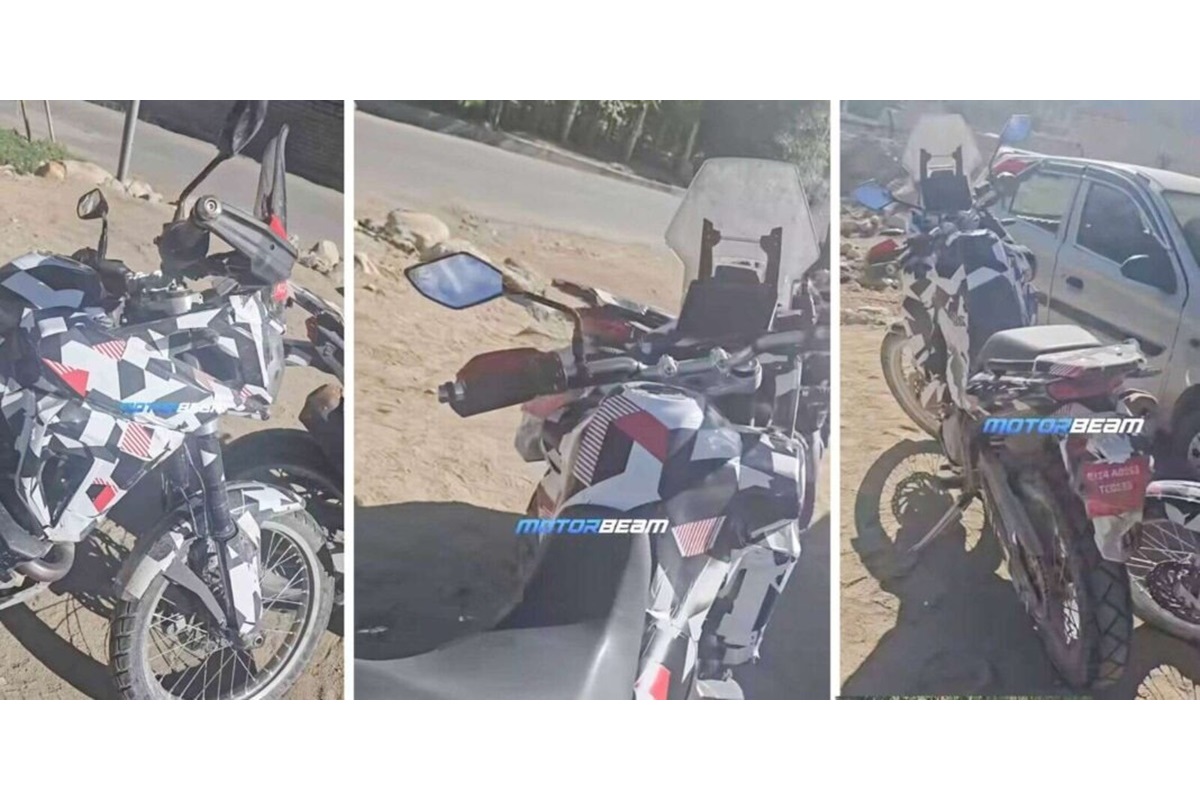
The XPulse 420 very close to its final version
Returning to the latest leaked images of a test mule being tested on Indian roads, we can confirm that it continues to maintain those key aspects that we talked about previously unchanged. Starting with a set of radial tires, probably 21 inches in front and 18 inches in the rear, shod with mixed-use tires.
Regarding the suspension section, Hero uses the classic configuration of inverted fork at the front and monoshock at the rear. Both elements are responsible for maintaining the dynamic balance of the assembly, in addition to providing the precise damping to the two main elements that make up the cycle part: on the one hand a steel multi-tubular chassis and on the other a conventional swingarm, probably made of aluminum.
This section of the XPulse 420 is completed, among others, with a braking kit that includes two wave-type discs, one per axle, and a radial anchor caliper installed on the front of the motorcycle. All this is combined with equipment that lives up to what is expected from a model of this type, where efficiency takes precedence both on and off the road. In this case we can see how this test mule is equipped with a two-level bench seat, LED lighting, a windshield in an almost vertical position and a pair of good-sized hand covers.
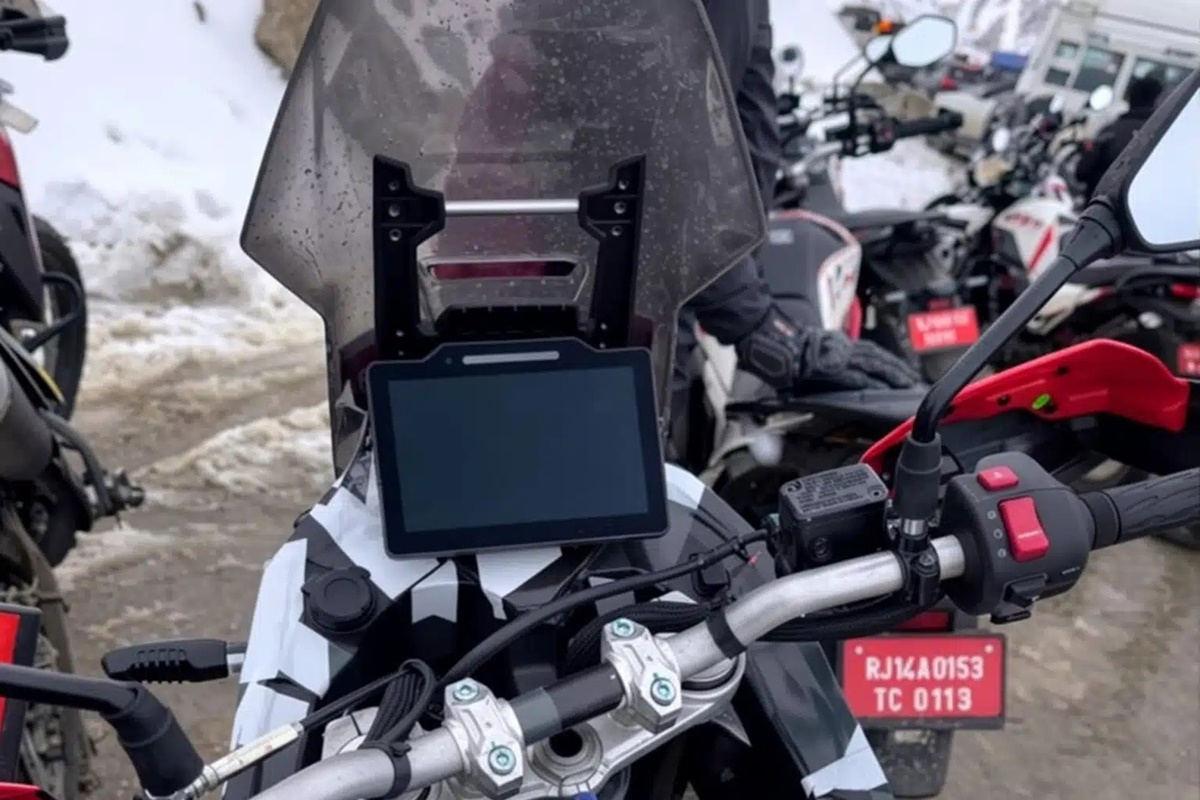
Other characteristics that denote the general philosophy of the Xpulse 421 would be the anatomical shapes of its tank, to which the pilot would adapt in any type of driving; the metal running boards with a strong upper support and a rear luggage rack ready to accommodate part of our luggage. Likewise, we cannot forget the instrument panel chosen to inform the pilot while he enjoys the piloting experience at the controls of the future Hero model.
We are talking about a TFT screen, installed in a vertical position and which most likely has smartphone connectivity including functions such as call and SMS alerts. Other notable aspects of the model, at least exhibited by this test unit, would be “A wide tubular handlebar, an upright stance, and a long, one-piece seat contribute to its long-ride capability.”as stated by the companions of Gaadi Waadi.
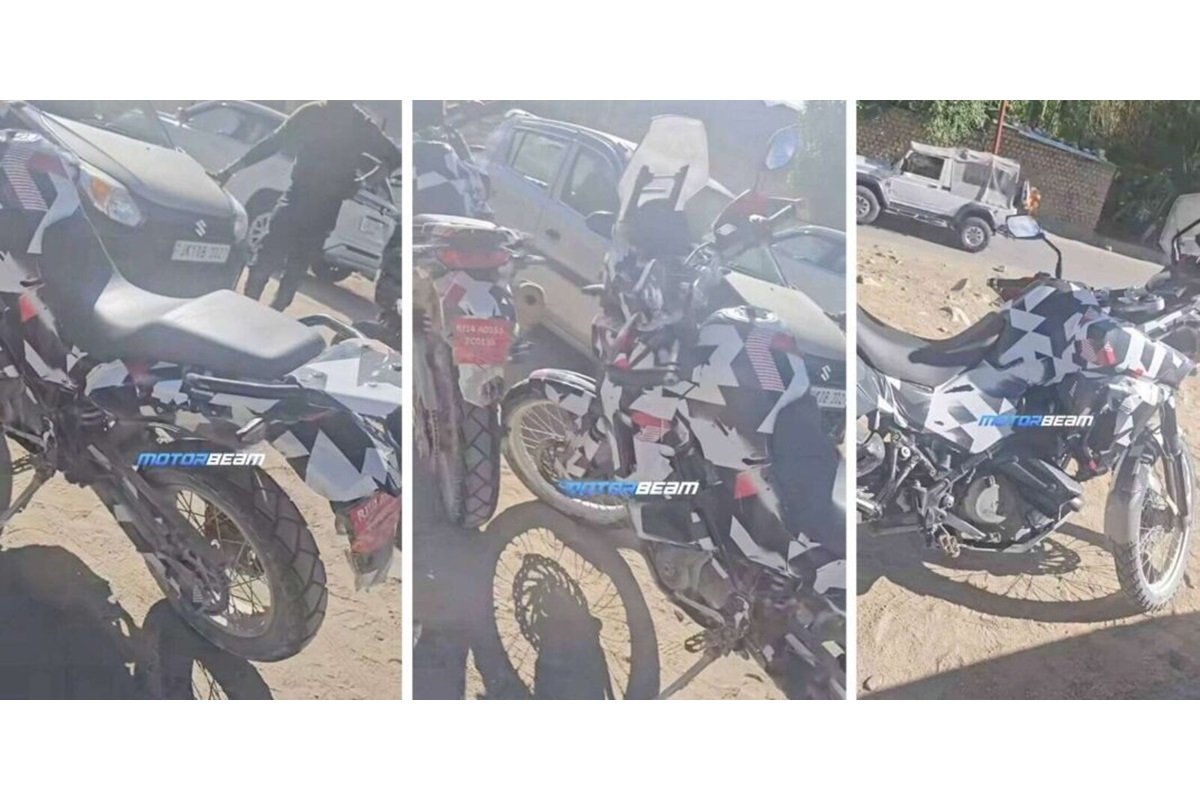
On the other hand, we have the fuel tank that at first glance seems to have a greater capacity than the current XPulse 210 has. Their shapes reveal it, “with extended covers that integrate with the side panels” our colleagues conclude. Also notable is the design chosen to shape the radiator covers, the control pins (which appear to be new) or the handlebar itself, which a priori “leaves enough room for accessory mounts.”
Finally, regarding the mechanics used by Hero to power this 45 HP, offering up to 40 Nm of maximum torque. And since power without control is of no use, it is foreseeable that Hero’s new ADV model will have an elaborate electronic package. This should have, among others, driving modes, cruise control, traction control, disconnectable dual-channel ABS, etc.