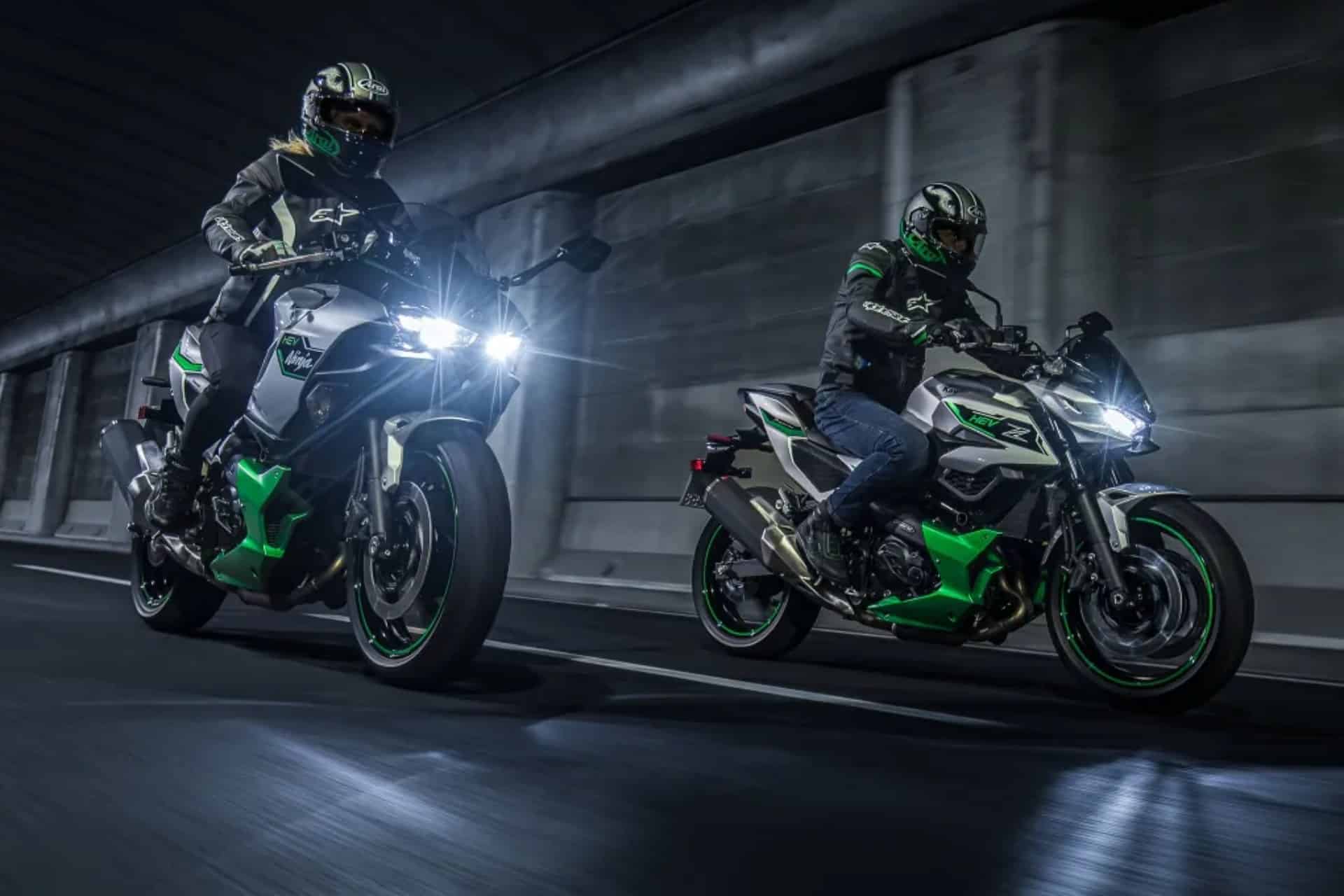
At a time when electrification is advancing at different speeds within the world of motorcycles, Kawasaki continues to defend an intermediate path that, although minority, is beginning to make more and more sense. The Kawasaki Ninja 7 Hybrid and Z7 Hybrid They not only represent a unique technological commitment, but also a different way of understanding the transition between combustion and electricity.
Now, both receive a major update focused on what really matters: the pilot experience. Since their launch, these 2 motorcycles have generated both interest and debate. No wonder: they are still the only mass-produced hybrids in the sector, combining a thermal engine with electrical assistance in a package designed for real, not experimental, use.

Now, with this latest evolution, Kawasaki has worked extensively on electronic management, especially on the ECU, with the aim of making the transition between modes more intuitive and useful in everyday conditions. The result is a clear improvement in driving mode selection and overall system response.
What’s new in the 2026 Kawasaki Ninja 7 Hybrid and Kawasaki Z7 Hybrid
The most relevant change is in the operation of the electric mode. Until now, the possibility of switching between EV and hybrid mode was limited to very low speeds, specifically up to 26 km/h. With the update, that range is extended to 60 km/h.

This completely changes the approach in the city. It is no longer a one-off function, but a tool that can really be used in urban traffic, where speeds constantly fluctuate and efficient driving makes more sense.
Another key improvement affects the sport mode, one of the most striking elements of these hybrids. Until now, its use was linked exclusively to operation in manual mode using cams on the handlebar. With the new update, it is also possible to use Sport mode with the automatic transmission. In practice, this allows access to a more direct response and a more dynamic character without the need to manage gear changes manually.

It is an adjustment that can generate division among the most purist bikers, but it clearly expands the range of users. Above all, it reinforces the idea that these motorcycles do not seek to complicate driving, but rather adapt to different styles and situations. The most striking thing of all is that, today, Kawasaki remains practically alone in this field. While hybrid systems have become standard in automobiles, in the motorcycle world they have barely had any real development.
The reasons are multiple: technical complexity, high costs and a traditionally more conservative user base. Integrating two propulsion systems in a motorcycle without compromising weight, balance or sensations is not easy, and that explains why most manufacturers have chosen to evolve combustion or jump directly to electric.
More information: “Espresso di Bimota”: The Kawasaki ZX-4RR could be dressed in Italian haute couture

However, Kawasaki has decided to explore that middle ground and, more importantly, perfect it. These updates are not a revolution, but they are a firm step towards a more coherent and practical technology. With these improvements, the Kawasaki Ninja 7 Hybrid and Kawasaki Z7 Hybrid They reinforce their positioning as a real alternative within the panorama. They do not seek to replace traditional motorcycles or compete directly with pure electric motorcycles, but rather to offer a balanced solution. An intermediate point, more practical.
The question now is whether the rest of the manufacturers will follow this path or if Kawasaki will continue to develop this technology alone. For now, what is clear is that the hybrid motorcycle concept is no longer a rarity. As we have told you, it is an option that is beginning to mature.