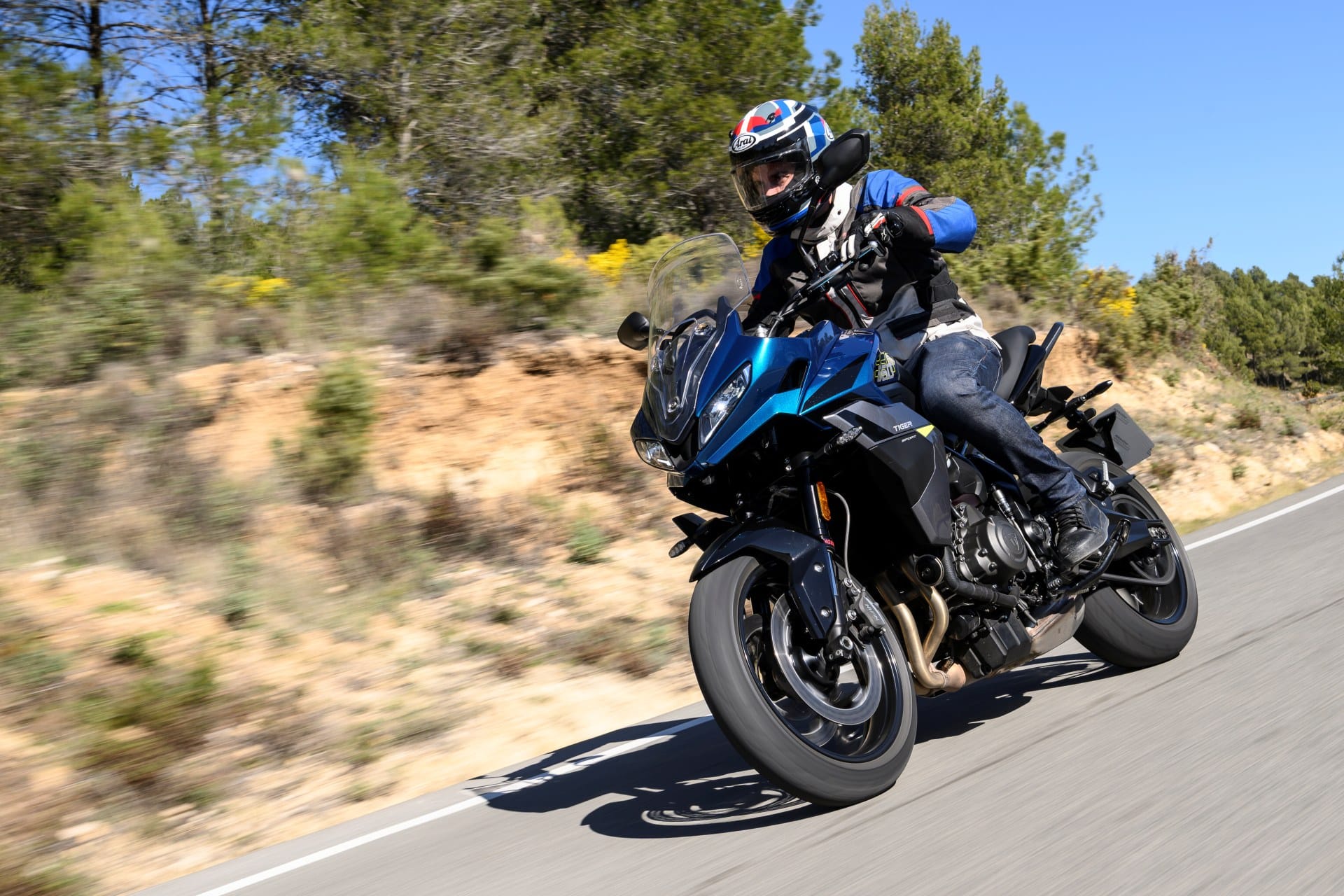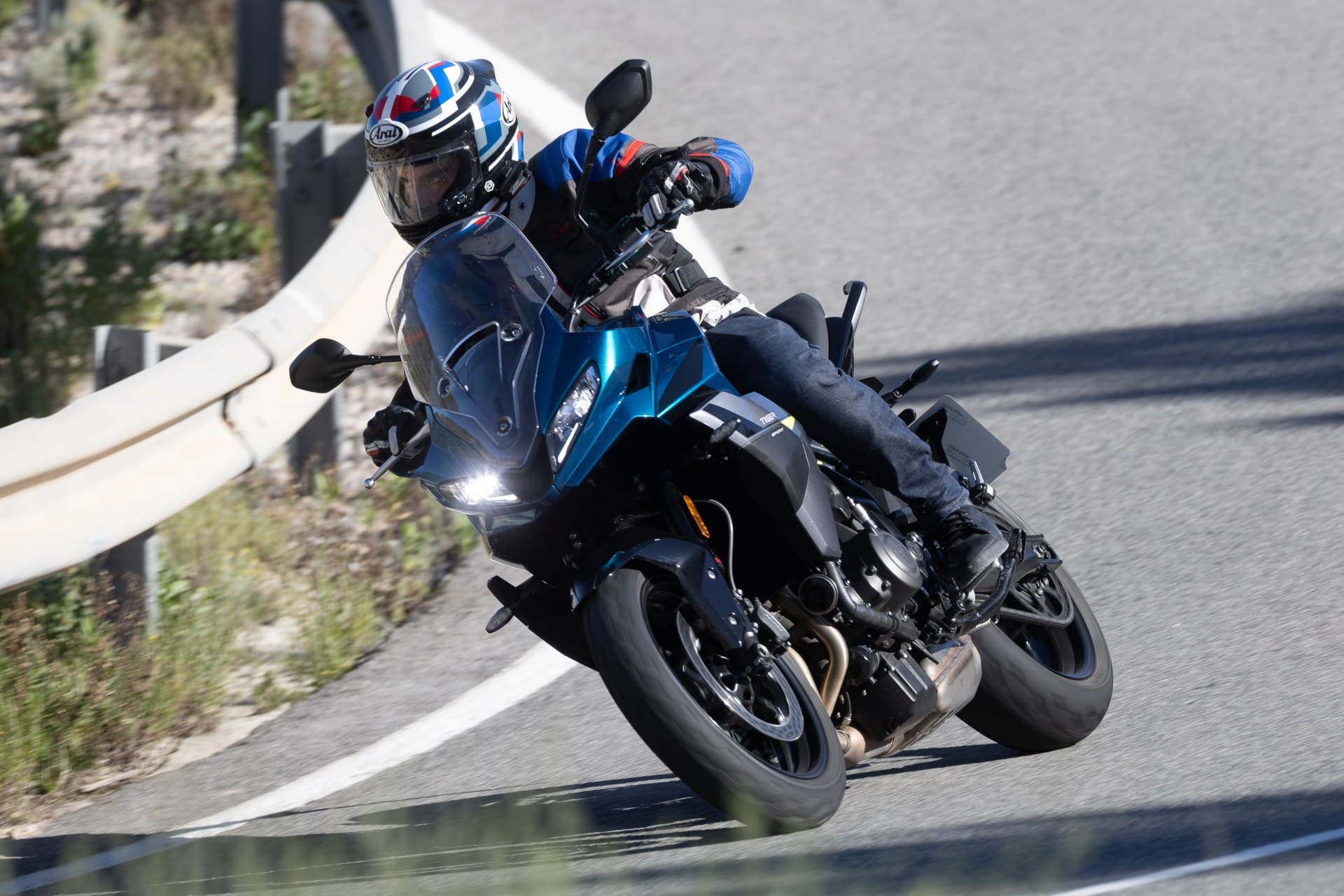
Test Triumph Tiger Sport 660 2026
Born in 2022 as the versatile sister of the successful Tridentthe Triumph Tiger Sport 660 It arrived showing a great balance between the agility of a naked and the protection of a trail. Thus breaking into the asphalt trail segment dominated by twin-cylinder engines with a three-cylinder engine characteristic of the brand.
Although it shares a large part of components with the Trident 660has nothing to do with the cycle part, since the geometry, suspension travel and driving position are different, it does have the same character and agility as its neoretro sister.

The Tiger Sport 660 It was focused from the beginning on users looking for a first large-displacement motorcycle with the A2 license and for the experienced traveler who prefers lightness and maneuverability. And in just four years it has managed to carve out a niche in the market with consolidated sales figures.
Now in 2026 raise the level taking advantage of the mechanics of the last Daytona 660 increasing its power up to 95 hp and increasing the tank capacity, which makes it better in all uses, whether we want to seek more driving sensations or if we want to make longer trips or with more load, the Tiger Sport 660 2026 it makes everything better.
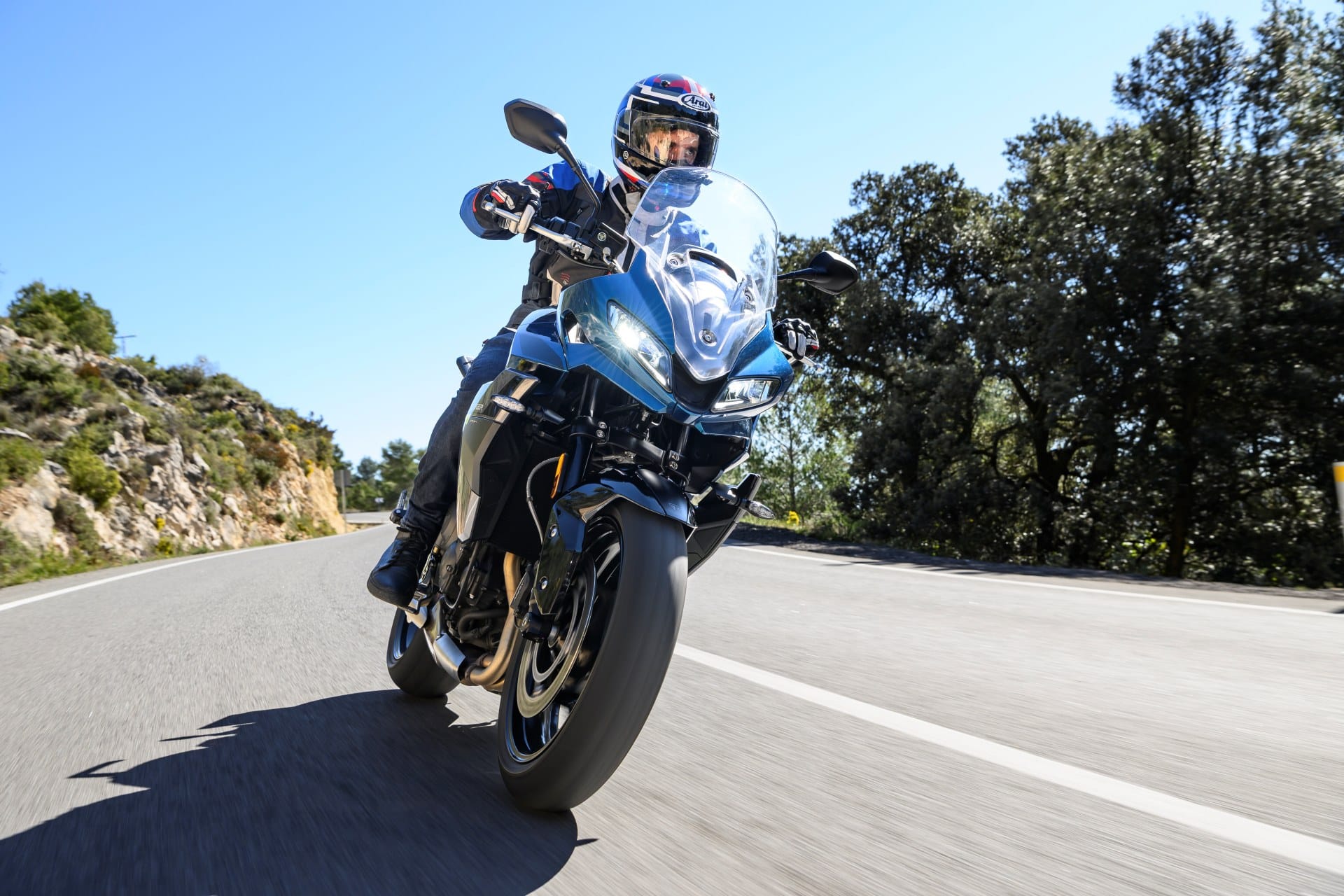
Test Triumph Tiger Sport 660 2026: What’s new in 2026
The new 2026 engine produces no less than 14 HP more, it is almost 20% more powerful, significantly increasing the performance of the previous model. This has been achieved thanks to a new intake with a throttle body with triple butterfly valves, one for each cylinder, a new cylinder head and a revised exhaust system. Now the engine “breathes” better, improving performance throughout the power band, increasing the stretch 1,000rpm more, leaving the final figures at 95 hp at 11,250 rpm and 68 Nm at 8,250 rpm, 4 Nm more than the previous model.
In the design part, the front fairings have been sharpened and enlarged, giving the appearance of a larger and more forceful motorcycle. The tank capacity also increases to 18.6 liters, increasing autonomy and thus improving its traveling capacity.
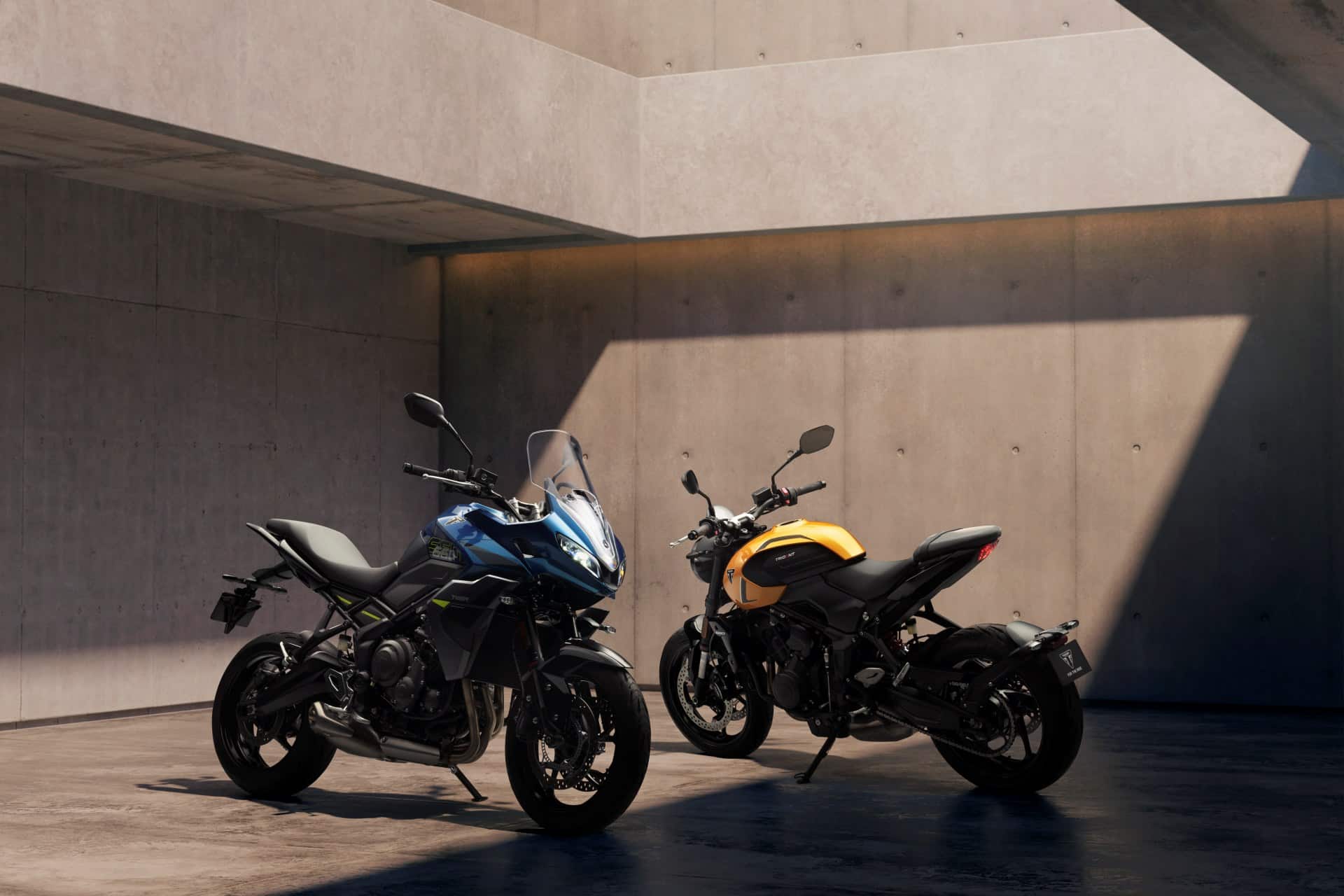
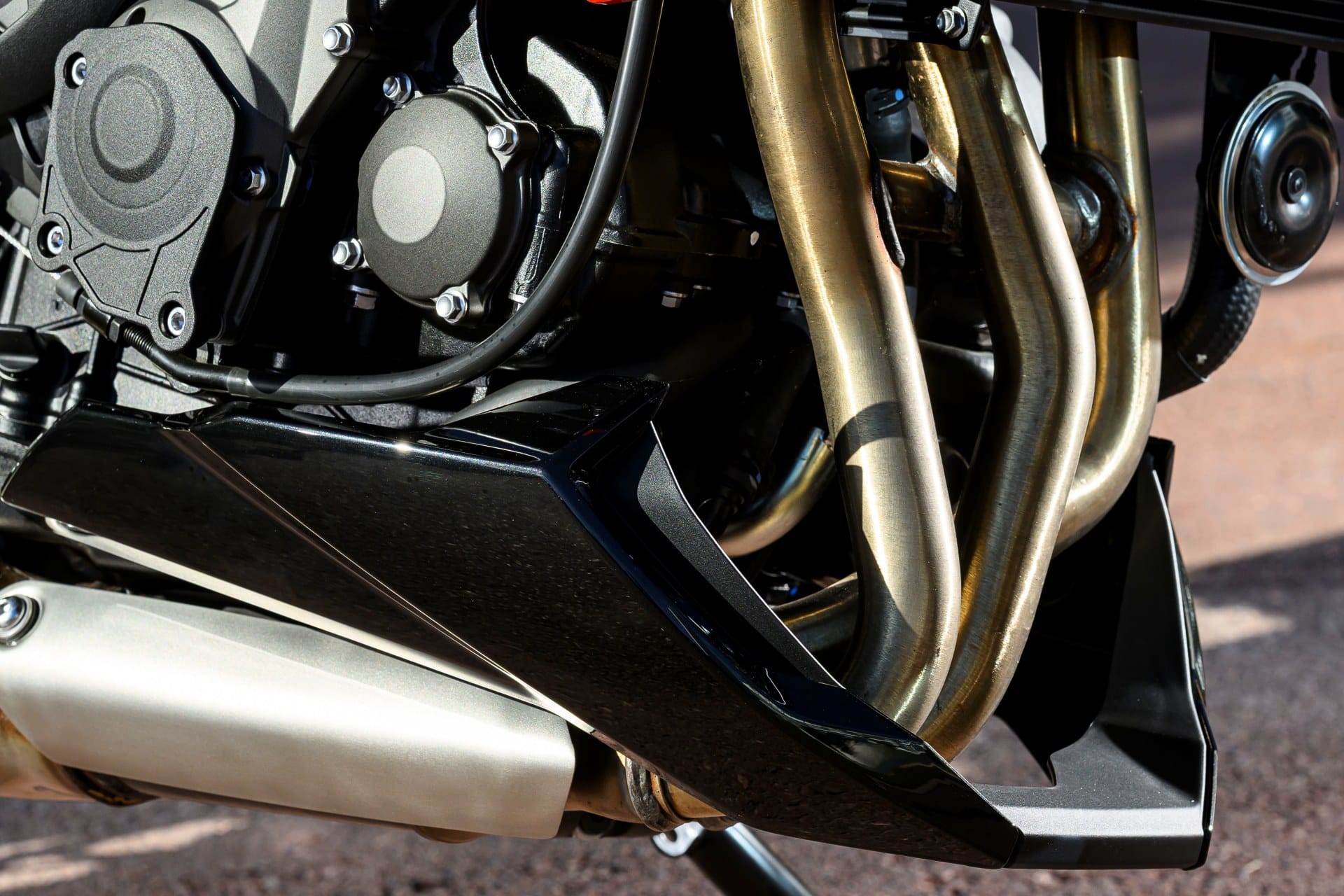
To accommodate the new filter box and the new intake, the tubular steel chassis has been redesigned in the central part to open space, without changing either the geometries or the central width, but gaining 5 kg more, which together with the extra capacity of the tank, leaves the weight at 211 kg, this being the only drawback of the new changes for 2026.
Test Triumph Tiger Sport 660 2026: Rivals Triumph Tiger Sport 660 2026
Among its asphalt trail rivals we have a wide variety of models among which we can find the BMW F 900 XRthe QJ SRT 900Sthe Yamaha Tracer 7the Kawasaki Versys 650the Benelli TRK 702 and the QJ SRT 700. The Tiger 660 It is positioned in the upper mid-range of benefits and in the lower mid-range of price.
Triumph Tiger Sport 660 2026 test: Cycle and electronic parts Triumph Tiger Sport 660 2026
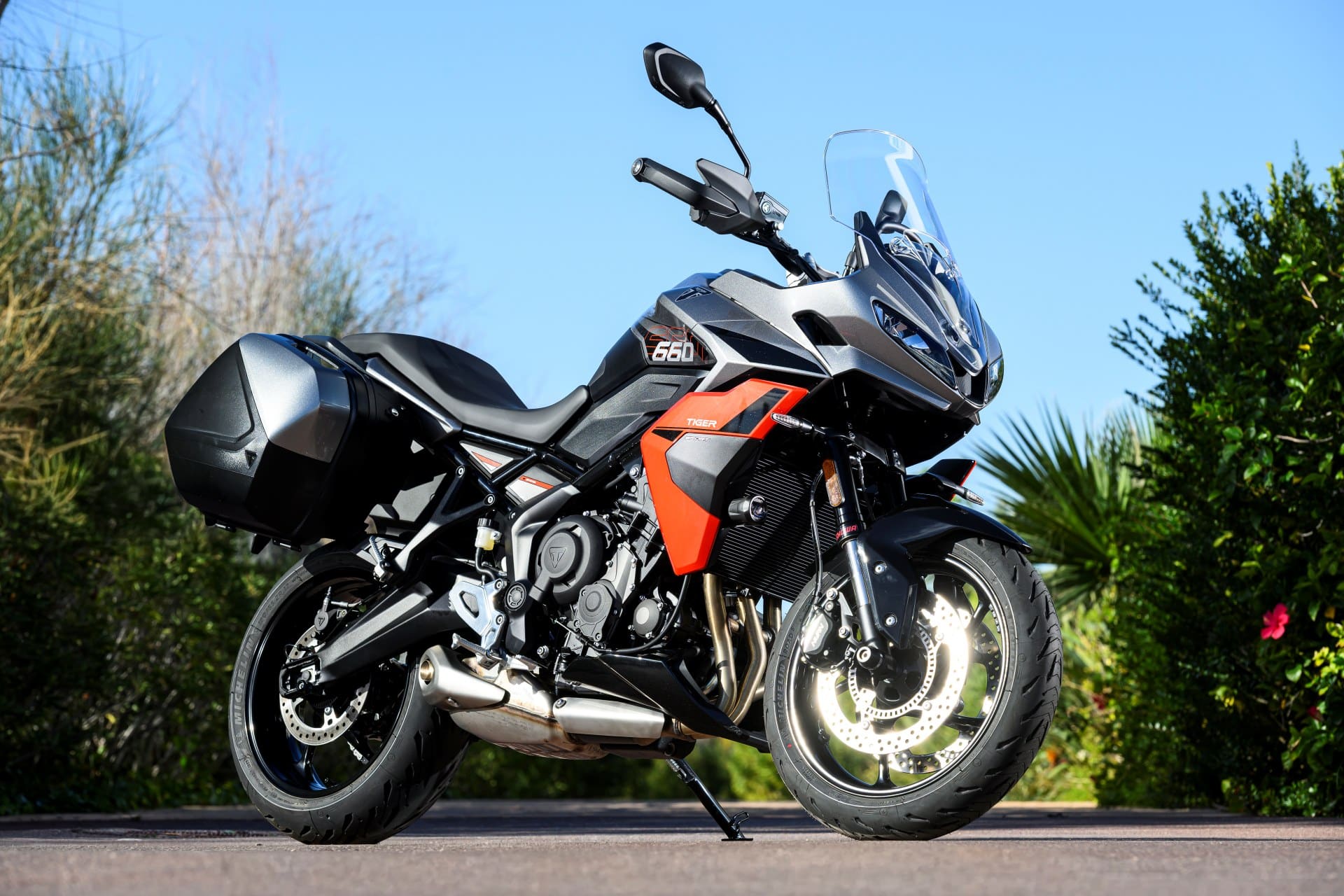
In the suspensions section, it maintains Showa in both trains, with a 41 mm diameter fork and 150 mm travel that has no adjustments, and a rear monoshock with also 150 mm travel, adjustable in rebound and preload, the latter quickly using an external wheel. Regarding the brakes, it uses Nissin material, with conventionally mounted two-piston calipers and 310 mm discs on the front.
As far as electronics are concerned, it has a ride-by-wire accelerator and 6-axis IMU, which allows you to have ABS and traction control when cornering, as well as different throttle responses that adapt to each of the three available modes (Sport, Road and Rain). All of this is controlled from a combination of TFT and LCD screen, somewhat reduced compared to some competing models.
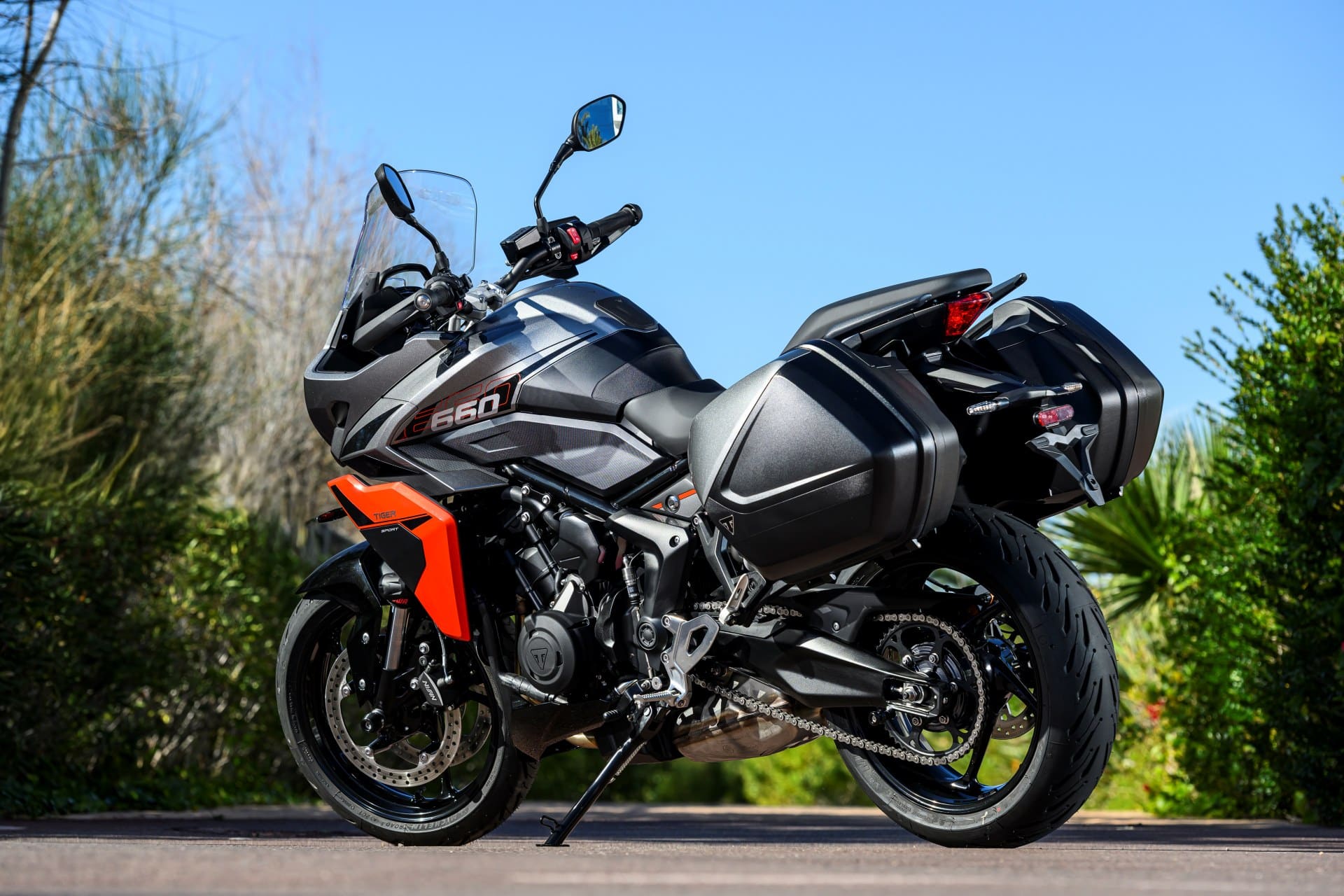
It has a quickshifter to shift up and down, and according to what the engineers told us, it is where the brand has dedicated the most hours, far from what one might think. The work has focused on the system’s performance being different depending on the accelerator position at the time of shifting, the gear and the rev range, so the variables with which it is played make it very tedious. But this work shows, and boy does it show…
The screen is manually adjustable in height, something that we can do on the fly, being able to raise or lower 83 mm from the highest to the lowest position.
Another aspect to take into account is the accessibility of the model, both in terms of price and maintenance, since the brand announces that reviews are every 16,000 km, something also very notable.
Test Triumph Tiger Sport 660 2026: Test and sensations Triumph Tiger Sport 660 2026
The Triumph Tiger Sport 660 2026 has a more imposing appearance; At first glance it is perceived as a more modern and powerful motorcycle, thanks to small tweaks and some width gain in the front.
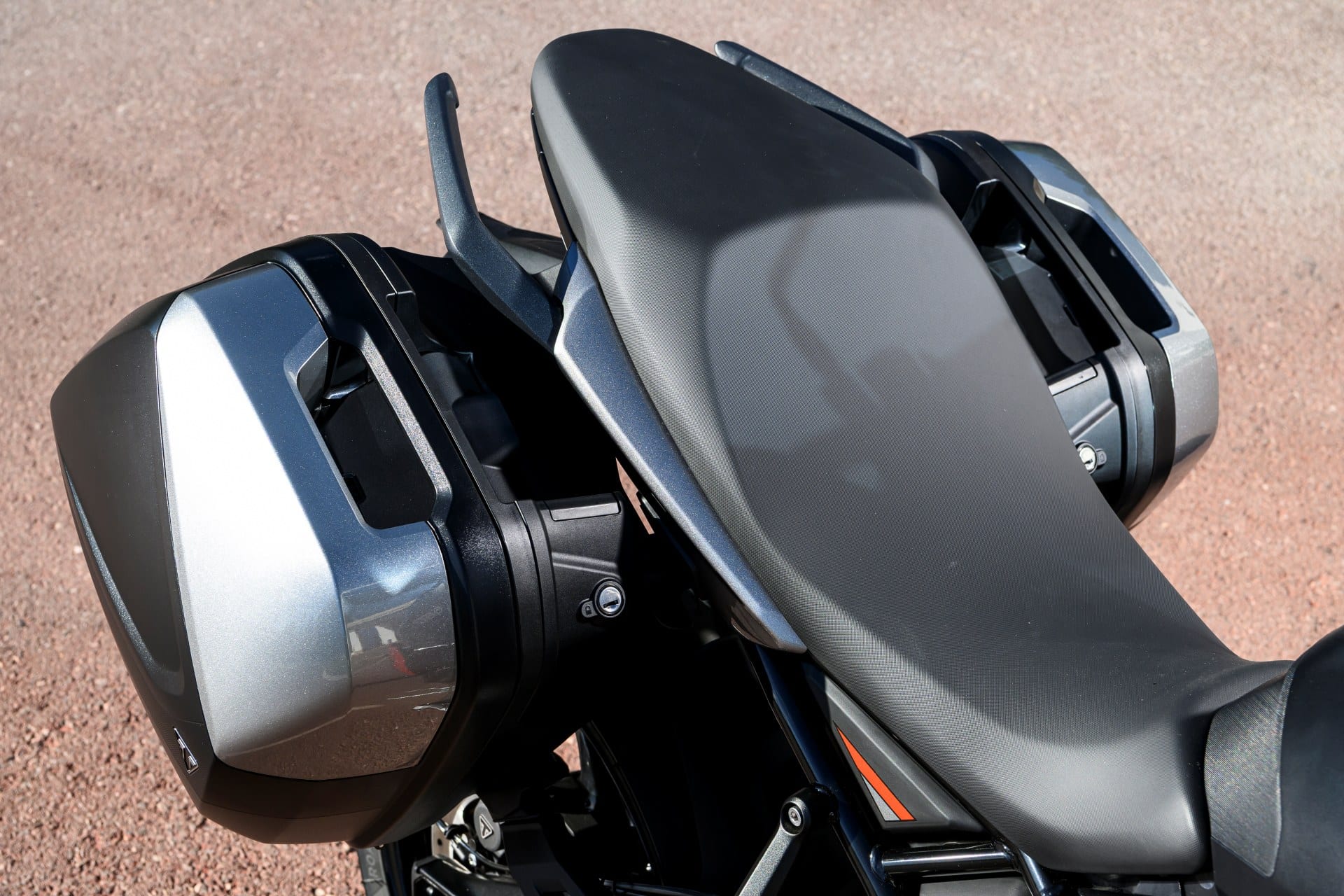
When we get on it, the classic trail motorcycle riding position, very comfortable, all for my height of 1.80 m, both footpeg height and handlebar position make the position relaxed. In addition, we reach the ground with the entire sole of the foot supported, but for users who need it there is an accessory seat that lowers the height by 25 mm, as well as another for long distances with softer padding.
The engine feels very smooth and relaxed, working surprisingly smoothly at low revs, something we tested throughout the day, making tight corners in sixth gear, and zero rattling typical of an engine suffering in sub-range. This is something that makes driving in the city or in relaxed mode very comfortable, since it not only allows us to go without uncomfortable vibrations or pay attention to the clutch so that it does not stall, but we can also work from these low revolutions and open the accelerator feeling continuous and smooth thrust.
Past this usable rev range that is not normally available, at low, medium and high levels, the bike responds in a very linear way, having thrust at any speed. If we start from very low, the bike responds smoothly and forcefully, in the medium range the same and in the high range it has character, but it is very usable, suitable for all types of users; Those with a medium-low level will be able to enjoy more than enough sensations, and a more sporty user will find great doses of fun.
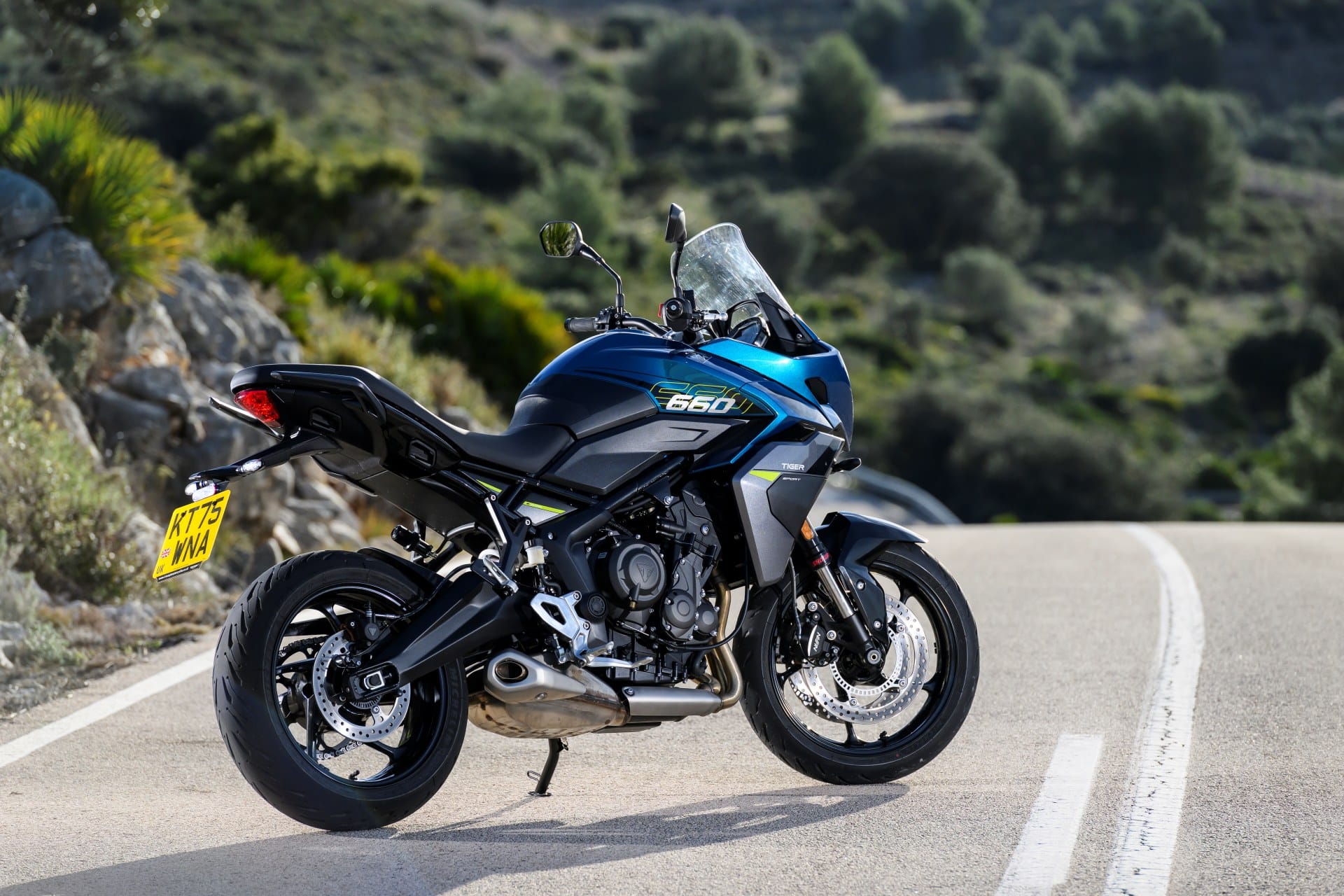
The quickshifter is at the top of its performance, smoothly engaging any gear at any time to perfection. Both in terms of touch, precision and speed, it is at the top of the behavioral level.
As far as chassis behavior is concerned, the bike feels manageable and stable, with a very good overall poise. The high handlebars penalize cornering as on all trail bikes, but comfort over long distances is the priority on these bikes.
The suspensions work correctly in all scenarios, although they feel somewhat soft when we ride more in sports driving, but the same thing happens to us as with the handlebars. It would be nice to have some adjustment capacity in the fork, but given the choice, being able to adjust the preload of the shock absorber is more useful, since it allows us to easily adjust if we are traveling with luggage or a passenger.
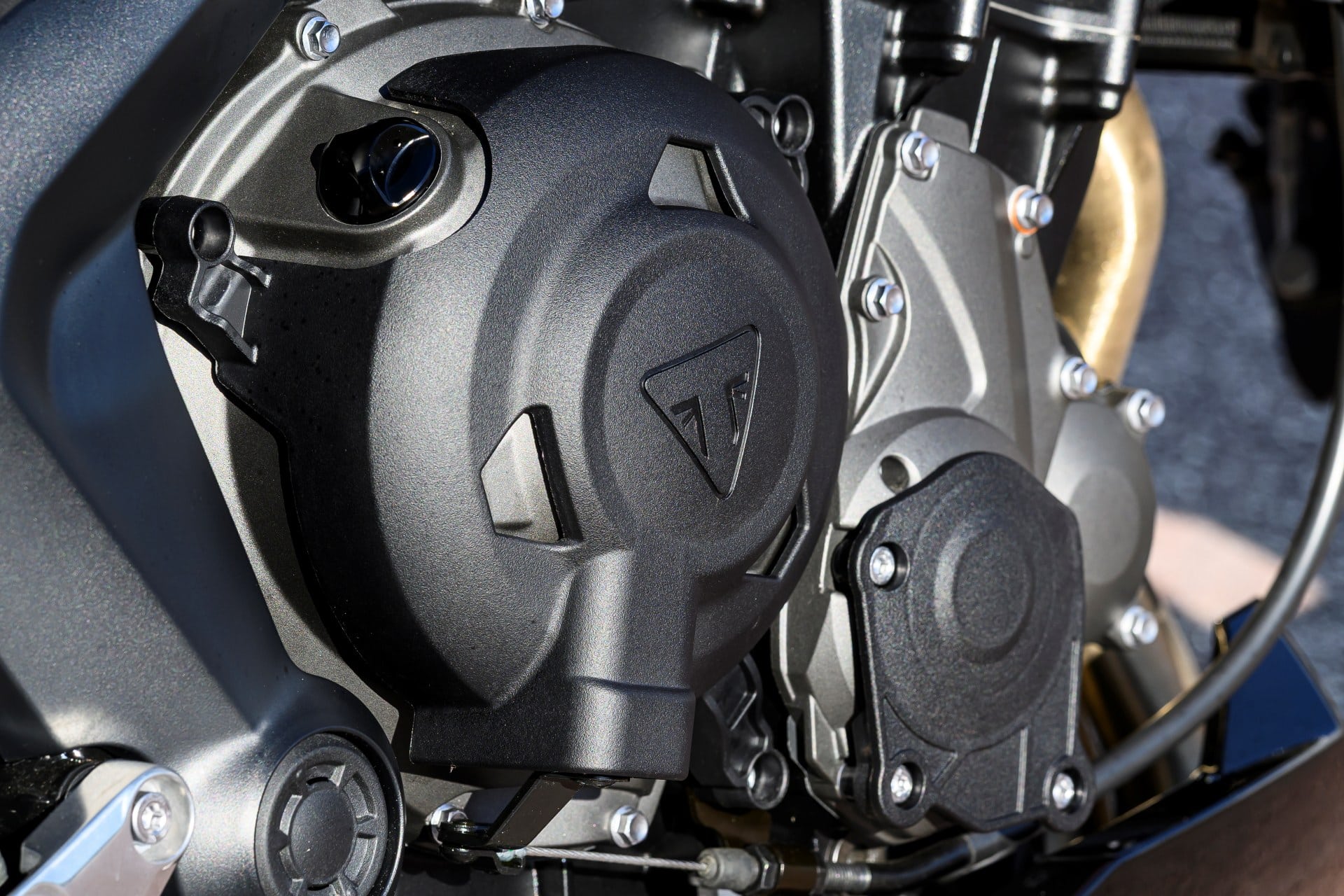
In the brakes section we have very good feel and power for low and medium levels of riding or for riding without a passenger or luggage. The bike brakes well and forcefully going at easy paces. But when we increase the pace or if we carry more weight, it would be nice to feel more braking capacity in the front axle, both in feel and power. With the rear brake we often felt the ABS activation, even without hard braking, largely due to the Michelin Road 5 tires, which did not transmit enough information about the asphalt. With other tires, the behavior would probably improve in all scenarios.
In the driving modes we did not notice much difference between the Road and the Sport, but the instrumentation is clear and simple, and even with little screen space, the information is seen correctly, maintaining the very careful aesthetics.