One of the biggest fears of any motorist when driving on a road surrounded by vegetation is suddenly encountering an animal in the middle of their path. A situation that, regardless of our experience on two wheels, can end with fatal consequences. In the United States they have decided to address this problem, along with the fragmentation of natural spaces, through a bridge of spectacular dimensions.
This is the Wallis Annenberg Wildlife Crossing, a gigantic ecoduct located in Agoura Hills, California, about 50 kilometers northwest of Los Angeles. Its construction began in 2022 and its official inauguration is scheduled for December 2, 2026.
The peculiarity of this bridge is that it is not intended for vehicle traffic or human traffic. Its only users will be wild animals, which will be able to move between different natural spaces without having to cross one of the busiest highways in the United States.
A bridge over 300,000 vehicles per day
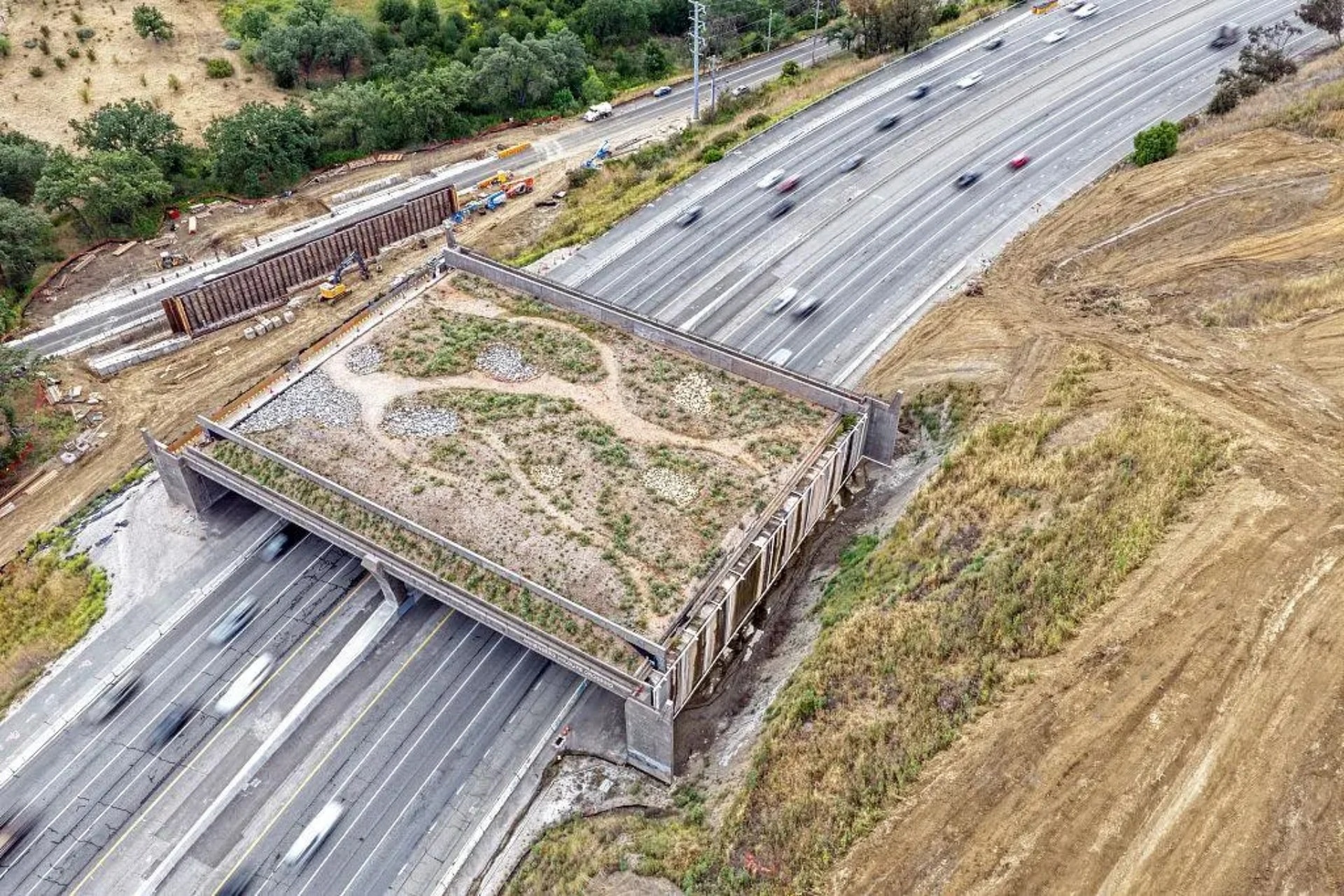
US 101 passes through this area with traffic of more than 300,000 vehicles per day. Its eight traffic lanes and two emergency lanes constitute a practically insurmountable barrier for numerous species that inhabit the Santa Monica Mountains.
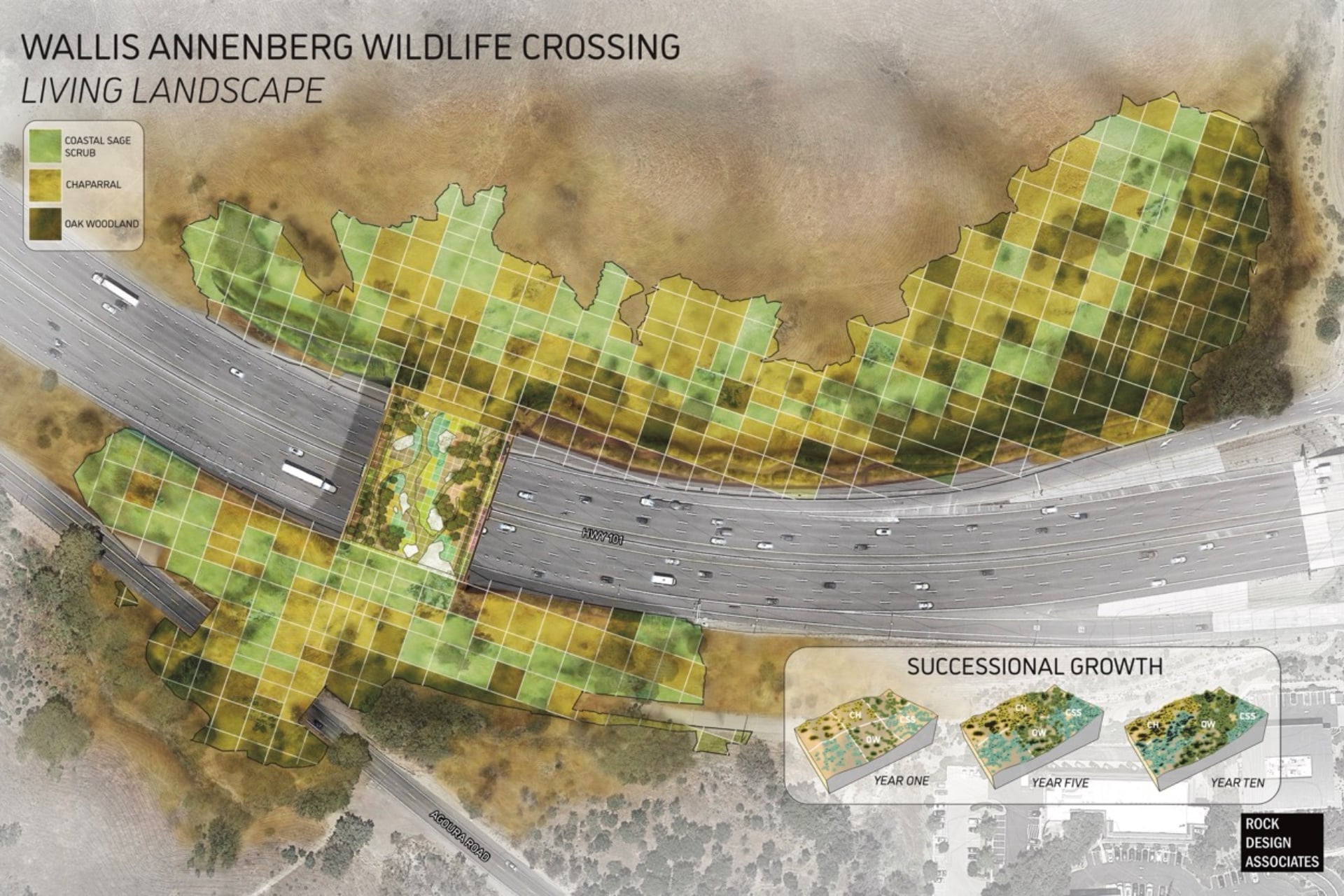
The new ecoduct will allow us to recover the natural connection with the Simi Hills, north of the highway. The project includes two overpasses and their corresponding link areas, which make up an ecological corridor approximately 380 meters long.
The most interesting thing about this work of engineering is that it needed to ensure that the animals do not perceive it as such. To do this, a natural environment has been recreated using soil, bushes and native plant species, turning the concrete surface into an extension of the landscape. Acoustic screens about three meters high have also been installed to minimize the impact of traffic and perimeter fences that lead the animals towards the enabled passage.
An investment of 114 million dollars with Leonardo DiCaprio among its promoters
The initial budget for the project amounted to 92 million dollars, although the increase in the cost of the works has raised the final bill to 114 million dollars. One of the most striking aspects of this initiative is its financing formula, in which public organizations, conservation associations and around 6,000 individual donors have participated.
Among them is the well-known actor Leonardo DiCaprio, whose involvement in different environmental projects goes back a long way. However, the most important contribution corresponds to the Annenberg Foundation, which has allocated $25 million to the construction of the ecoduct. Hence the infrastructure is named after the philanthropist Wallis Annenberg, who died in 2025.
The animals have not waited for the inauguration
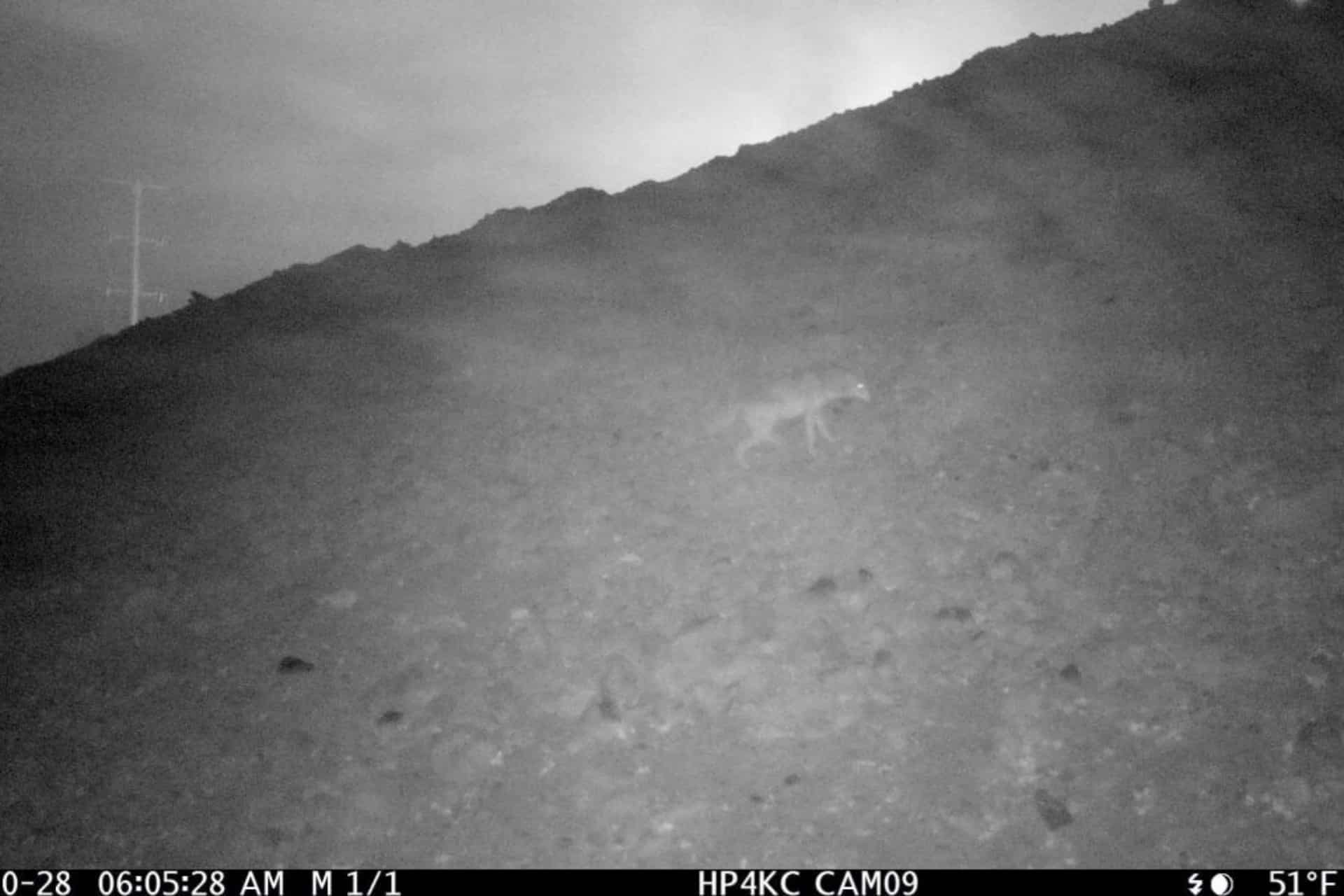
Curiously, although the works have not yet been officially completed, the first beneficiaries of the project have already begun to explore its facilities. On October 28, US National Park Service cameras captured a coyote approaching the overpass. Subsequently, new incursions were recorded and what researchers consider the first complete crossing of a mammal through the infrastructure.
Scientists will monitor over the next few years to check to what extent the ecoduct favors the mobility of different species and contributes to recovering the genetic diversity of populations that have remained isolated for decades.
Especially important will be its role in the conservation of the pumas of the Santa Monica Mountains, threatened, among other factors, by inbreeding derived from their geographic isolation.
A solution that can also save the lives of many motorcyclists
Beyond the obvious environmental benefit, this type of infrastructure has important implications in terms of road safety. In Spain we know perfectly well the danger posed by the appearance of wild animals on the road. Wild boars, roe deer and deer are the protagonists of numerous accidents, especially on secondary roads that cross forested areas.
And if for a motorist a collision with a large animal can be serious, for a motorist the consequences can be even worse. We do not have a body that absorbs the energy of the impact and, in many cases, it is not even necessary for the collision to occur to end up on the ground.
A sudden evasive maneuver, emergency braking with the motorcycle tilted or leaving the road can trigger an accident. Neither cornering ABS, nor inertial measurement platforms, nor driving assistance systems can work miracles when the space available to react is insufficient.
Ecoducts, combined with adequate and properly maintained fencing, make it possible to act on the source of the problem instead of simply warning of its existence through danger signs.
Obviously, not all roads need infrastructure of this magnitude. There are much cheaper alternatives, such as underpasses adapted to wildlife or smaller elevated corridors.