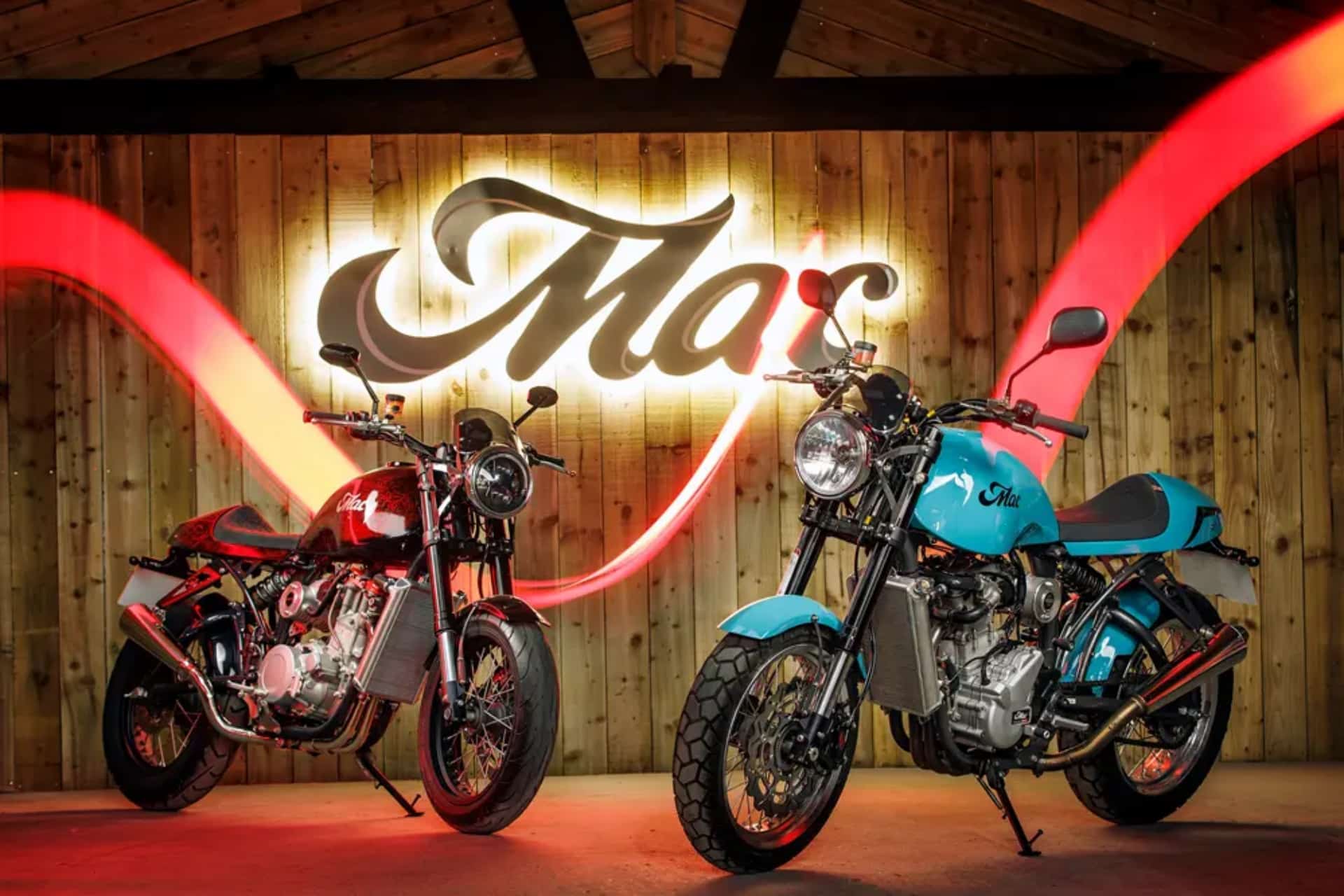
In a market increasingly dominated by global platforms, omnipresent electronics and ranges calculated to the millimeter, the arrival of a new British motorcycle brand always has something romantic. But Mac Motorcycles goes one step further. We are not talking about a company born in the heat of a passing fad, but rather a family project that has taken more than a decade to go from the initial idea to a real motorcycle, approved, manufactured and ready for the first customers.
The company, located in an old 19th century rural building on the outskirts of Barnsley, South Yorkshire, officially opened its doors on May 8. Its initial proposal is articulated around two models: the Mac Rex, a retro-inspired naked with a certain flat tracker feel, and the Mac Ruby, a café racer with sportier lines. Both share the same technical base and start from 15,500 pounds in the United Kingdom, a figure that makes it clear that we are not facing a popular motorcycle, but rather a niche machine, built with an almost artisanal approach.

The soul of the two Macs is a 600 cc single-cylinder engine of SWM origin, liquid cooled, with double camshaft distribution, four-valve cylinder head, electric start and six-speed gearbox. The brand itself declares a power of 57 HP for this engine, in addition to a compression ratio of 12.4:1 and internal dimensions of 100 mm diameter by 76.4 mm stroke. That is, a modern mechanics in its architecture, but with the physical, vibrant and direct character that has always defined the great “singles”.
That engine is not unknown. It comes from the SWM universe and has already been linked to models of a very particular nature, such as the AJP PR7 or the extinct CCM Spitfire. In the case of Mac, it receives its own electronic management, a specific ECU and a set-up adapted to the concept of the motorcycle. The idea is not to chase exorbitant figures, but to offer thrust from below, immediate response and a very direct mechanical connection with the pilot.
And that is precisely one of the keys to the project. Mac Motorcycles doesn’t want to make a retro motorcycle simply for aesthetics. Its objective is to recover a more basic, more physical and more emotional way of driving. Ian Oliver, general director of the company and former powertrain engineer at Jaguar, defines the project as a search for those sensations that many motorcyclists associate with their first motorcycles: lightness, simplicity, sound, vibration and a very clear relationship between what the right hand does and what happens on the rear wheel.
This is what Mac Rex and Ruby are like
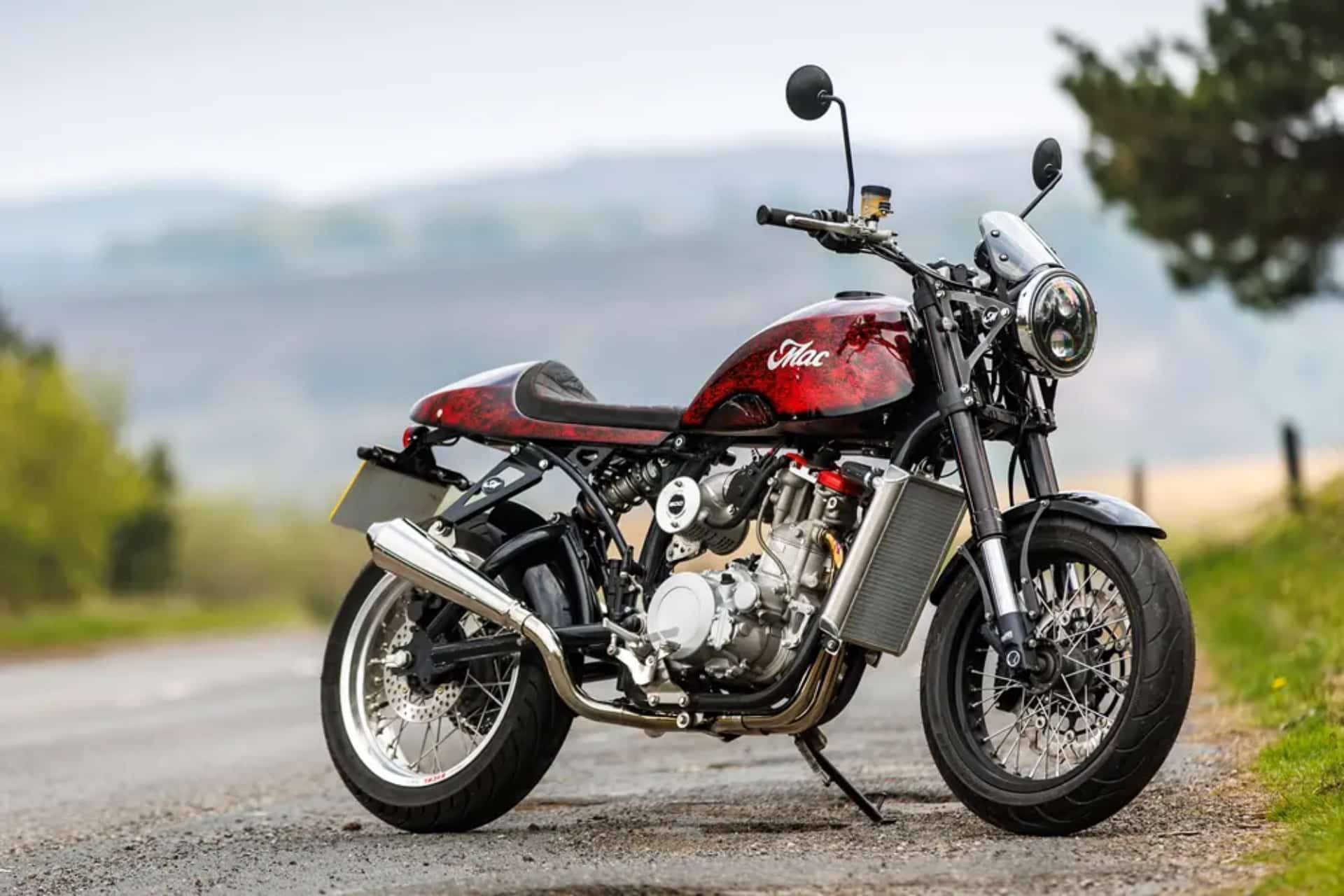
Technically, both the Rex and Ruby rely on a tubular steel backbone chassis designed specifically for the project. This is not a quick adaptation around the SWM engine. According to the brand, the frame and swingarm are of its own design and are manufactured in the United Kingdom; Furthermore, in the early phases of development they had the experience of Lester Harris, from Harris Performance, to define geometries and key points of the assembly. This structure is partially hidden under a 16-liter tank manufactured by Acerbis, an interesting solution because it combines a well-established Italian supplier with a clearly British visual identity.
The commitment to local suppliers is one of Mac’s great arguments. The chassis and swingarm come from Caged Laser Engineering, the front brake can mount a Hel radial caliper with a 320 mm floating disc and Brembo pump, and the rear suspension is provided by Nitron, with an adjustable R1 monoshock. At the front we find a 47 mm Fastace inverted fork, while the wheels are 17 inches, polished and with stainless steel spokes. It’s a curious mix: international components where it makes sense, but with a clear intention to sustain a British supply chain wherever possible.
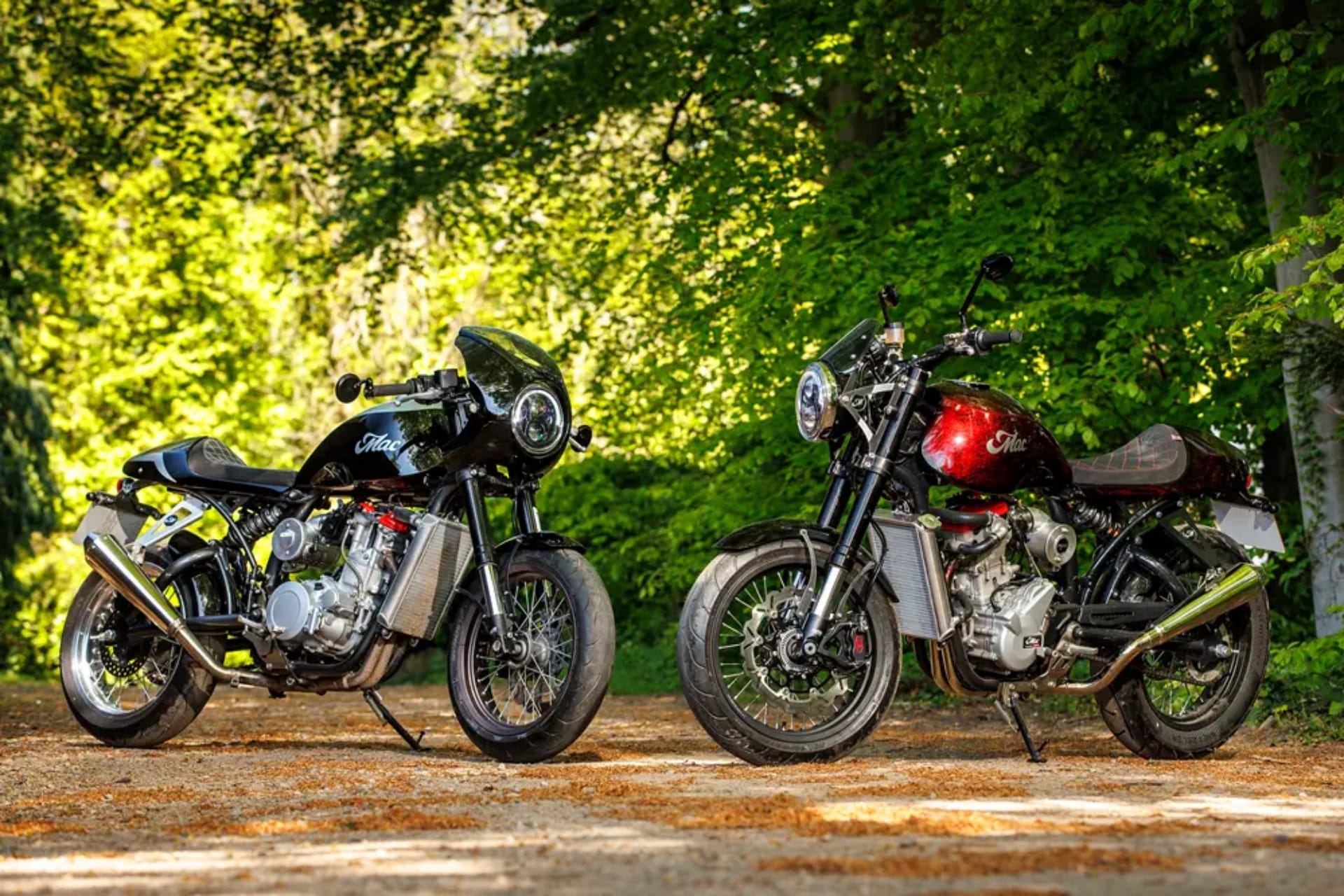
Design also plays a fundamental role. Clive Goodwin, former creative director of Samsung Design Europe, has been in charge of giving final coherence to the shapes of the motorcycle. The result is minimalist, compact and very recognizable. The Rex opts for a more muscular and simple roadster silhouette, while the Ruby leans towards a more classic café racer reading, with a sportier driving position. In both cases, a clean, almost mechanical aesthetic is sought, where the engine, chassis and tank have more prominence than any superfluous decoration.
The seat height, located at 760 mm according to the first units tested, also points to an accessible and manageable motorcycle. This, together with the narrowness of a single cylinder, should make the Rex and Ruby less intimidating than their price and exclusivity might suggest. They are not motorcycles designed to smash times or to travel highways at high rates, but rather to enjoy secondary roads, on sections of linked curves and on those types of routes where touch counts more than pure speed.
The first contact published by MCN with a pre-production unit of the Rex makes it clear that the motorcycle has plenty of character. The engine pushes hard from below, sounds with personality through the dual-exit Keihan Systems exhaust and transmits those pulsations that many current manufacturers try to filter out until they disappear. But it also confirms that the project still has room for tuning: the suspension of the tested units turned out to be too firm and the cornering behavior still required adjustments to gain precision and naturalness.
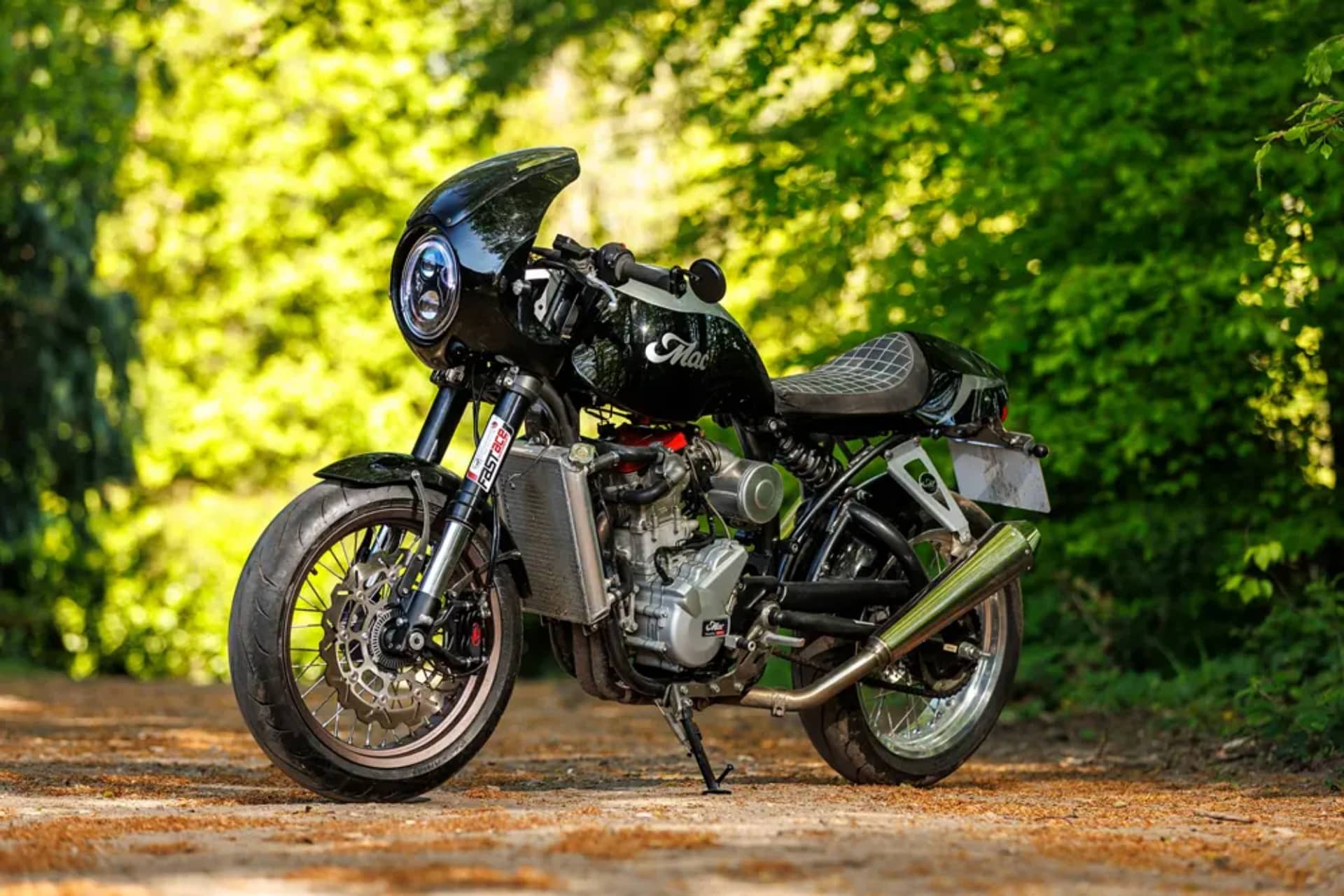
Mac assures that these units were pre-production and that the customer motorcycles will be delivered adjusted according to the preferences of each buyer. It is an important detail because it defines very well the type of brand it wants to be: small, close and capable of treating each motorcycle almost as an individual piece. In fact, the initial delivery time is around 14 weeks from the order, which fits with a limited and personalized production.
The painting, meanwhile, comes from The Smallest Cog, the Hereford workshop associated with Richard Hammond. It’s another very British nod to a bike that seems built with both tools and nostalgia. But it is important not to confuse nostalgia with immobility. The Mac Rex and the Mac Ruby are not old motorcycles in disguise, but rather contemporary machines that aim to recover a more analogue driving experience.
Therein lies its true appeal. At a time when many motorcycles seem designed to be perfect, Mac Motorcycles proposes something different: a motorcycle with edges, with sound, with vibration and with a story behind it. Its price may limit it to a very specific audience, but that may also be where its strength lies. It is not intended to compete against a medium-displacement Japanese naked or against a large series retro. It wants to be something else: a British motorcycle, made calmly, for riders who still believe that a secondary road and a good single cylinder can be enough to justify everything.