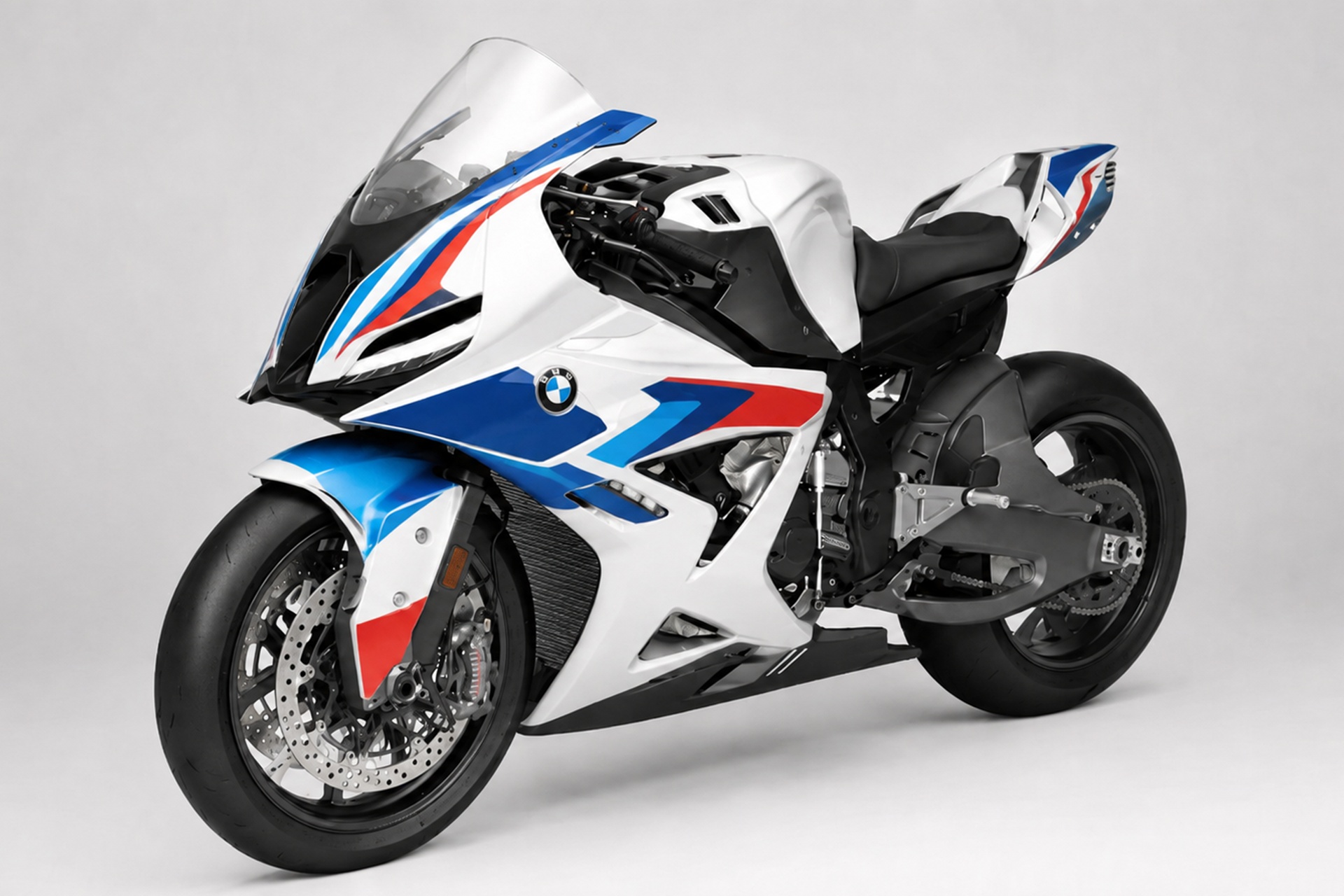
BMW Motorrad could be preparing one of the most important transformations of the S 1000 RR since the German superbike burst onto the market in 2009. An image supposedly coming from a design patent registered by the brand in India, reveals a motorcycle that keeps almost intact the shapes of the BMW Concept RR presented in May 2025.
The appearance of this documentation does not in itself confirm that the model will be manufactured in exactly this appearance. Brands routinely register designs to protect their intellectual property, even when some projects don’t end up reaching dealerships. However, in this case there are several indications that we are not dealing with a simple style exercise.

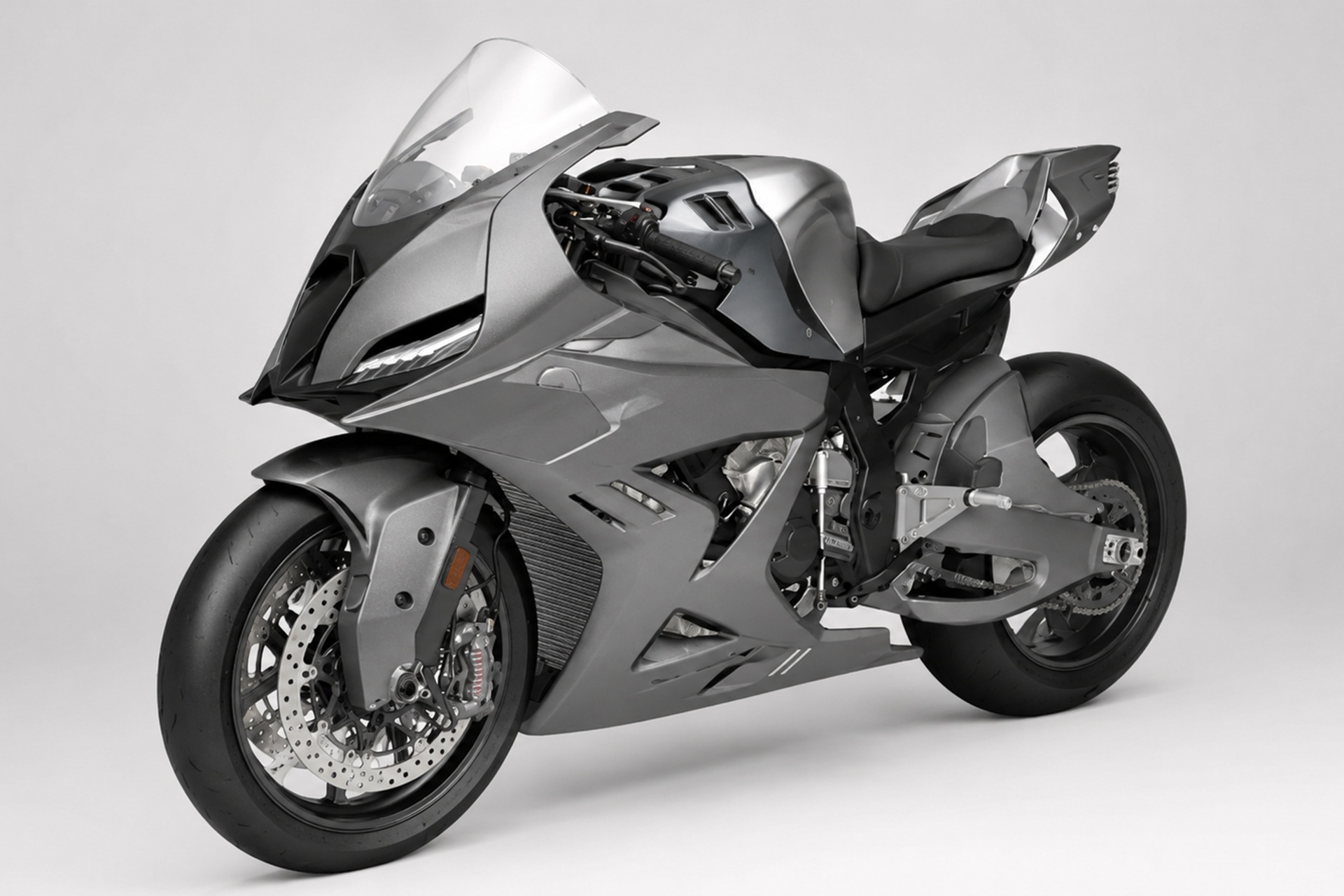
When BMW presented the Concept RR at the Concorso d’Eleganza Villa d’Este, the company itself officially defined it as a preview of the future generation of its RR sports cars. Therefore, the closeness between that conceptual motorcycle and the images now published is especially significant.
An S 1000 RR almost identical to the Concept RR
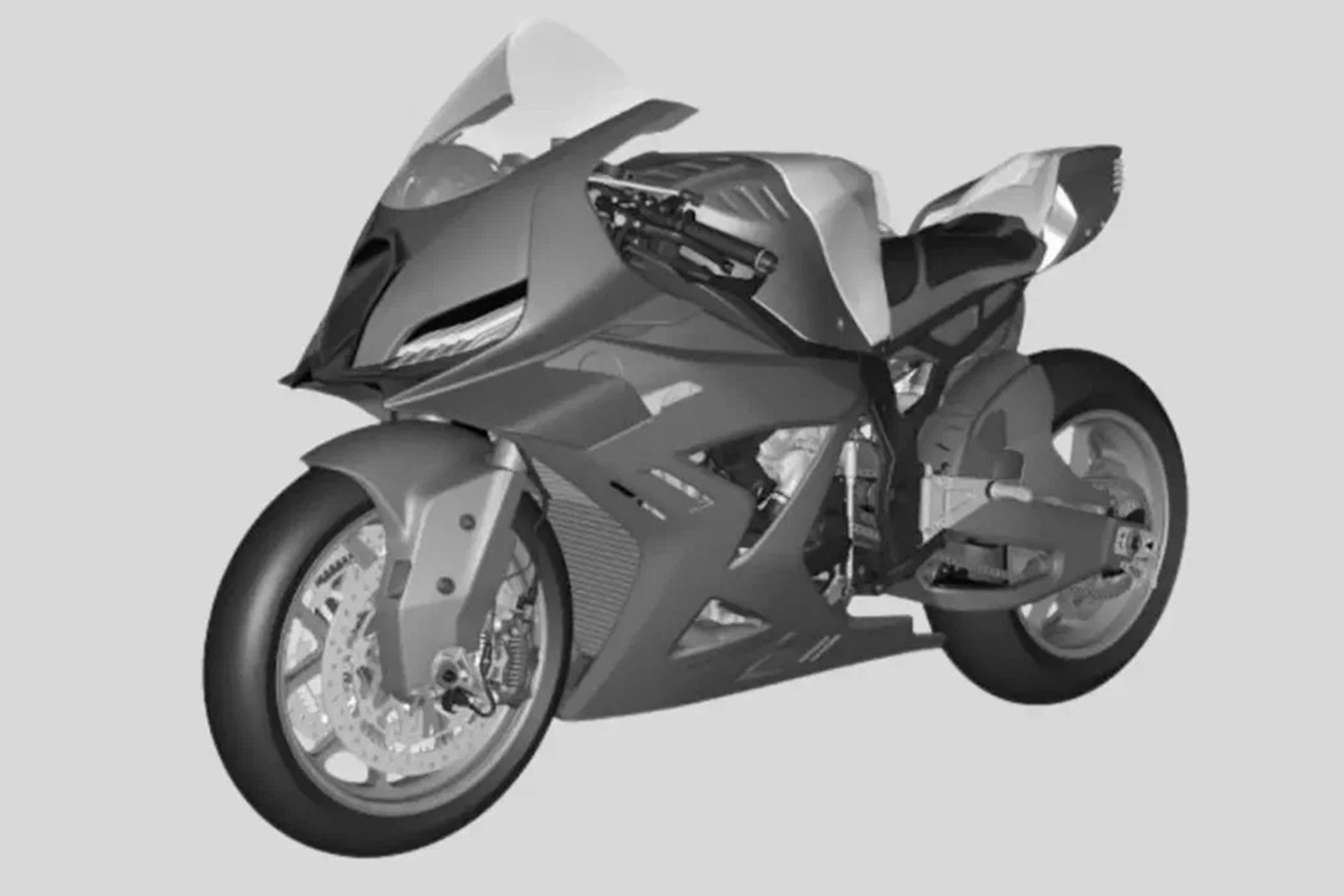
The alleged patent image retains some of the most striking elements of the Concept RR. Among them, an extremely compact front stands out, presided over by a large ram-air central air intake that conditions the entire visual expression of the motorcycle.
The lateral aerodynamic appendages are also maintained, much more integrated into the fairing than the spoilers used in previous generations. Instead of looking like pieces added later, they are part of the surface of the bodywork itself and help channel airflow around the assembly.
The design abandons, at least apparently, the visual asymmetry that marked the first generations of the S 1000 RR. The new proposal is cleaner, sharper and closer to a competition motorcycle, with taut surfaces and a front area that inevitably reminds us of the current World Superbike machines.
The patent also preserves the raised and minimalist tail, the sculpted tank and a very closed lower part of the fairing. There are no major aesthetic concessions compared to the Villa d’Este prototype, something unusual when a conceptual motorcycle begins its adaptation to the requirements of homologation and series production.
That does not mean that all the components observed will arrive unchanged. Elements such as the mirrors, lighting, license plate holder, exhaust or certain carbon parts could be modified before the final presentation. But the overall architecture seems to be much closer to a production motorcycle than to a prototype destined exclusively for a living room.
The key data: a power of 215 HP
Along with the image, the first technical figures have also begun to circulate. According to information published by the German magazine Motorrad, the future BMW S 1000 RR would reach a maximum power of 215 HP – 158 kW -, five horses more than the current model.
The S 1000 RR marketed until now declares 210 HP at 13,750 rpm, so the evolution would not represent an absolute revolution in terms of maximum power. The increase seems consistent with the positioning of the model, since BMW must maintain a clear distance from the exclusive M 1000 RR.
For now, there is no known data on maximum torque, rotation speed, diameter and stroke or possible internal modifications. It has also not been confirmed whether BMW will keep the current inline four-cylinder configuration with ShiftCam distribution intact, although everything points to a profound evolution of the existing platform and not a radical change in architecture.
It will probably be more important to check how that power is delivered, how the electronics work and how much the whole thing weighs. The current S 1000 RR declares 198 kilograms in running order with the tank 90% full, a reference that the future generation should try to improve or, at least, maintain despite the increase in equipment and the increasing requirements for homologation.
Aerodynamics inherited from the Superbike World Championship
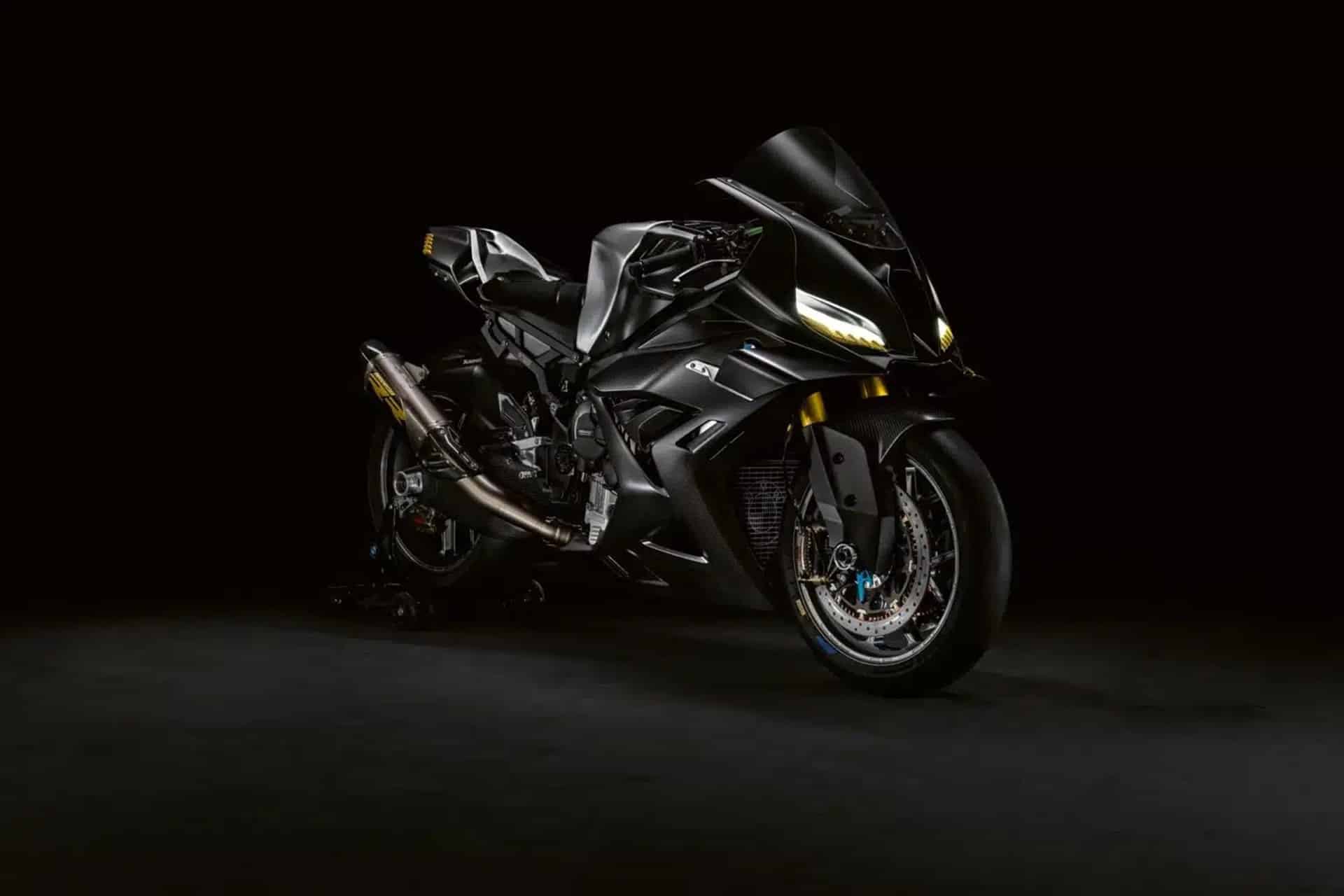
The Concept RR was developed taking as reference the BMW M 1000 RR used in the World Superbike. The prototype featured a liquid-cooled four-cylinder derived from the racing machine, with more than 230 hp, and made extensive use of carbon and aluminum to reduce weight.
BMW explained during its presentation that the aerodynamic work pursued three objectives: improving stability at high speed, allowing greater cornering and reducing drag. To achieve this, the air not only circulated around the motorcycle, but also through different internal ducts of the fairing.
The future S 1000 RR will hardly transfer all the materials and extreme solutions of the prototype to a large production version. Even so, the patent image suggests that a good part of that aerodynamic philosophy could be preserved.
The spoilers should generate load on the front axle during hard acceleration, reducing the tendency to wheel lift and improving stability. The internal work of the ducts could also help control temperatures, reduce turbulence and direct air towards the intake system.
Possible launch during the summer of 2027
Information published in Germany places the start of production in May 2027. If this schedule is met, the new BMW S 1000 RR could reach dealerships during the summer of that same year. BMW has not officially confirmed these dates.
The complete renewal of the M 1000 RR would occur later, possibly for the 2028 season. This sequence would allow BMW to first launch the new S 1000 RR platform and later use it as a basis to develop an even lighter, more powerful and competition-focused M version.
Until BMW publishes the definitive information, it is advisable to interpret both the power and the calendar with caution. What seems increasingly difficult to ignore is the design: the next S 1000 RR could transfer much of the radical image of the Concept RR to the road.