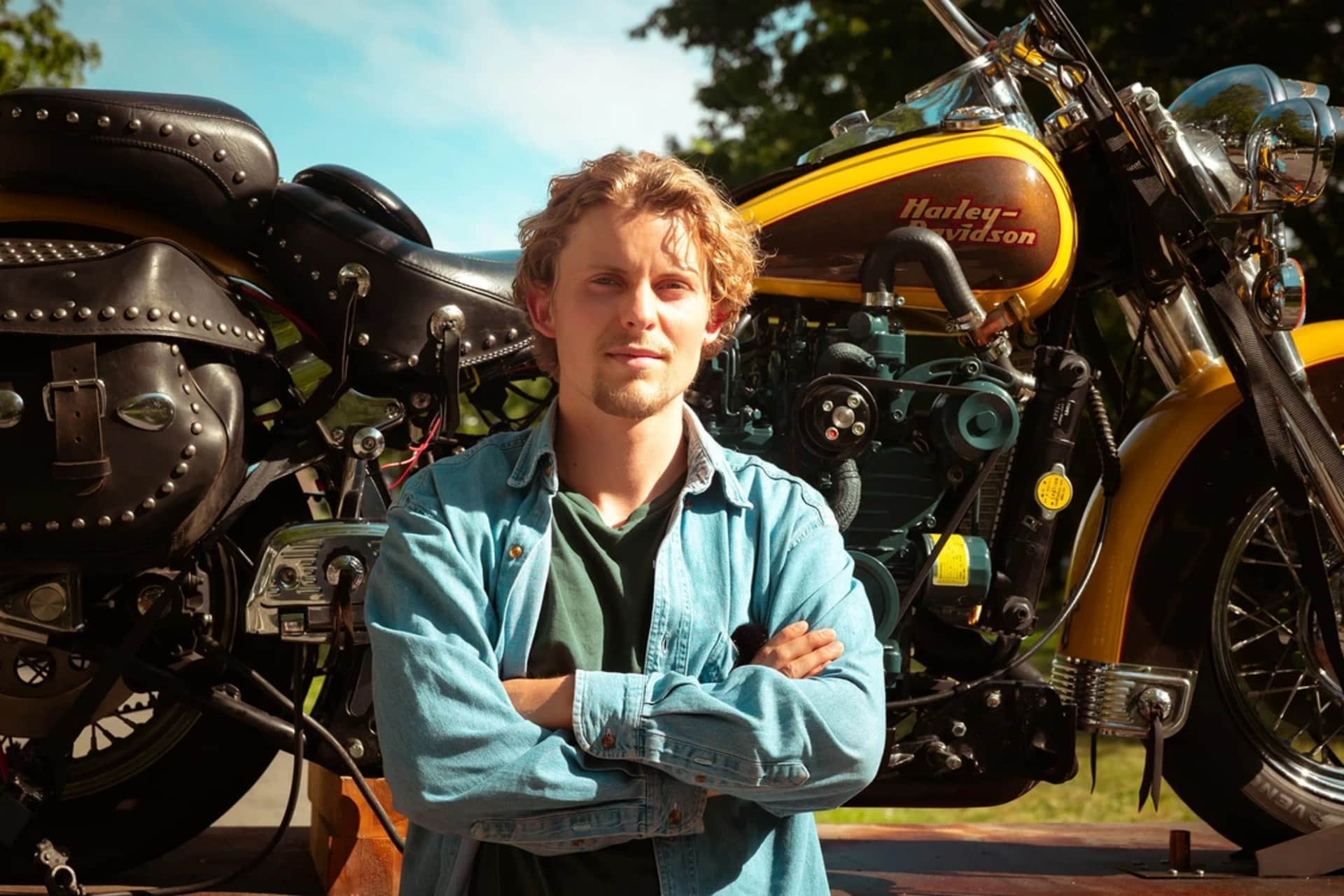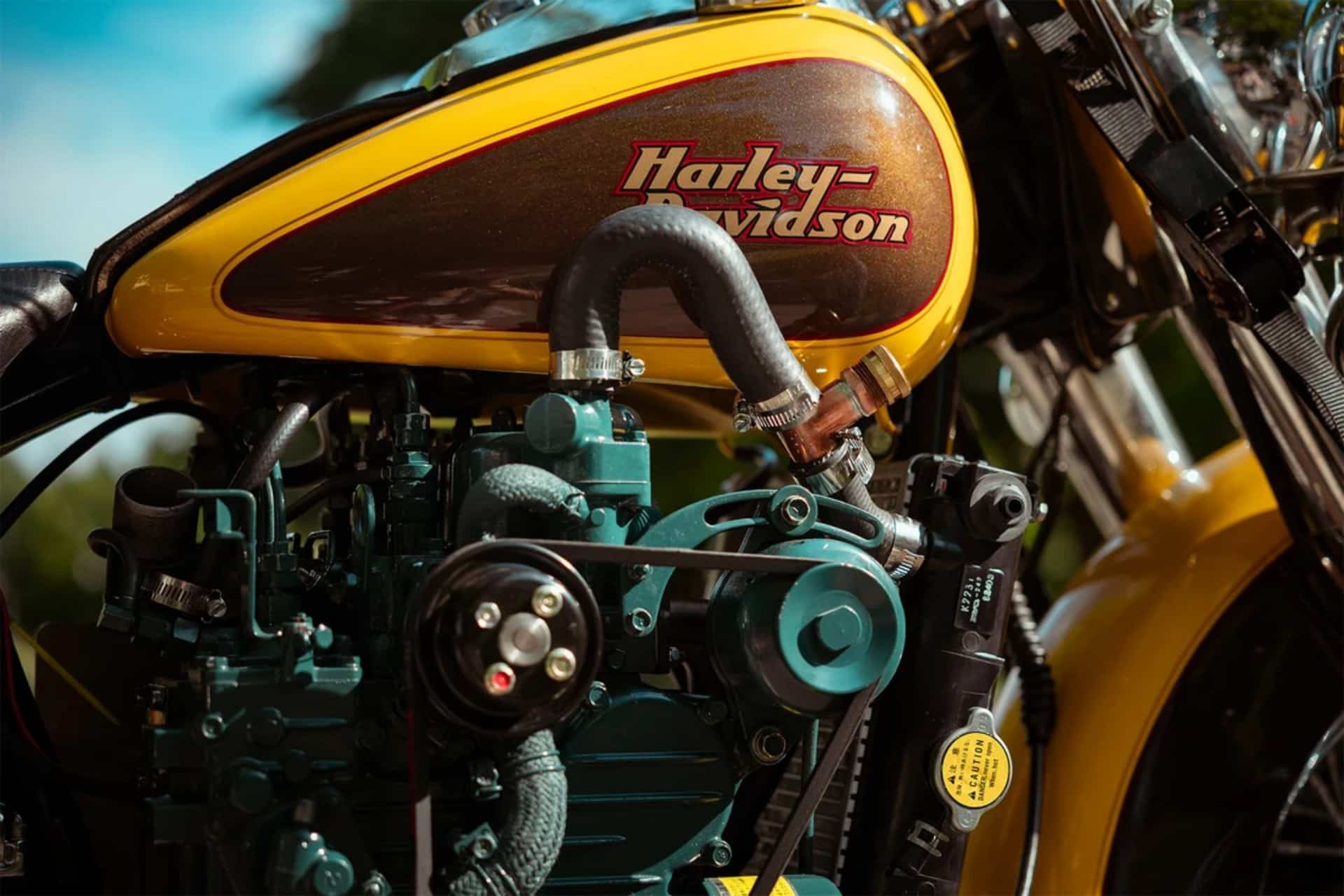
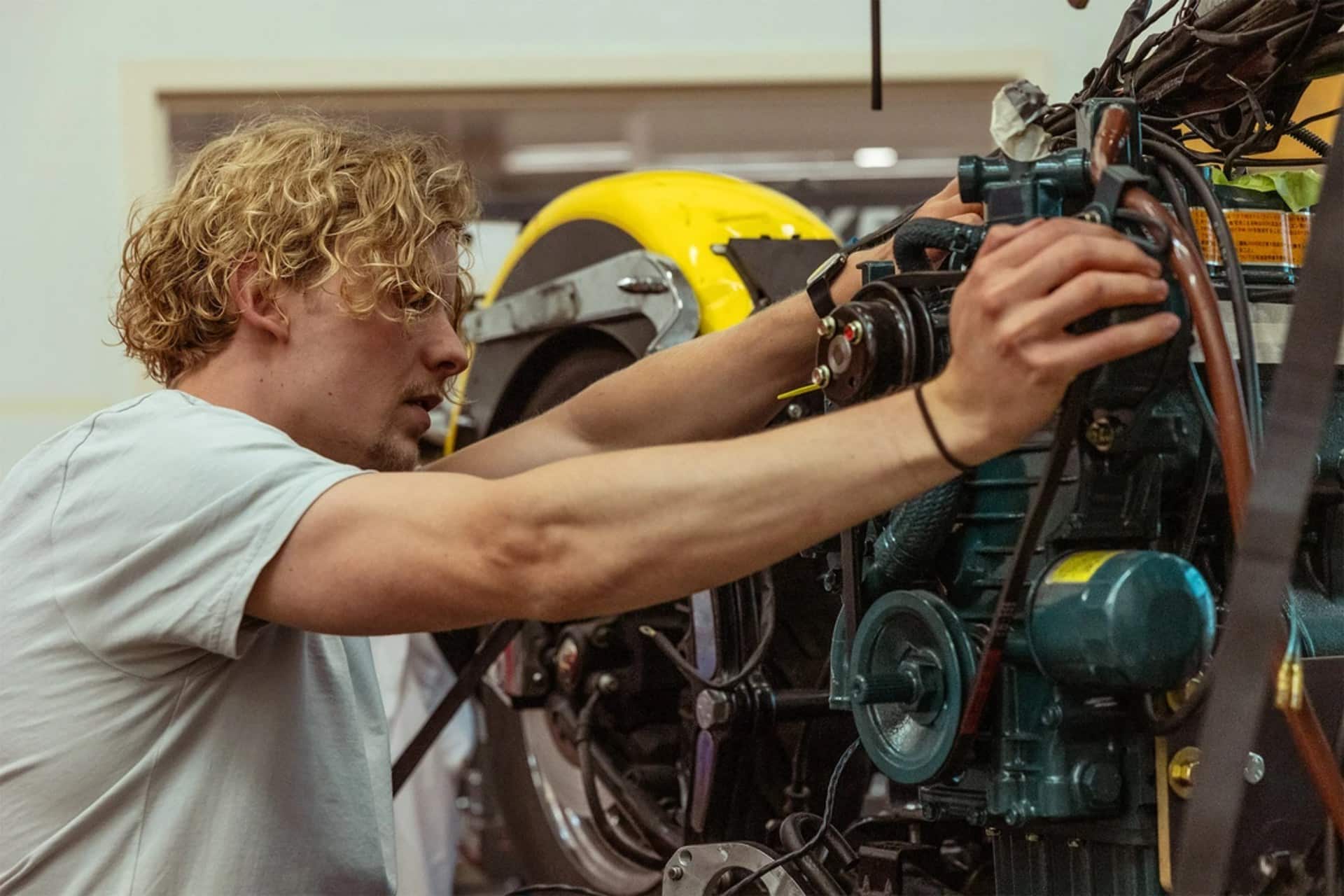
What might seem like an invention of garage to get attention is, in fact, an academic project with a clear purpose. The protagonist of this story is a Harley-Davidson Softail which has been adapted to house a diesel engine Kubotausually destined for agricultural machinery.
The transformation was Alex JennisonEngineering student at the University of Columbia Britanic (UBC, Canada), together with a team of colleagues with the same concern: demonstrate that alternative energies can have a real and accessible role in modern transport.
Thus, this Harley-Davidson is born with Tractor diesel engine
The starting point was not the motorcycle, but a practical need. That is, reduce the emissions of the university fleet of heavy vehicles, composed of trucks, gardening machinery and service transport. The proposal was to take advantage of used kitchen oil and turn it into biodiesel suitable for cold climates, so that the university could self -abuse without depending on conventional fossil fuels.
However, instead of presenting your idea in a closed laboratory, Jennison And their team decided to create a prototype. And, thus, install the engine in a Harley-Davidsona cultural icon, and demonstrate about the asphalt that the project was not only viable, but inspiring.
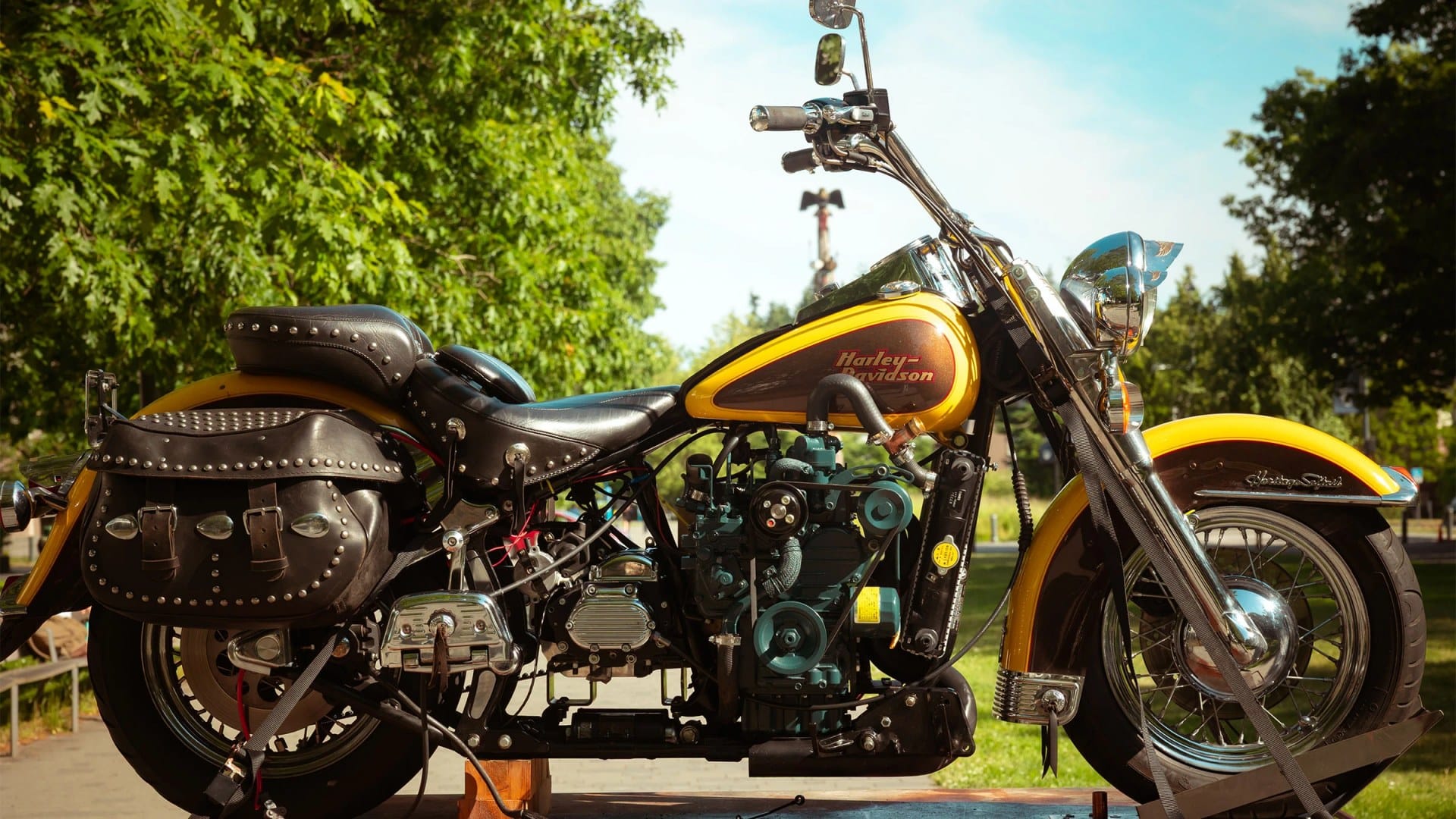
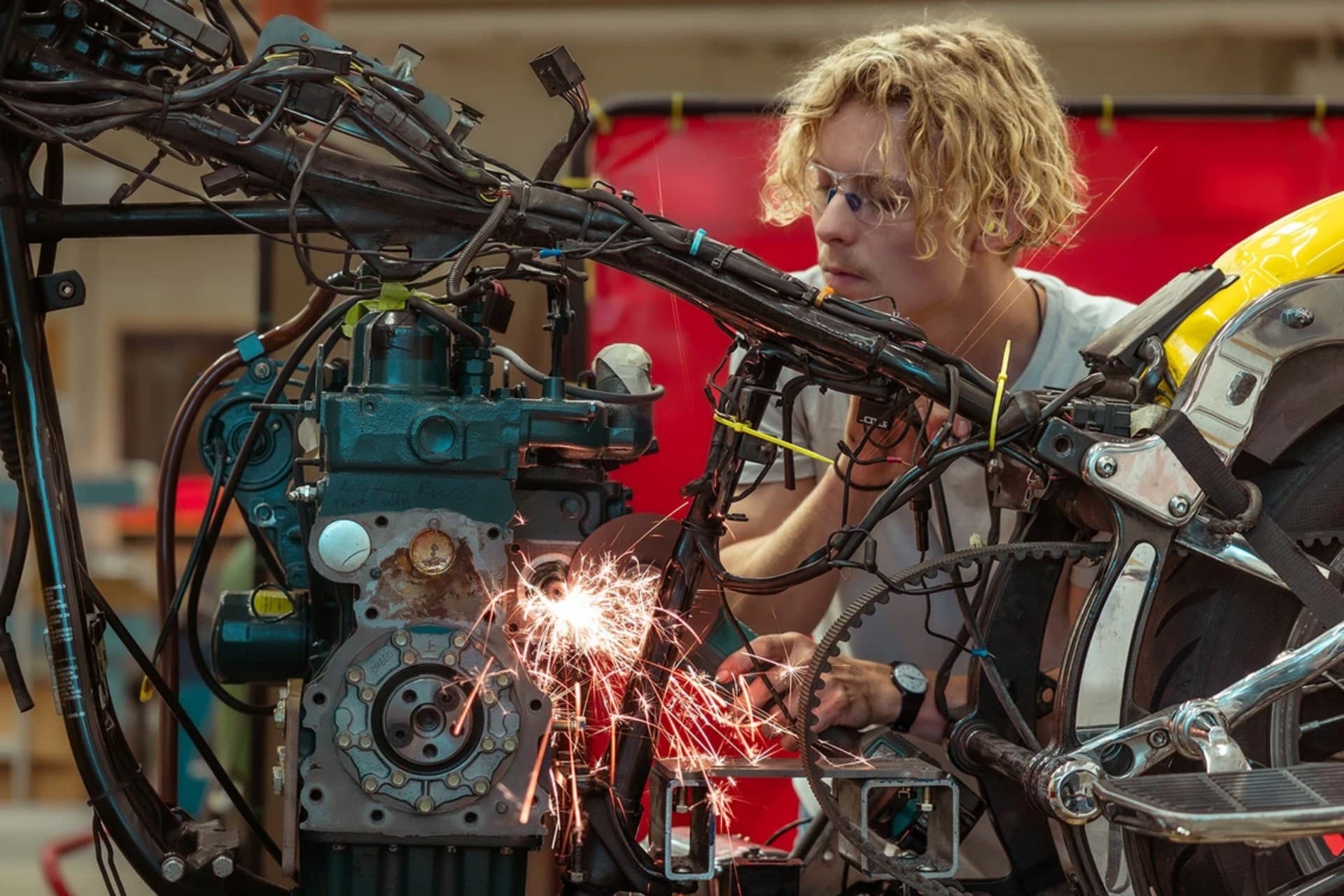
As you can imagine, the adventure was not simple. For more than a year, the students faced entire nights of welding, machining and impossible adjustments to get an agricultural engine to fit into a chassis designed for a V-TWIN classic.
The own Jennison summed up with irony: “Twelve months of struggle, endless nights and a lot of patience for a tractor diesel engine to end up roaring in a Harley-Davidson. Non -profit. Just to try one point: clean fuels work today”
The result was a robust motorcycle, imposing appearance, which can work with both conventional biodiesel and recycled oils. Beyond the mechanical show, the Harley Diesel is a debate vehicle.
Jennison He maintains that, although electrical systems are the great promise against climate change, they are not exempt from problems. The dependence of minerals such as cobalt or lithium entails serious social and environmental consequences: from the exploitation of communities in the Democratic Republic of the Congo to the deforestation of sensitive areas such as the Amazon.
Faced with that model, the biodiesel offers a more immediate and usable alternative in local contexts, especially since much of the labor and infrastructure is already prepared to work with combustion engines.
As he points out: “Most municipal fleets still work with diesel, and their mechanics already know how to repair them. Why not feed those same engines with used oils from university coffee shops?”
The following objective of Jennison is more ambitious: finance through GOFUNDME a trip of almost 2,000 kilometers with this Harley unique to demonstrate the reliability of its creation and make visible that sustainable solutions can be applicable outside the laboratories.
For now, it has managed to raise about 5,000 Canadian dollars of an objective of 15,000. His campaign not only seeks economic support, but also open a debate on how to rethink transportation beyond total electrification.
This Harley-Davidson Diesel does not resemble any other. He is noisy, heavy, unorthodox … but he is also a manifest on wheels. It does not intend to compete with the electric or the traditional motorcycle industry, but to question the idea that there is only one path to sustainability.