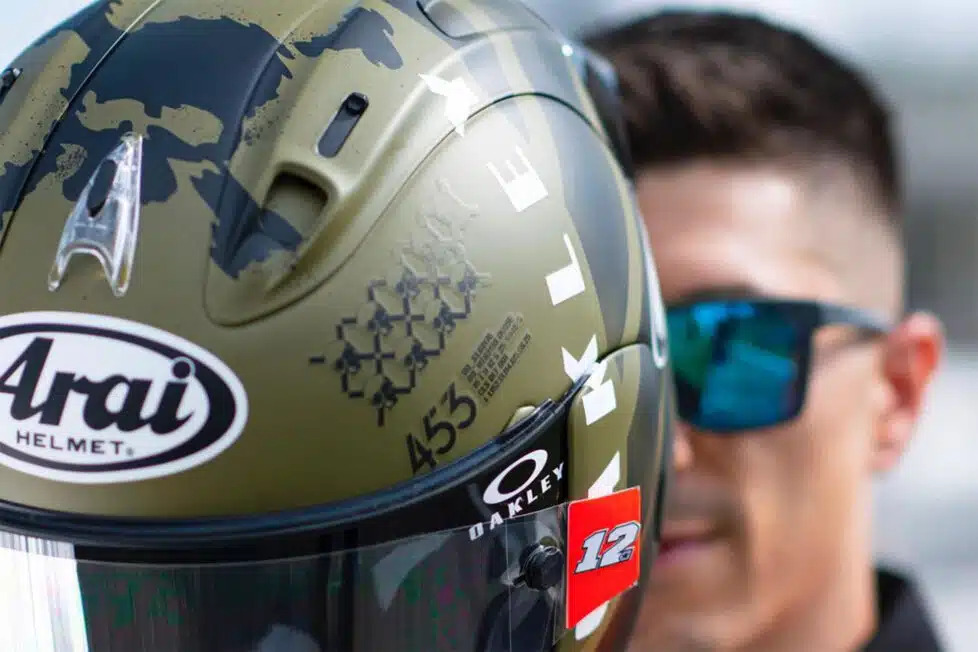
Yes friends, the helmet also sweats. Now, we are going to tell you how to keep them clean and fresh during the summer. Which, by the way, “are getting hotter and more humid.”
Summer has many good things for those of us who enjoy motorcycles, but it also has a drawback that is repeated every time the thermometers rise: the heat. And while we ride, there is an area of our equipment that ends up paying especially dearly for these high temperatures: the inside of the helmet.

On the road, with the air circulating, the situation can be relatively bearable. However, when it comes time to cross a city, stop at a traffic light or face a traffic jam, the helmet can quickly become a small sauna. Sweat ends up soaking the pads, moisture accumulates and, if we do not let the interior dry properly, the inevitable bad odors appear. The typical smell ofbrontosaurus”
Therefore, summer is a good time to pay a little more attention to cleaning your helmet. It is not necessary to turn every outing into a maintenance ritual, but you do need to acquire some simple habits that will help keep it in better condition and, above all, for longer.
Sweat stays inside the helmet longer than it seems
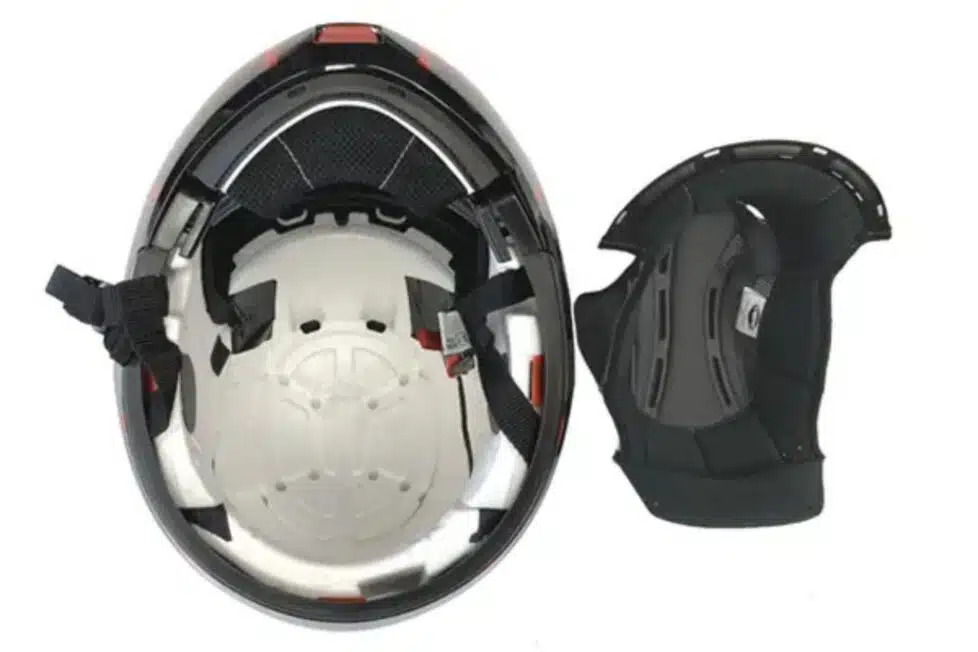
The interior part of the helmet is designed to be in direct contact with our head and face. The pads absorb sweat and, with continued use, also accumulate grease, dust and dirt.
Obviously, the problem comes when that moisture remains inside for too long. The helmet can take a long time to dry completely and, especially during the summer months, insufficient ventilation encourages the appearance of quite unpleasant odors.
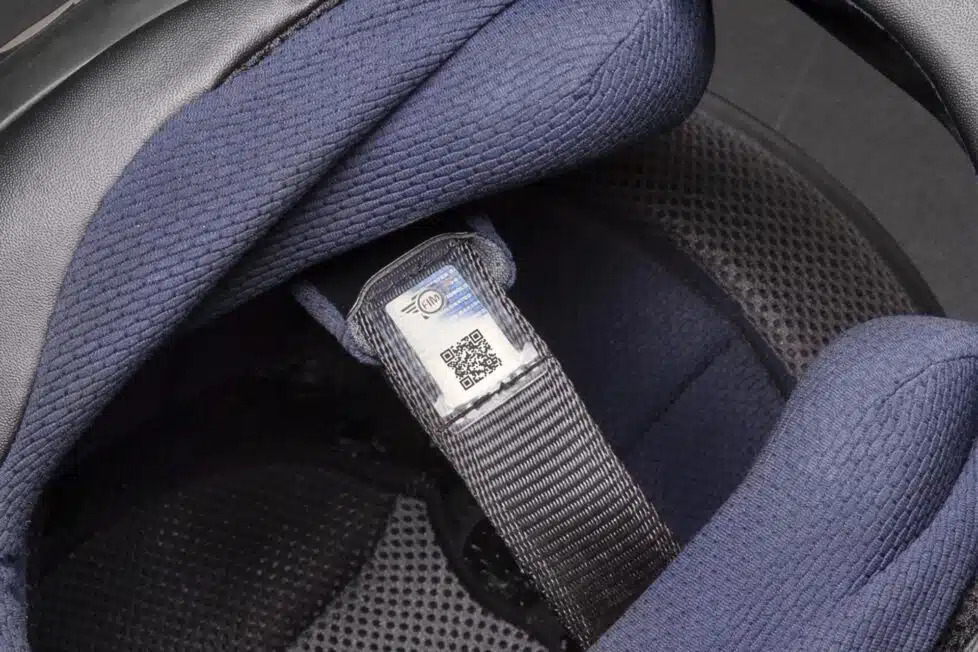
The simplest solution is not to wait for the problem to appear. Whenever possible, after a particularly hot day it is advisable to leave the helmet open and in a place ventilated so that the moisture evaporates. If the interior can be disassembled, removing the pads greatly facilitates the process.
And here is an important recommendation: before disassembling anything, it is advisable consult the manual of the helmet. Interior extraction systems change between manufacturers and models, and not all parts are designed to receive the same treatment.
Warm water and neutral soap: the safest combination
When it’s time to clean the interior, the temptation may be to use whatever detergent we have at home. However, obviously not all are suitable for helmet materials.
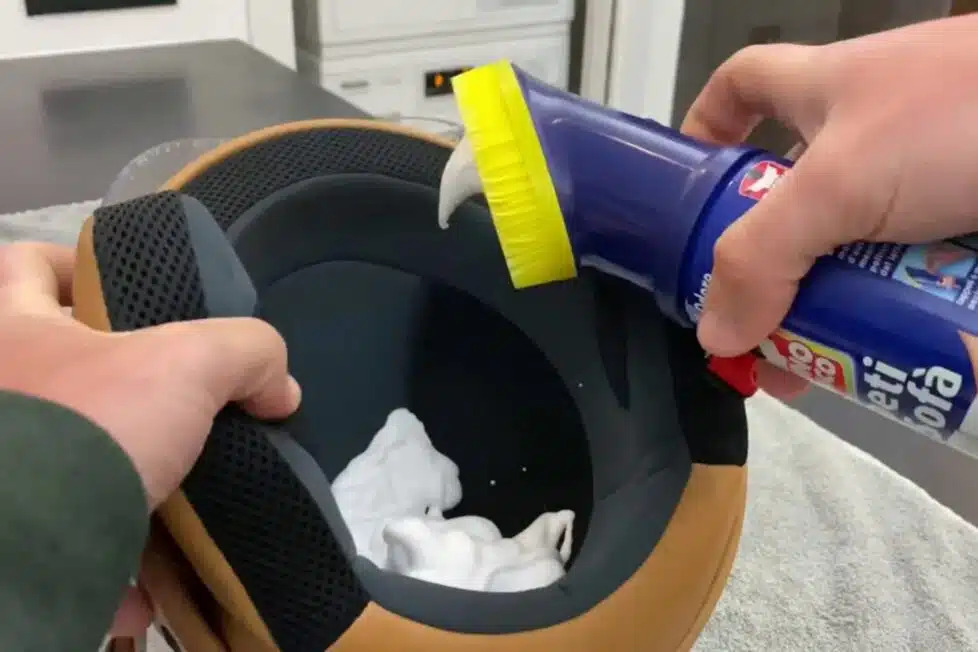
It is recommended to use soap or neutral detergent diluted in water to clean the interior and acidic or alkaline products, such as glass cleaners and substances containing organic solvents, are not recommended. In addition, some products with alcohol or solvents can greatly deteriorate certain materials.
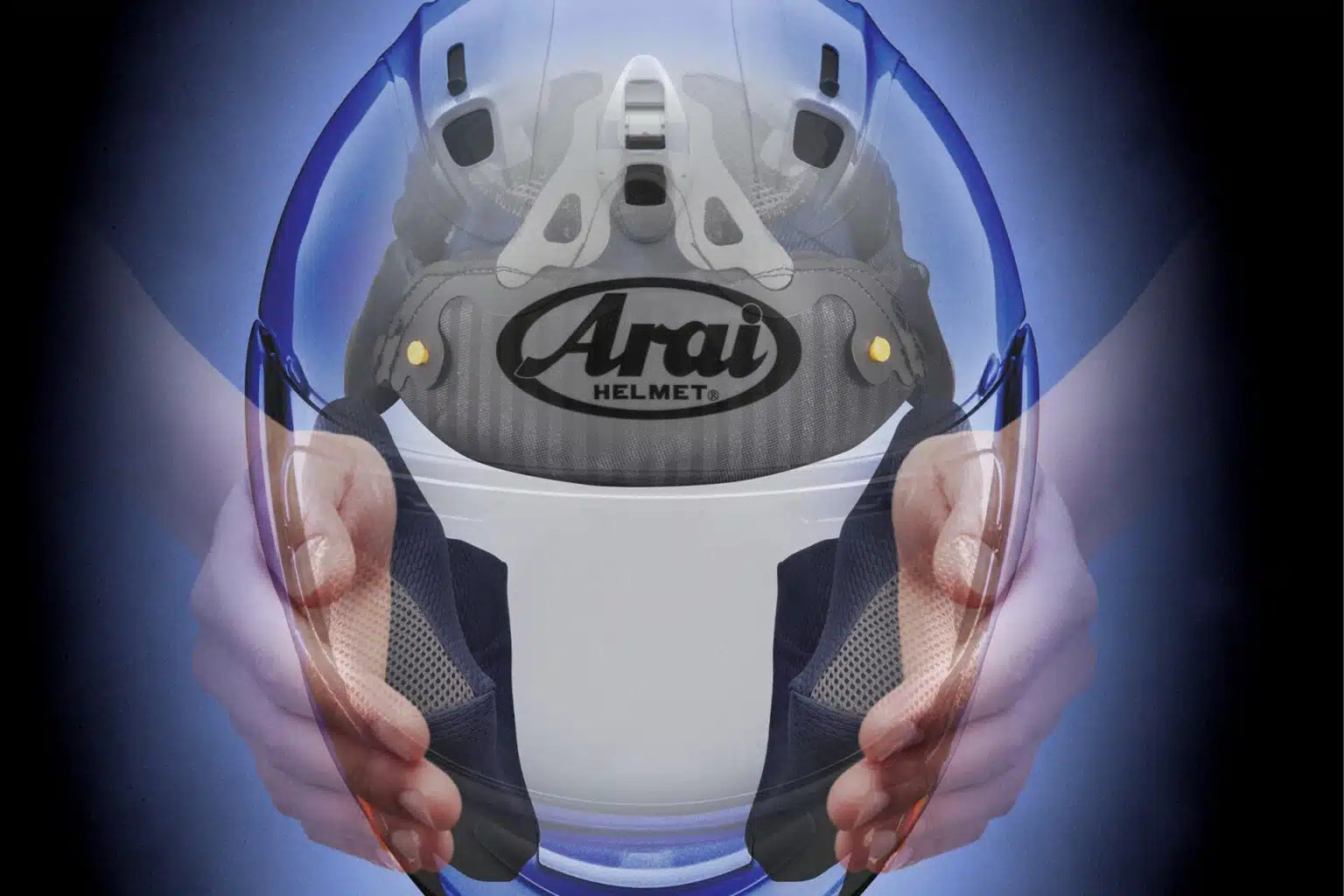
Therefore, the idea is simple: if the pads are removable, they can be washed following the manufacturer’s specific instructions. In certain helmets it is even possible to use the washing machine, although some brands recommend placing the interiors in a washing bag and point out that, when frequent washing is carried out, hand washing is a more careful option.
It is not necessary to use large amounts of detergent. In fact, an excess of product can make rinsing difficult and leave residue on the fabrics. After washing, the pads must be rinsed very well until the soap is completely removed.
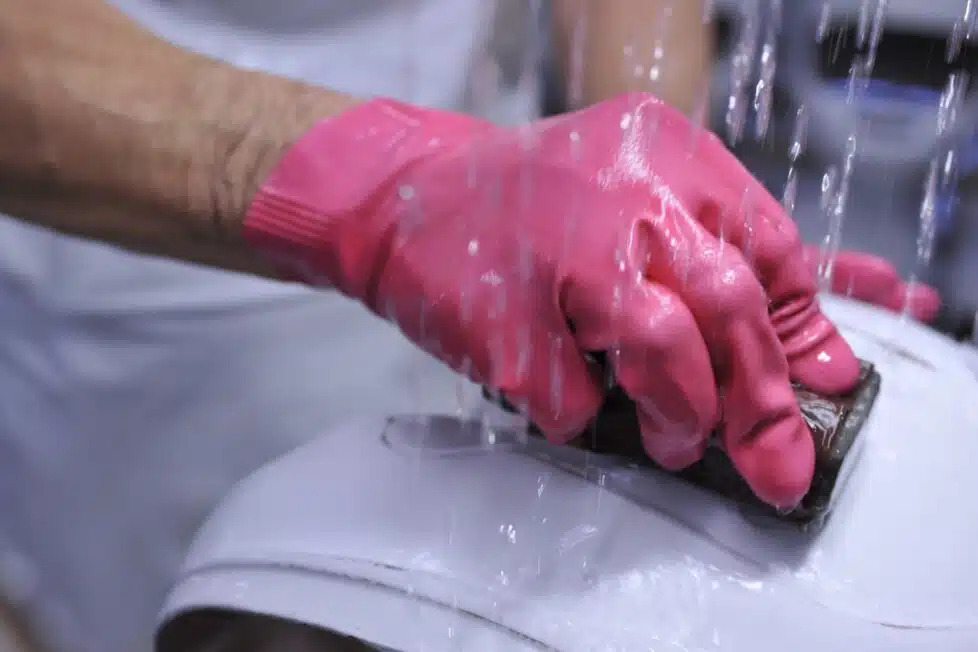
Water that is too hot can be a problem
This is one of the details that we can most easily overlook. Just because a piece of fabric can be washed with hot water does not mean that we can apply the same treatment to the components of a helmet.
In some maintenance instructions, it is specified that water above 40ºC should not be used and explains that the inner expanded polystyrene lining, responsible for absorbing part of the energy in the event of impact, is especially sensitive to heat and certain chemicals. Therefore, it is recommended to clean it with a soft cloth moistened with a solution of neutral soap and water, without rubbing or applying excessive pressure.
Therefore, a deep cleaning of the helmet does not mean submerging it entirely in water or applying aggressive products inside. Different parts have different materials and functions and should be treated accordingly.
The shell, strap and ventilation inlets also need attention
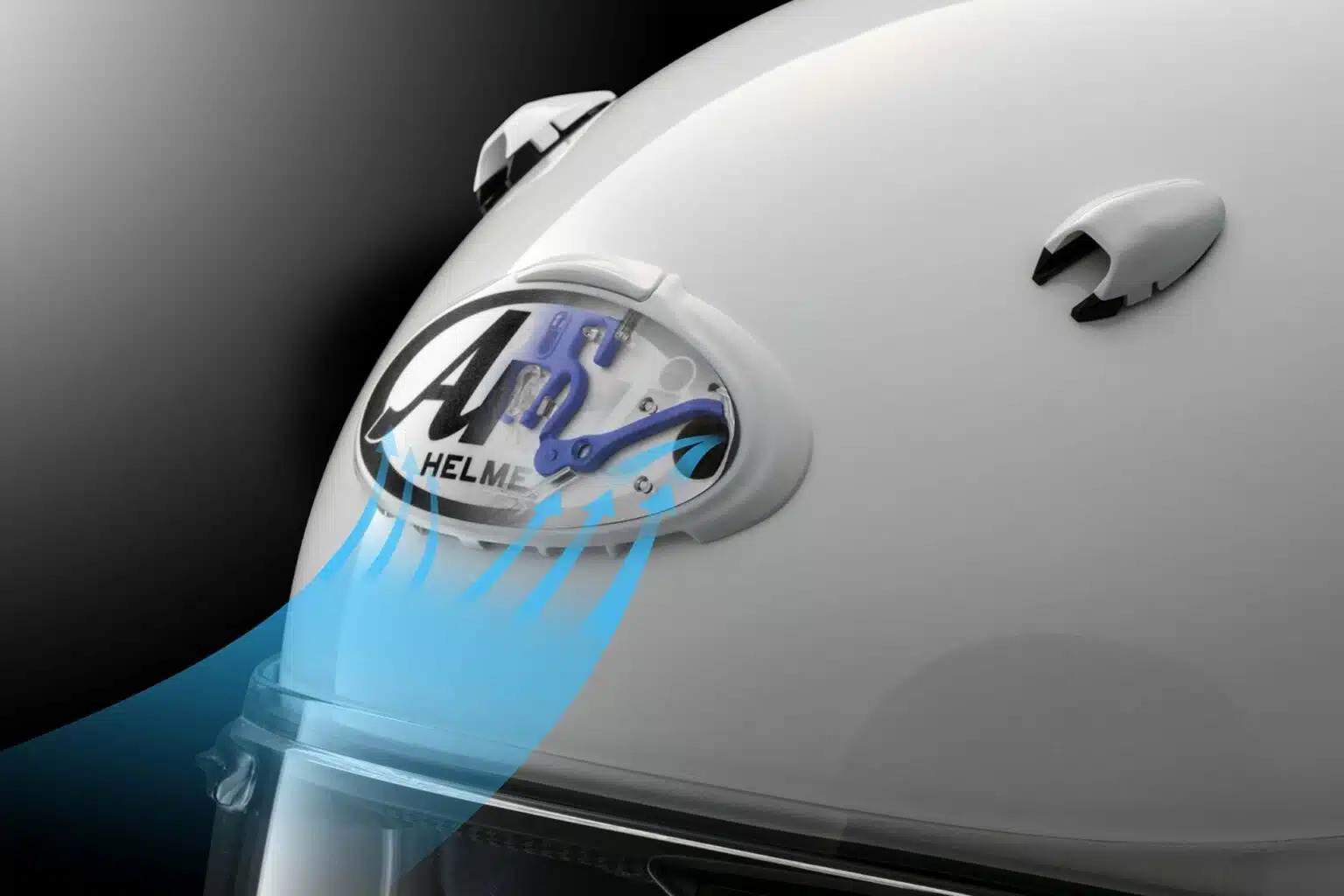
The pads They are the main protagonists of cleaning, but they should not be the only pieces we review. In fact, the retention strap, for example, is constantly in contact with sweat and can accumulate quite a bit of dirt. Careful cleaning with water and neutral soap can help keep it in better condition.
As we can all imagine, it is also worth checking the ventilation inlets and outlets. Over time, they can accumulate dust, insects or small debris that hinder air circulation. Factories recommend using a toothbrush or cotton swab of cotton to access small areas and keep the ventilation elements clean.
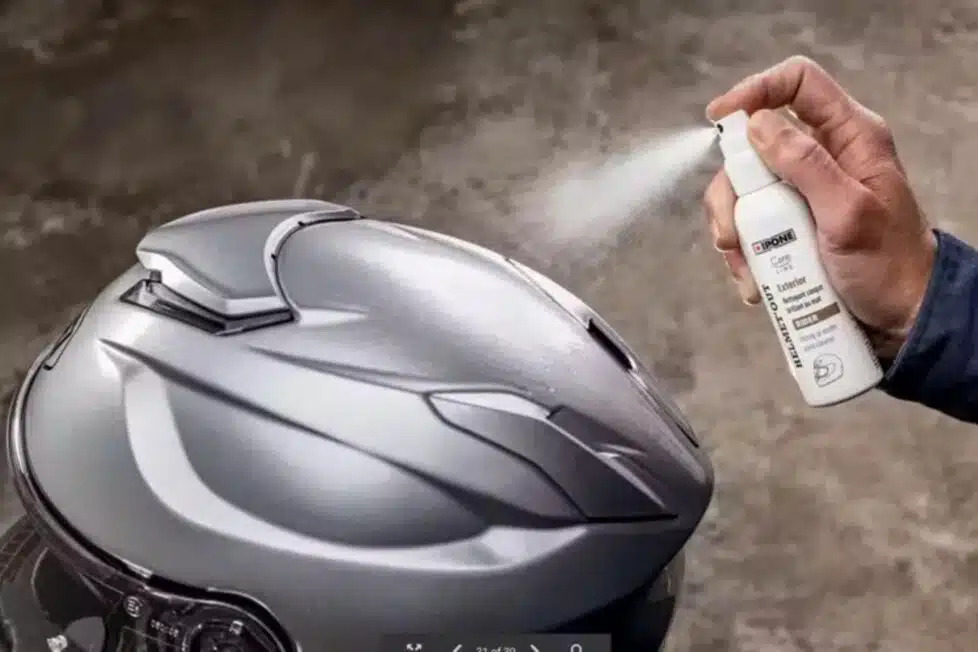
As for the outer shell and the screen, it is also advisable to use suitable products. Conventional glass cleaners or certain chemicals can affect plastics and coatings. For the screen, a mild solution of neutral detergent and water is usually recommended, and cleaners containing organic solvents are discouraged.
Drying your helmet is as important as washing it
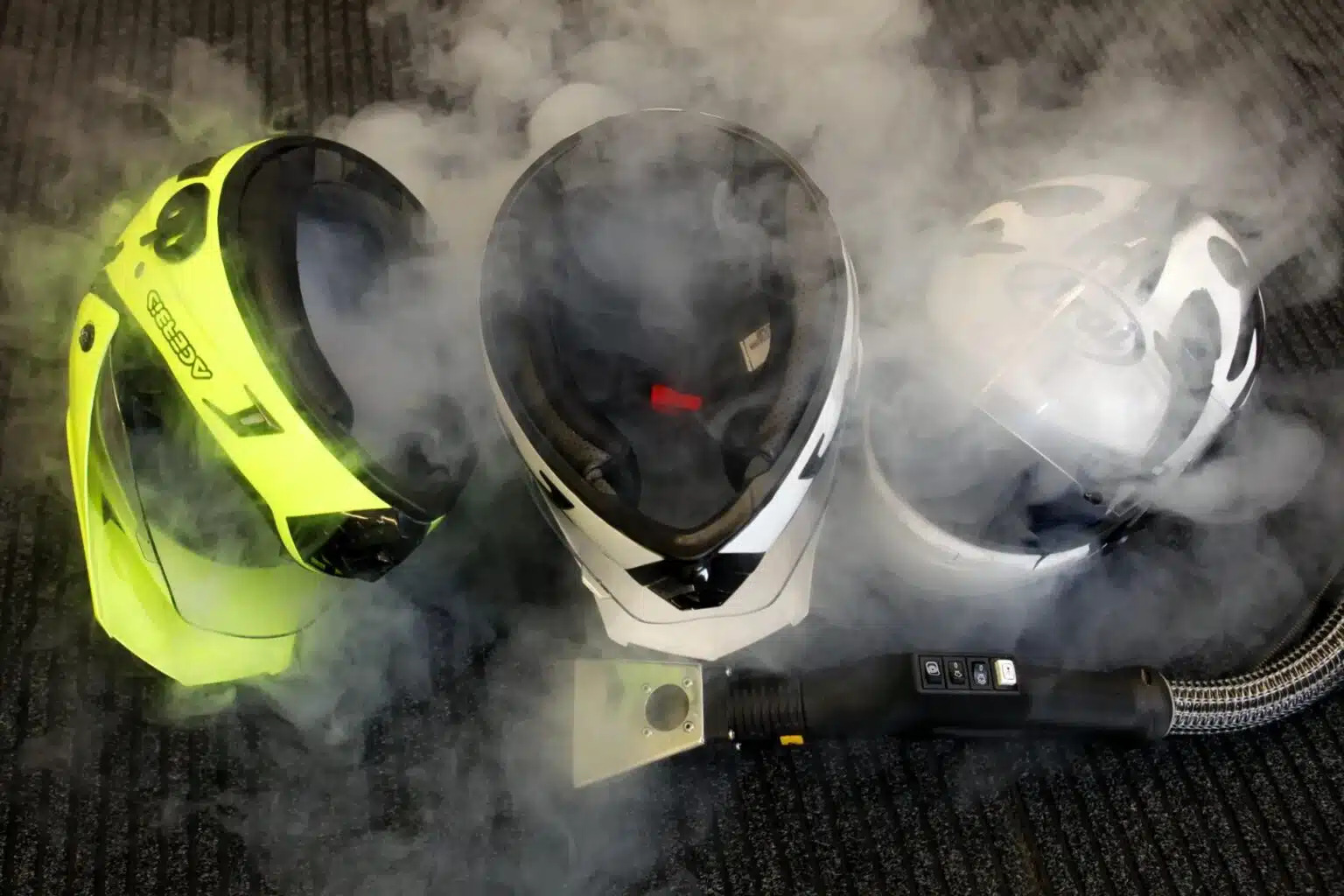
Here is probably one of the most common mistakes that we bikers make. We wash the padswe leave them for a while and, when they seem dry on the outside, we put them back. The problem is that they can retain moisture inside. This residual moisture can end up generating bad odors and, over time, encourage the appearance of mold. This is why it is essential to let all parts dry completely before installing them back into the helmet.
Also, doing it quickly with a hair dryer is not a good idea. It is also not advisable to leave the pieces in direct sun for hours. It is recommended to dry the interiors in the shade and not use mechanical dryers, as the heat can damage certain materials, especially the polystyrene lining. It is also advisable to let the helmet dry at room temperature and away from heat sources.
It is best to find a dry, ventilated and shaded place. It may take a little longer, but it is the safest way to complete the process.
A little maintenance now can save you a lot of trouble later
There is no need to wait until the helmet smells bad to clean it. In fact, the more frequent the use and the hotter it is, the more sense it makes to pay attention to its interior. Periodic cleaning of the pads, proper ventilation after each ride and complete drying when the helmet gets wet or accumulates sweat are simple habits that can make a huge difference.
And there is one last issue that we must not forget: if an interior is deteriorated, worn or damaged, cleaning it is not always enough. Manufacturers offer spare parts For certain models and replacing damaged pads may be a much more advisable option than continuing to use them for years.
In the end, keeping the helmet clean is not just a matter of comfort or preventing our traveling companion from smelling like a “wild boar” after a route in August. It is also a way to take care of one of the most important safety elements that we use every time we get on the motorcycle. Not to mention, the most important.