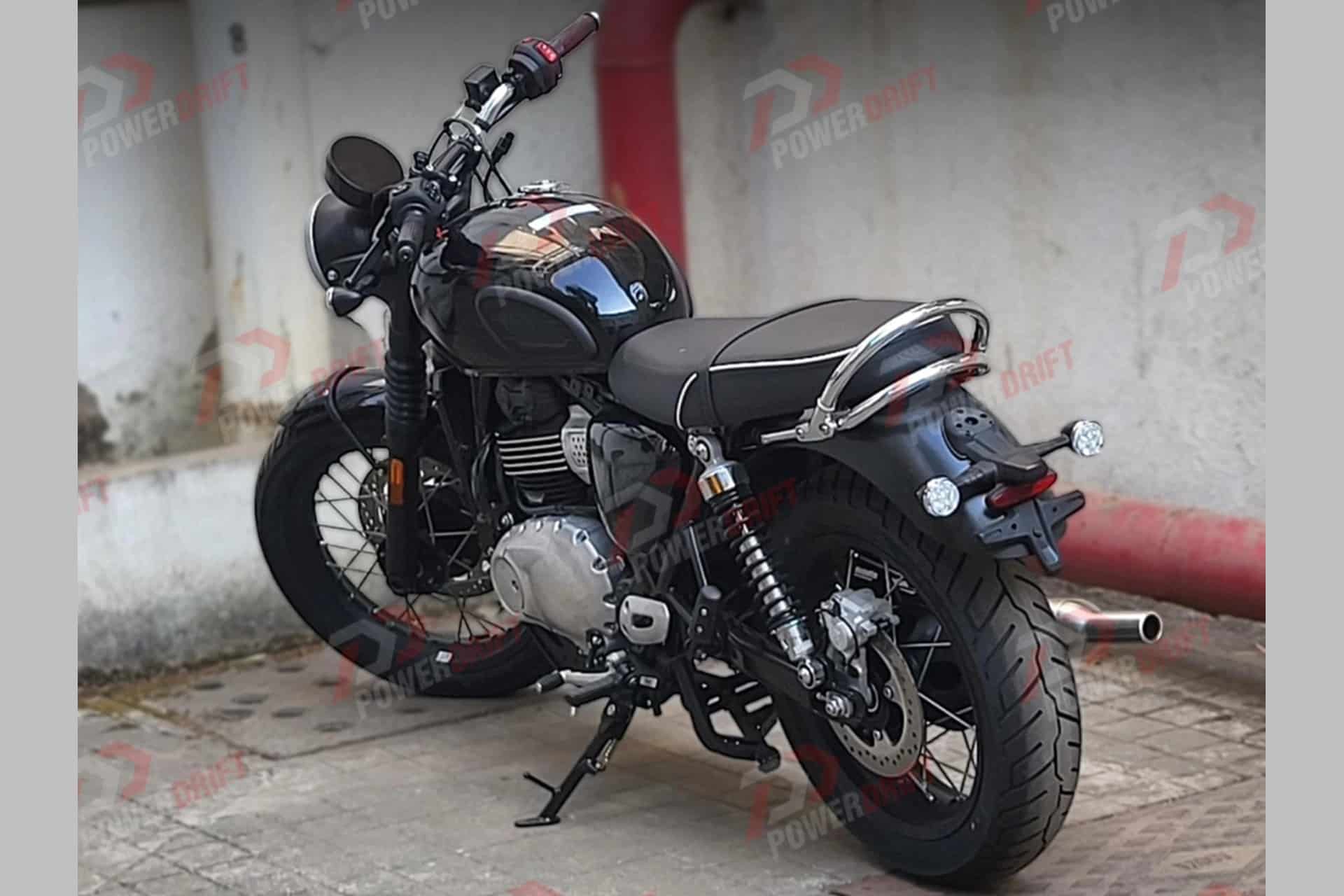
Just a few days after being intercepted in the middle of a test, the Bonneville 400 once again becomes the protagonist of some spy images leaked by a local media, although on this occasion the new retro Triumph frame was parked on one of the busy streets of the route established by its testers. And so, at a glance, we continue to explain some of the essential aspects that will give life to the model.

Bonneville 400: standard bearer of the retro concept
As we explained in the previous article, the Bonneville 400 represents a new paradigm within the range. Modern Classic from Triumph. At least when it comes to style and general simplicity. This is nothing new when we talk about this legendary saga, although on this occasion it becomes even more evident for obvious reasons.
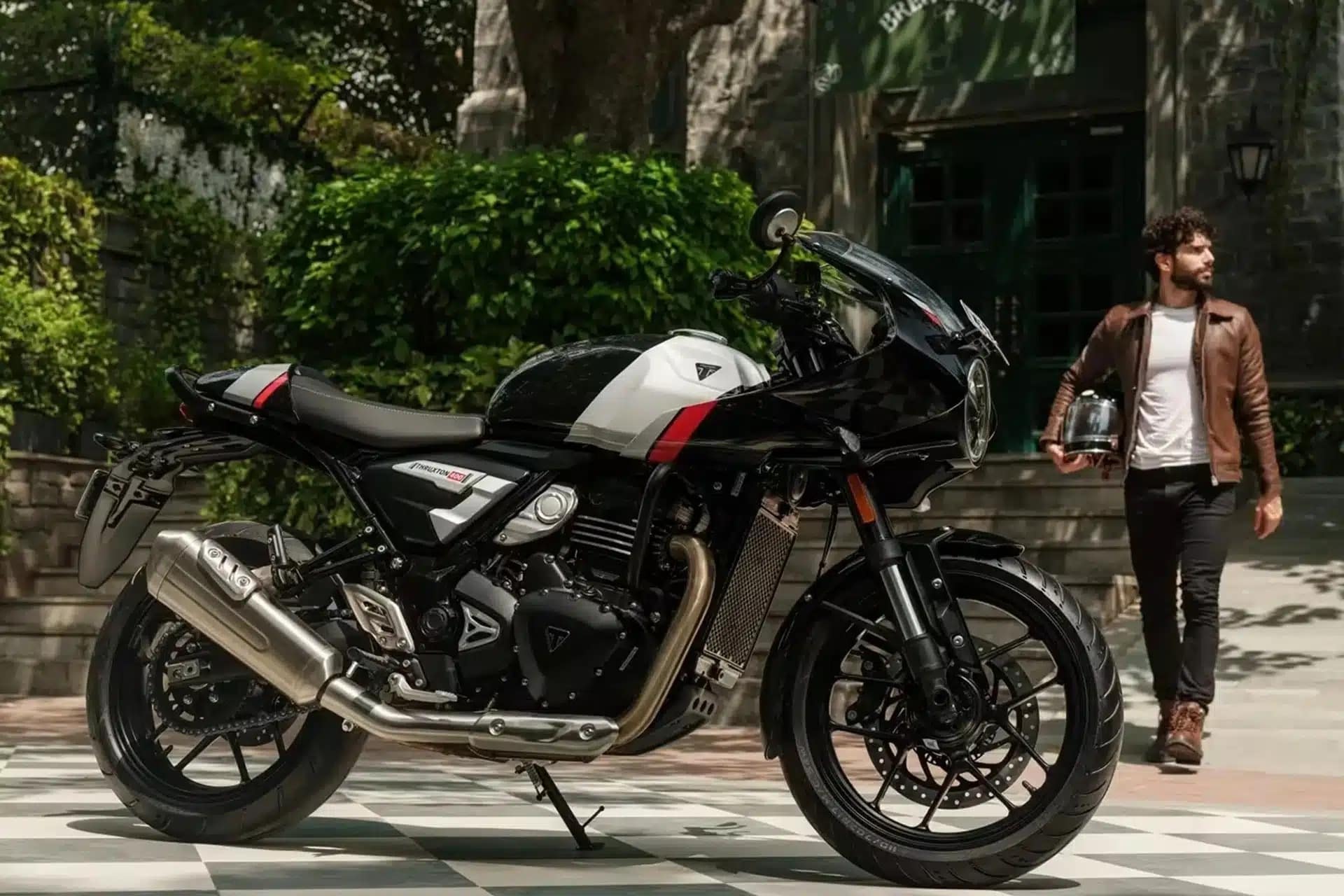
Firstly, because of the options that Triumph already offers us within this category, where the well-known Speed 400 and Scrambler 400 raise the technical bar in terms of its cycle and equipment. And it’s not that the Bonneville 400 lets its guard down in this section; It simply stands out with its own configuration where we can highlight an old-fashioned suspension team.
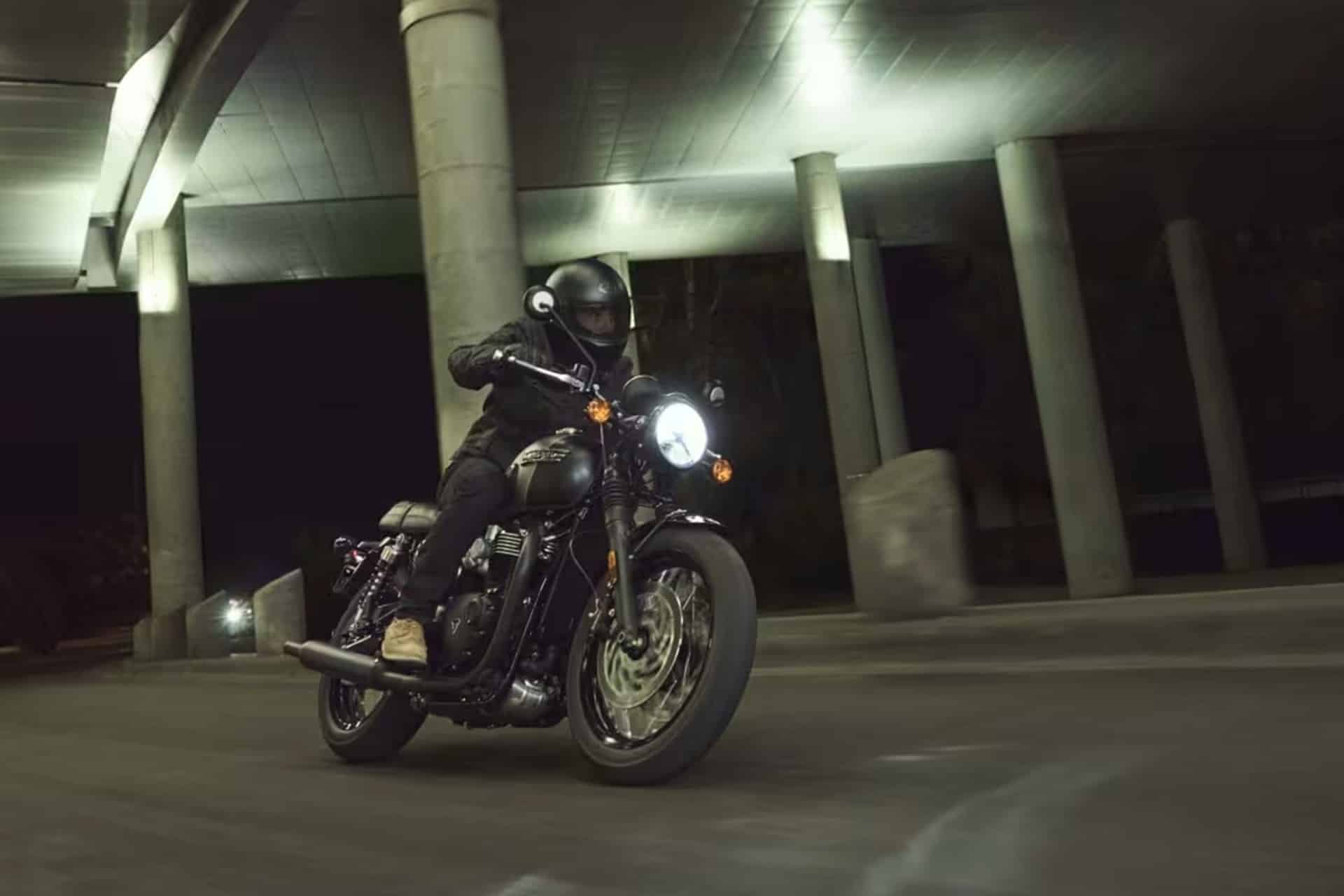
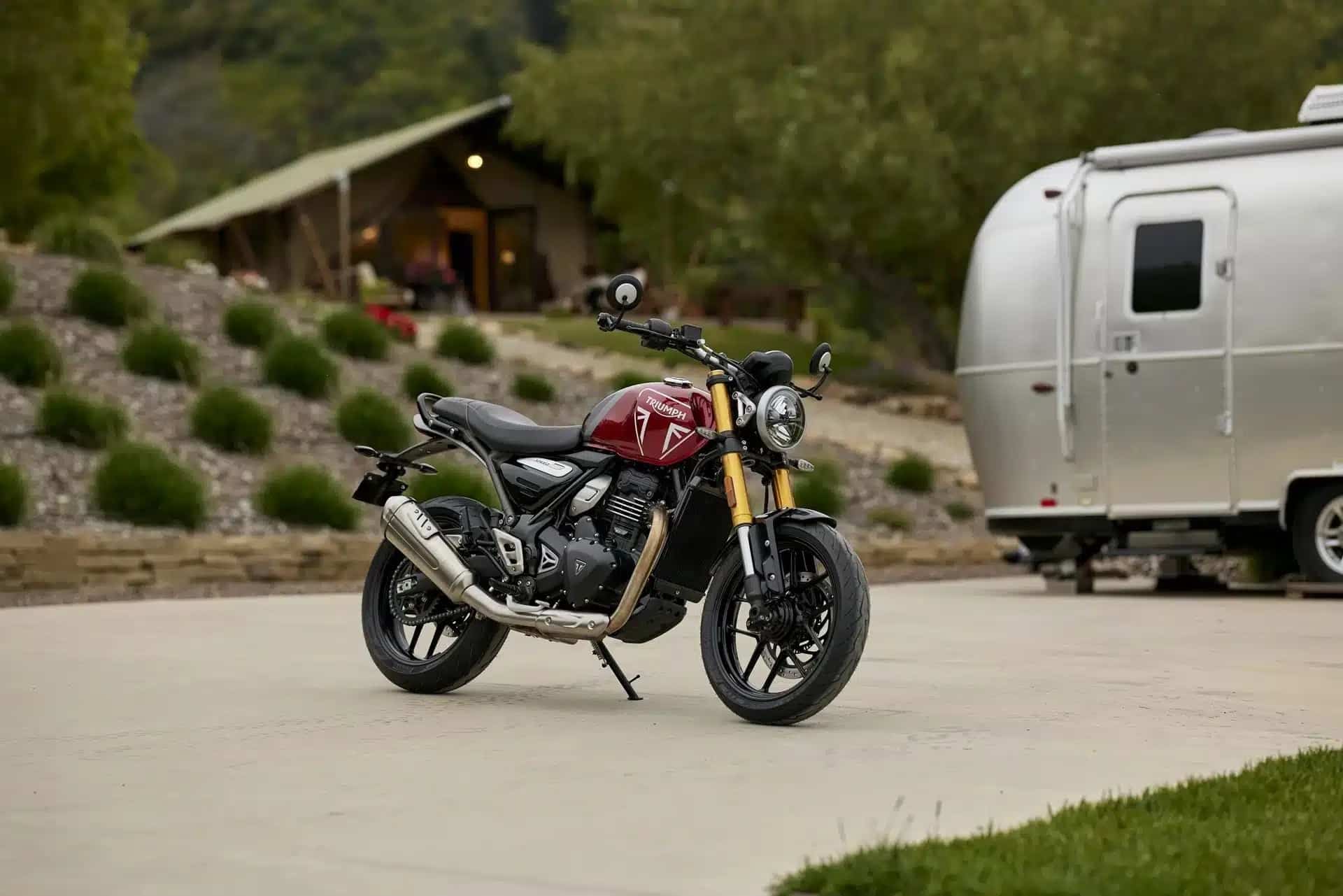
This involves mounting a conventional fork on the front axle and a pair of lateral shock absorbers at the rear. The latter are new within this range of models sold by Triumph. All of them opt for the typical front inverted fork architecture and central shock absorber on the rear axle. Likewise, it is very likely that the Bonneville 400 will implement a smaller section rear swingarm and a new bolted subframe.
There are even more differences if we talk about the cycle part; We highlight the arrival of a pair of radial tires measuring 19” at the front and 18” at the rear, measurements that Rush Lane’s colleagues are betting on. An idea that we fully support. Also the possibility that these come shod with tires equipped with a camera. Likewise, now focused on the equipment and finishes of the model, we have some elements that were expected in a motorcycle like the Bonneville 400.
Analyzing the rear view offered by the header image, the circular instrument panel that this test unit mounts stands out. We are not very clear that it will be entirely digital. We’re leaning more toward the possibility that Triumph ends up using a successful dialer, with an analog tachometer and a small auxiliary LCD display.
The simple design that defines the shapes of its seat is also striking. Here the British brand opts for the classic one-piece model, where there is a small gap between both seats and a grip strap between them. This has its reason for being more for an aesthetic issue than a practical one, since the Bonneville 400 also has a strong rear handle with a chrome finish.
Finally, the contrast offered by its general black finish with some metallic finish accessories is notable. The exhaust system, the engine covers or the shock absorbers themselves (with the exception of the spring), offer us this well-defined panoramic image.
In short, a frame that clearly supports that classic look that also works for Triumph, although offering the exact amount of technology that is currently required from a model of this level.