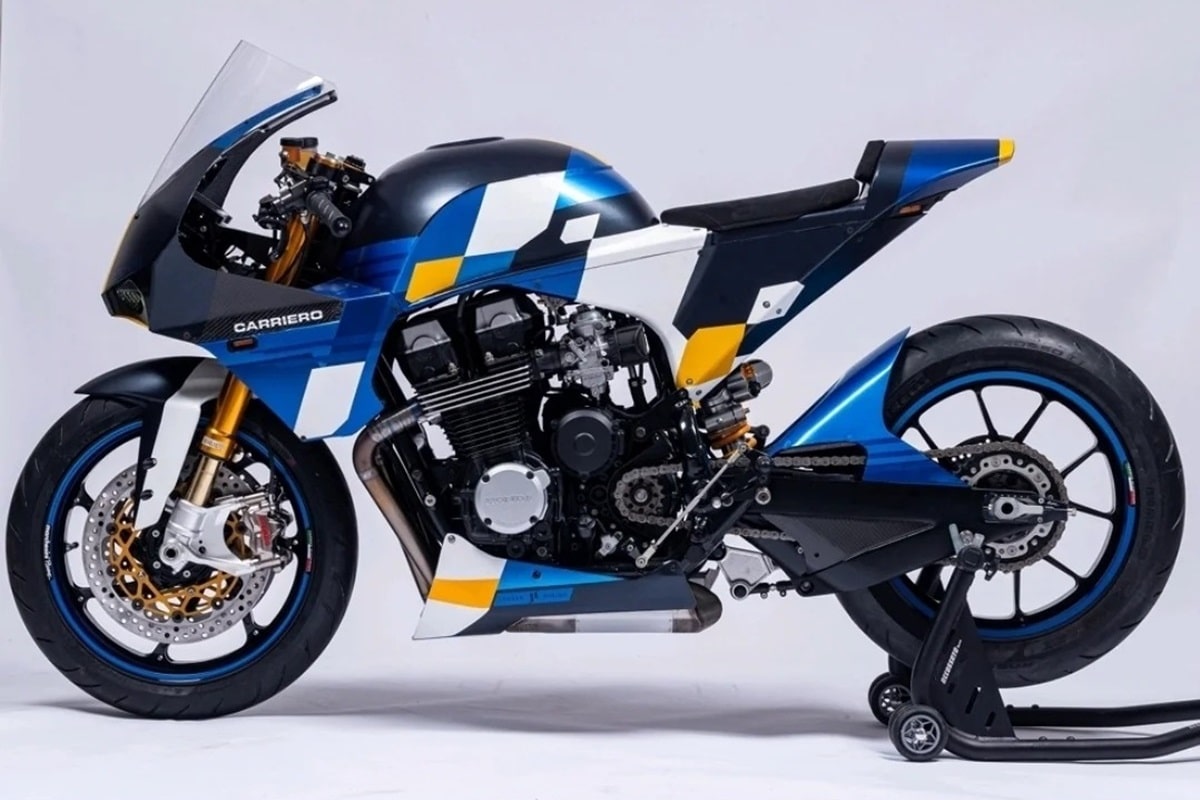
When one has the opportunity to learn about projects as avant-garde and bold as the recent work of the Italian specialist Corse Carrierthen and only then, can we understand that in this world of motorcycles, the limits only exist in our minds. You just have to take a first look at this incredible CB750 F2 converted, almost by magic, into a “Cafe Racer Racing” high-flying.

CB750 F2 by Carriero Corse in detail
After its publication for the first time by the colleagues at Bike Exif, many of us have wondered how it is possible to engineer a project of this magnitude and not stop trying halfway. A statement that comes from knowing countless preparations on the platform offered by the iconic Japanese model, but never as disruptive and personal as the one presented by the Carriero Corse team.
Massimo Carrieroexplains a little why its preparation takes as reference the classic Café Racers of the mid-sixties of the last century: “Café Racers emerged from informal challenges between drivers. But as competition intensified, driving skills evolved alongside continuous mechanical improvements, following the same logic that has always driven the development of motorsports.”
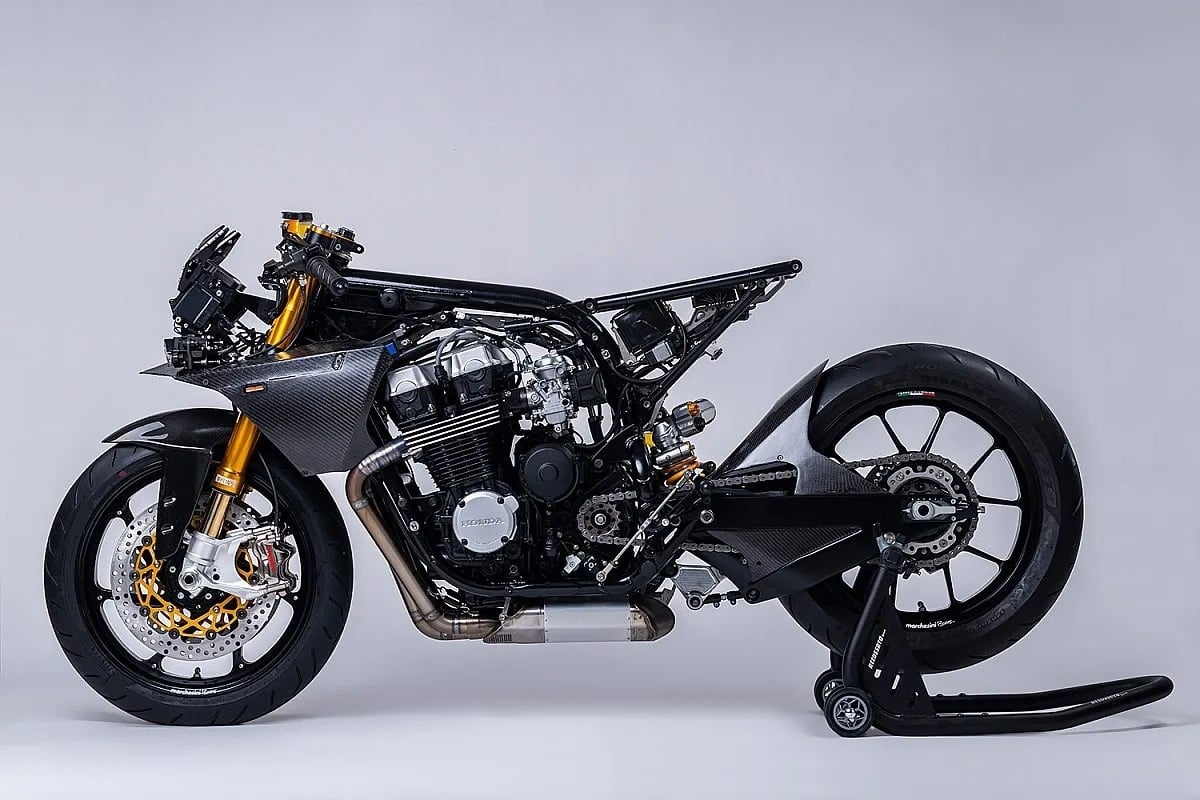
Starting from this idea, Carriero Corse decided to use a 1991 Honda CB750 F2 for this adventure, being clear that its objective was to improve such relevant aspects as ergonomics, final weight or maximum power delivered. To achieve this, it had to be done thoroughly, starting with modifying the original subframe to be able to install an Ohlins central monoshock system and finishing off the rear with a sharp single-seat tail.
A completely custom swingarm was also mounted, made with CNC components, which in turn are made up of sheet metal and carbon fiber sections. Now the wheelbase has been reduced by no less than 136 mm compared to the original model. On the other hand, products from the Swedish brand were also chosen both to configure the front suspension, in this case with an inverted fork, and for the steering damper chosen for the occasion.
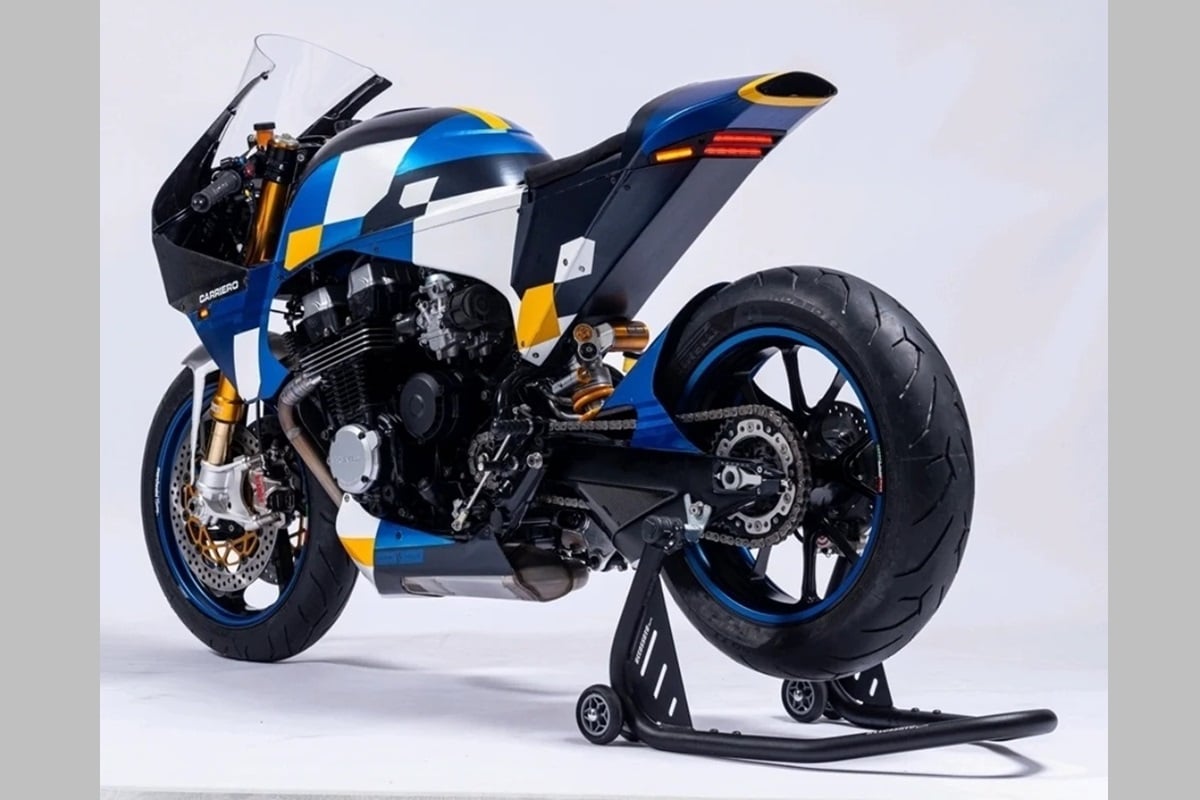
Other relevant elements responsible for giving the final shape to this Honda CB750 F2 by Carriero Corse are, for example:
- Marchesini forged aluminum wheels
- Pirelli Diablo Rosso II Tires
- Brembo brake calipers
- floating rear brake disc
- 320mm discs at the front
- Antigravity Lithium Ion Battery
- Dynatek coils
- Customized instrument panel ECU Master, etc.
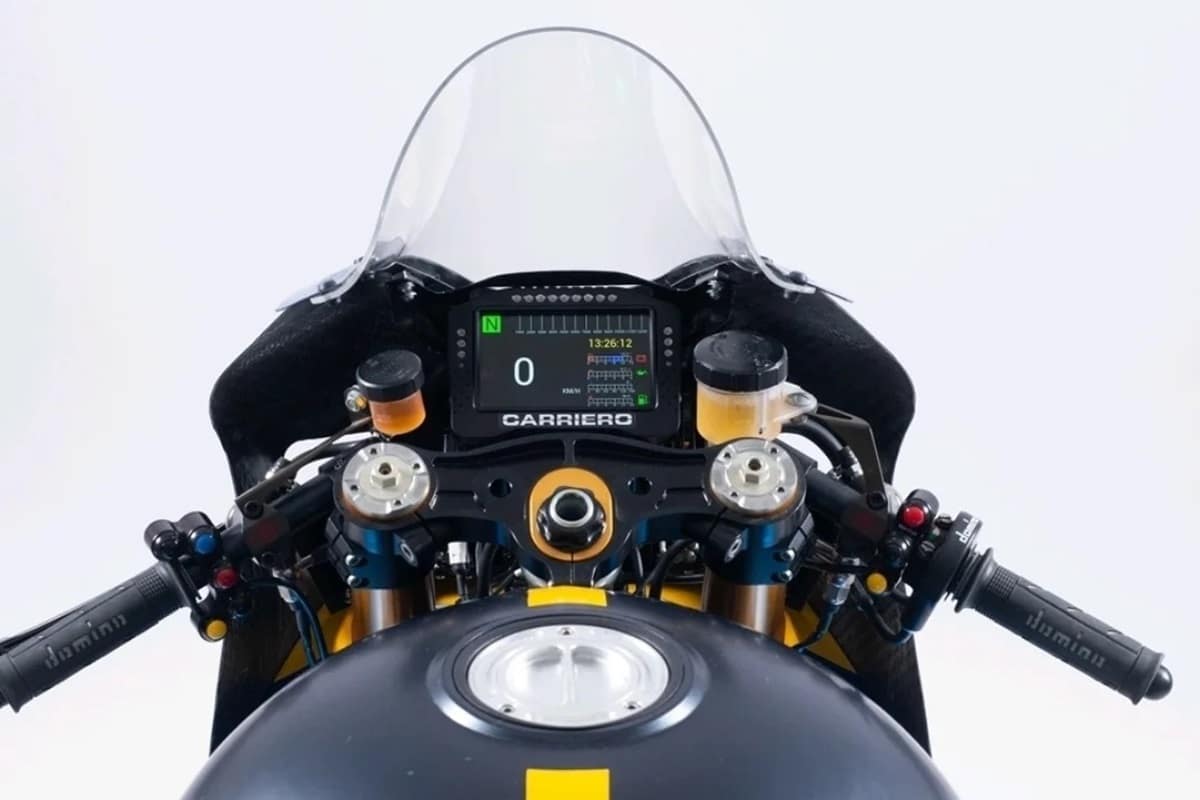
On a mechanical level, the Carriero Corse team, in addition to completely rebuilding the engine, also increased its displacement to 886cc. Now the gearbox has 6 ratios, instead of the original 5 that the CB750 originally had. Modifications were also made to the clutch, adding a new CNC Racing pump.
With the idea of increasing final performance, the people at Carriero Corse installed a PWR oil cooler and a custom exhaust system made of titanium. Let us remember that saving maximum weight was another of the primary requirements in this project. “A first stage Dynojet kit and an optimized ECU ensure the bike purrs like a kitten”clarified our British colleagues.
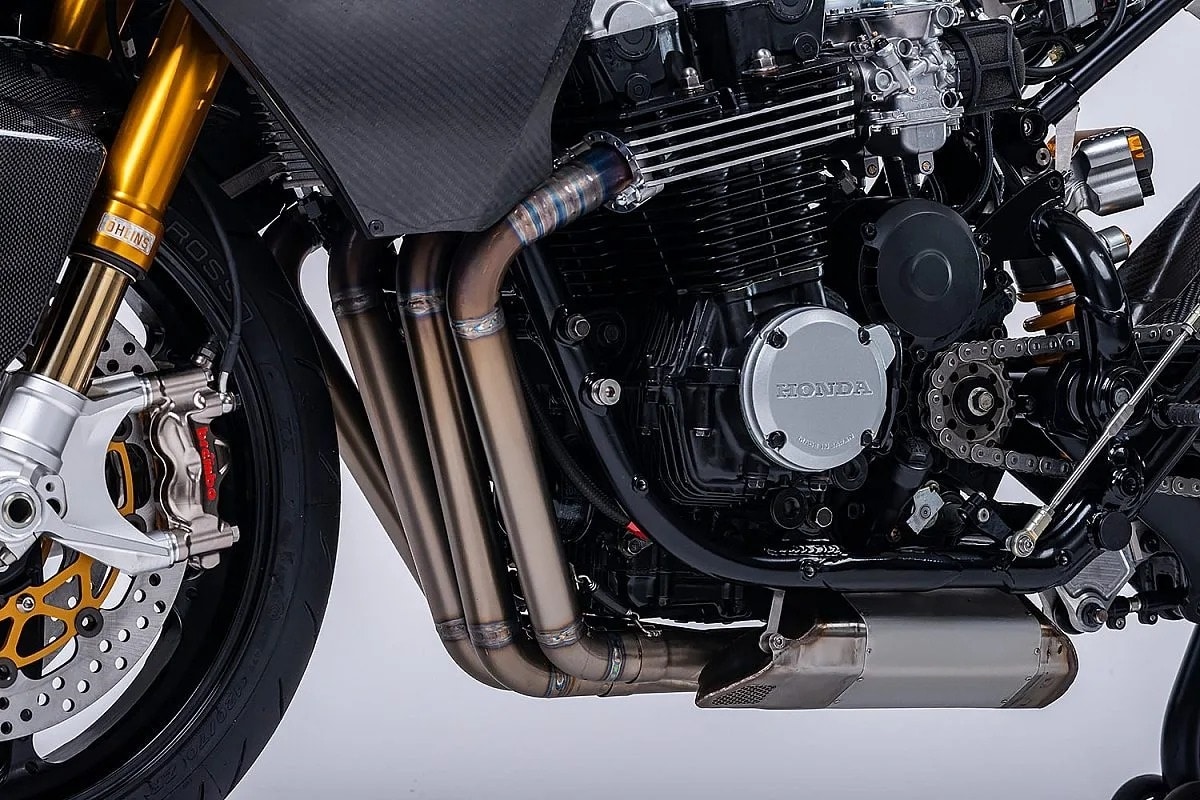
Finally, we have the aesthetic aspect, as well as the aerodynamic aspect. We are talking, of course, about the bodywork that surrounds this CB750 from Carriero Corse. At first glance it seems that we are looking at a new generation superbike, an impression for which Colombi Design is largely to blame. They were in charge of designing the guidelines of this preparation. Subsequently, all the necessary parts were manufactured with carbon fiber to dress this “Café Racer Racing” from the transalpine specialist “in formality”.
As a culmination, the headlights of a Yamaha R1 were installed on the front, supported by “LED daytime running light strips, housed in a 3D printed housing.” Just below these we find the only piece of the body that has not been molded by hand. We are referring to the front fender, coming in this case from a Ducati Panigale. Something that we assume will be liked by all those who have literally fallen in love with this rolling sculpture, right?