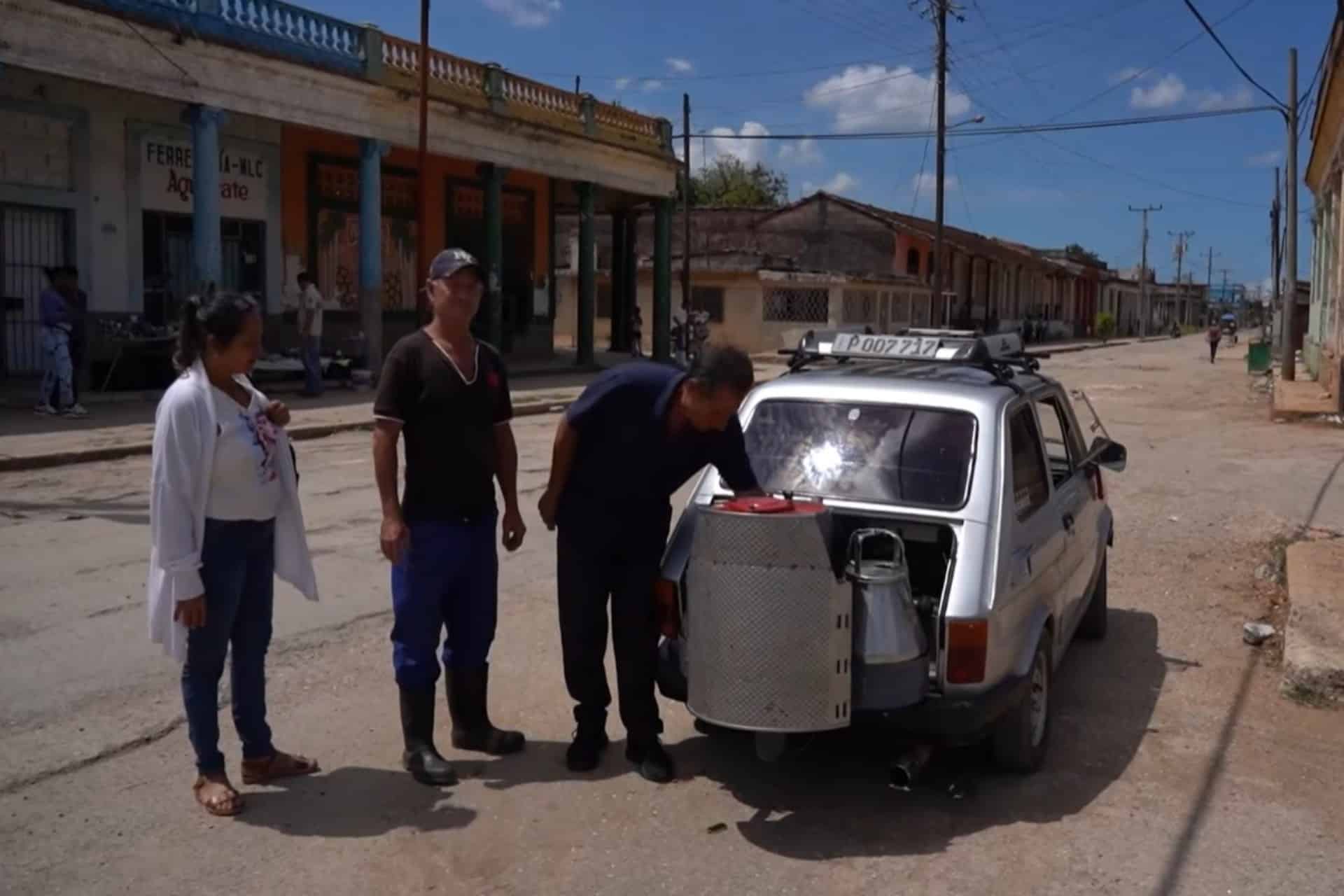
It is two in the afternoon in Aguacate, a town of barely 6,000 inhabitants just over an hour from Havana, Cuba. The Caribbean heat is hot, life moves slowly and neighbors kill time between talks, errands and daily tasks. until it appears Juan Carlos Pino.
The Cuban arrives slowly, waving, honking his horn. But it is not he who captures the attention, but what he drives. It is a car that runs on coal. So, in a matter of minutes, a dozen curious people and locals surround the vehicle. Some can’t believe it, others take out their cell phone. And everyone asks.
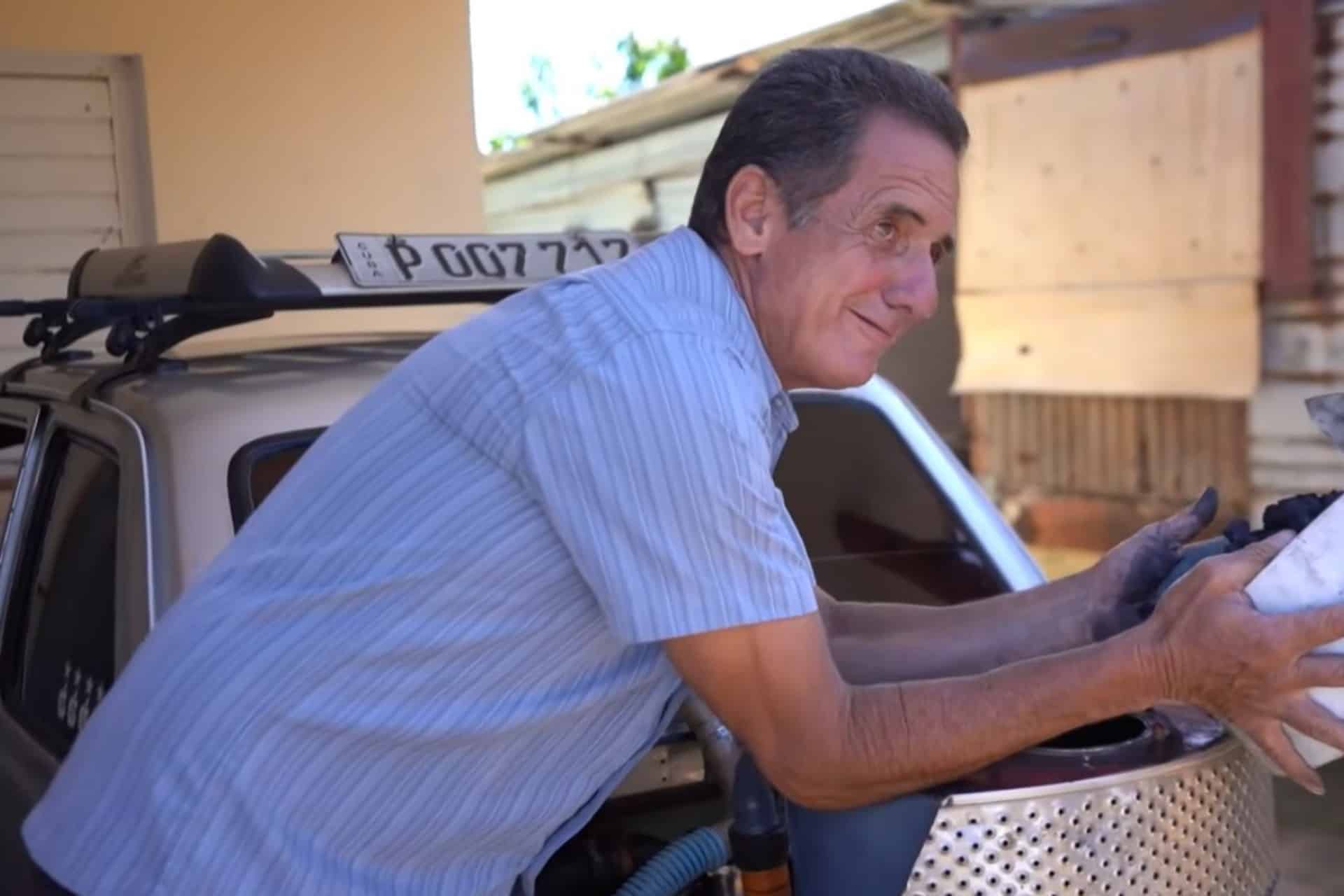
The protagonist of this story is an old man Fiat Polski 126p 1980. A very small, humble car, almost anecdotal anywhere else in the world, but here, in Cuba, it has become a symbol of ingenuity and survival in the face of adversity.
Pine He got it just half a year ago, exchanging it for a modest home. But, as soon as he was able to enjoy it, the shortage of fuel that previously came from Venezuela left him unemployed.
Until he decided to reinvent it. Inspired by videos on the internet, especially those of an Argentine engineer, our protagonist transformed the car in just 2 months. Of course, the system is as rudimentary as it is effective. A modified tank where charcoal is burned and generates the gas necessary to power the engine. All built from recycled parts, scrap metal and lots and lots of patience.

As a curiosity, the boot process is not immediate. Before turning it on, you have to prepare the system for almost half an hour. You have to load the charcoal, light it, fuel the combustion… and wait. It’s not a car for those in a hurry, but it works. And that, in the current context of the US blockade on oil, changes everything.
Because this story is not just about mechanics. It’s out of necessity. The energy crisis and lack of supplies have forced many Cubans to look for alternative solutions for daily life. Cooking with firewood, storing rainwater, reusing any object… what is known there as “Creole inventions“A way of life in which nothing is thrown away and everything can have a second chance.
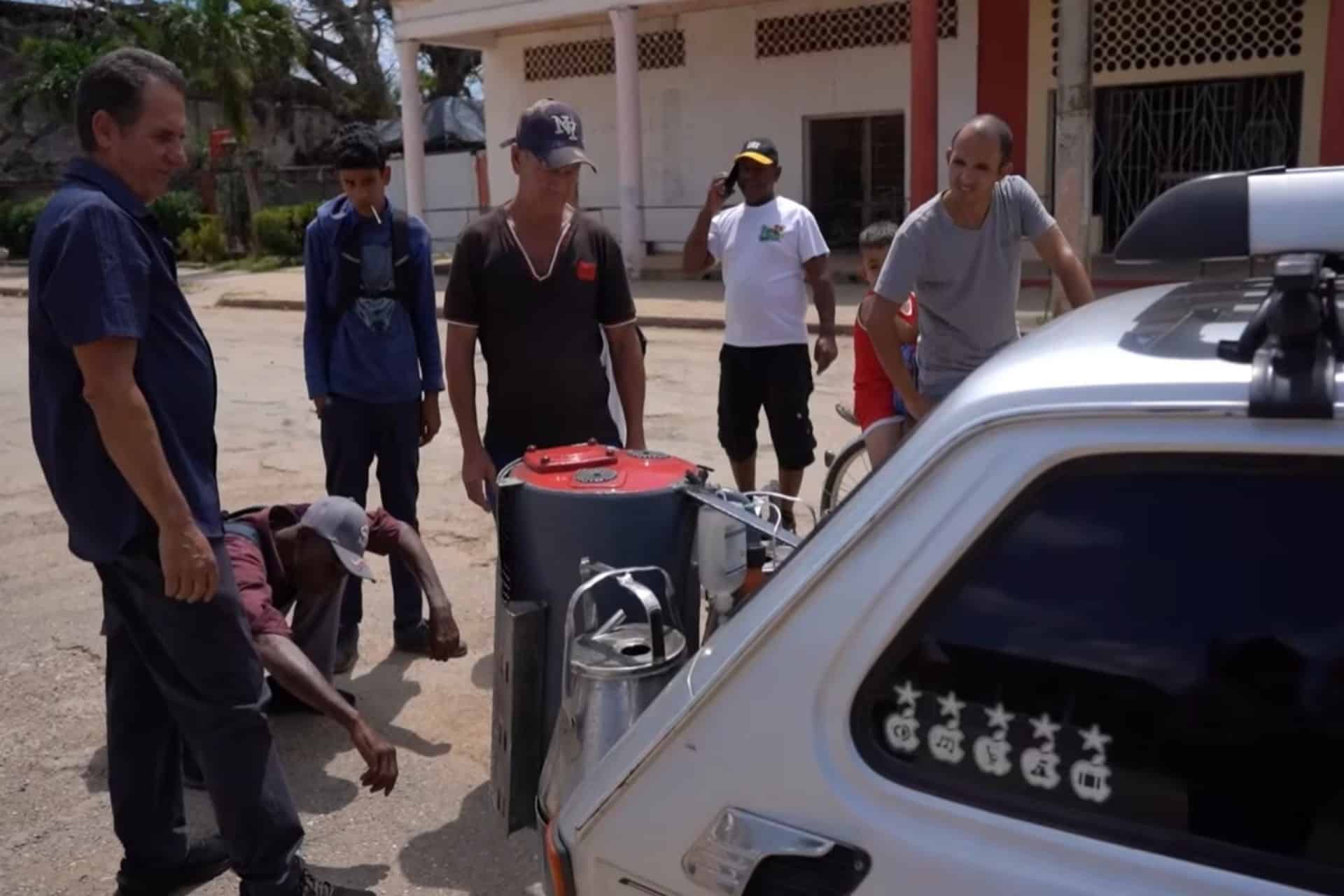
While some, like Pinethey turn cars into improbable machines, others deal with more basic problems: constant power outages, water shortages or difficulties in accessing food. Creativity is not always a choice, but an obligation. Law of life.
In neighborhoods of Cuba’s capital, when the electricity goes out, the sound of generators and improvised batteries replaces the silence. Where there are no resources, there is ingenuity: car batteries converted into domestic energy sources, homemade systems to light a home or cook with whatever is at hand. And yes, in this context, the carbon car is much more than a curiosity. It is a metaphor in motion.
It is a reminder that even in the most difficult circumstances, there is always room to invent, adapt and move forward. Even if it’s slow and smells like coal. And, as we all know, in that, Cubans are, without a doubt, the best in the world by necessity.