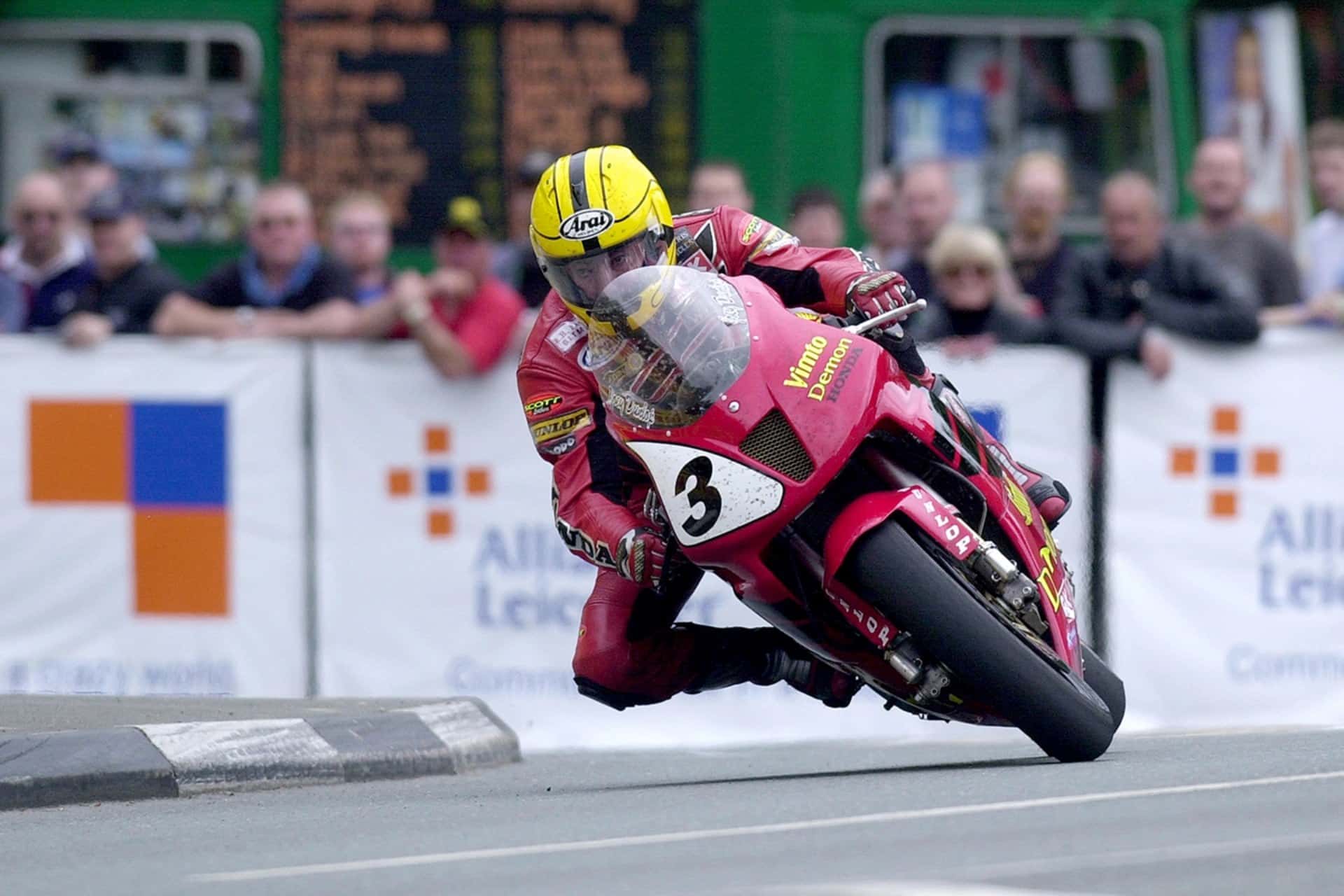
For more than 40 years, Scott Leathers has been synonymous with tailored leather suits and high-level protection. From its base in County Durham, the British firm built a solid reputation thanks to the artisanal manufacture of suits, jackets and technical equipment adapted to the needs of each pilot. An approach that allowed him to gain the trust of names like John McGuinness either Joey Dunlopregulars in the Isle of Man TT paddock.
However, the story has come to an end. The company officially ceased its activity on March 26 after entering into the liquidation process, with the specialized firm Ellis Breese in charge of managing the assets and distribution among creditors. An outcome that, although painful, had been brewing for a long time.

What happened to Scott Leathers?
Behind the closure there is a combination of factors that reflects the current situation of the sector in the UK. On the one hand, the increase in operating costs in the United Kingdom (from salaries to raw materials) has made it increasingly difficult to maintain an artisanal production model. On the other hand, competition from South Asian manufacturers, capable of offering similar products at much lower prices, has significantly reduced the potential customer base.
Added to this is the loss of visibility at key events. Traditionally, Scott Leathers relied heavily on quotes like the Isle of Man TT or the living room Motorcycle Live to generate orders, especially in the custom segment. But, unfortunately, the departure of the TT after agreements with other brands and the absence at recent fairs significantly reduced the volume of orders in key months.

The former general director himself, Jim Airdhas been forceful in pointing out the economic context as the main culprit. Beyond his criticism of the country’s situation, the truth is that the business model of Scott (based on customization, local production and direct dealings with the customer) has been losing ground in the face of a globalized market that is increasingly sensitive to price.
At its peak, the company had 40 employees. But, at the time of closure, the staff had been reduced to just half a dozen, reflecting a progressive contraction that has finally led to its disappearance.
The fall of Scott Leathers It is not only the closure of a company, but also the closure of a way of understanding motorcycling. One in which leather was not just another product, but a second skin designed to protect, compete and, in many cases, make history. Without a doubt, a shame.