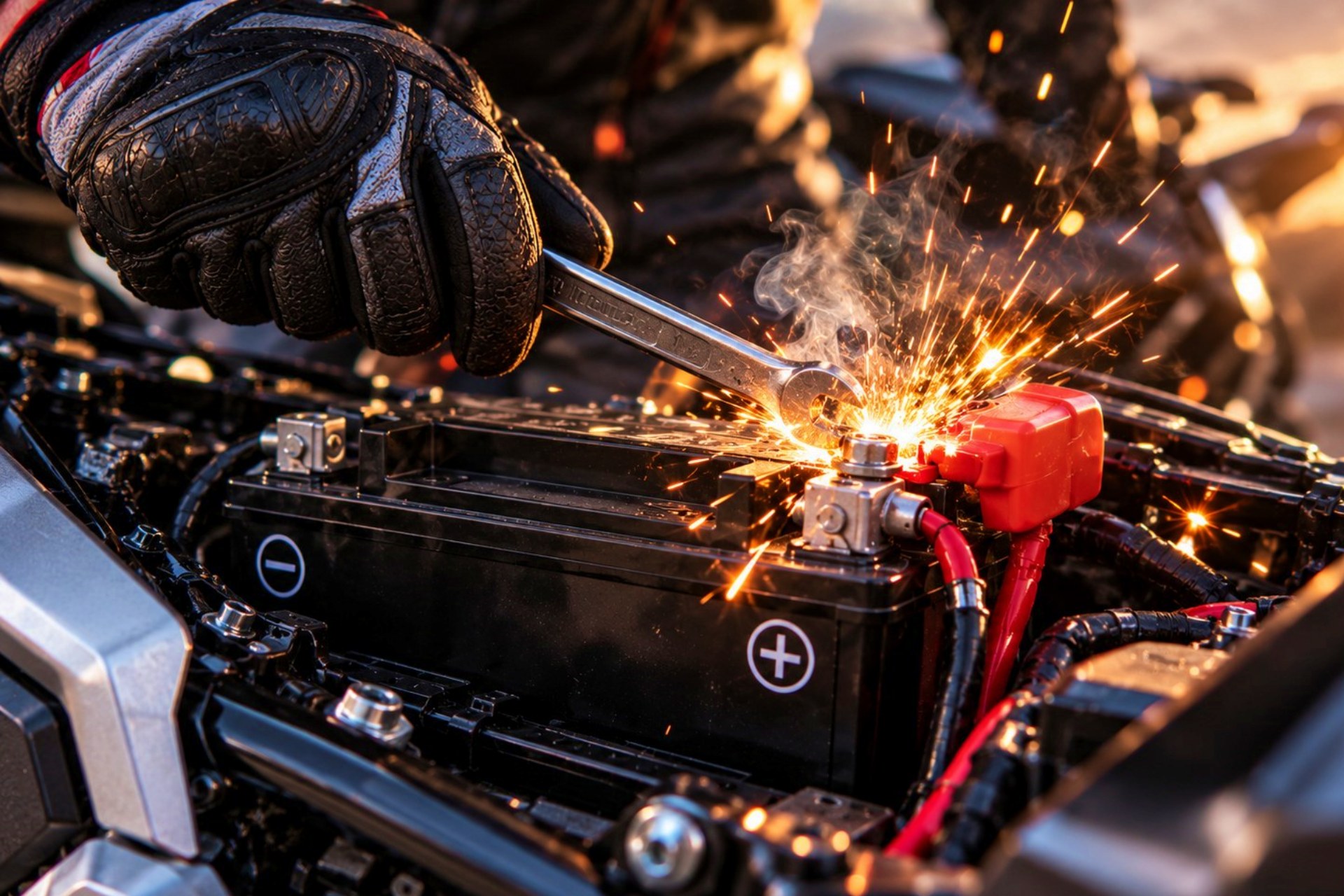
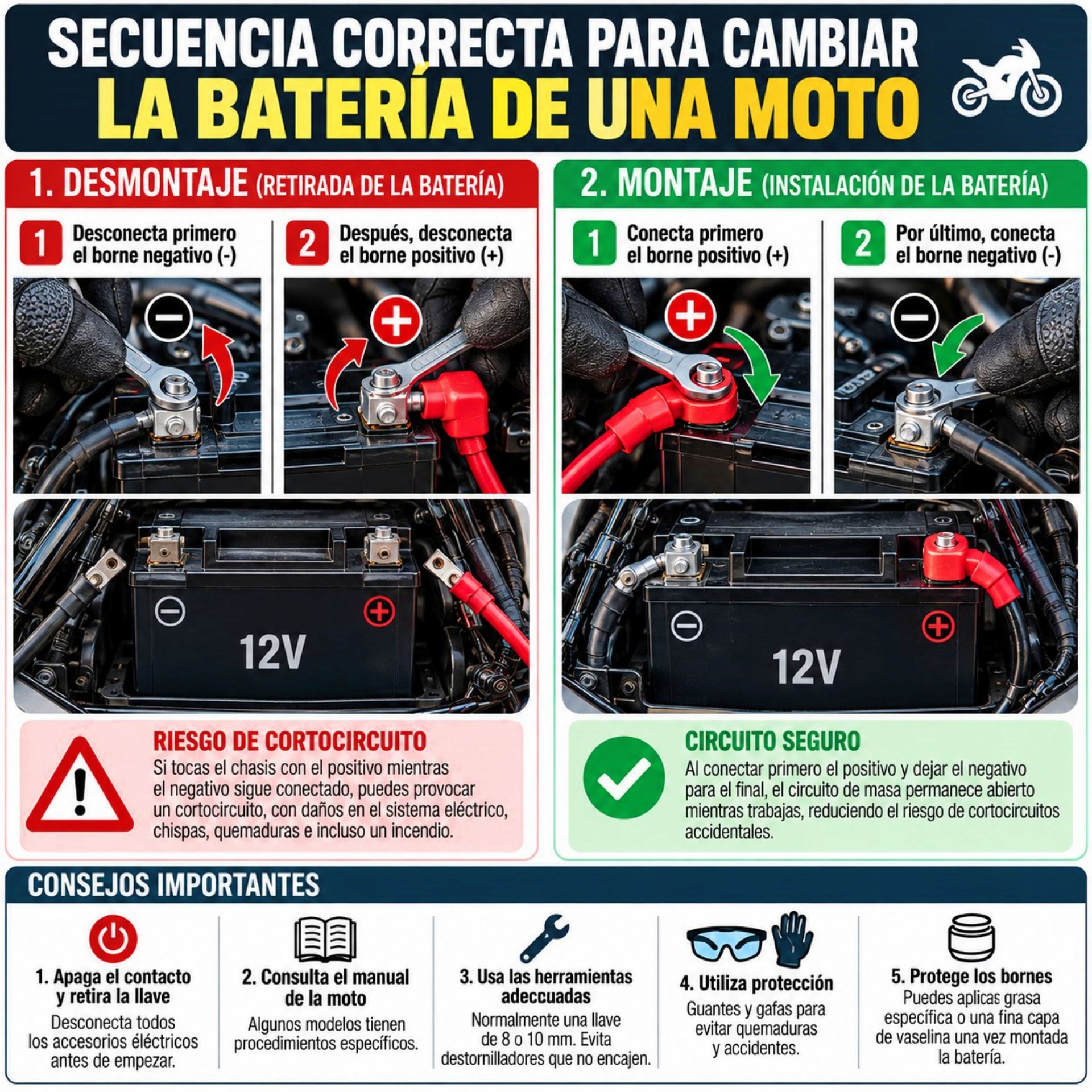
Change the battery of a motorcycle is a relatively simple maintenance operation, but there is one rule that should always be respected: «Disconnect the negative terminal first and connect that same terminal last«. The sequence reduces the risk of accidental short circuits and avoids situations that could end up damaging electrical components or causing burns. This is recommended by both the General Directorate of Traffic like battery manufacturers.

Before starting, you must turn off the ignition, remove the key and disconnect the electrical accessories. It is also advisable to consult the motorcycle manual, since certain models incorporate electronic systems or specific procedures that must be respected during replacement.
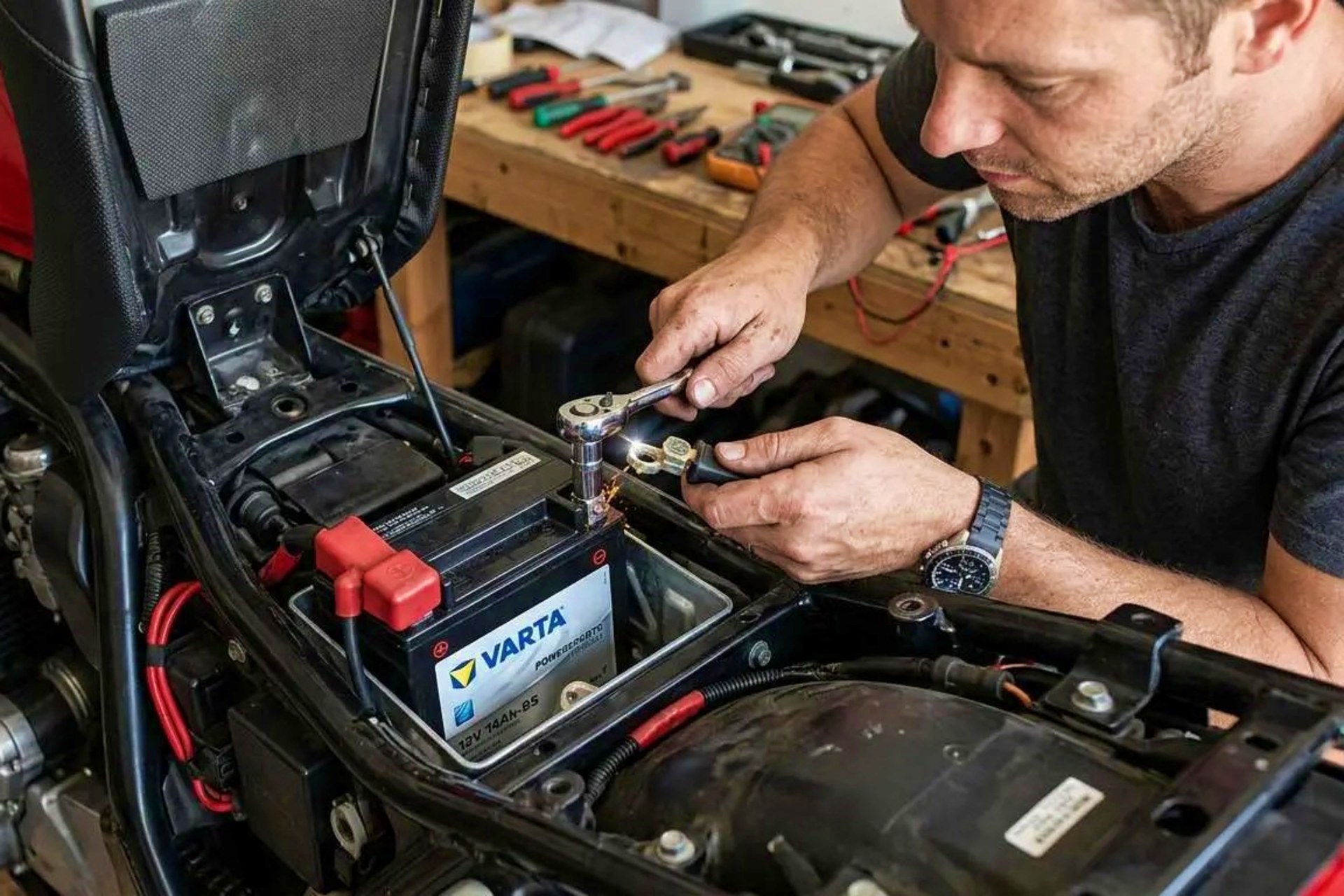
The correct order to remove the old battery
The first step is locate the positive and negative terminals. The positive is usually identified with the + symbol and a red cover, while the negative carries the − symbol and is normally connected to the motorcycle’s ground. The extraction must begin with the negative terminal. Once disconnected, the positive is removed and the cables are moved aside to prevent them from accidentally coming into contact with the terminals again. The clamping system is then released and the battery carefully.
Why is this order so important? In most motorcycles, the chassis is connected to the negative pole. If you start with the positive and a metal tool simultaneously touches that terminal and a metal part of the vehicle, an accident may occur. high current short circuit. Consequences can include sparks, burns, wiring damage, and even a fire. By disconnecting the negative first, you interrupt that electrical path and greatly reduce the risk of a tool causing a short circuit.
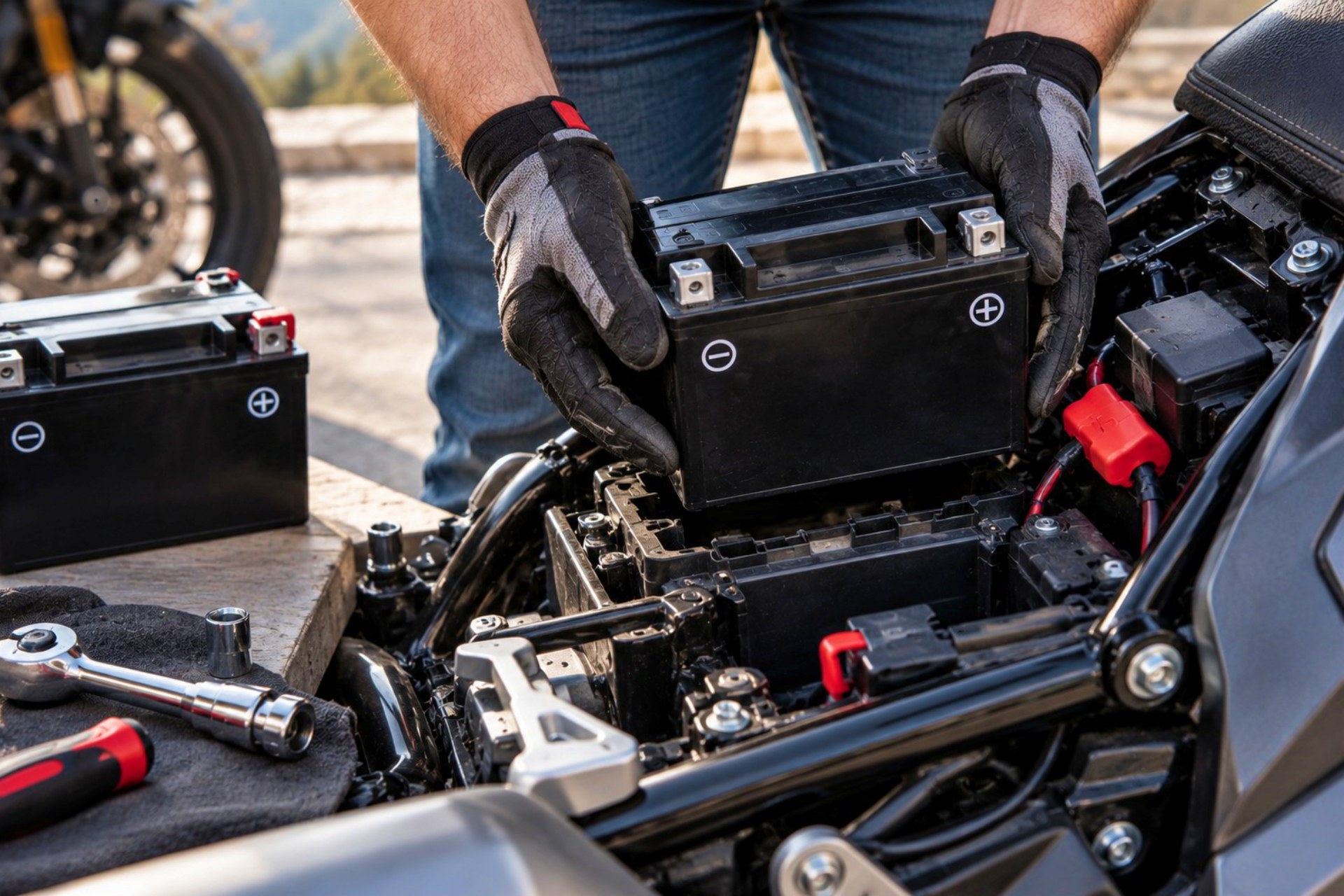
How to install the new battery without damaging the electrical system
Assembly follows the reverse order of disassembly. First, the battery in its housing, checking that its dimensions, tension, capacity and characteristics are appropriate for the motorcycle. Next, the positive terminal is connected and its screw is tightened without exceeding the recommended torque. Then connect the negative and check that both terminals are firm and that the cables are not forced.
This sequence allows the ground circuit to be kept open while working on the positive, reducing the risk of accidental short circuit with the tools. However, we must prevent these from bridging the two terminals and always respect the manufacturer’s specific instructions.
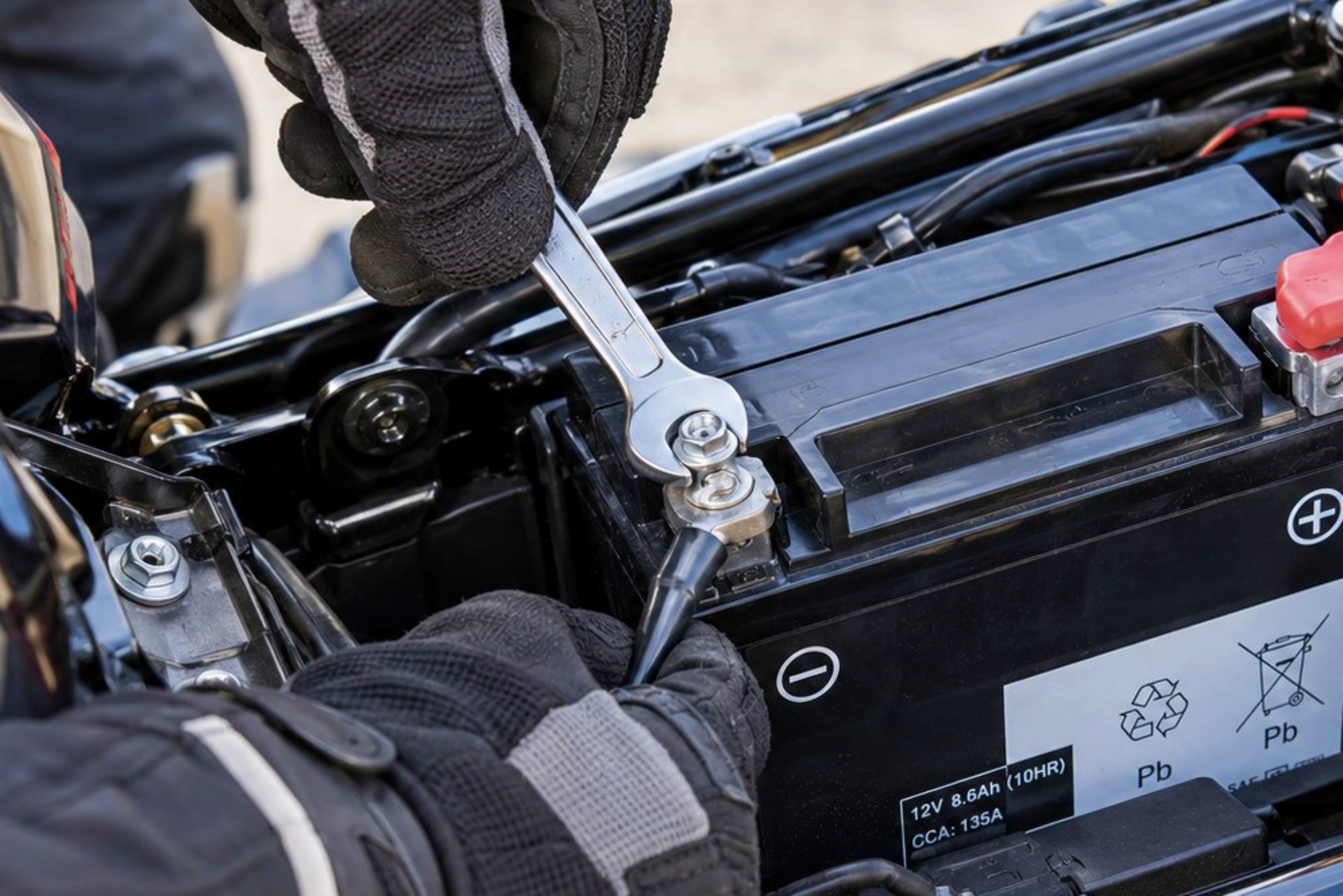
The right tools make the difference
To change the battery It is not usually necessary to have a complete workshop, but it is necessary to use tools that allow you to work safely. A properly sized open-end or socket wrench is preferable to a screwdriver that does not fit properly into the hardware. Measurements of 8 or 10 mm are used on many motorcycles, although they may vary depending on the model. The important thing is that the tool adapts to the screw and allows it to be loosened and tightened without damaging its head.

During operation, it is advisable to use gloves and eye protection, avoid carrying metal objects that could fall on the terminals and do not place tools on top of the terminals. battery. If the terminals show significant corrosion, the cables are damaged or access requires disassembling electronic components, the most prudent thing to do is to go to a workshop.
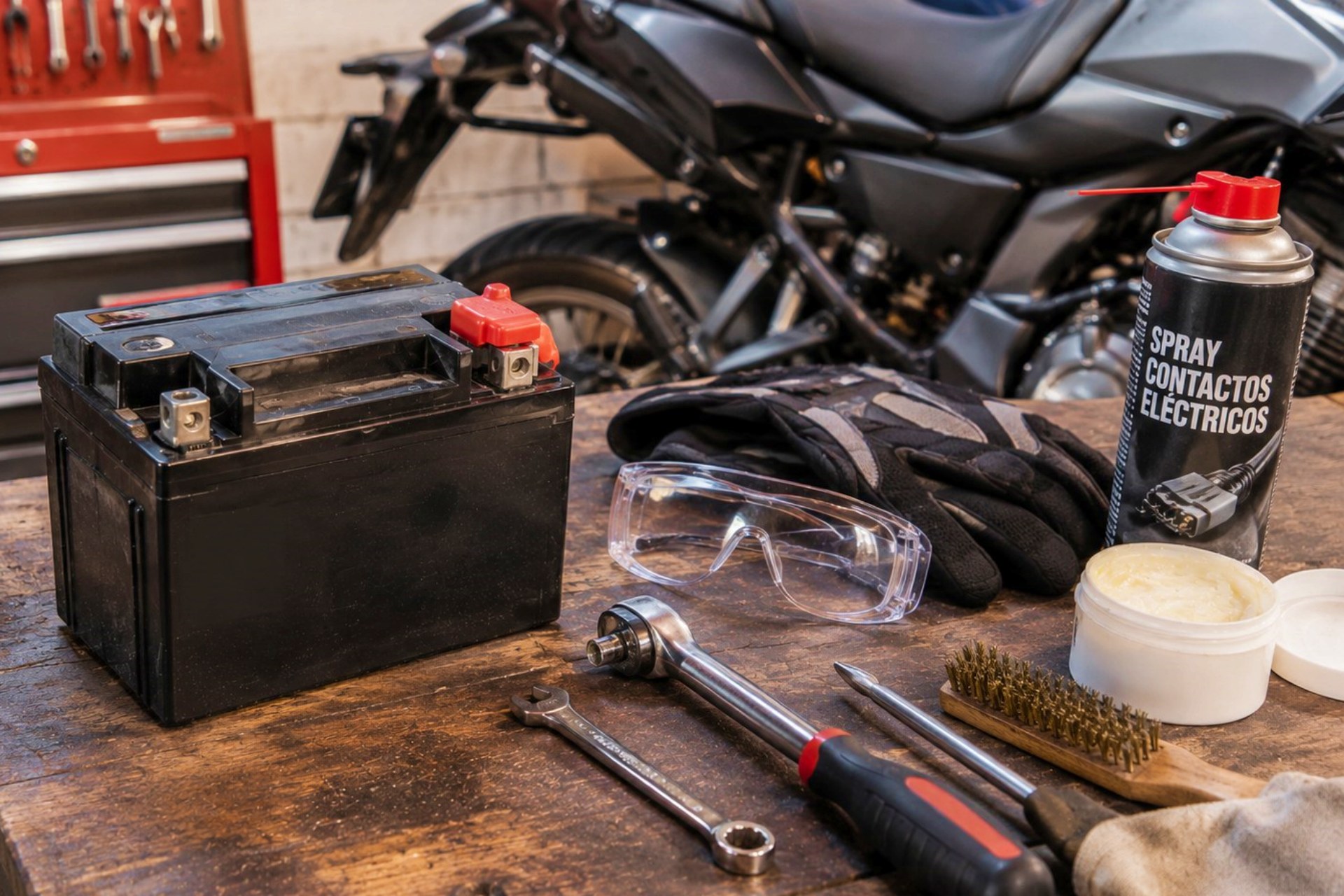
Another aspect that should be clarified is the electrical risk. A battery Conventional 12V motorcycle does not usually pose a danger of electrocution through intact skin under normal conditions. However, that does not mean it is harmless: it can supply a very high current during a short circuit, heating a tool in a matter of seconds and causing burns. Furthermore, some batteries They can release flammable gases, so they should be kept away from flames, sparks and ignition sources.
Once connected the batteryit must be verified that it is held firmly and that the terminals do not have any looseness. The vibrations of a motorcycle can loosen a poor connection, cause interruptions in the electrical supply and generate unwanted heating.
Regarding protection against corrosion, you can apply a specific product for terminals or a thin layer of Vaseline compatible with the batteryfollowing the manufacturer’s instructions. It is preferable to do this once the connections are correctly assembled. It is not advisable to apply products indiscriminately or use greases that could damage the materials of the terminals.
Frequently asked questions
Which terminal should be disconnected first when changing a motorcycle battery?
You must first disconnect the negative (−) terminal and then the positive (+). This reduces the risk of accidental short circuits if a metal tool comes into contact with the motorcycle frame.
In what order are the terminals of a new motorcycle battery connected?
When installing the new battery, connect the positive (+) terminal first and the negative (−) terminal last. First, you must check that the battery is compatible with the motorcycle and that it is correctly secured in its housing.
What happens if I connect or disconnect the motorcycle battery terminals in the wrong order?
Incorrect order can increase the risk of short circuits, sparks, burns, and damage to wiring or electrical components. To reduce these risks, the negative terminal should be disconnected first and connected last.
What tools do I need to change a motorcycle battery?
Normally a fixed or pipe wrench of the appropriate size is sufficient, which is usually 8 or 10 mm, although it depends on the model. It is also advisable to use gloves and eye protection, remove electrical accessories and consult the motorcycle manual before starting.
Is it dangerous to change a motorcycle battery at home?
Changing the battery can be a simple operation if proper precautions are followed. Although a conventional 12V battery does not typically cause electrocution through intact skin under normal conditions, it can generate very high currents in the event of a short circuit, causing burns and releasing flammable gases. If there are damaged cables, significant corrosion or electronic systems that require specific procedures, the most prudent thing to do is to go to a workshop.