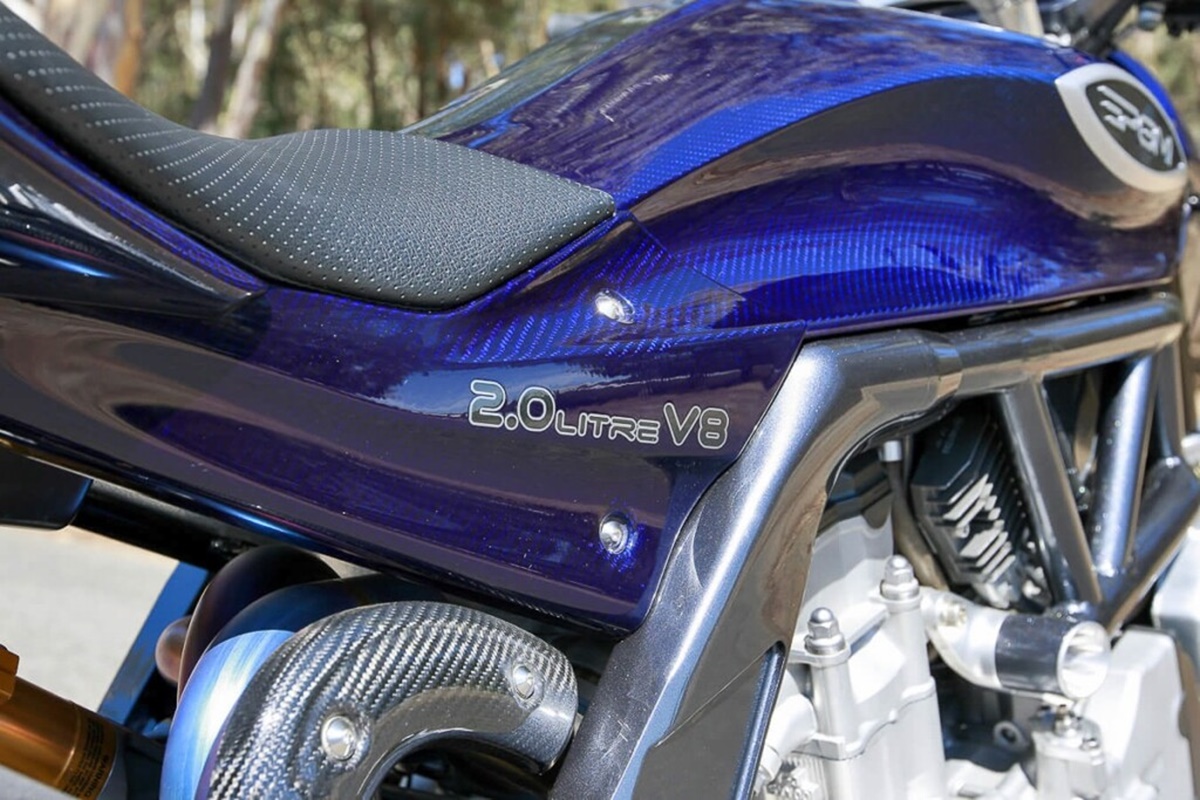
The year was 2015 when Pat G. Maloneya former competition mechanic at the highest level (Superbike and F1), made his PGM V8: a two-liter naked engine, powered by an engine built from two Yamaha R1 blocks that he had worked on for the seven years prior to the presentation.
More than one at the time, including the charismatic Alan Catchcart, had to be pinched on the cheek to know that he was not dreaming, that that devil’s thing was made of “flesh and blood.” Well, more like steel, aluminum, carbon, plastic and a few other materials that together made up something truly unique.
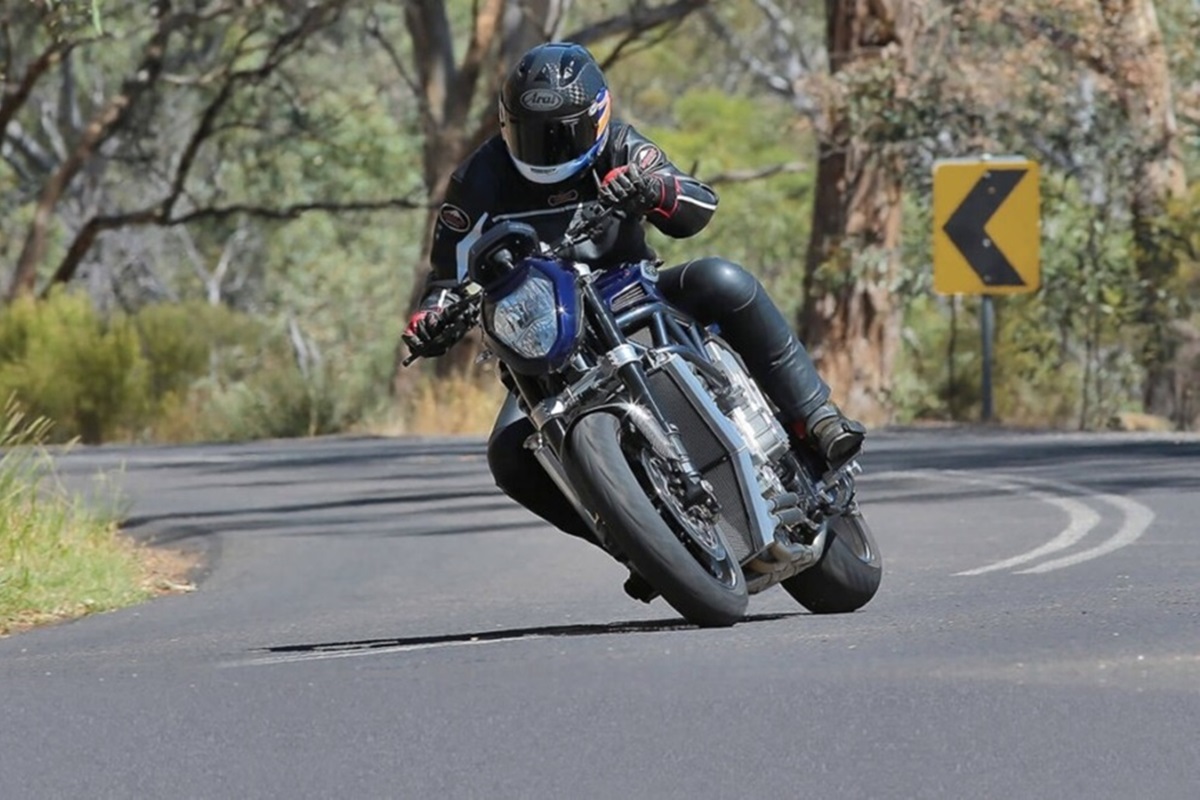
Although it was not the first V8 in history in Australia, before it the Drysdale V8 and the Aurora Hellfire OZ26if it was the first of all of them to show itself as a manageable motorcycle despite the figures declared by the manufacturer himself: 334 HP, 242 kilos and 214 Nm of maximum torque.
This conclusion is not my own, basically because neither I nor any of the members of the SMN staff had access at the time (or later) to being able to pilot such a device. The one who did have that privilege was the aforementioned British journalist who at the time stated: “The PGM V8 is the most impressive multi-cylinder machine I have ever had the privilege of driving”. Words are unnecessary.

PGM V8: only a genius can build something like this
When you have spent half your life moving in the circles of the highest competition, considering the idea of building a motorcycle like the PGM V8 becomes somewhat more affordable than for the rest of us. In this context, Maloney initially planned to use two ZX-7RR blocks for his project. However, upon seeing the compactness of the first generation R1 engine, he opted for the latter.
Specifically due to the propeller that it was equipped with at the time. the 2004 version of the legendary Japanese sport. The final configuration Pat designed included the Yamaha R1 cylinders and heads arranged in two banks at 90º. The engine also retained the pistons and connecting rods from the Japanese sports car. However, a custom crankcase had to be manufactured along with a one-piece flat crankshaft machined from EN36 steel.
At the same time, the transmission also had to be completely redesigned, giving rise to a six-speed sequential gearbox. As a result we had a displacement of 1,996 cc with internal dimensions of 77 x 54 mm and compression ratio was 13:1. The block also had no less than 40 valves, 20 in each cylinder head, actuated by two overhead camshafts.
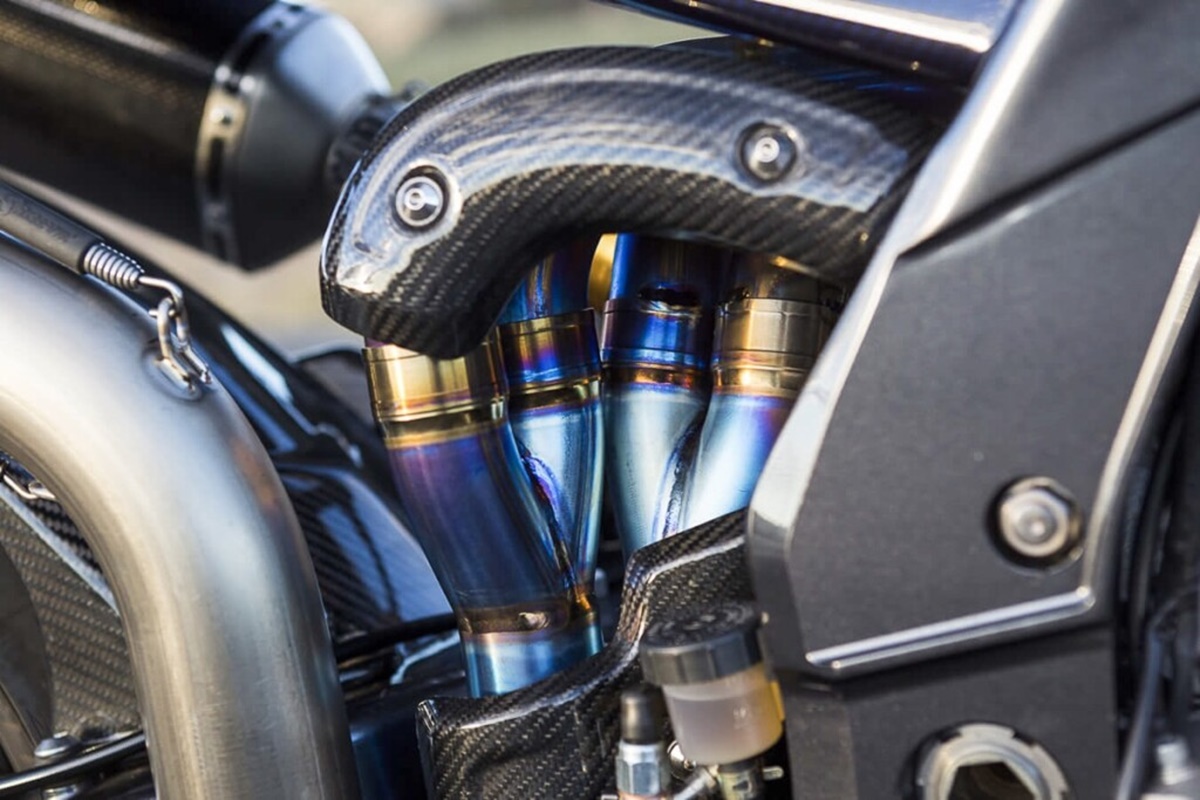
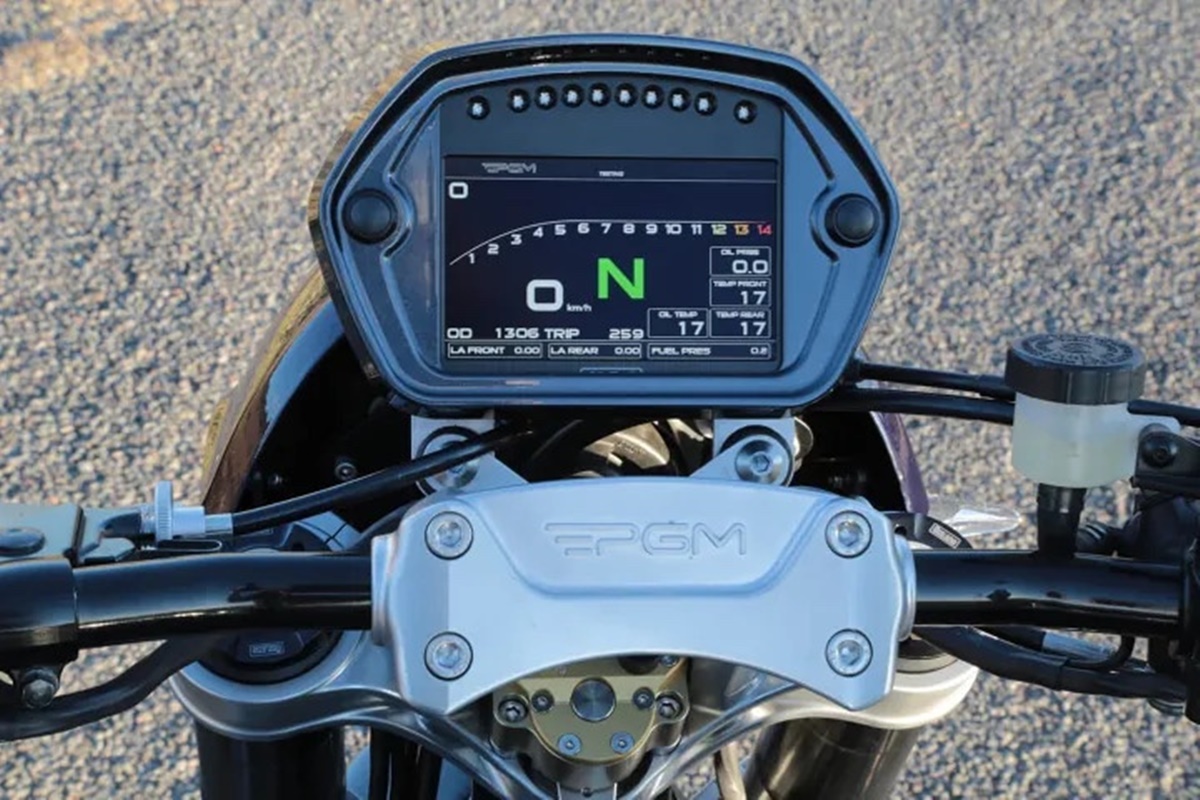
Power was provided by a battery eight 45mm Mikuni carburetors and an electronic throttle managed the intake. The electronics of the motorcycle were in charge of a MoTeC M130 ECU. In addition, “Each cylinder bank expelled gases through its own 4-2-1 titanium exhaust system developed with Akrapovič. Impressive!”as confirmed by Bike Bound.
At the chassis level, a chrome-molybdenum tubular structure was designed to embrace the powerful V8. At the time it declared relatively aggressive geometries, with a advance of 25.5º and a 107mm launchwhich are compensated with a 1,540 mm wheelbasesomewhat long and forced by the (relatively) bulky engine.
The rest of the motorcycle’s equipment, as you can imagine, was made up of the most cutting-edge components that could be fitted to a street motorcycle at that time. Among them we can highlight:
- Front Suspension: Öhlins FGRT301 48mm inverted fork
- Rear Suspension: Öhlins TTX Shock
- Front brakes: Dual 320mm discs, Brembo GP4 calipers
- Rims: Marchesini forged aluminum
It was never mass marketed.
After its official presentation everything pointed to a more than possible limited series. In parallel “Designer Seanr Chhean gave the bike a coherent carbon fiber bodywork rather than trying to disguise the engine under conventional fairings. Thus, the V8 remained the visual center of the motorcycle”. However, the project was never put together under these terms.
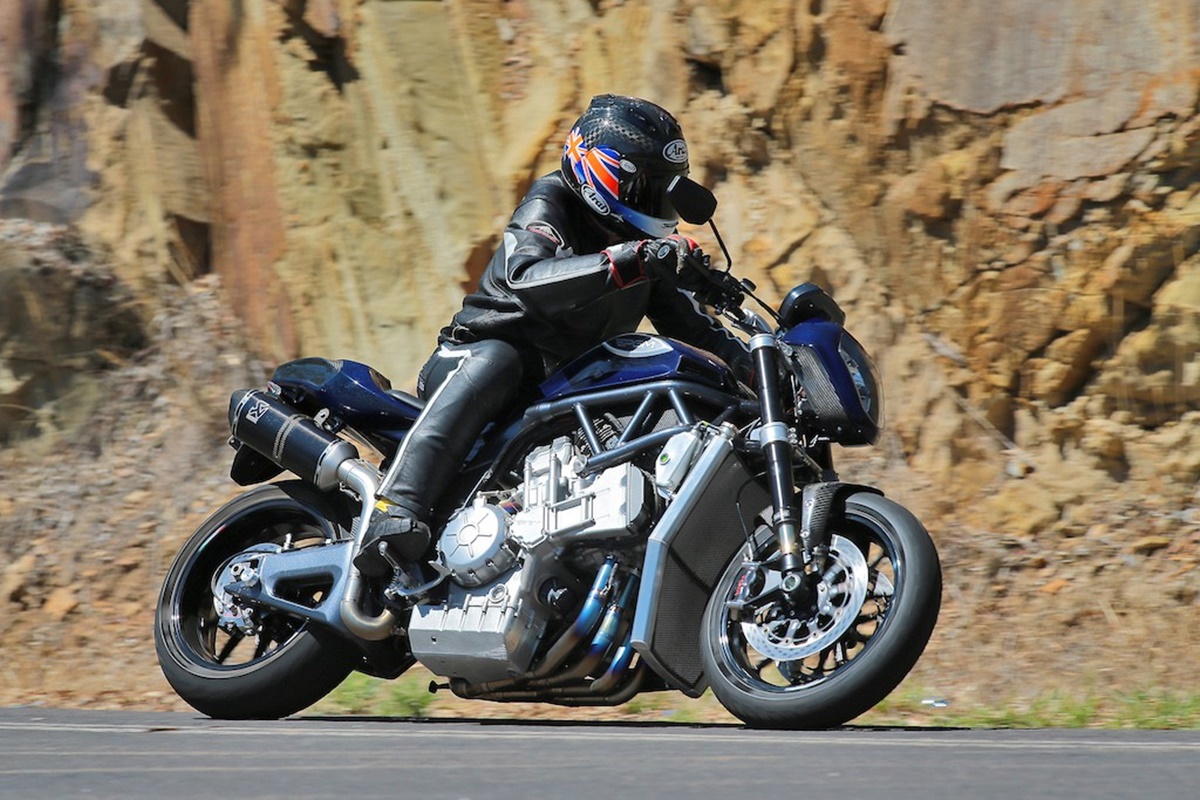
Starting in 2018, PGM offered the possibility of obtaining a copy upon request, similar to the initial prototype. The problem, among other things, was the $180,000 that the interested party had to treasure, customizable extras aside.
From Bike Bound they conclude: “It is difficult to determine production figures, as this was a very limited production, hand-made machine, built to order.”