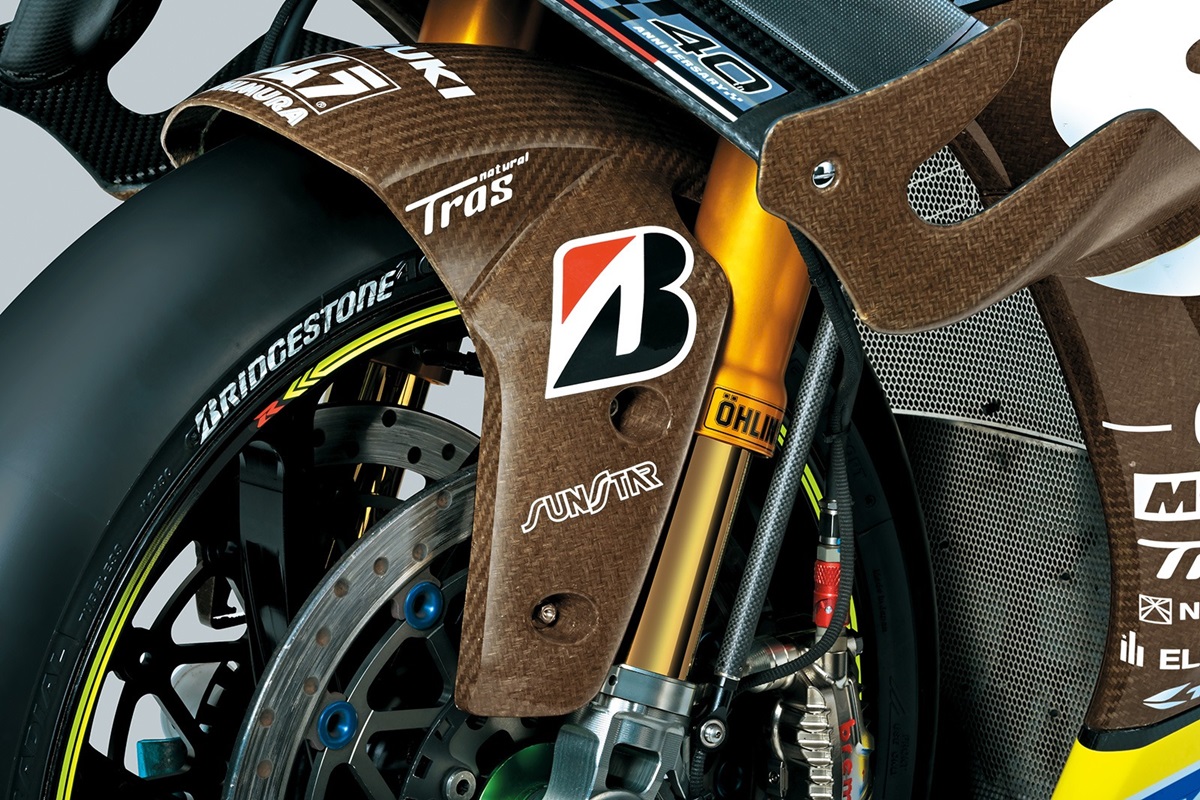
The Suzuki GSX-R1000R has been a true test bed for three seasons, due to its presence in the Suzuka 8 Hours. As we have been telling you since then, those from Hamamatsu, in collaboration with specialized companies in the sector such as the Swiss Bcompthey test natural fiber composites used for the manufacture of some of the components that make up the exterior silhouette of the Japanese superbike.
In the words of Shinichi SaharaSUZUKI CN CHALLENGE Team Project Leader at Suzuki Motor Corporation: “Carbon neutrality represents one of the most important and complex challenges of our time. Achieving significant impact requires ingenuity, perseverance and vision for the future. We created the SUZUKI CN CHALLENGE Team to lead these efforts, innovating at the forefront of sustainable technology, as a demonstration of what is possible today and where we are headed in the future.”

“A more sustainable vision for racing”
In a recent MCN interview with Ken Kruck, Motorsport sales representative at Bcomp, he details the latest advances around natural fiber composites stating that it reduces up to 85% CO2 emissions involved in production if we compare them with those generated in the manufacture of carbon fiber.
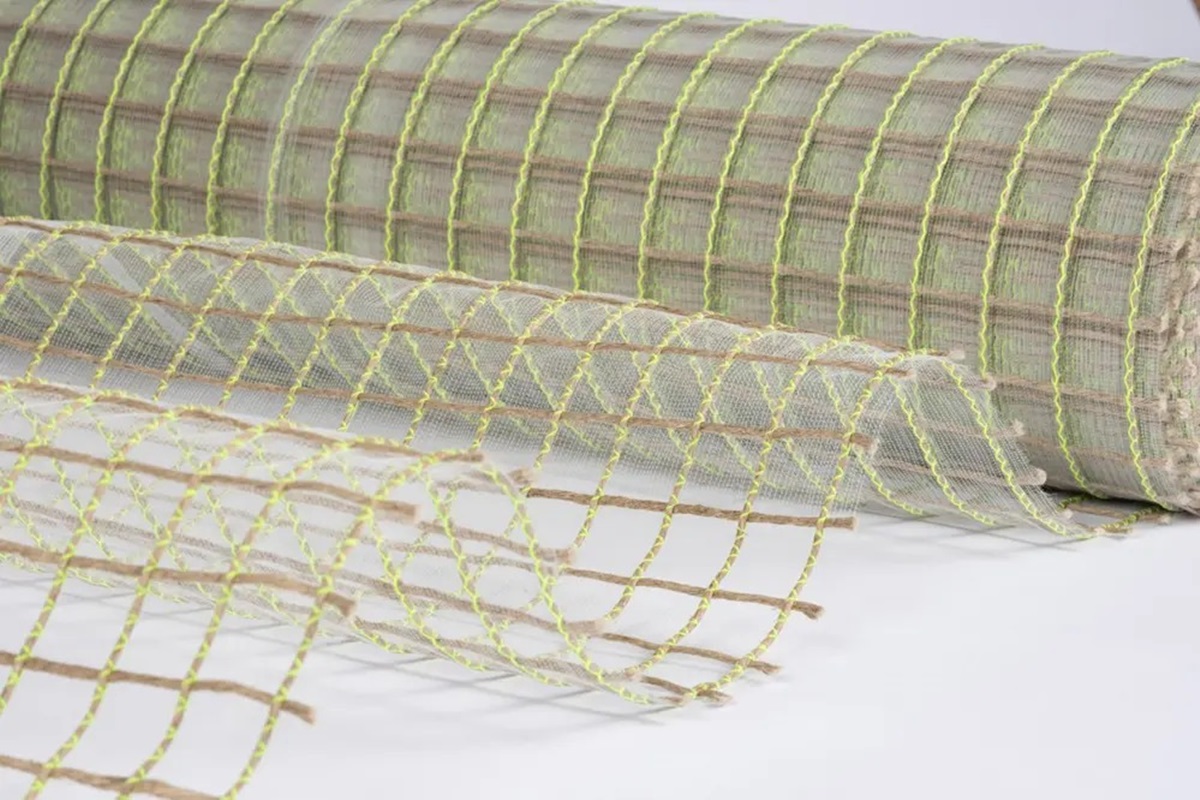
The two main products used in this process are ampliTexa technical fabric, and powerRibsa reinforcing grid, both compounds made from linen. In fact, it is not the first time that we expose the virtues of these materials; Last February we learned about the Ather Redux concept, a motorcycle-scooter that uses ampliTex in the manufacturing of body panels, thus reducing weight and carbon footprint.
Natural fiber composites also in competition
It was in 2021 when Bcomp made the first contacts with Suzuki through its Japanese partner After. At that time the latter “presented the material to the then Suzuki MotoGP team in 2021 with the aim of building a complete bodywork for the GSX-RR. In 2022 a prototype fairing was developed and tested privately with positive results before Suzuki’s withdrawal from MotoGP put an end to the project”they confirm from MCN.
Already in 2024, this three-way agreement between the Suzuki CN Challenge team, Tras and Bcomp was launched. Although natural fiber composites were initially only used to manufacture the front fender of the GSX-R1000R, subsequently the number of Bcomp parts has gradually increased, including side fairings, rear fender, spoilers and rear lower cover.

Regarding this advance in the use of natural fiber composites in Team SUZUKI CN CHALLENGE, Natsumi Nittageneral director of Tras, explained: “Each year we have expanded the use of Bcomp technologies in the bike, taking full advantage of its excellent rigidity, lightness and vibration damping properties. The racing bike demonstrates the experience and expertise we have developed in producing parts with Bcomp technologies, allowing Suzuki to test them extensively in the harsh conditions of motorsport.”
A promising future
There is no doubt that natural fiber composites can have a strong presence in the different sectors included in the automotive industry. Whether at the competition level or in future street models, as well as in products related to equipment and protection, this technology is destined to expand in the future.
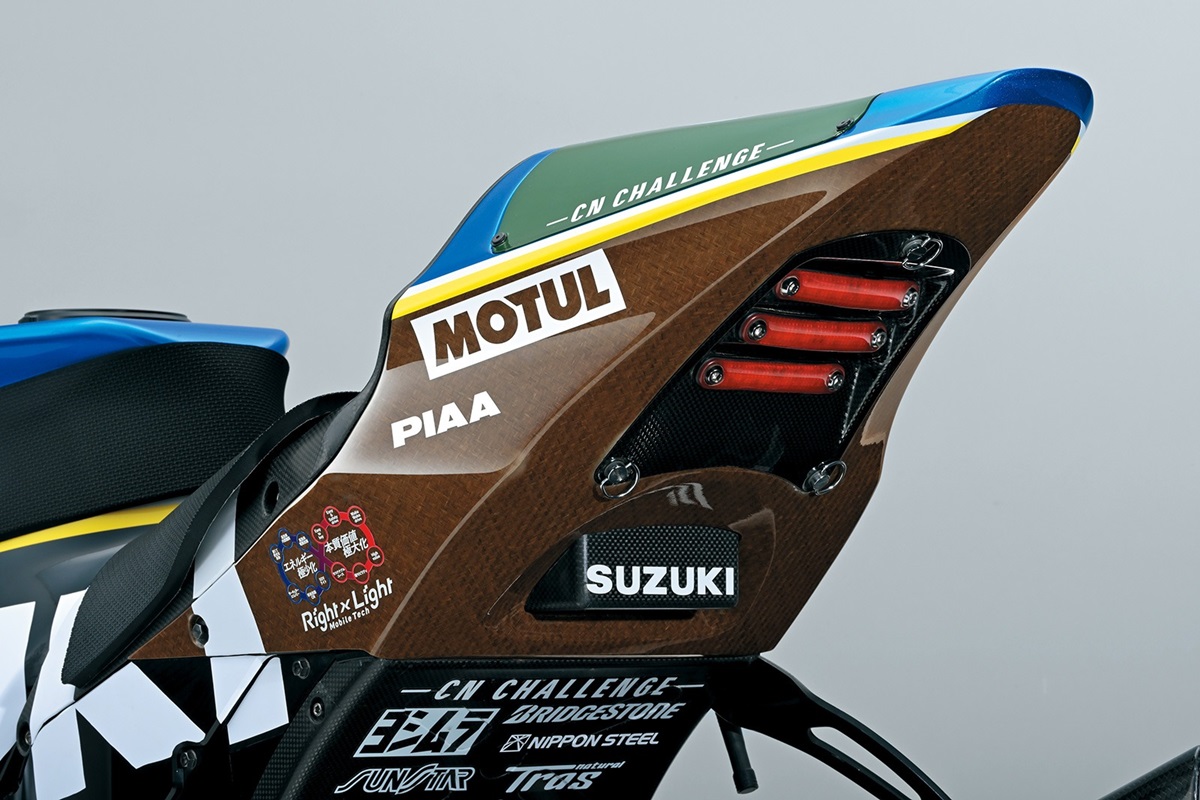
An example of this is the BMW Group, which has also joined the new trend of using natural fiber compounds in the manufacture of accessories related to future models. Likewise, Suzuki and Tras have begun testing Bcomp spoilers in the Japanese Motorcycle Championship (JSB1000 category). If this new application proves successful, they could be offered as a limited production option for production motorcycles.