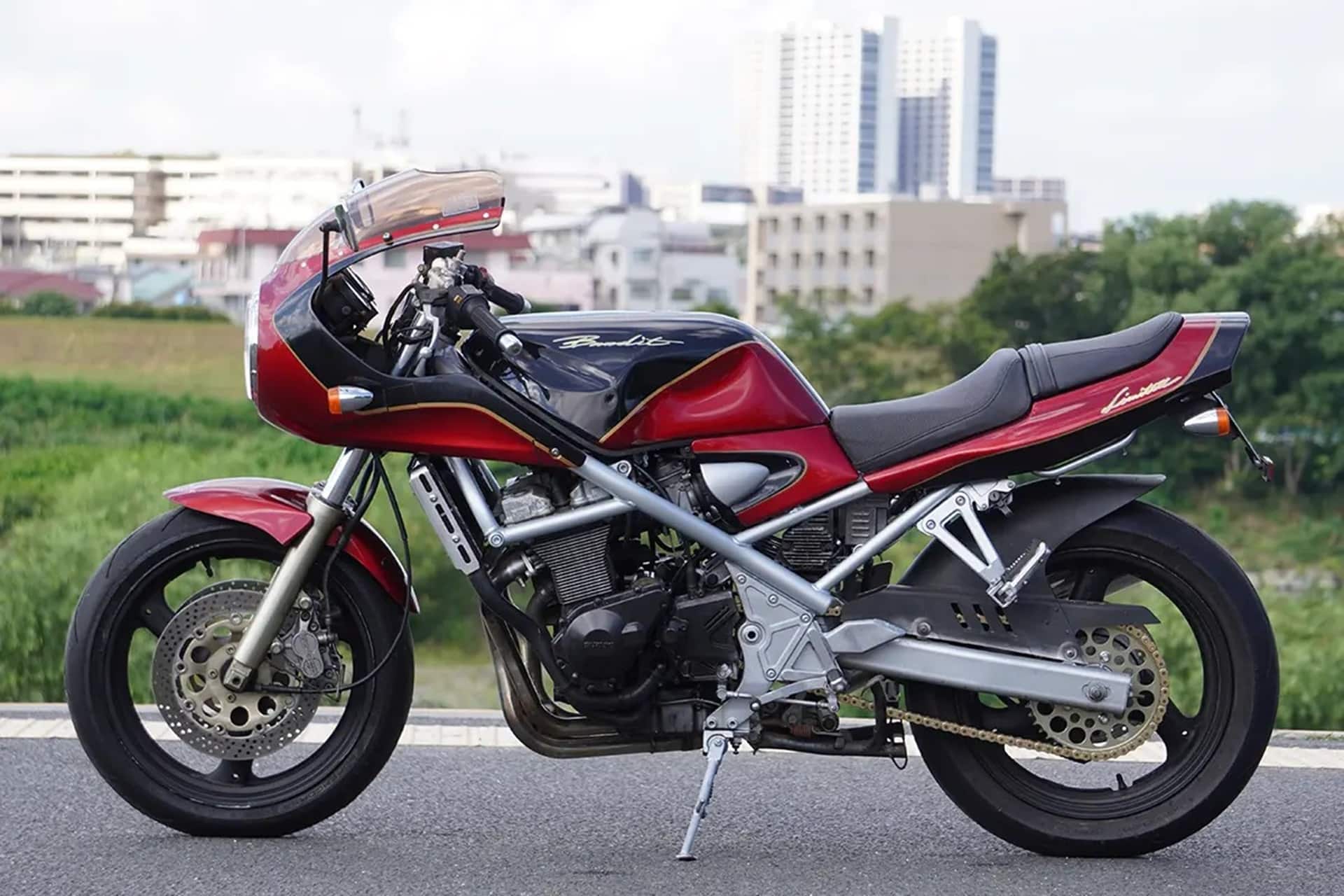
Coinciding with the entry into the nineties, as well as with Suzuki’s 70th Anniversary, the latter delighted Japanese fans with the launch of the Bandit 400 Limited.
A special series of the well-known naked model that combined, in the most successful way possible, explosive Japanese technology with a marked Café Racer style worthy of the best British sports frames.

Suzuki Bandit 400 Limited: Sports classicism at the service of emotions
Few motorcycles from the nineties have that charming distinctive touch that the Bandit 400 offers. A naked frame with a clear sports inspiration that is difficult to beat. Or so we believed until Suzuki came up with this 400 Limited edition, in which it added a series of equipment details with which to further perfect the beautiful imprint of the model.
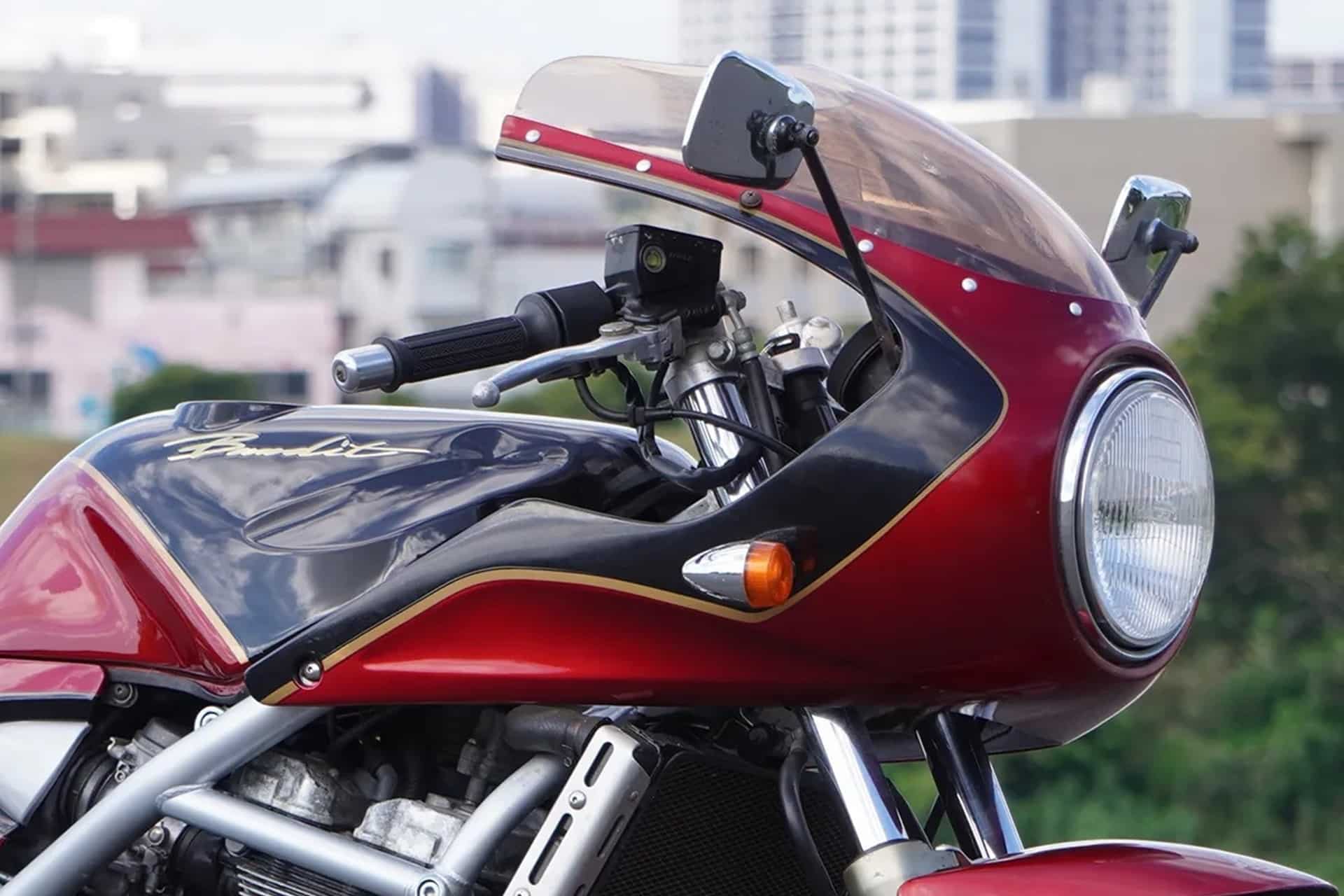
We only have to take a first look at its general lines to be totally captivated by that mix of classicism, typical of old Europe, with the rabid sportiness of Japanese motorcycles. In any case, to achieve this balanced technical and visual result, the Hamamatsu firm included an FRP (fiberglass reinforced plastic) front fairing, exclusive rearview mirrors for this version, as well as a fully chrome exhaust system.
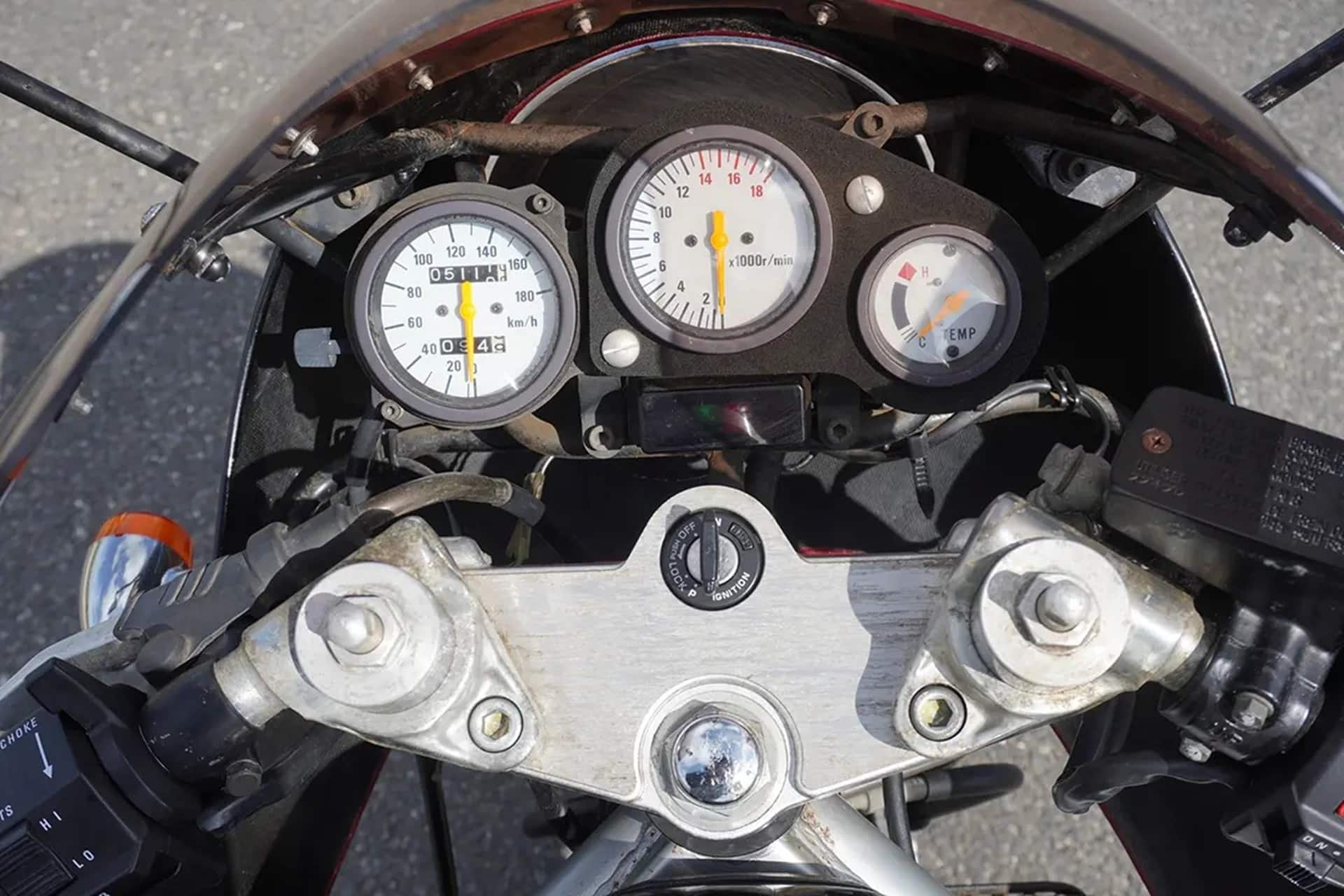
Officially presented in November 1990, with a starting price of 666,000 yen (3,560 euros at the current exchange rate), the brand said about it at the time: “Silent, smooth… a really pleasant drive.” The idea was to offer an even more friendly and refined motorcycle to its controls. In addition, it had two color schemes that fit perfectly: Candy Antares Red / Space Black and Blade Silver Metallic / Starlit Blue Metallic.
For the latter, the metallic blue also extended to the area of the chassis and the swingarm, giving its appearance extra sportiness. In the mechanical section, the Bandit 400 Limited included the well-known 399 cc inline 4-cylinder engine equipped with a multivalve cylinder head, liquid cooling and a battery of Mikuni BST33 carburetors in the feed.
Associated with a six-speed transmission, it managed to offer a final power of 59 HP at 12,000 rpm and 38 Nm of maximum torque at 10,500 rpm. Figures that put it on par with any of the sports cars of the same displacement that were marketed in Japan at that time. In fact, this engine was inherited directly from its “Hi-Sport” sister, the GSX-R400. This perception is also helped by its low final weight of just 172 kilos and a cycle part that lives up to expectations.
However, the Bandit 400 Limited became a cult object during the seasons it remained in the Suzuki catalogue. By 1991, “a version equipped with a variable valve timing (VC) engine was presented, which raised performance to another level”as detailed by the Webike colleagues. Already in 1995 the Bandit was completely remodeled and this 400 Limited version was not included among the different versions offered by the model.