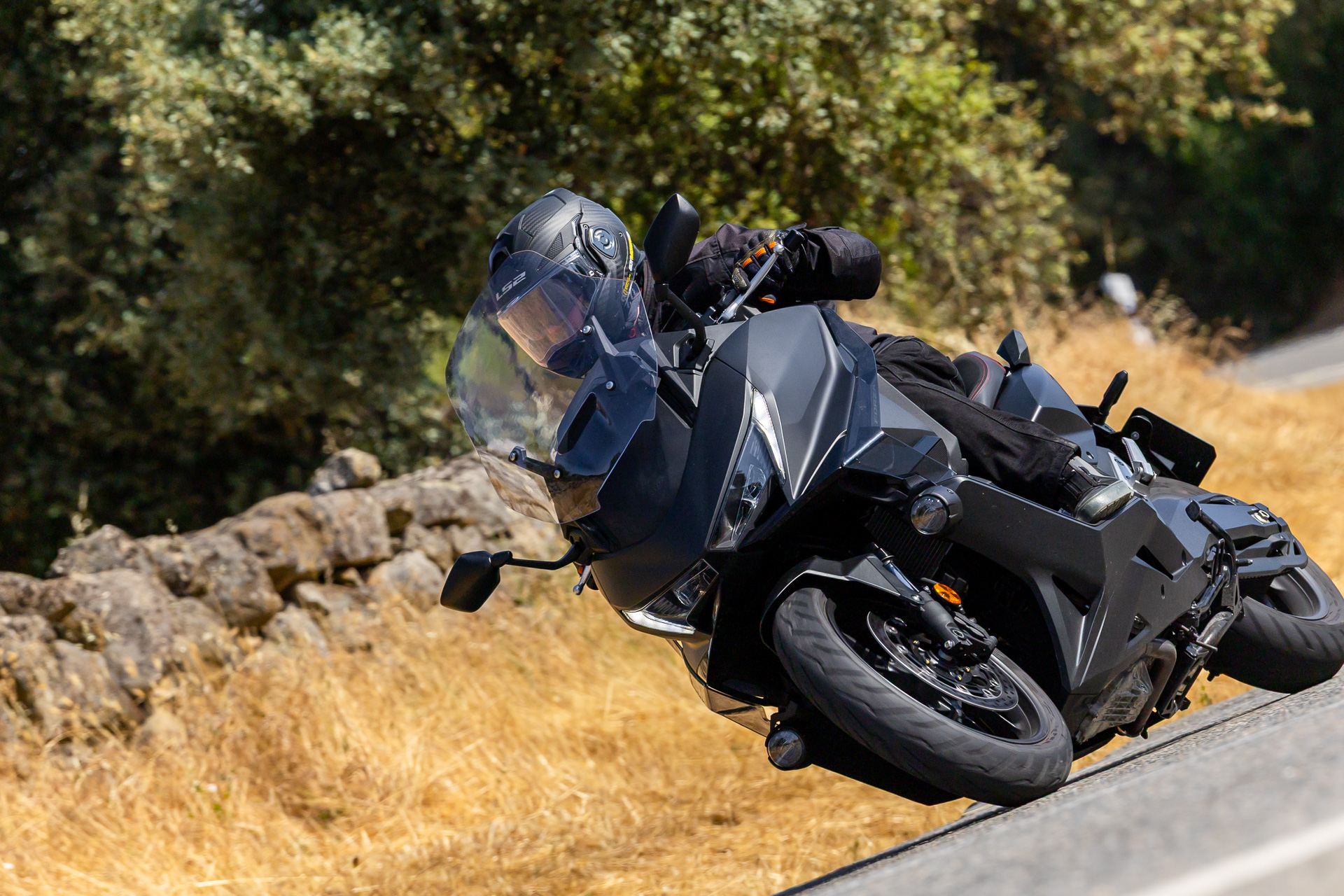
Feel the Forza: The origin of the Forza 750
Although the Forza nomenclature refers to the Honda scooter saga, its origin is in the NC/Integra platform that the golden wing brand launched in 2012. After the crisis at the end of the first decade of the 21st century (Lehman Brothers and what came after it) Honda developed three different vehicles under the same platform: the NC700S, NC700X and Integra.
All three shared chassis and engine, a 700 cm3 twin-cylinder engine associated (optionally) with the DCT gearbox, the pinnacle of Honda technology and which saw the light of day for the first time in 2010 on the VRF1200F. The NC enjoy conventional motorcycle ergonomics, while the Integra adopts a scooter appearance, but maintaining motorcycle characteristics, such as the swingarm independent of the engine and a new displacement for a vehicle that aims to be economical.

The success of the concept was immediate; Soon the displacement increased to 750 cm3 and four years after its launch, a new version of the NC750X (the best-selling motorcycle in Europe at the time) and the Integra 750, disappearing the NC750S. With the emergence of the X-ADV 750, the Integra evolved into the first iteration of the Forza 750, separating its path from that of the NC750X.
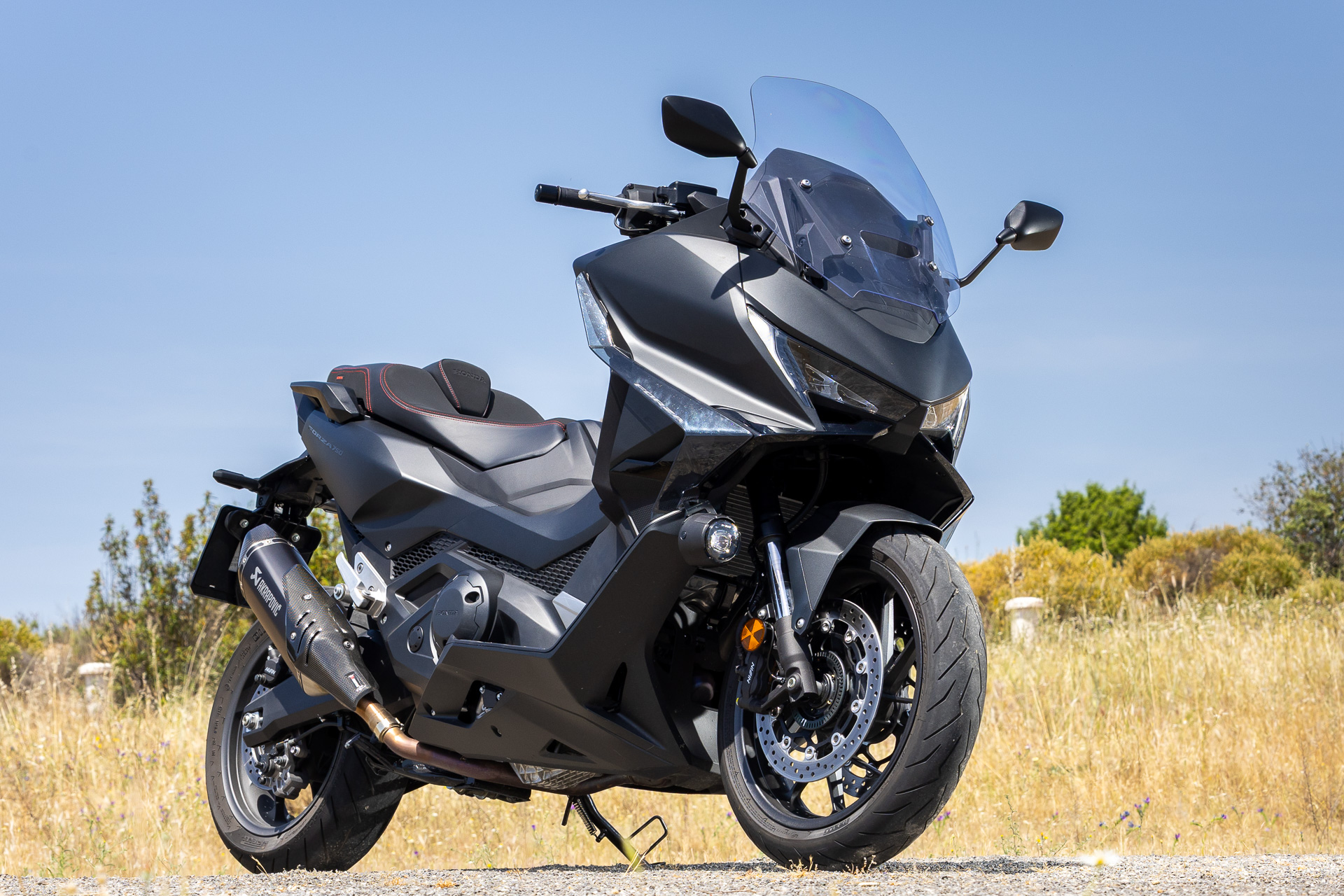
With this background, the Honda Forza 750 is not just another scooter, but rather it confronts without complexes medium-high displacement motorcycles, whether naked, crossover or trail that aim to be the motorcycle-for-everything. The advantage of the Forza 750 over those is that, with the dynamic characteristics of a motorcycle, it offers the ergonomics, comfort, protection and carrying capacity that only a scooter can offer.
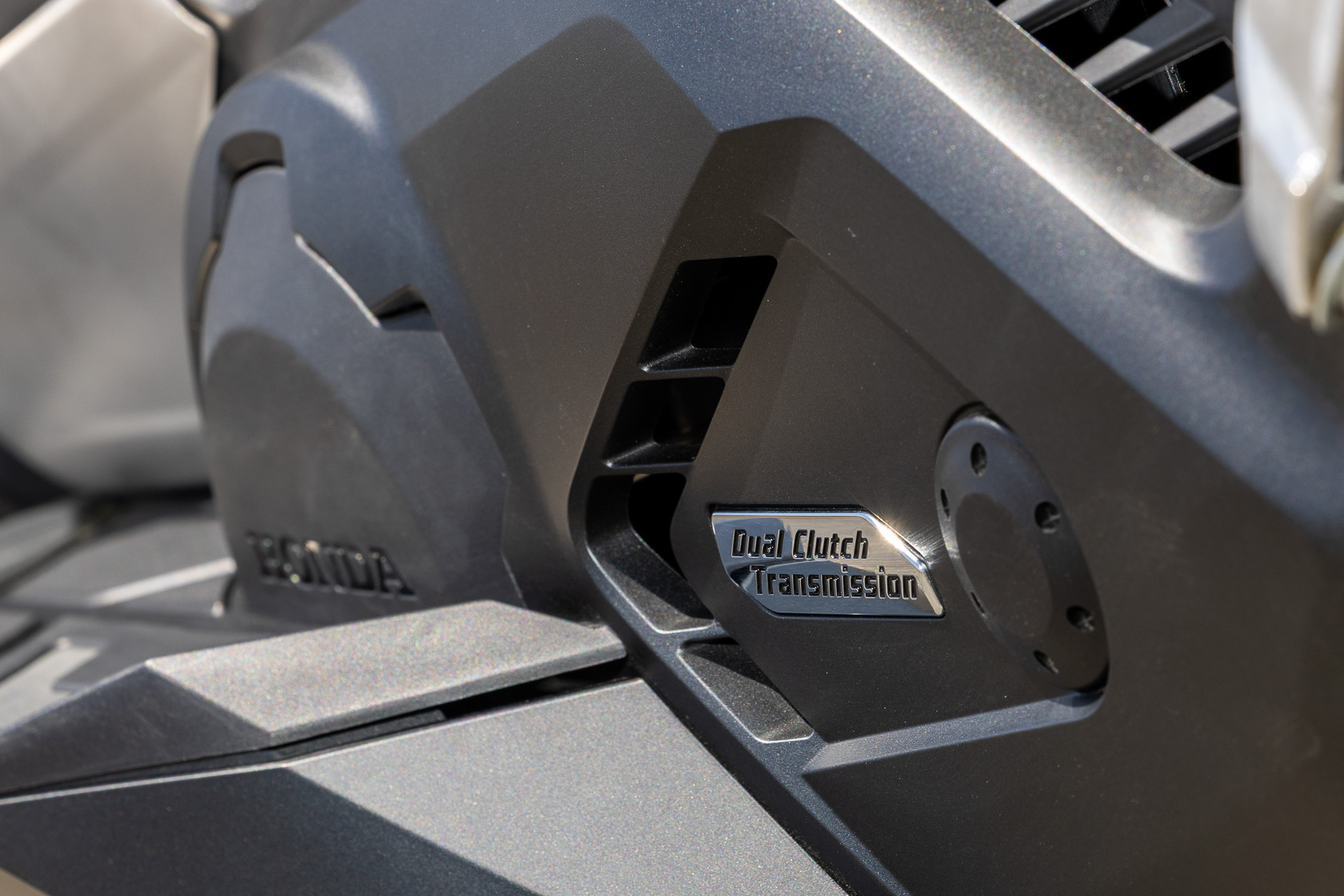
In 2026, the Honda Forza is a very well-tuned vehicle, to the point that you want to start it every morning, whether to go to work, to the supermarket or to exit corners. The DCT transmission has reached levels of maturity unmatched in other types of transmission, being the only one with a double clutch and always having the two adjacent gears pre-engaged.
You can ride it like a scooter, in automatic, with the advantage of being able to intervene to change gears at any time (and continue calmly in automatic) or you can choose to drive it manually with the paddles on the left pineapple, quite a discovery for yours truly. I have found deep pleasure in the process of shifting with my hand (fingers), but without a clutch. It is a different driving experience that, once accustomed, is difficult to give up.
Feel the Forza: Technical Features of the Honda Forza 750
The Honda Forza 750 (59 HP, €12,490) has a liquid-cooled SOHC 8-valve parallel twin engine, which produces 57.8 HP and 69 Nm of maximum torque, which provides very good acceleration, ideal for the city and the highway. Of course, it incorporates an electronic throttle (Throttle By Wire) and has three driving modes: Rain, Standard and Sport, as well as a customizable User mode.
The long stroke design allows for powerful response from low revs. In addition, it has Honda Selectable Torque Control (HSTC) technology in three levels, that is, control of the amount of torque to the rear wheel to prevent slipping, as in traction control. Cruise control, essential in a practical motorcycle, is also present. For those who have the A2 license, Honda offers a 35 kW version.
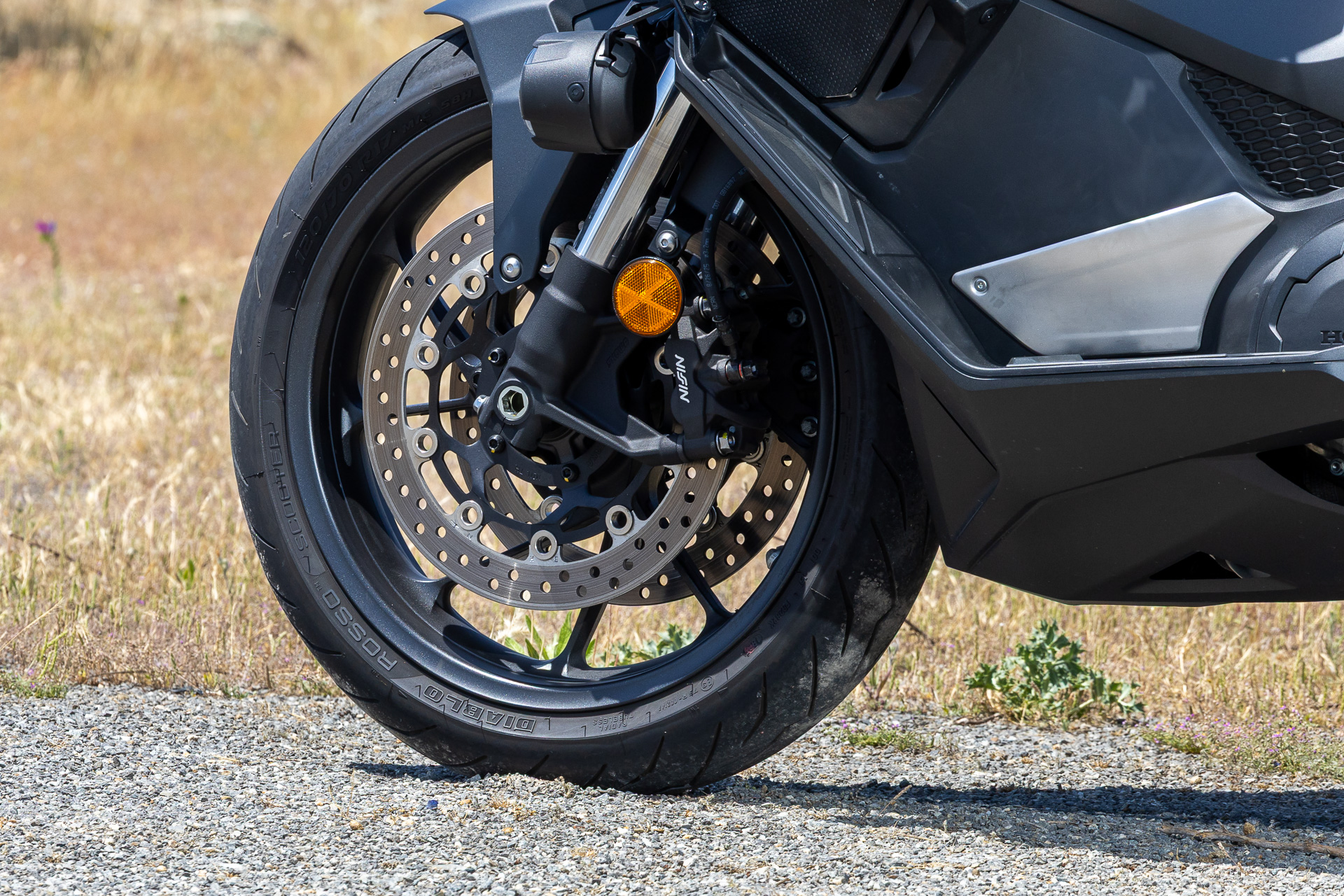
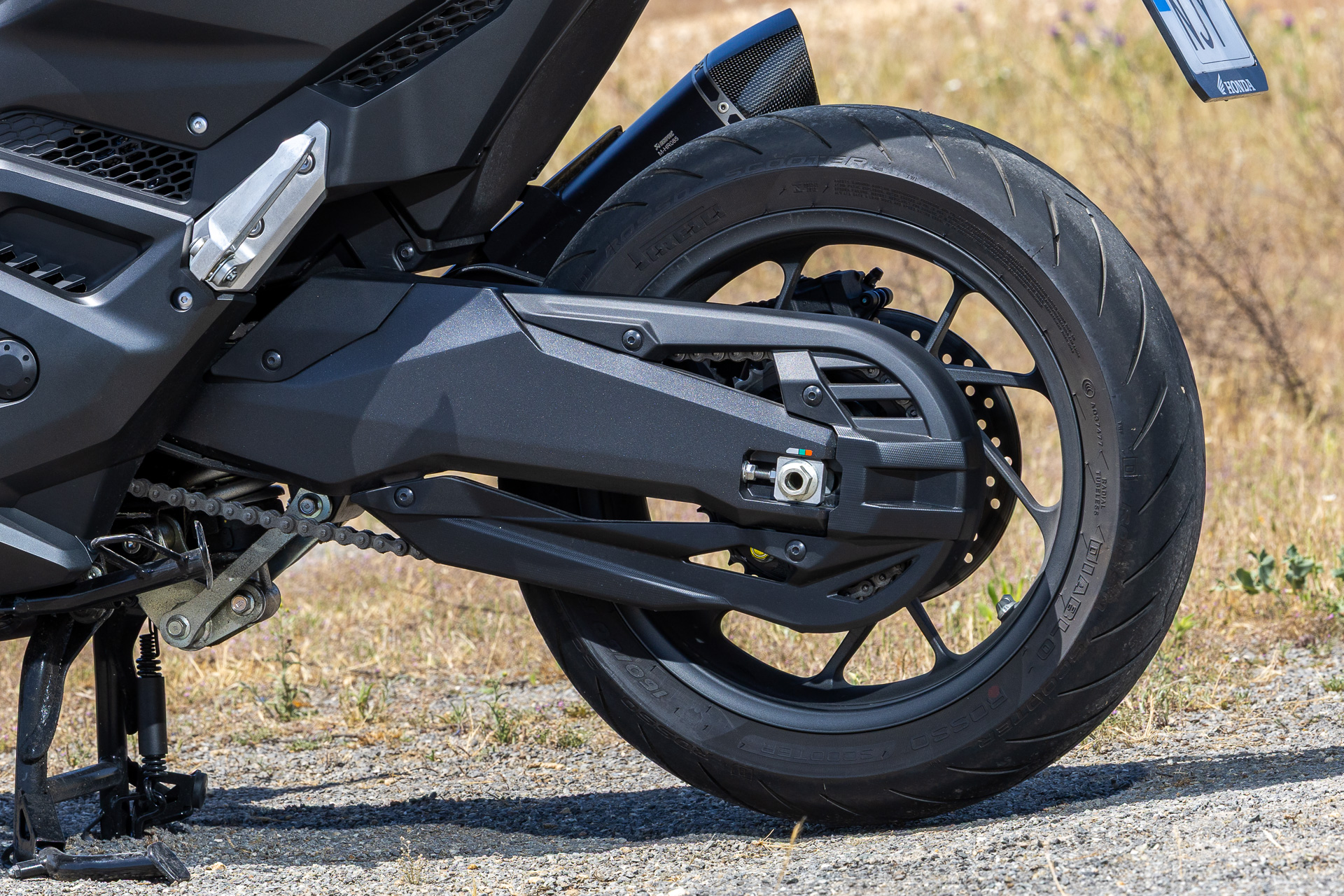
The chassis is tubular steel with an aluminum swingarm, while the 41mm USD inverted fork and Pro-Link rear suspension are typical of a motorcycle. Likewise, it has 310 mm double front disc brakes with radially anchored calipers and a 240 mm rear disc, all assisted by ABS allowing feel, dosage and braking power.
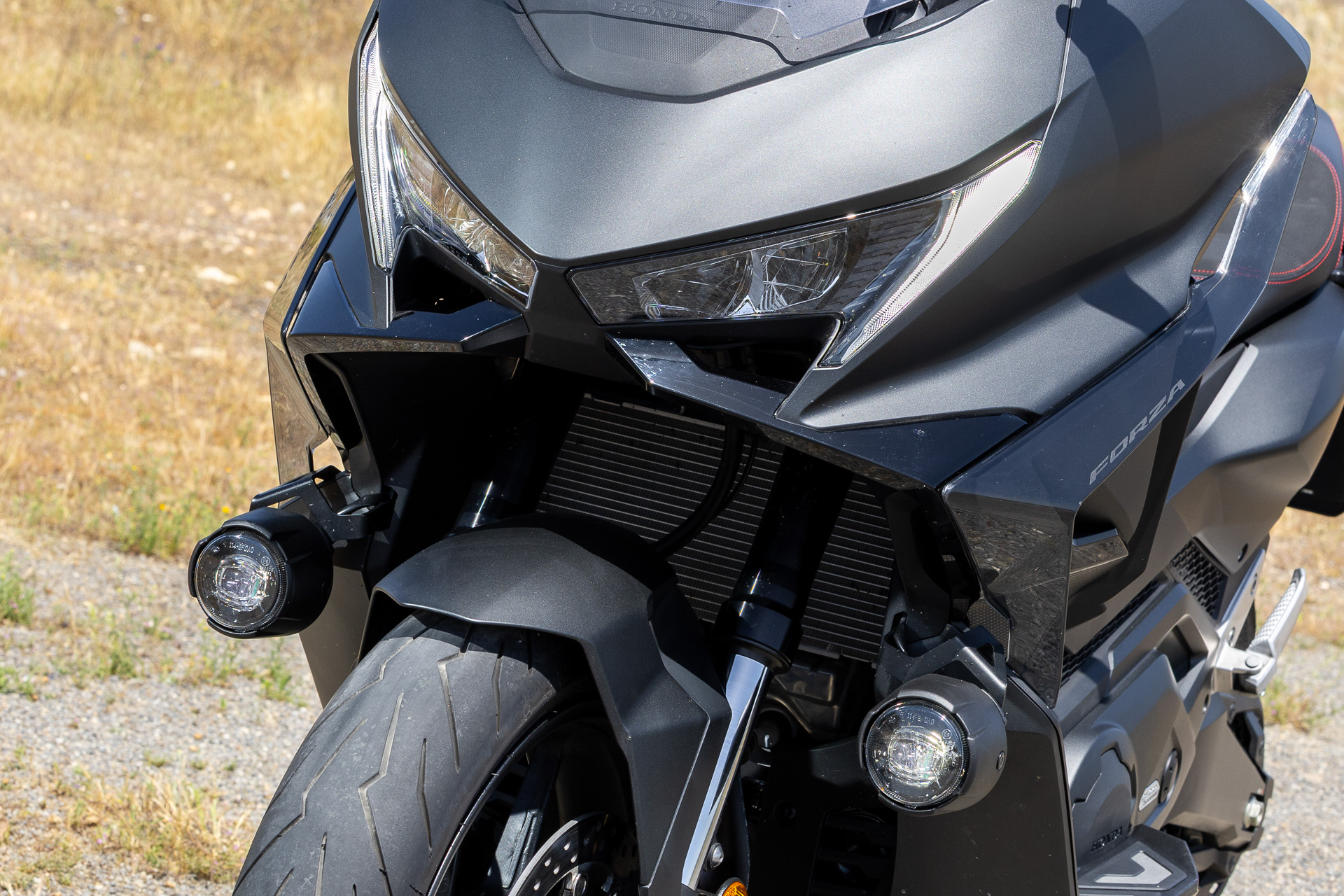
The body is designed to provide good wind protection without adding unnecessary bulk. The screen is electrically adjustable and provides magnificent protection, also in terms of sound. Honda also includes a new material in some body panels, Durabio, a polymer derived from corn, which is more sustainable and highlights the importance Honda gives to the use of reusable materials.
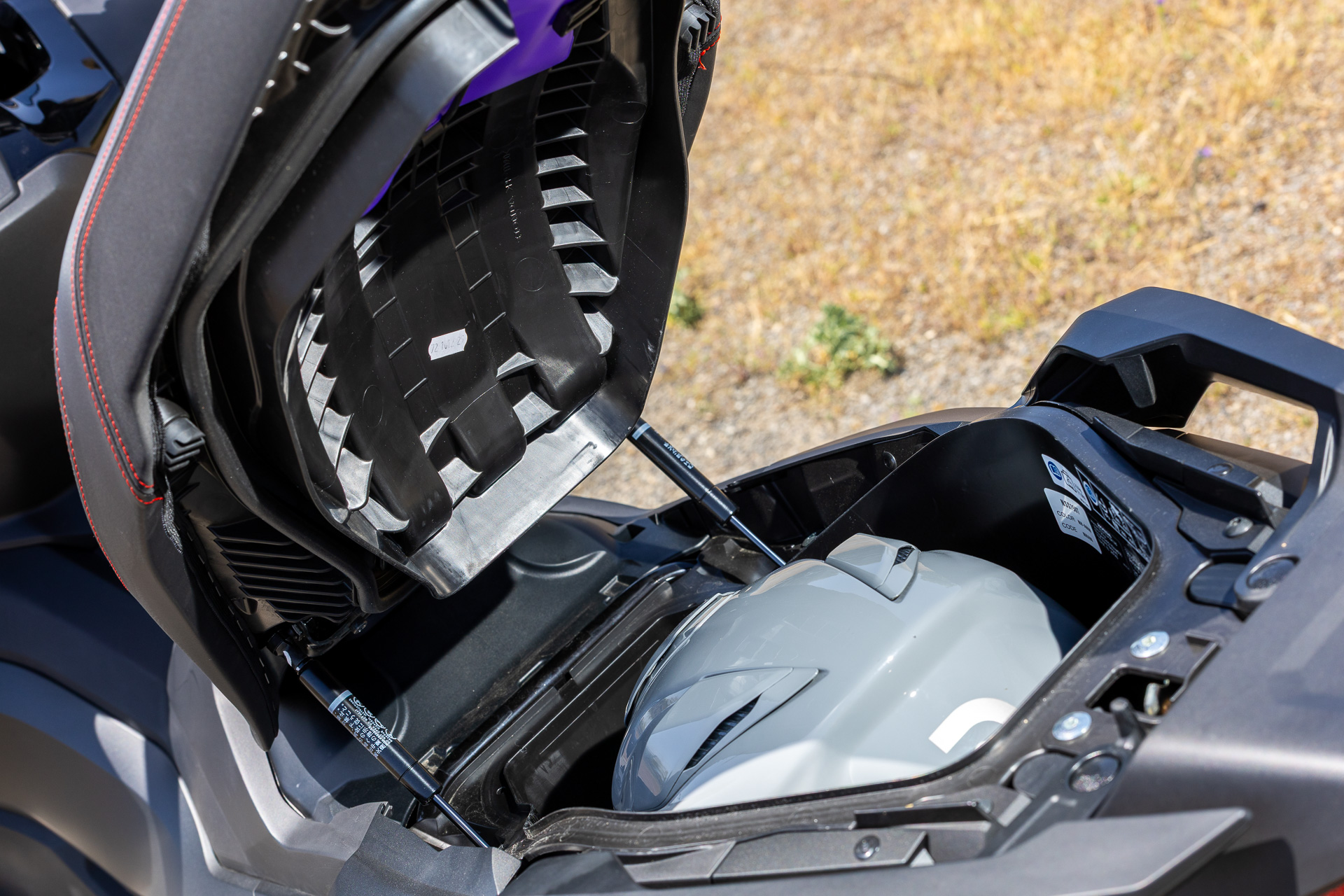
In addition to the space for the full-face helmet under the seat, there is a glove compartment for daily use items. The Smart Key system allows you to control the ignition, locking and opening of the seat with a single device. The USB-C port is now located on the handlebar, easier to use.
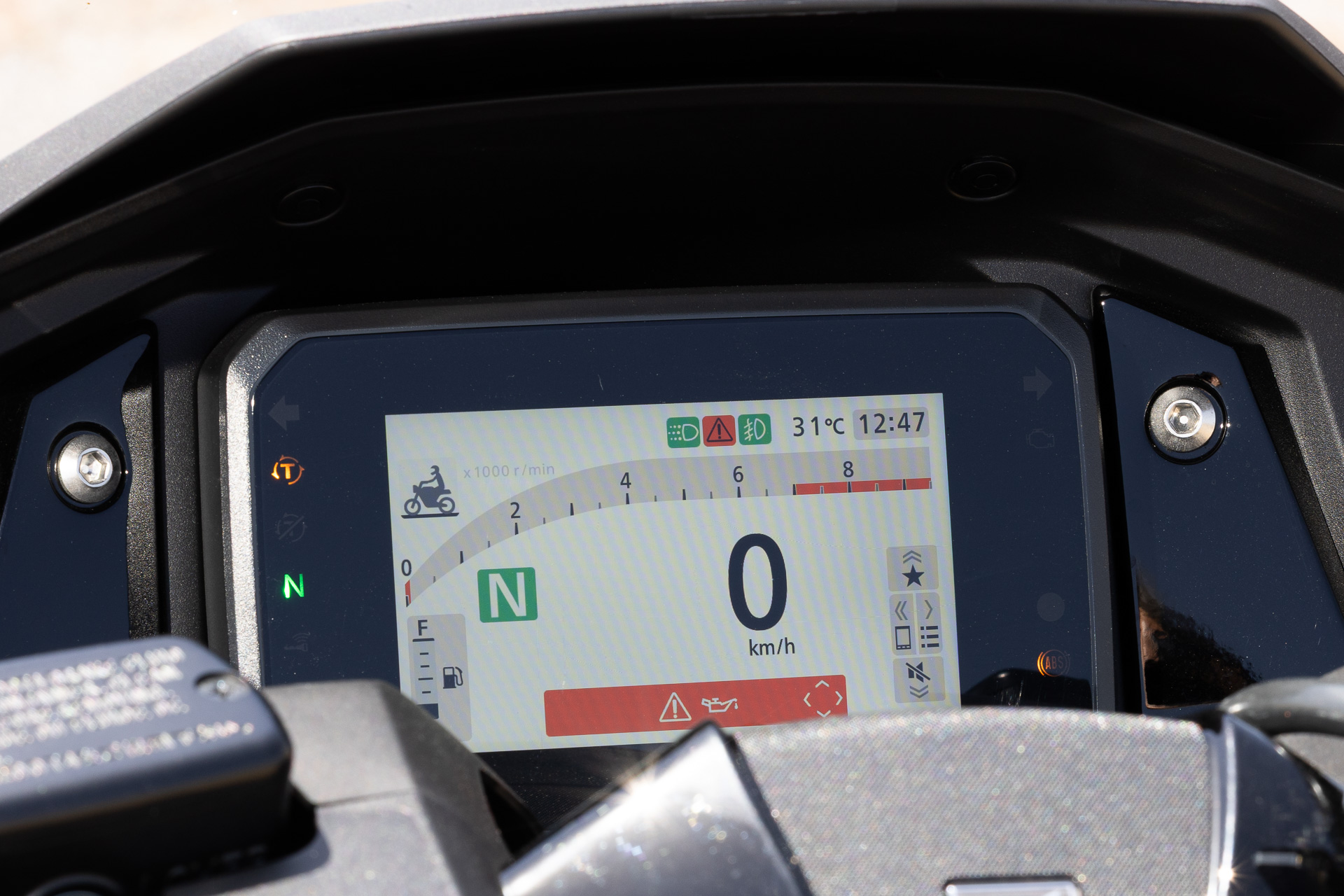
The lighting is full LED lighting. The instrumentation consists of a color TFT screen with Bluetooth connectivity that allows, through the Honda app, access to navigation and the phone itself. Operation is very simple through the new interface and through the pineapples, which can be overwhelming due to their size at first, but which you get used to quickly.
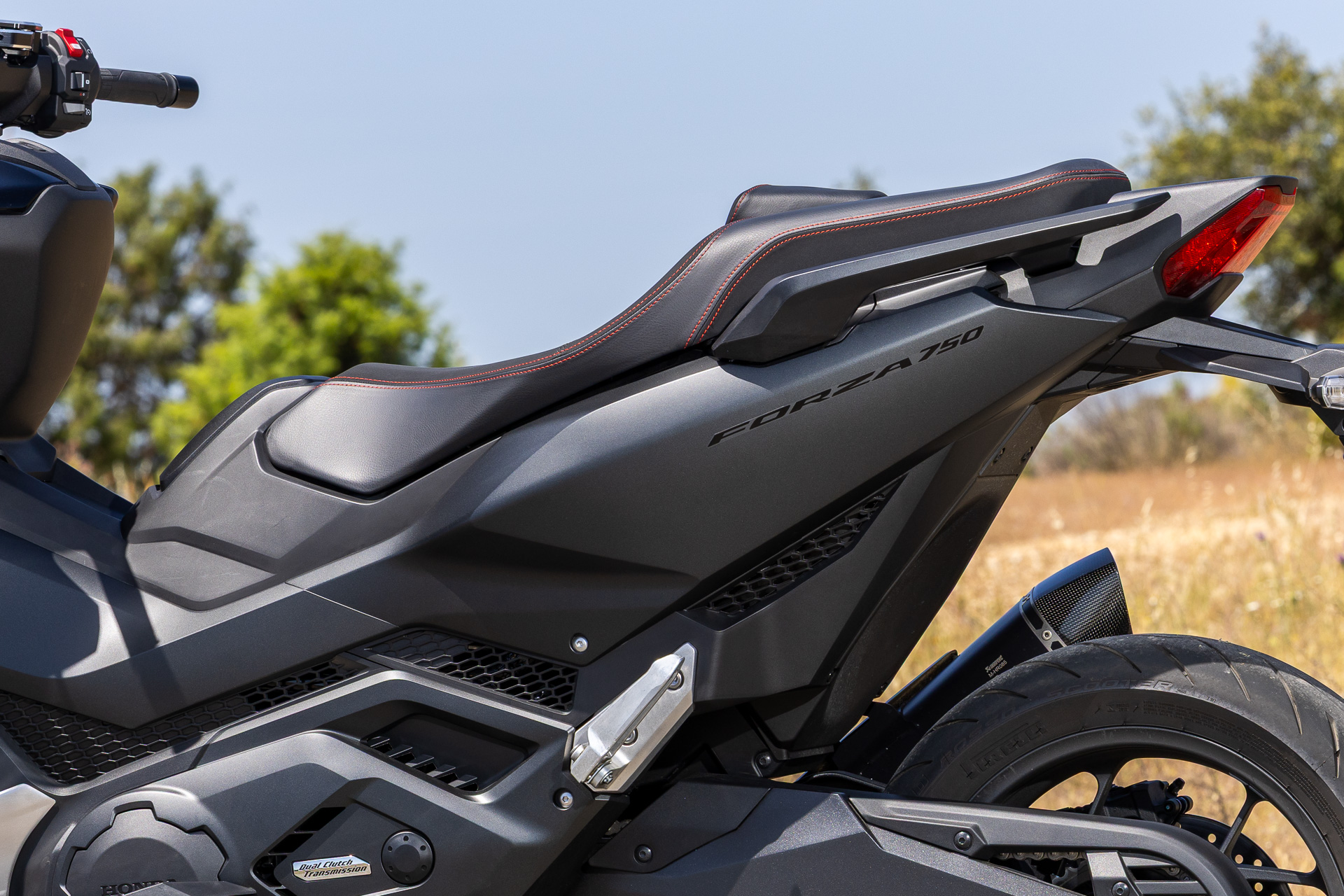
The seat is located 790 mm from the ground. As it narrows at the front, despite being wide, it allows almost all heights to reach the ground. Putting it on the easel is very easy. The lumbar support is especially comfortable when you put your feet behind the shield, allowing you to do long runs with little fatigue. However, there is an optional comfort seat (which raises the height by 10 mm), as well as several interchangeable packs that can accentuate its road vision through trunk, suitcases or fog lights or a more sporty appearance.
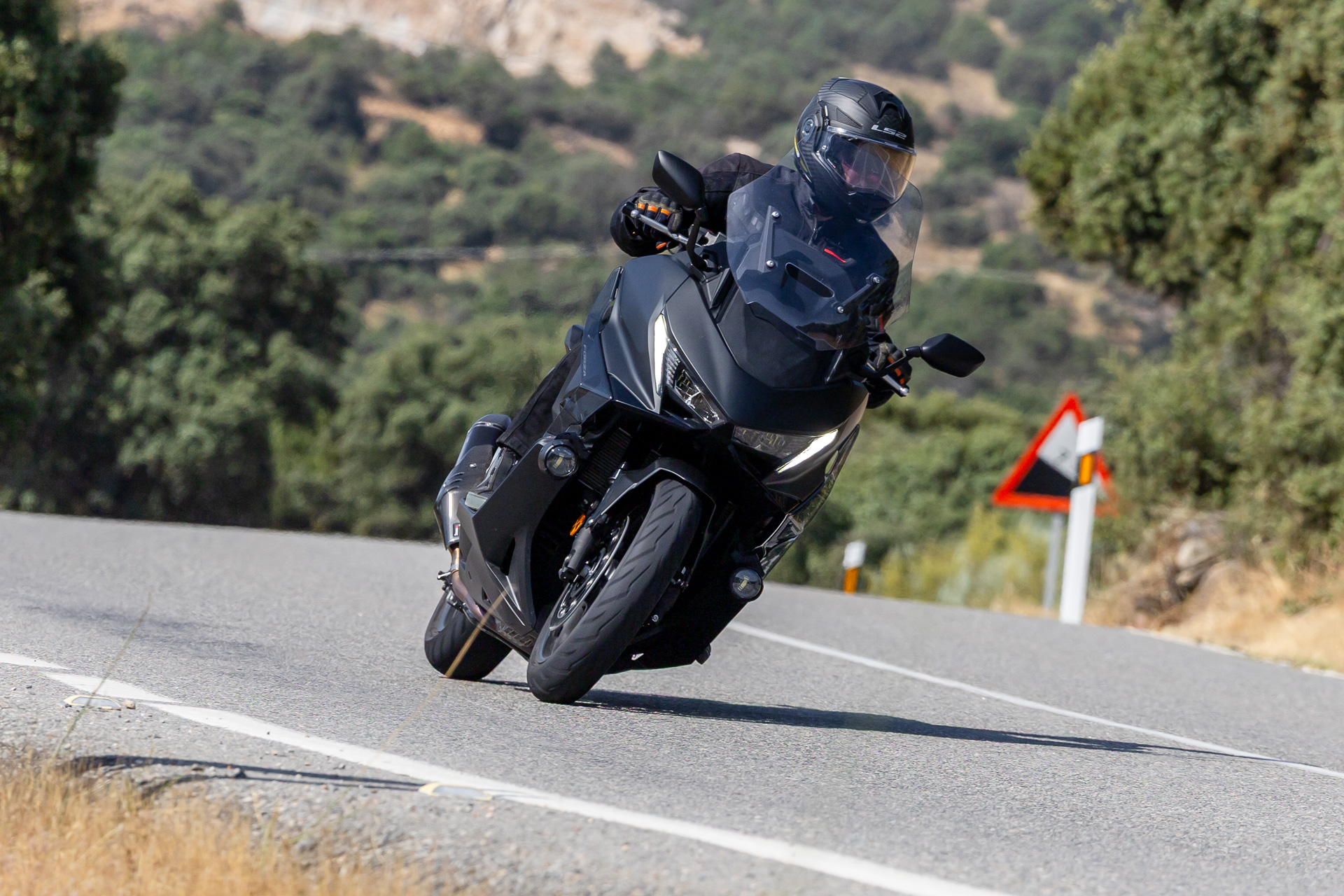
Feel the Forza: you go to work in the Forza
The 745 cc engine, combined with the DCT system, allows the Honda Forza 750 to shine especially on intercity tours. Designed to go to the city center from the outskirts on fast roads, its ability to change gears optimally guarantees powerful but smooth acceleration, ideal for overtaking and entering the highway.
The balance between power and displacement offers a relaxed and controlled ride, perfect for long journeys where physical wear and tear can be a problem in less ergonomic models. The aerodynamic protection is excellent and it will take you a while to get wet if you haven’t taken the water out of your clothes that day. This comfort is extended to medium-long distance trips, where the posture allows for long runs and the DCT, different ways of approaching driving.
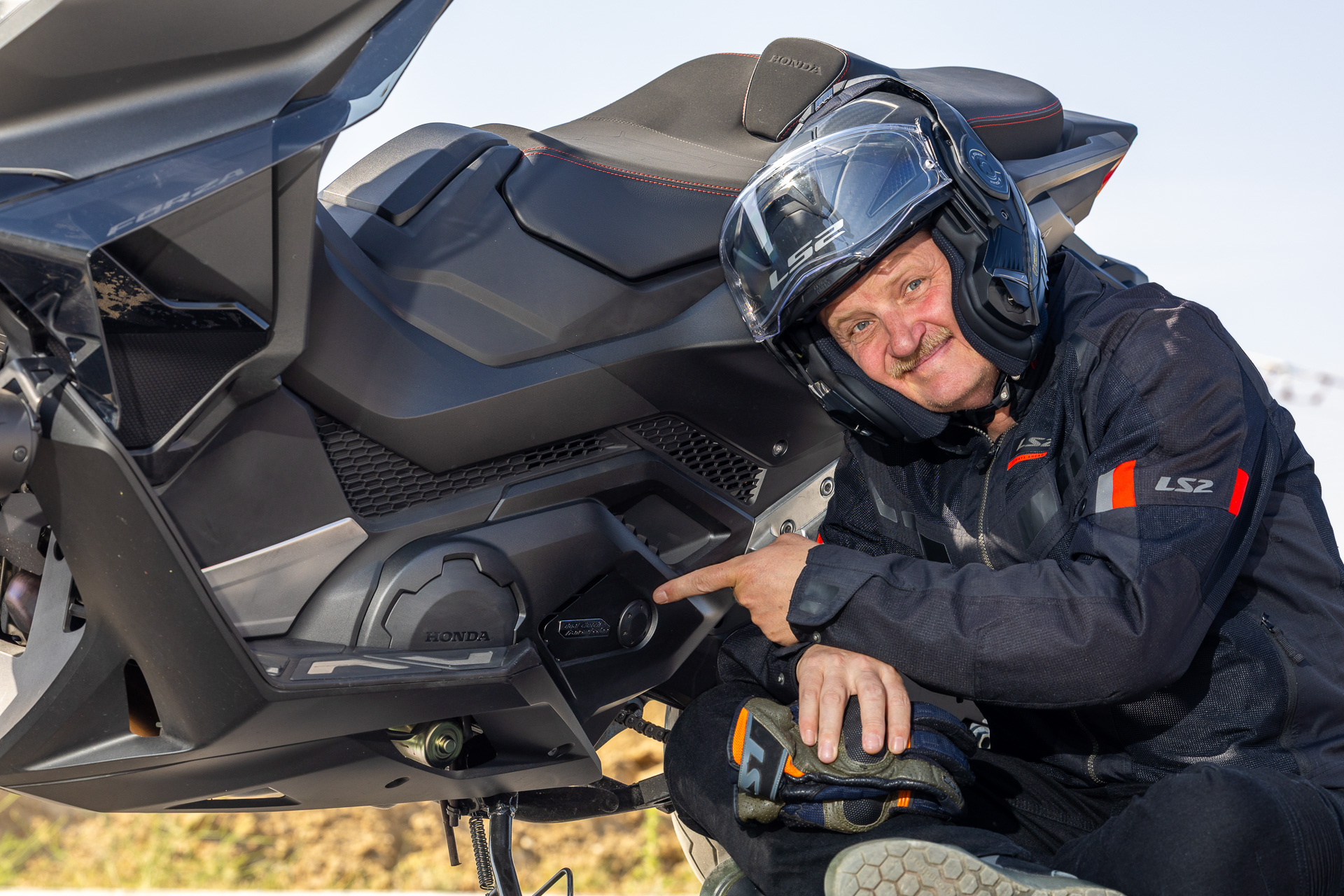
Feel the Forza: in the traffic jam you find yourself
In the urban environment, the Honda Forza 750 stands out for its maneuverability and practical urban features. The DCT system eliminates the need for constant gear changes, ideal for stop-and-go traffic typical of the city. The distance between the axles allows you to roll at very low speed without having to hit the handlebars to avoid putting your feet on the ground, helping with fluid wriggling.
The well-designed steering angle facilitates maneuvering and turning in tight spaces, while the cargo capacity, expanded by optional accessories such as trunks and side cases, adds vital functionality for daily commutes. Seat comfort also plays a crucial role, making journeys shorter (because pleasant).
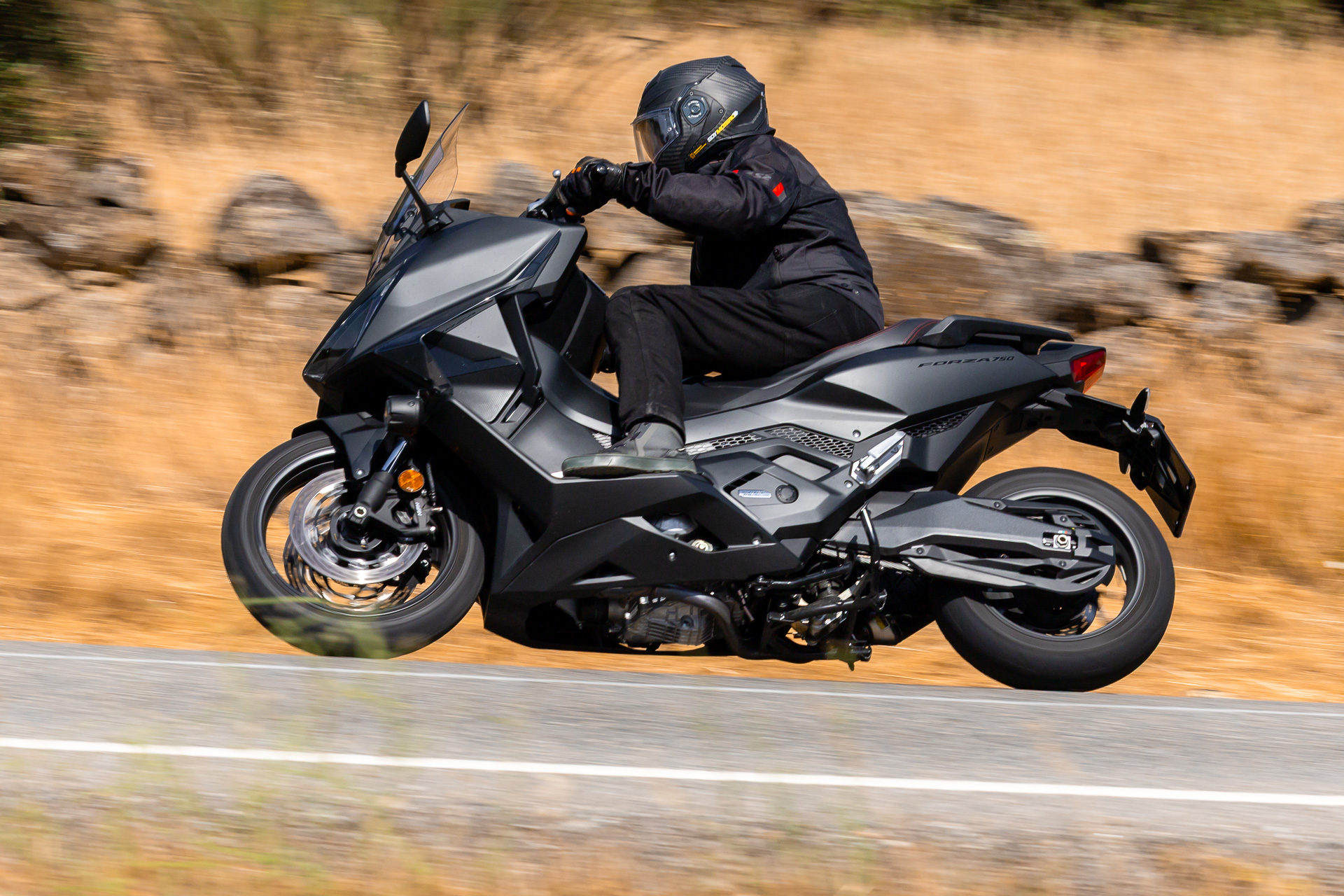
Feel the Force: let’s have fun
The DCT’s manual mode transforms the driving experience in every way, allowing the driver to have full control over gear changes, providing a more direct and immersive experience. On curving roads, this feature allows you to exploit the torque and response of the engine in each corner. It is very fun to shift with your left hand to keep the engine in the middle zone, where the thrust is, instead of stretching the gears which, although possible, is less enjoyable.
The driver can anticipate and adjust the gears for each corner, making driving dynamic and entertaining. It is much easier to concentrate on the line, on the braking points or on your own posture just for the simple fact of not having to use “brain resources” in the clutch-shift operation. Far from losing the authenticity of the gear changes (which, basically, almost no scooter also has), it becomes a pleasure to very easily enter into communion with the Forza.
Stability is very good in fast corners, while in twisty sections its agility in changing path is surprising, the result of the combination of the low center of gravity and the 15-inch rear wheel. The 17-inch front end is responsible for giving the front end a “motorcycle” feel; And, deep down, it is a great motorcycle.