The world of simulators and video games has always been more focused on cars than motorcycles. This is a reality that leads us, first, to have great four-wheeled titles that are so faithful in physics and behavior that some F2 and F3 teams use them to test their cars, although without having the advanced technology that F1 simulators have.
Meanwhile, the much more complex physics of a motorcycle means that video games about them have always been one step behind. But not only that: setting up a car simulator at home without acceleration G forces is relatively simple and economical, at least at a starting point.

But with motorcycles things also get complicated at that point. Because in addition to the fact that replicating the behavior of a motorcycle is much more complicated, we have to add that a motorcycle simulator is almost unaffordable.
You just have to look at the options we have on the market, which are intended for the business and not the user. What’s more, do you remember the legendary GP500 from recreational games? Well, the few units that are available of that 30-year-old machine that Bandai developed together with Namco start at almost 3,000 euros and it is not that they provide, even remotely, the sensations expected from a simulator.
Moza Racing takes a firm step towards having something similar to a motorcycle simulator at home
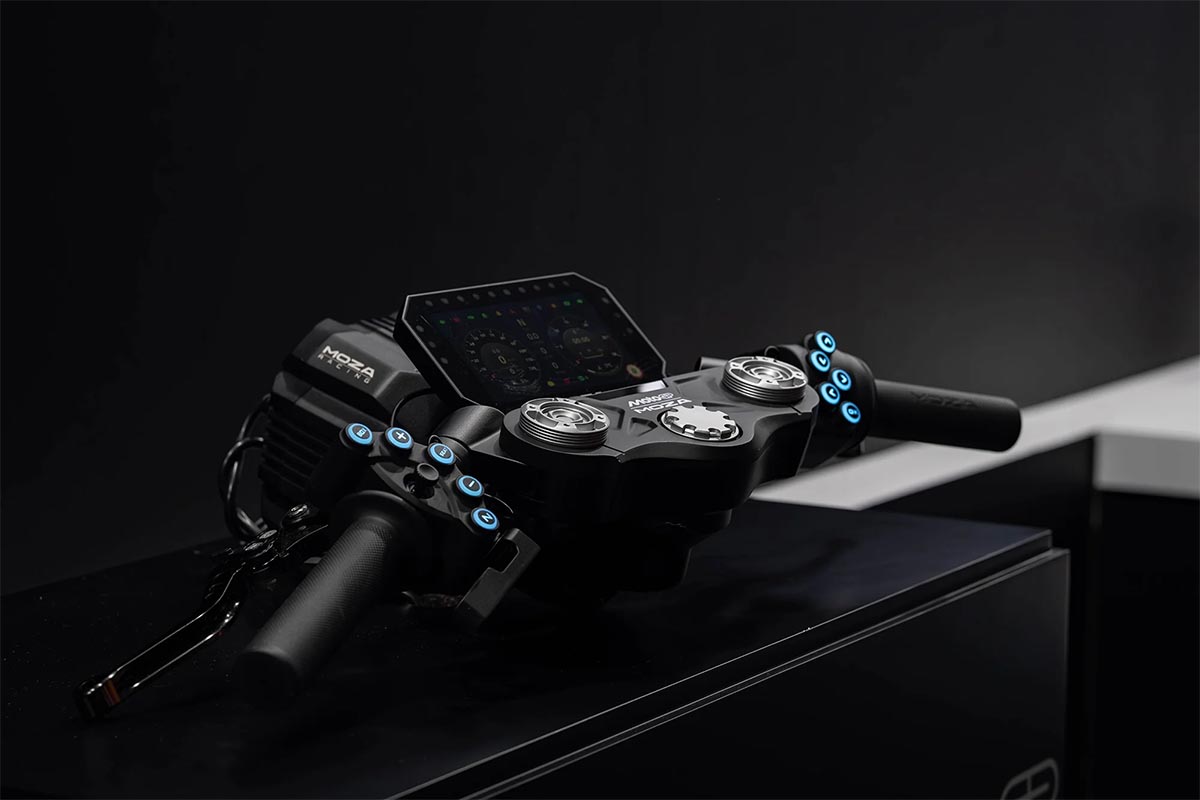
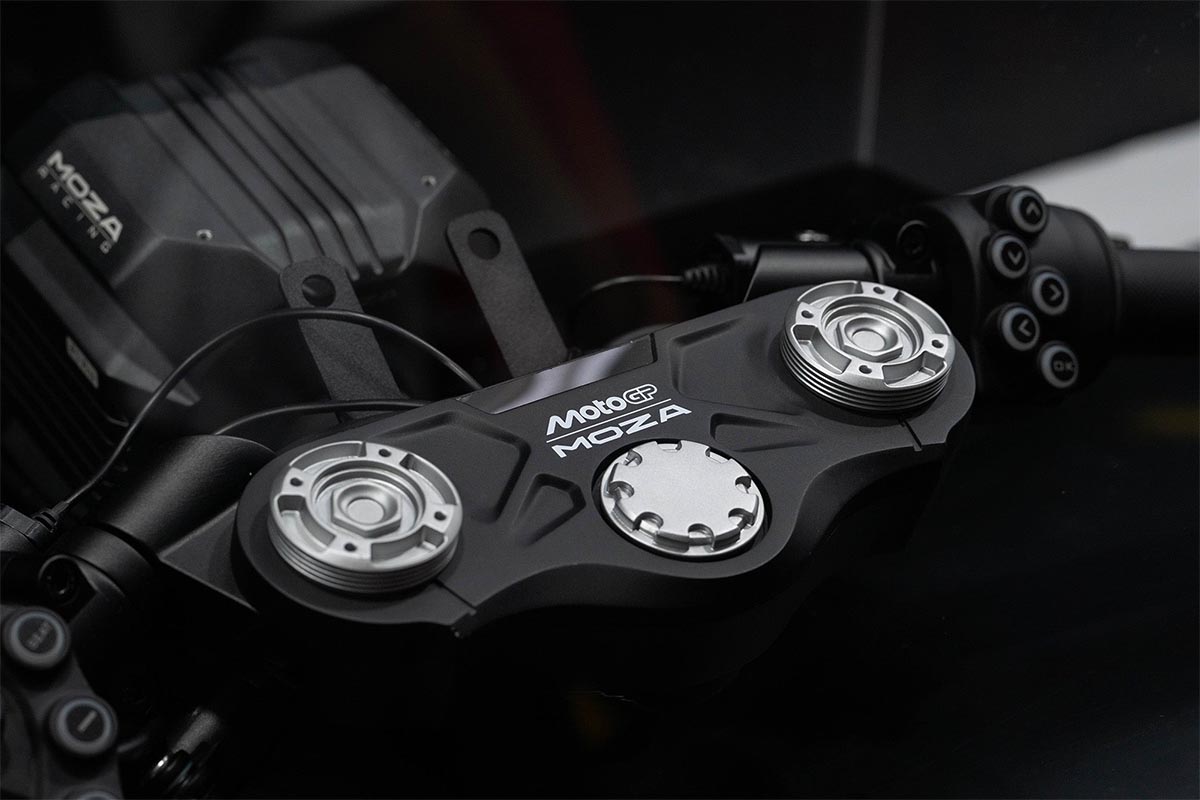
Now, with the entire gaming and simulator world experiencing its golden age, Moza Racing has jumped into the pool with a motorcycle simulator for home. It is true that, at least for the moment, it is only the handlebar that also simulates that of a MotoGP as it has a license and can be used with MotoGP 2026. But it is undoubtedly a first step.
While cars have their simracing cockpits and also airplanes, the rest of the platform has not been created for now. Only the handlebar that, it seems, can be connected to the manufacturer’s bases to obtain sensations and take advantage of the “forcefeedback” offered by car steering wheels.
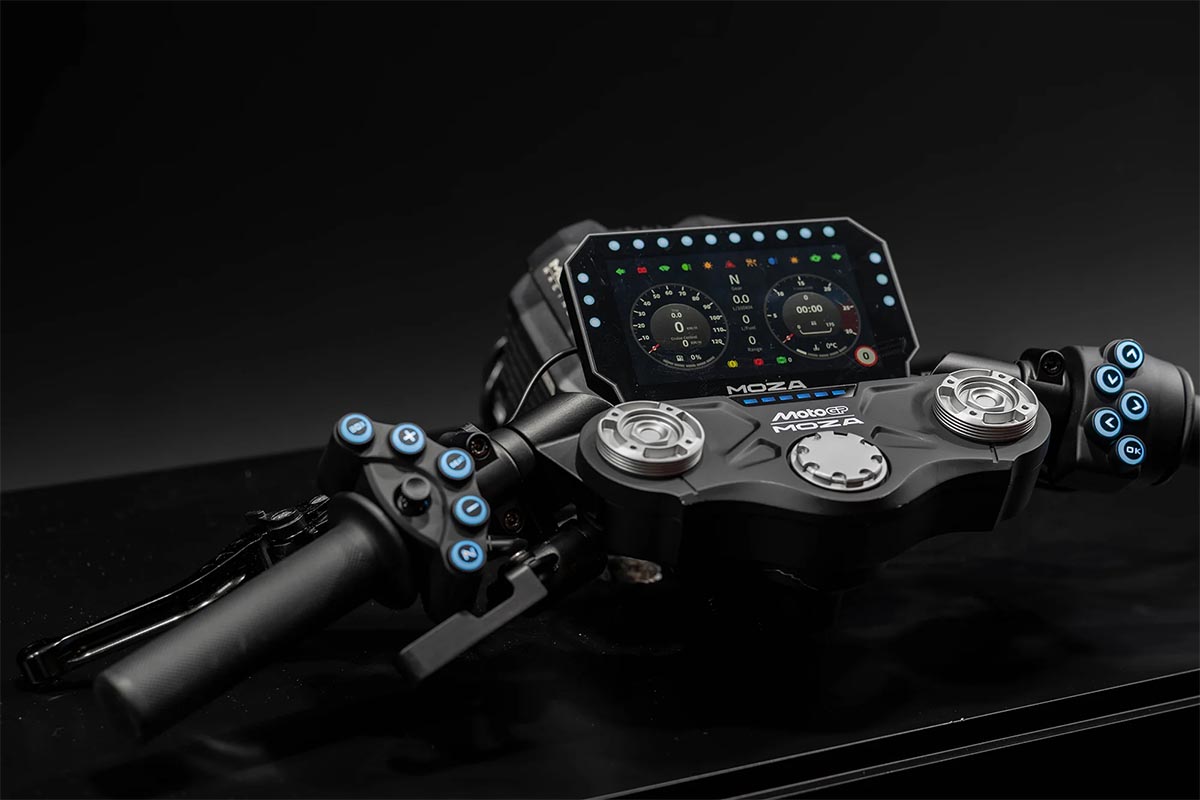
Of course, it has different interesting details. The set is made of high-strength magnesium alloy and incorporates buttons and RGB lighting, as well as brake and clutch controls with Hall effect sensors to offer a more precise response. Both the brake lever and grips can be replaced with compatible components from a real motorcycle and the system also supports the Moza CM2 Digital Dashboard, as well as compatible DIY displays.
The big key is that this handlebar can work with the entire range of Moza bases, thus taking advantage of the force feedback to reproduce steering reactions and even allow counter-steering, something that can make an important difference compared to playing with a conventional controller, or adapting a car steering wheel.
The bad news is that, at least for now, we do not know the price at which it will hit the market nor the moment at which it will be available. For that we will have to wait a little longer.