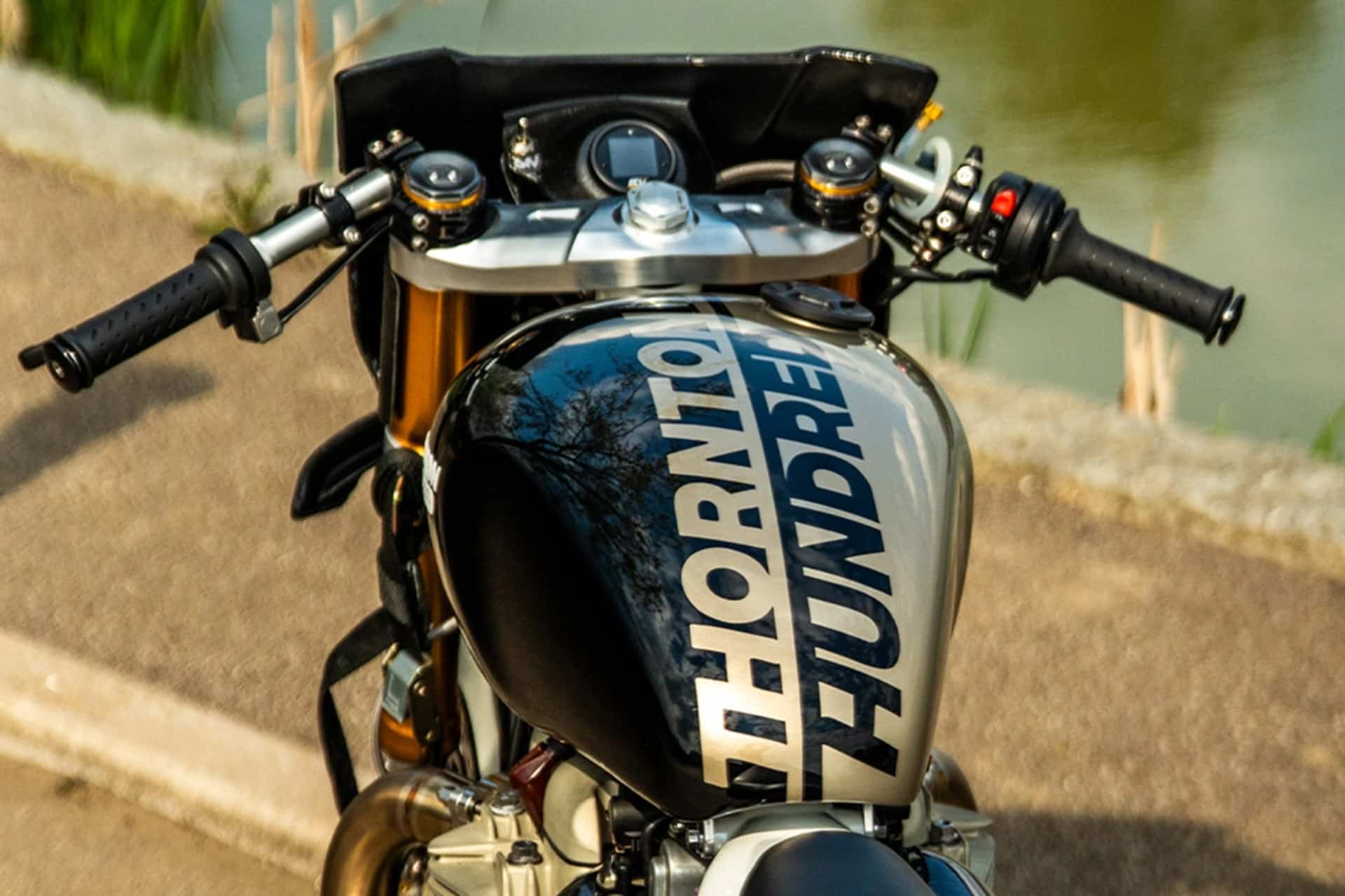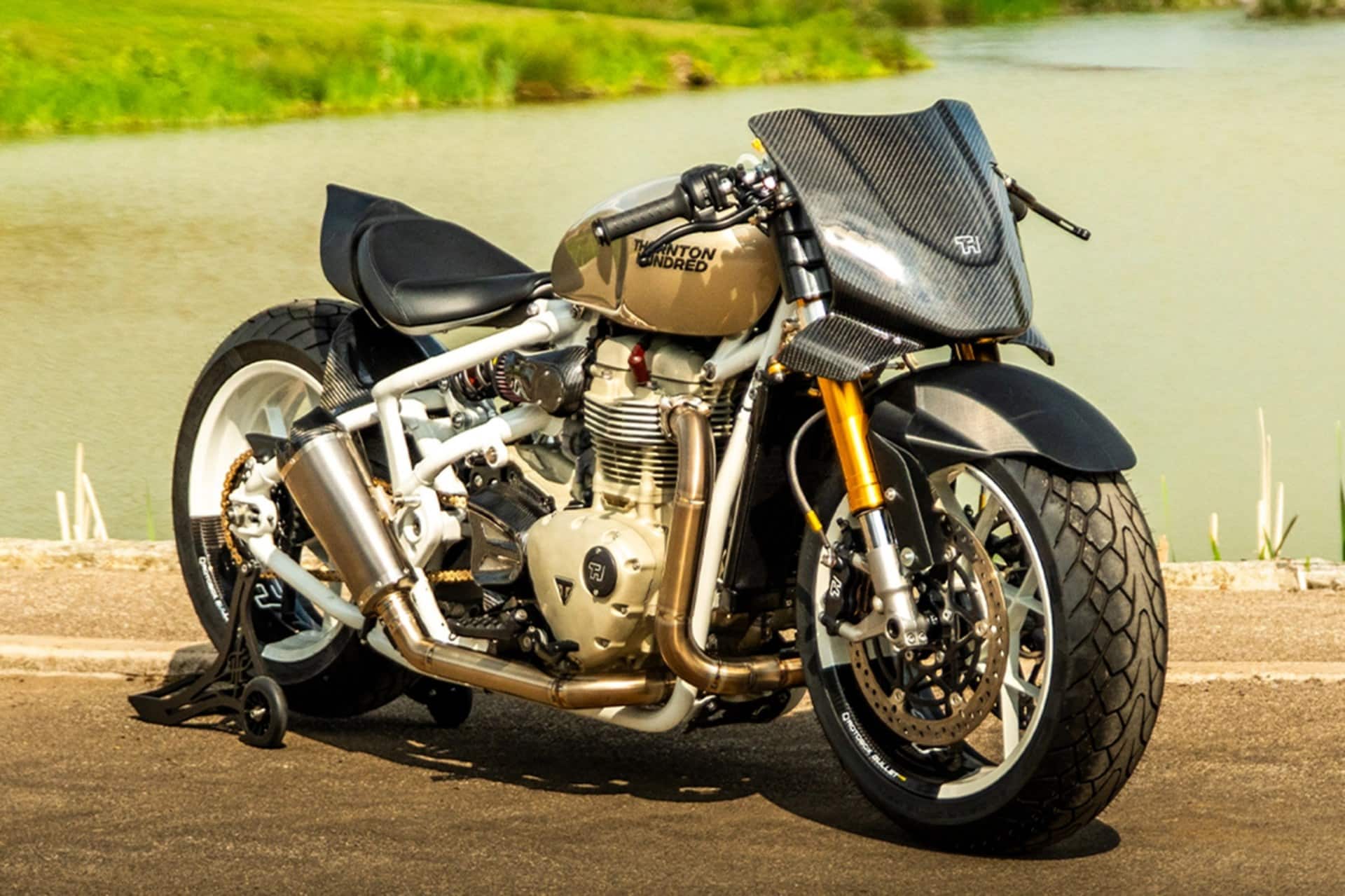
The historic sands of Pendine Sands have once again served as the setting for one of those stories that mix artisanal engineering, passion and a certain dose of mechanical madness. On this occasion, the protagonist is a Triumph Bobber profoundly modified by Thornton Hundredthe well-known British specialist in personalized preparations based in Milton Keynes. Thus, far from settling for a display custom, they decided to develop a motorcycle capable of seriously competing in land speed tests.
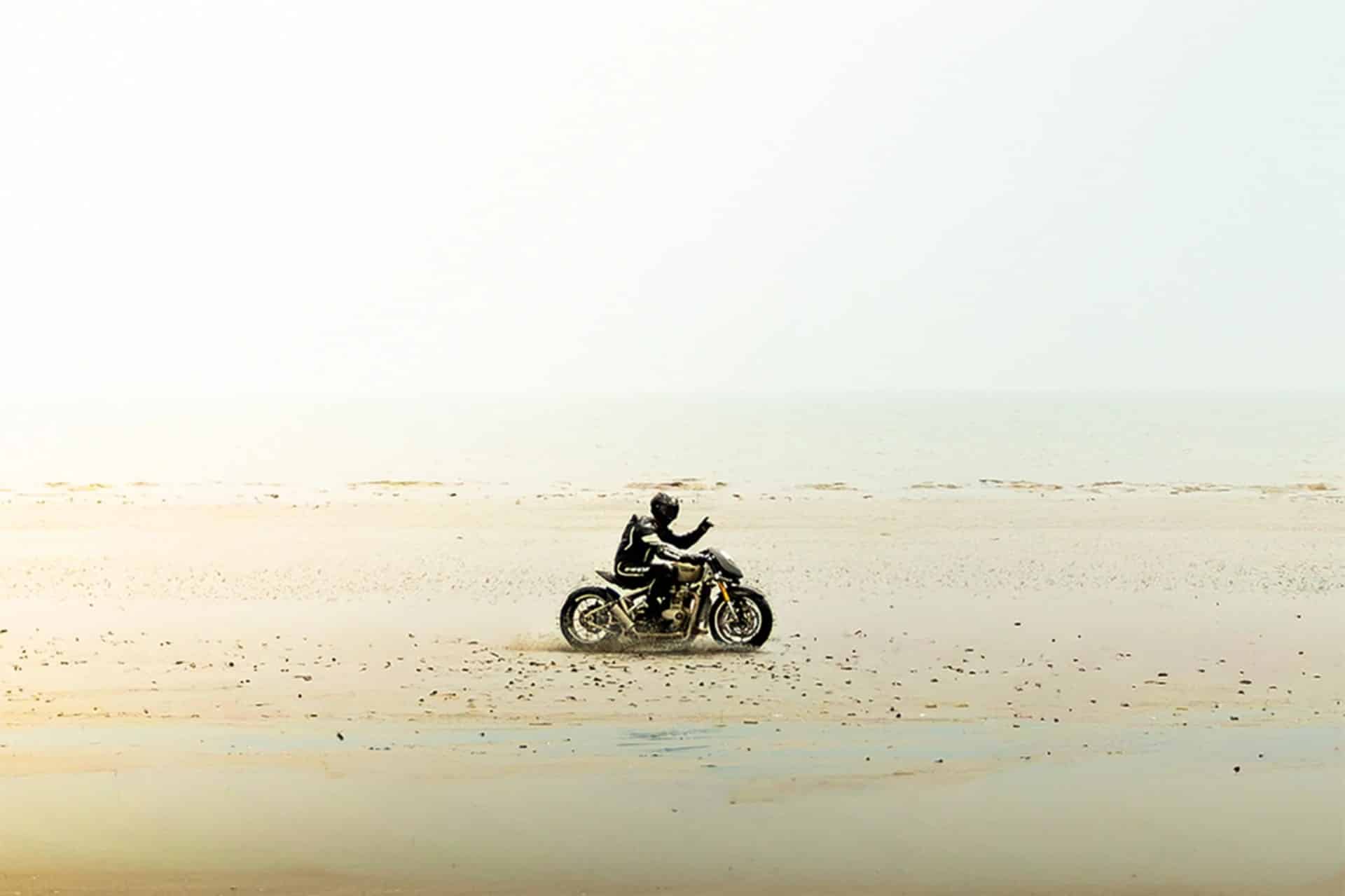
And boy did they do it! Furthermore, the result did not take long to bear fruit. Piloted by the company’s founder, Jody Millhousethe so-called “Pendine Racer” managed to record a maximum speed of 132.28 mph in half a mile (equivalent to about 213 km/h) and 106.98 mph in the quarter mile, approximately 172 km/h. After 7 passes on the Welsh sand, these figures were enough to secure 2 records within the category of naturally aspirated motorcycles under 1,350 cc with production chassis.
Of course, the day was not easy. The team had planned to attempt the full mile, but the state of the terrain ended up affecting the activity. The especially soft sand of Pendine It prevented longer races from being held, forcing efforts to be focused on shorter distances. Even so, the Bobber of Thornton Hundred He managed to measure himself against much more powerful machines specifically prepared for this type of challenge.

As explained Millhouseon the beach they shared space with true speed monsters like Suzuki Hayabusa turbocharged or Kawasaki ZZR1400 equipped with extended swingarms. However, the Bobber British managed to stay in the fight thanks to an unusual feature in this type of extreme preparations: preserving a relatively standard geometry.
Obviously, behind the 2 records there is much more than raw power. The project took around 8 months of development and started in a peculiar way. The starting point was the chassis of a damaged motorcycle acquired during a trip to the United States. Once sent to the United Kingdom, the team began to assemble the motorcycle using components available in the workshop itself and taking advantage of free time between other jobs. The philosophy was clear: build something special without starting from a new platform or following a conventional recipe. And that is precisely where part of the charm of this preparation lies.
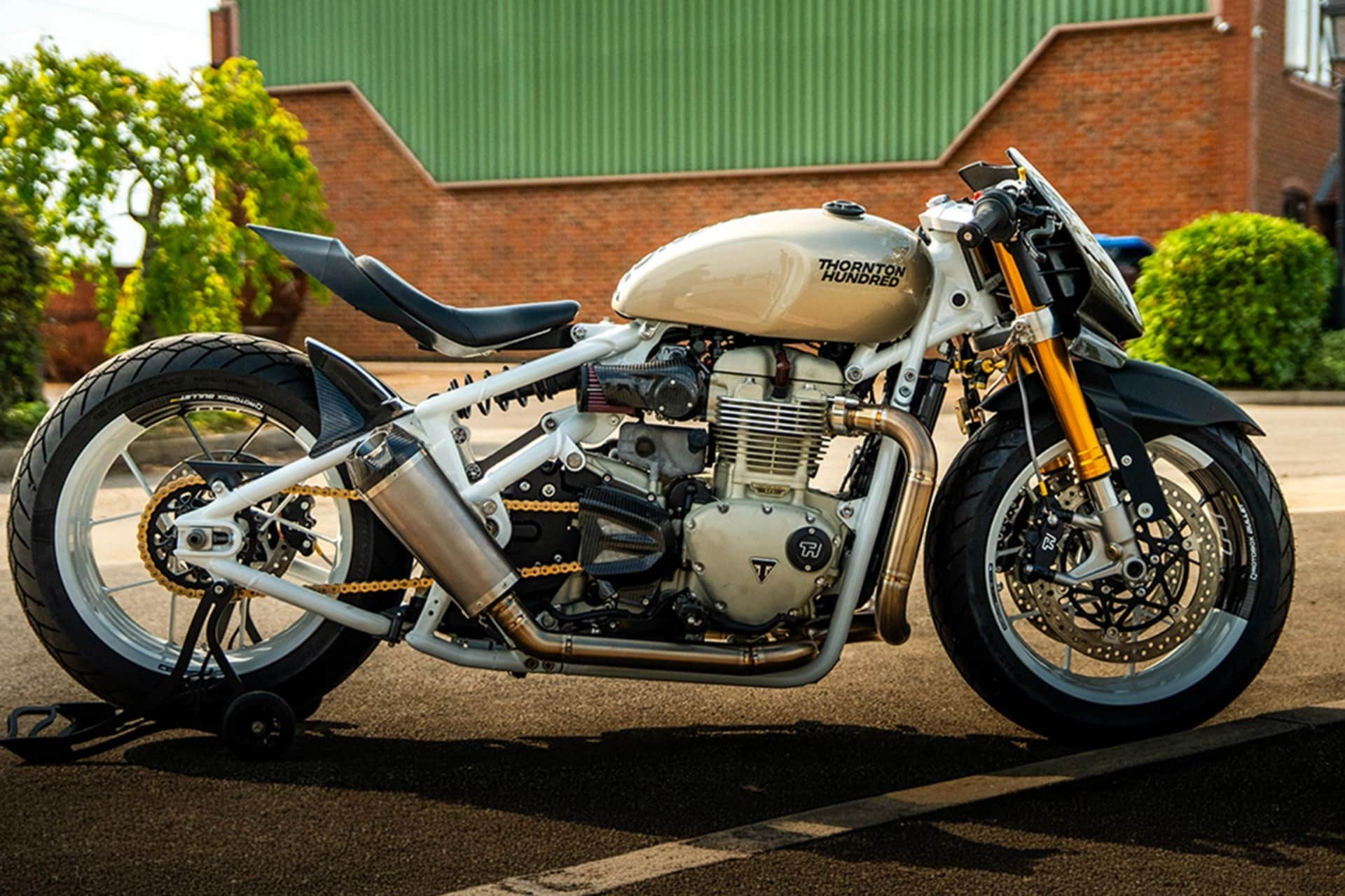
Transforming a cruiser designed to enjoy the landscape into a record-breaking machine required extensive work on the engine. The parallel twin of the Triumph Bobber It received a comprehensive preparation that practically doubled its performance compared to the series model. The final result is around 130 hp measured on the bench, a spectacular figure when compared to the approximately 70 hp delivered by the Bobber standard to the rear wheel.
This is the most beastly Triumph Bobber of today
To reach that level, Thornton Hundred It developed high-compression pistons in-house and combined them with higher-lift camshafts, improving both response and the engine’s ability to spin more aggressively. The electronic section was also completely redesigned through specific wiring and an independent programmable ECU, allowing much more precise control of the mechanical operation.
All this power gain also forced the clutch to be reinforced with specific springs capable of supporting the increase in torque. But, the speed does not depend solely on the engine, and Thornton Hundred he knows it well. Thus, the team eliminated more than 50 kg compared to a Triumph Bobber conventional, a very significant reduction that helped improve acceleration, handling and efficiency on the sandy surface.
Key elements to achieve this include carbon fiber wheels, including a wide front wheel, as well as a handcrafted exhaust system made of stainless steel and finished with titanium mufflers. Akrapovič. Additionally, to reduce drag and improve stability at high speed, the “Pendine Racer” incorporates a semi-fairing, an optimized front fender and a specific rear cover.
Beyond the details, the record achieved in Pendine confirms a simple idea: even a motorcycle born to ride slowly can become, with enough imagination and craftsmanship, a true speed machine. And as an example, a button.