The DGT has announced an action plan to reinforce surveillance of the roads most frequented by motorists during on weekends between June and October. The objective of this measure is to reduce the accident rate of one of the most vulnerable groups on the road, as well as to verify compliance with the rules and emphasize the importance of respecting them to improve safety.
The campaign will be developed through the Traffic Group of the Civil Guardand will pay special attention to the most frequent risk behaviors: excess speed, illegal overtaking, alcohol and drug consumption or driving without a helmet and other protective elements.

Traffic affects the preventive approach
Accident data show the need to reinforce preventive measures, especially during weekends. In fact, more than half of the fatal accidents recorded so far this year occurred between 3 p.m. on Friday and midnight on Sunday.
Of the 104 motorcyclists died on interurban roads until May 3158 lost their lives in that time period, which is 13 more than in 2025. In total, the group’s accident rate also continues to increase. This past May alone, 31 motorcyclists died, seven more than in the same month of the previous year.
Most of the accidents are concentrated on conventional roads, where almost eight out of every 10 deaths have been recorded this year (a total of 77 between January and May), and road departures continue to be the most frequent type of accident, with 46 fatalities. During this time, deaths from collisions, both rear-end, multiple and frontal, have increased.
The profile with the highest fatal risk is that of a man between 45 and 64 years old, an age group that has 50 deaths so far this year, accounting for 48% of the total. Regarding displacement, the highest mortality is associated with motorcycles between 501 and 1,000 cubic centimeters, with 41 users of this type of vehicle dying until the end of May.
Spain is the second country in the European Union with the largest fleet of motorcycles and mopeds, which exceeded six million units in 2025. In this context, the vulnerability of the motorcyclist group makes the preventive approach and responsible driving especially relevant.
In its commitment to training, the DGT regulated last year the obtaining of the A license for motorcycles, reinforcing its practical nature and awareness of the consequences of accidents, in addition to including content on driving aid systems (ARAS). Likewise, Traffic offers safe and efficient driving courses for motorists, on a voluntary basis, which more than 700 drivers have already taken, to improve skills and, where appropriate, recover two points on their driving license.
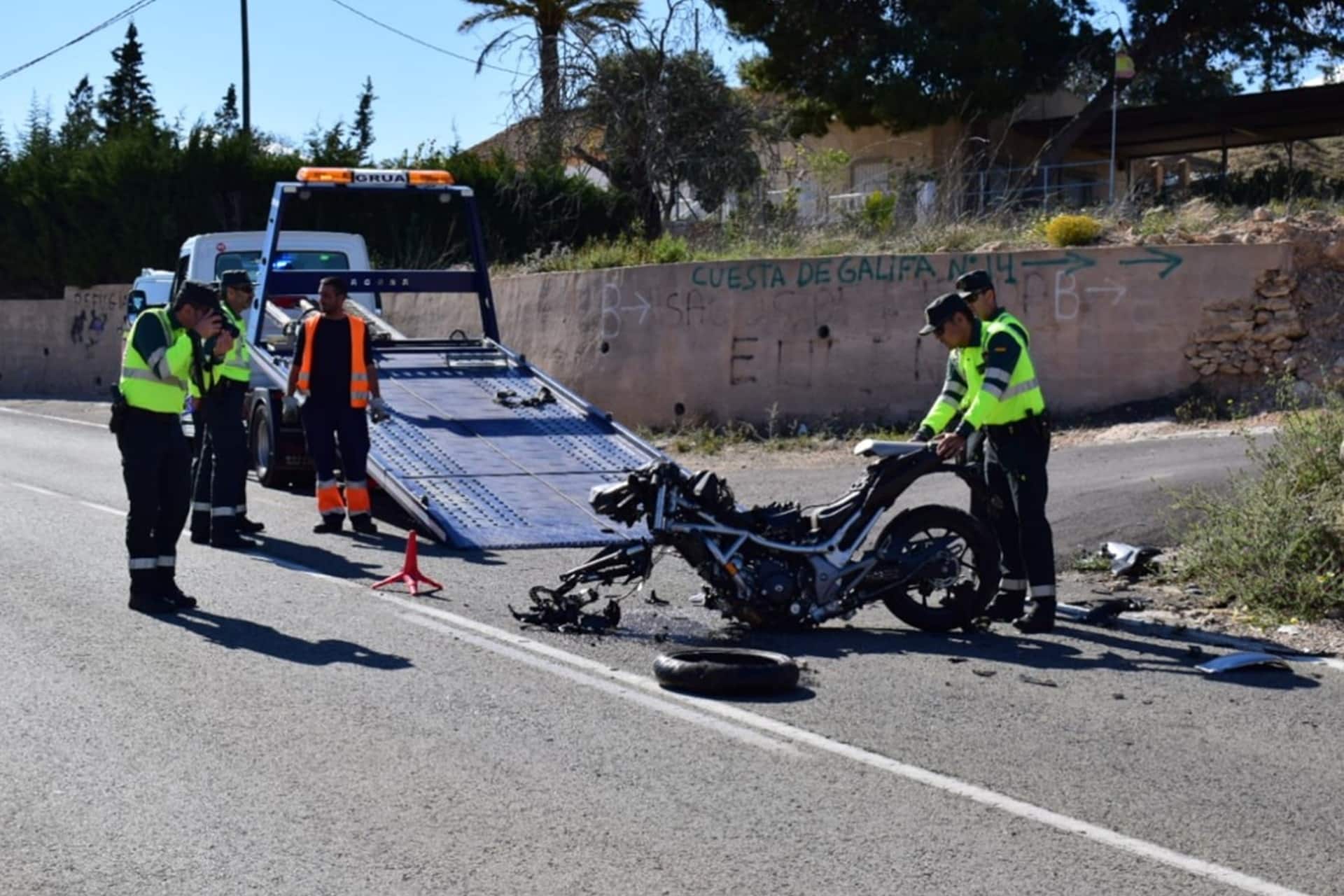
Road safety also requires the commitment of drivers. Therefore, it is essential to insist on the importance of using appropriate equipment. The use of a helmet reduces the risk of death by up to 42% and head injuries by 69%, according to a recent INSIA study for the DGT, while airbag systems for motorcyclists contribute to significantly alleviating the severity of injuries in the event of an accident.
In this sense, the DGT and Anesdor have prepared a technical video guide on the airbag for motorcyclists, which explains the main guidelines for use and resolves some of the most common doubts. The study also confirms that clothing with protectors reduces the probability of injuries.
Specifically, between 23% and 45%, depending on the body region, and up to 90% abrasions and open wounds in protected areas. For their part, gloves reduce hand injuries by half and boots by up to a third of foot and ankle injuries.
Likewise, it is essential to avoid distractions, which are the cause of numerous accidents. Speed is another determining factor. Always respecting the limits and adapting it to the traffic conditions and the state of the road allows you to anticipate the reactions of other users and expands the margin of reaction to unforeseen events.
Preventive driving also implies maintaining the safety distance, which must be greater when speed increases or visibility or grip decreases. In fact, prevention should begin even before starting the journey. Checking the condition of the motorcycle, with special attention to tires, brakes, lighting and levels, are other recommendations that help ensure adequate conditions to complete trips and return safely.