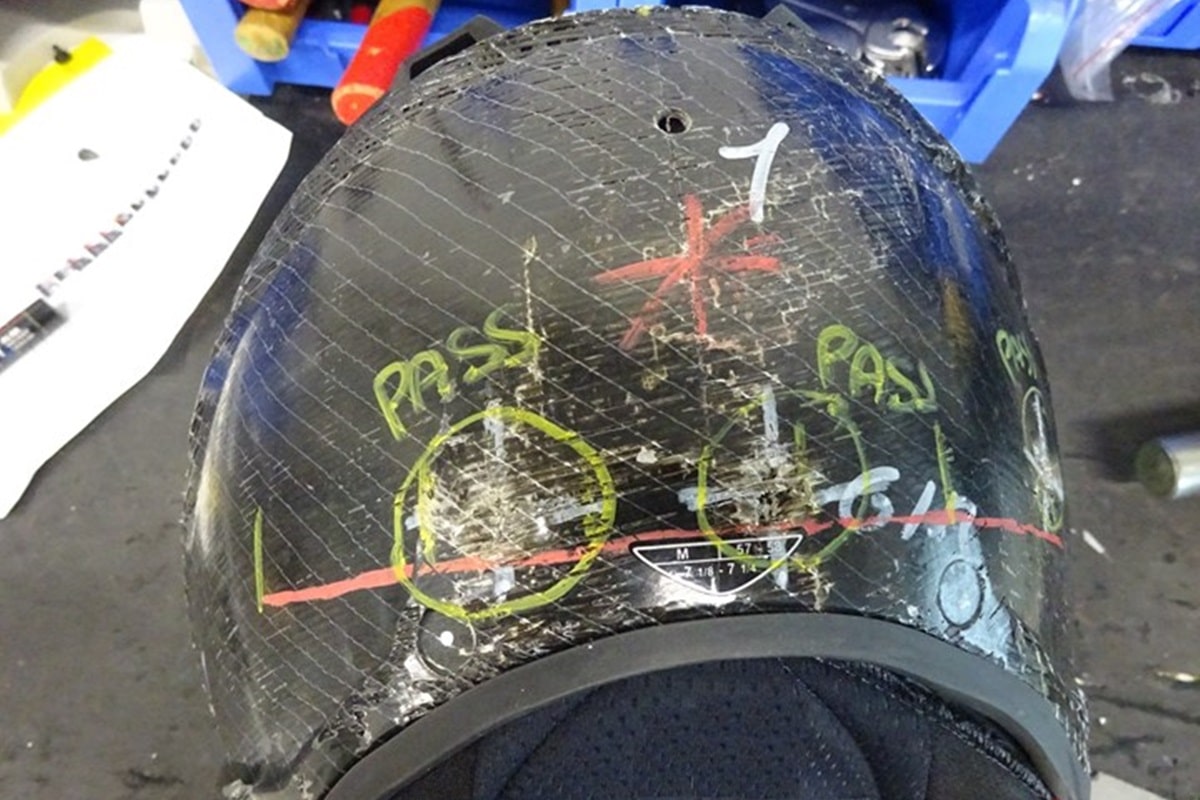
Stick with these two names, ExoTechnologies and DANU. The first refers to the British company specialized in the research and development of sustainable composite materials. The second name is related to the last of the technologies devised by this company based in Douglas, Isle of Man.
We are talking about a possible sustainable and high-performance alternative to carbon fiber, which has also recently been tested in the world’s first helmet made with this material. As explained by the brand itself, DANU demonstrated superior results for portable protection:
- 14% lighter than traditional compounds
- Excellent 275G impact resistance and structural stability
- Fully recyclable, removing waste from landfills at the end of its life cycle
DANU: A real alternative for the future
For years, carbon fiber has dominated sectors requiring strength and performance. However, its excessive CO₂ emissions, environmental impact, cost and scalability limitations have made manufacturers look for a better solution.
In this context we find DANU, a material that rivals carbon fiber in mechanical properties, while offering incomparable advantages in sustainability, scalability and affordability. It is a thermoplastic material reinforced with natural fibers such as hemp or linen.
Now tested to leading global safety standards, including FIM ECE2205 and DOT, DANU sets a new benchmark, not just for motorcycle helmets, but for any product requiring lightweight strength, durability and large-scale production potential. .
As explained Jeroen Watsdirector of innovation at ExoTechnologies: “DANU is proof that high performance and sustainability are no longer mutually exclusive. This material redefines what is possible in all industries, establishing“I set a new standard for responsible innovation.”
What makes DANU even more notable is its suitability for mass production, overcoming barriers that have long held back other compounds:
- Scalability: Developed for cost-effective, high-volume manufacturing.
- Massive Utility – Applicable across industries, from automotive and aerospace to sports teams, renewable energy and marine sectors.
- Circular Economy: Completely recyclable, dramatically reduces environmental impact and paves the way to a landfill-free future.
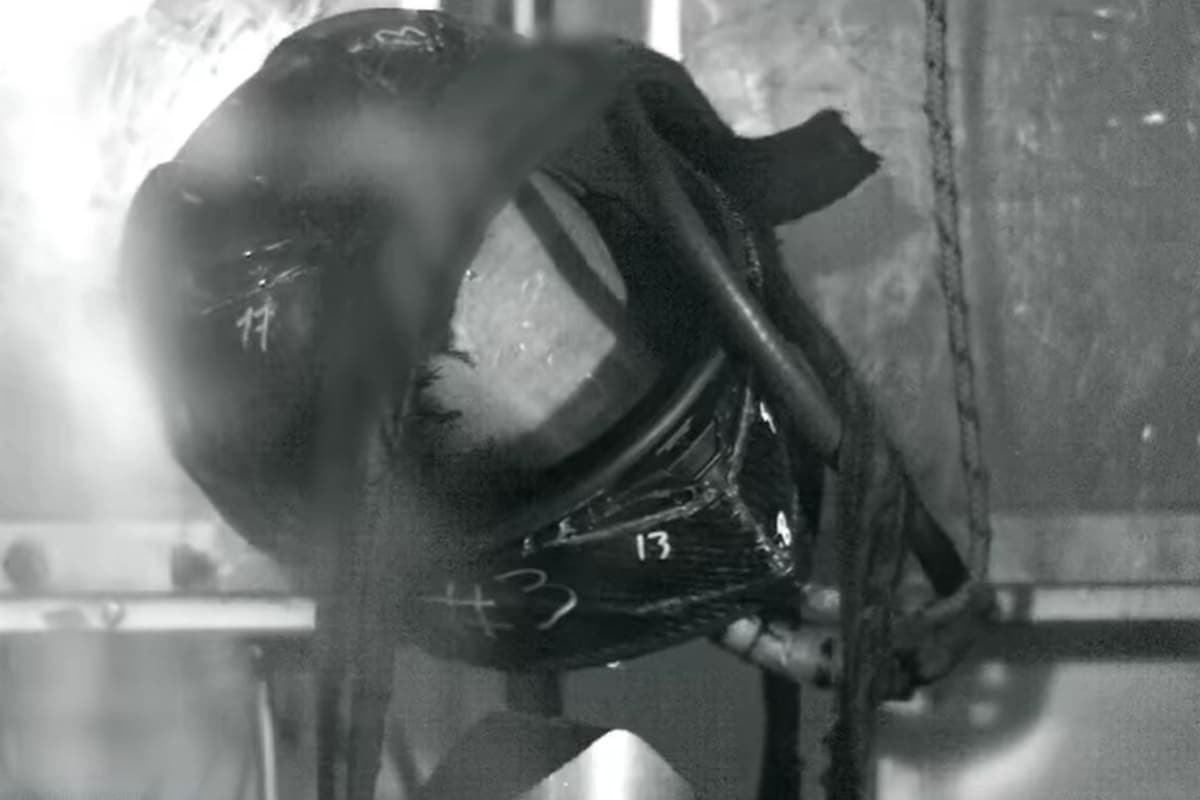
As industries move further away from carbon fibre, DANU offers the ideal alternative, providing:
- Comparable mechanical properties: closely matching the strength, stiffness and weight savings of carbon fiber;
- Lower CO₂ emissions in all phases of the life cycle (LCA)
- Exceptional durability – resistant to high impact and stress conditions
This is not the first time we have heard about this type of technology in the manufacture of a helmet. Recently, we showed you Life Impacto, Dainese’s innovative project, with which they seek to introduce into the market an approved and eco-sustainable helmet model, manufactured without the use of glues and with a reduction in the variety of materials used, and can later be recycling.