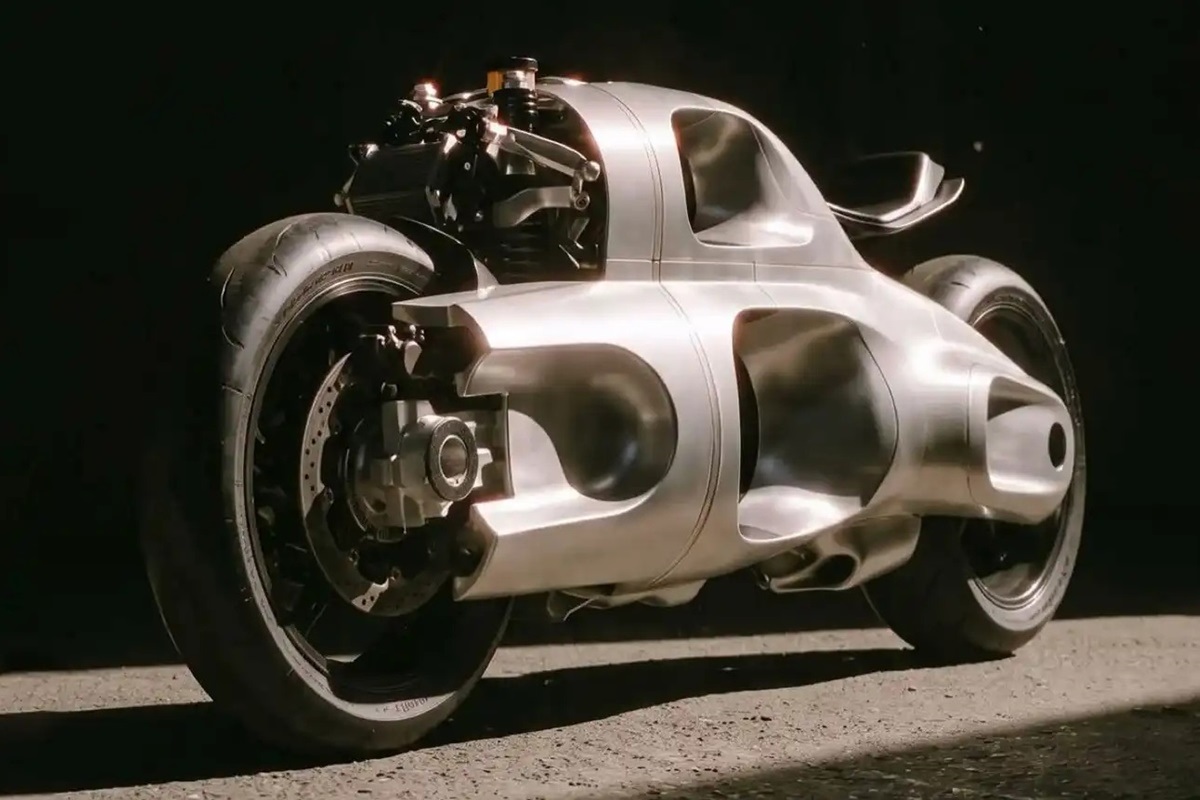
When mechanical monstrosities such as the REV-1a virtual concept by Lennart Baramsky, designer of BMW Group Designwork, the question is obvious: is a project of this type really viable within the two-wheeled sector? Taking into account Tesla’s latest extravagance with its futuristic Roadster, why not?… More than one will ask at this very moment.

Concept REV-1: what we know
Lennart Baramsky works in the general Design department of the BMW Group and apparently, in his free time, he designs motorcycle prototypes, generally in a futuristic style. In addition, it applies innovative technical ideas, although unlikely to finally occur in a possible street model. The REV-1 is part of one of these projects and according to reports from Motorrad Online it would be inspired by aerodynamics BMW R 7 from 1934.
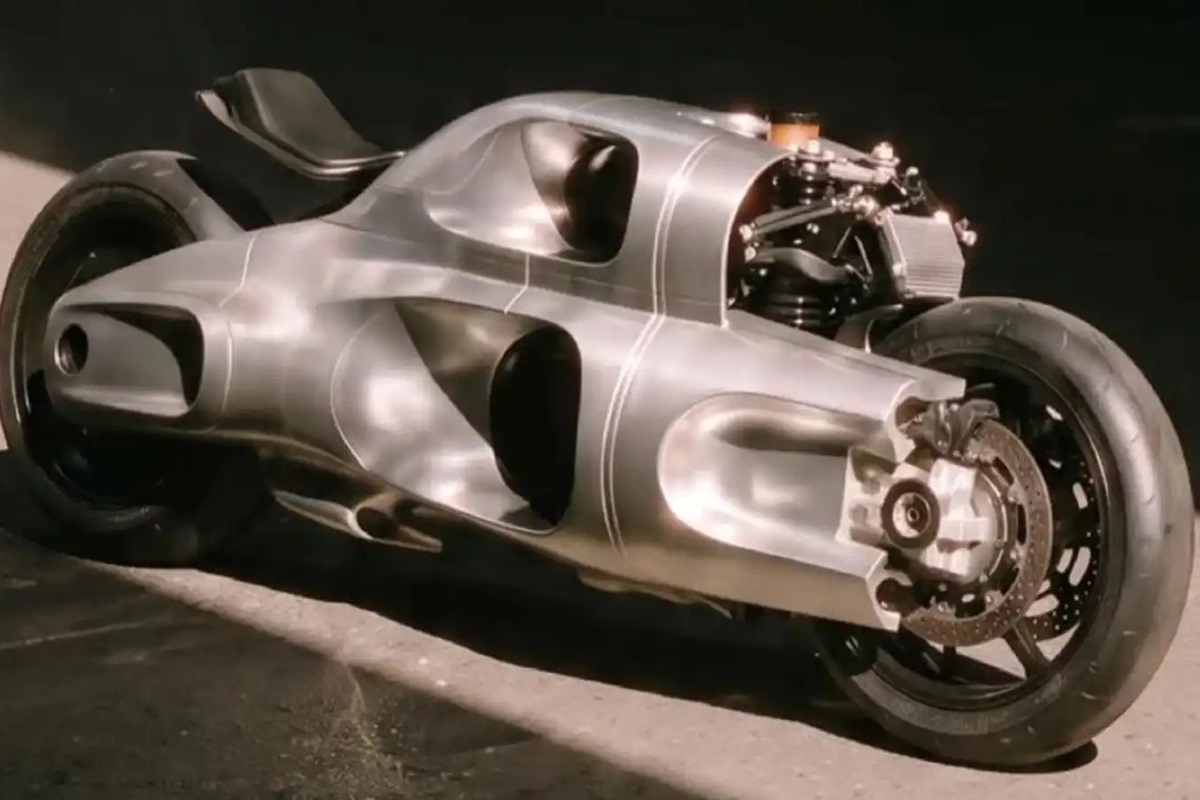
That initial idea from BMW with this concept ended up at the bottom of a drawer. Mainly because it has a too complex design. That is why it was never mass produced. We don’t really know what Baramsky’s future plans are with this virtual concept. In any case, as happened then with the aforementioned R 7, this REV-1 shares that groundbreaking philosophy that is not very compatible with a series model.
Our German colleagues explain this idea perfectly when they say: “The REV-1’s already unconventional appearance is further accentuated by its sophisticated front-wheel steering system, which includes hub steering, a complex linkage system and a shock absorber. In contrast, the single seat and rear shock absorber feature a minimalist design.”
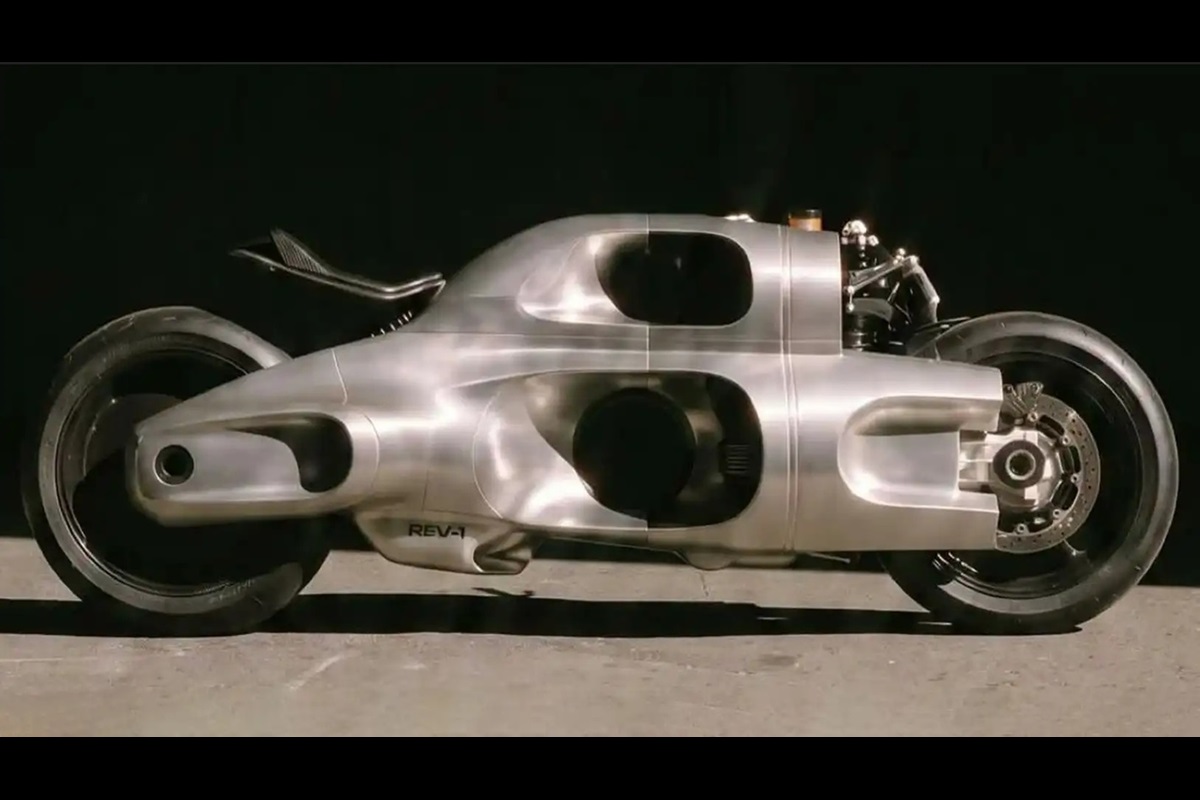
Hydrogen and electricity for extreme performance
The figure can leave almost anyone stunned: 612 HP of power. Not only because of the enormous amount it represents in numerical terms. Also because of how complicated it would be to be able to manage said horsepower. Let’s think for a moment that a current MotoGP is around 300 HP… I don’t know how many here treasure the level of Marc Márquez in their riding; Otherwise it would be very complicated to open the handle on a mechanical monstrosity like this.
That said, technically Lennart Baramsky’s REV-1 would be presided over by a fuel cell combined with an electric motor. This would be perfectly integrated into its striking and aerodynamic aluminum bodywork made entirely of CNC, with double asymmetric swingarm on both axles. Another notable detail is the prominent air intakes both on the sides of the tank and in the central side panels.
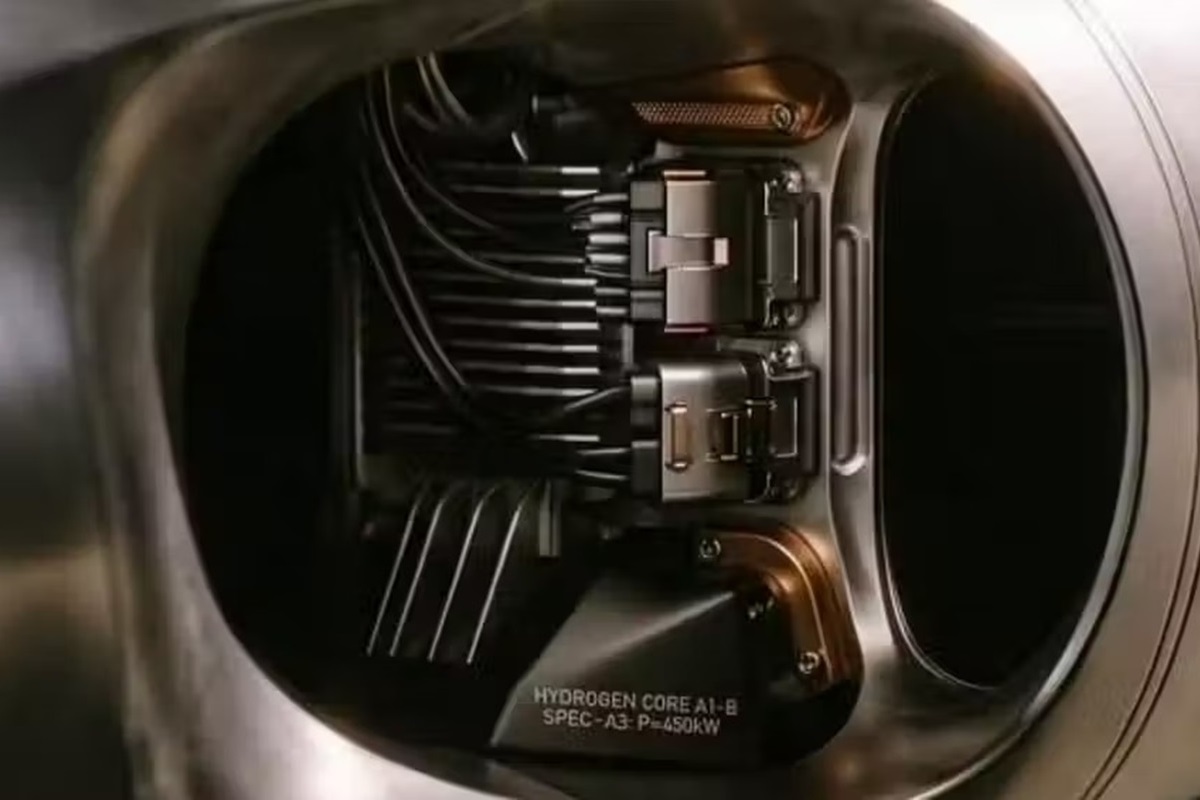
Although it seems like it, it is not real
Lennart Baramsky’s REV-1 will continue to be a design suitable only in a virtual world to which we do not have access… At least for now. Beyond this “small handicap“, there are nuclear aspects of the rendering itself that the R&D teams of the brands in charge of developing future hydrogen models have been working on for years. Mainly in the way of storing this element.
Recently, researchers from Kyushu University in Japan claim to have taken a step that could change the course of this story. They have developed a hydrogen fuel cell that is more compact, less expensive and, above all, with a temperature range that is much easier to handle..
Could this be the impetus for motorcycles like the REV-1 to stop being fiction and become reality?