The countdown to the new generation of racing helmets is already underway. Starting in 2026, any rider who competes in events covered by the International Motorcycle Federation (FIM), both on asphalt and in off-road disciplines, will be required to use helmets certified under the standard. FRHPhe-02the new reference standard in advanced protection.
With the upcoming season on the horizon, the industry faces decisive months. The FIM has made it clear that there will be no exceptions: whoever wants to be on the grid must adjust to the new standard. A pressure that, in the long term, promises to raise the level of safety of the entire market, both inside and outside the competition.
The measure represents a significant technical leap with respect to the previous certification FRHPhe-01valid since 2019 in MotoGP and later adopted by other World Championship categories.
Remind you that the FIM began this process in 2016, convinced that the existing homologation standards (such as the European standard ECE R.22-06he DOT American or JIS Japanese) were not enough to cover the needs of this high-level sport, where speeds, impact angles and structural demands are much higher than those found on the open road.
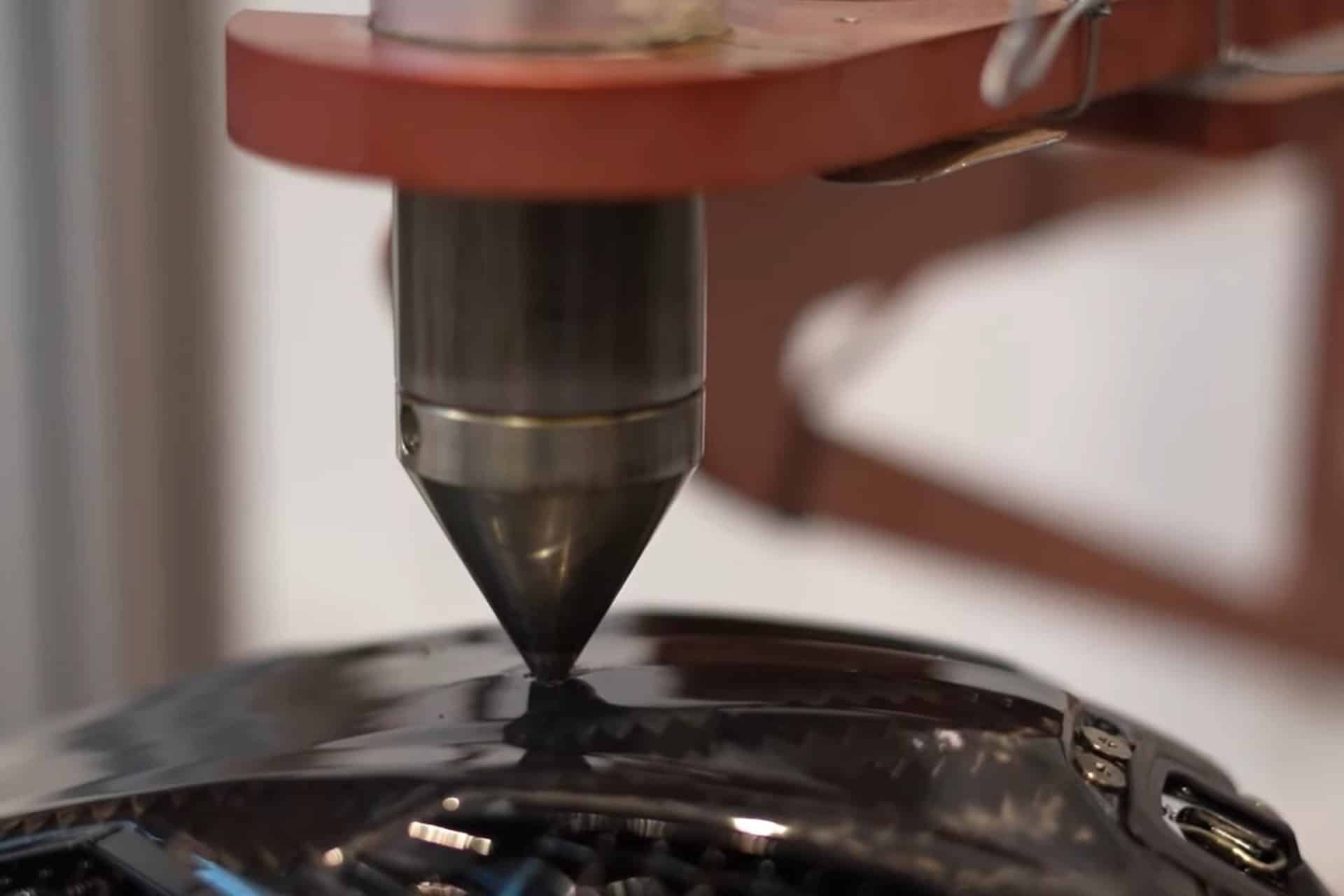
With the arrival of the FRHP program (FIM Racing Homologation Program), the federation wanted to establish a common and much stricter language for all manufacturers that aspire to compete at the highest level. The first standard introduced more severe impact tests and additional deceleration analysis. However, the expansion of the program to off-road specialties led to the creation of a second, standard FRHPhe-02.
This new standard FRHPhe-02 tightens the requirements. Impacts against oblique and hemispherical anvils (designed to reproduce falls at irregular angles, common in circuit and motocross) are now included, as well as the measurement of the skull fracture criterion (SFC), a more sophisticated parameter that evaluates the real risk of head injury.
A mandatory test is also incorporated to verify the rapid removal of the cheek pads, a crucial maneuver for medical teams in the event of an accident.

The new FRHPhe-02 regulations for helmets will be mandatory next season
As we have mentioned before, the use of helmets FRHPhe-02 It will be fully mandatory in 2026. And therein lies the challenge. Until a few months ago, only a few brands had managed to pass the demanding homologation process, a procedure that involves independent tests, manufacturing audits and batch-to-batch consistency tests.
The situation, however, has begun to unravel in recent weeks. The FIM has announced that there are already nine full-face helmets approved with the FRHPhe-02 for circuit use and eight specific for off-road disciplines.

Among the most recent models to receive the green light, the Shark Aeron GP, the Bell Pro Star, the Arai MX-V and the Airoh Aviator 3 stand out, all of them subjected to a battery of tests that far exceeds what is required by any civil regulations.
The list will continue to expand. According to the federation itself, 17 all-terrain models and 19 intended for asphalt are currently in the certification process under the FRHPhe-02. For manufacturers, achieving this approval is no longer an option. In fact, without it, their helmets cannot appear in championships such as MotoGP, the World Superbike Championship, the MXGP or the Dakar, essential showcases for their prestige and sales.