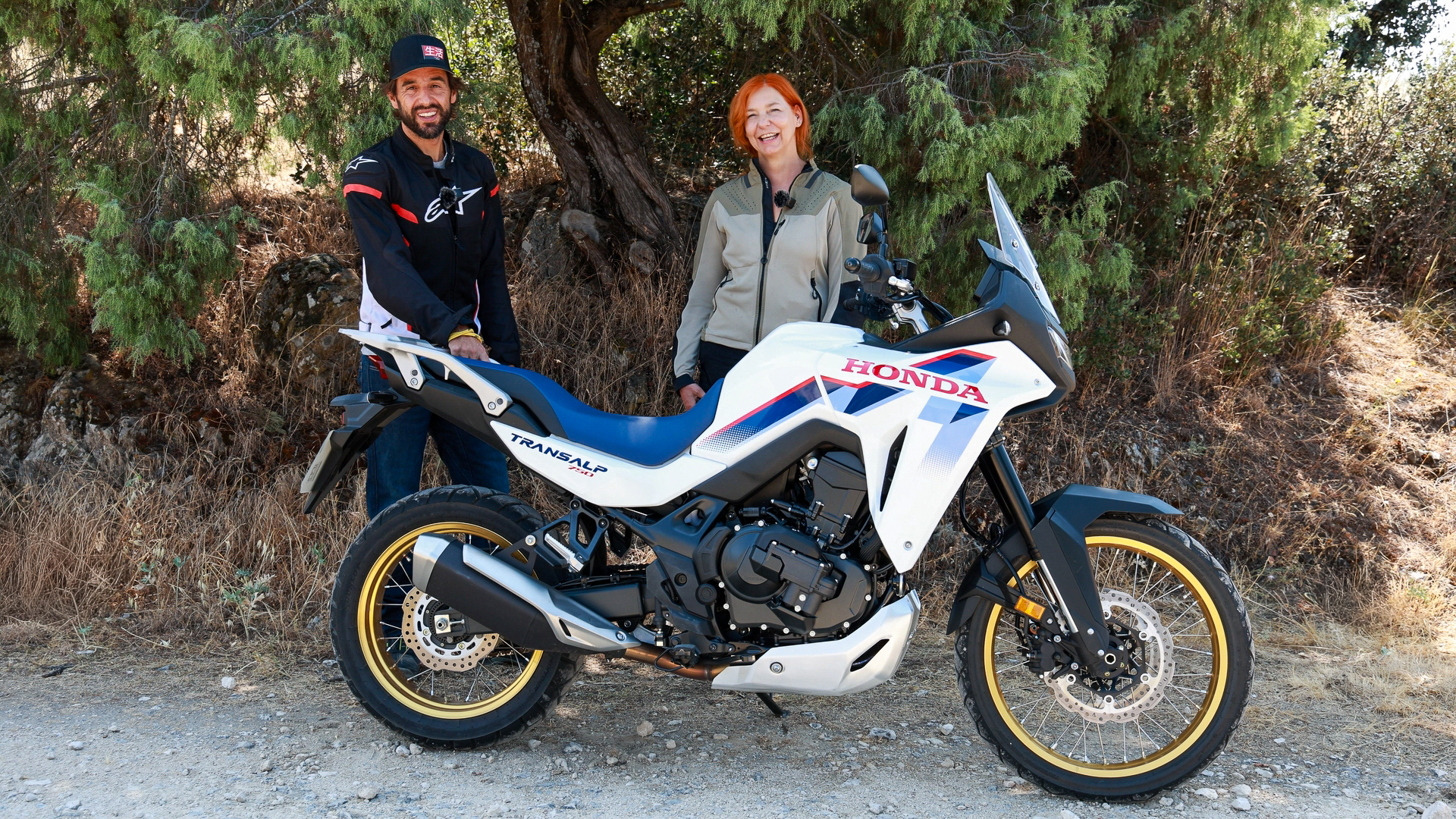
Honda XL750 Transalp E-Clutch Thorough Test: Introduction and Positioning
The Honda Transalp was the motorcycle that taught us that the journey was more important than the destination. Its story begins in 1987, inspired by the great African adventures and by the motorcycles that dominated the Dakar at that time. Honda dreamed of a motorcycle capable of doing it all: travel, travel on secondary roads, get lost on dirt tracks, and above all, transmit a feeling of absolute freedom. This is how the first Honda XL600V Transalp was born.
That first Transalp had a 583 cc V-twin and a modest 50 hp, but its figures were never the important thing. What made her special was her character. It was comfortable, reliable, easy to drive and so noble that it seemed capable of taking you to the end of the world. Many travelers discovered with it that adventure did not depend on power, but on the desire to explore.
During the nineties the Transalp evolved little by little, improvements came, a new fairing and small mechanical tweaks. But Honda had the intelligence not to change its essence. She continued to be that simple and resilient travel companion who never asked you for anything in return.

In 2000 the XL650V appeared with a 647 cc engine and more refinement. It was a more mature motorcycle, better prepared to devour kilometers and continue to be a faithful companion for those who dreamed of endless roads. It retained the 21-inch front wheel and that adventurous spirit that had made it a legend.
In 2008 the XL700V arrived and thus increased the family of the legendary Honda model, with more power, more modern and more oriented to the asphalt, but always preserving the Transalp DNA, a balanced, friendly motorcycle capable of taking you anywhere without complications. She was the last representative of a saga that seemed eternal.
And then something happened that saddened thousands of fans, in 2012 the Transalp disappeared from the catalogue. For more than a decade, its name remained in the memory of those who had traveled half of Europe, crossed Morocco or had simply found it the perfect motorcycle to escape from routine.
But legends never die!!!
Honda XL750 Transalp E-Clutch in-depth test: technical characteristics
In 2023, Honda resurrected one of the most beloved legends with the new XL750 Transalp. The heart of the motorcycle had changed, the classic V-twin gave way to a modern parallel twin of 755 cc and more than 90 hp. The technology, driving modes, electronics and TFT screen placed it in the 21st century. However, behind that modernity the same philosophy as always continued to beat.
And today, almost forty years later, Transalp continues writing its history. The new Honda Transalp XL750 2026 maintains intact the philosophy that made its predecessor great. A versatile motorcycle, easy to ride and capable of taking you as far as your imagination can reach. But now it adds an important technological leap from the innovative Honda E-Clutch.
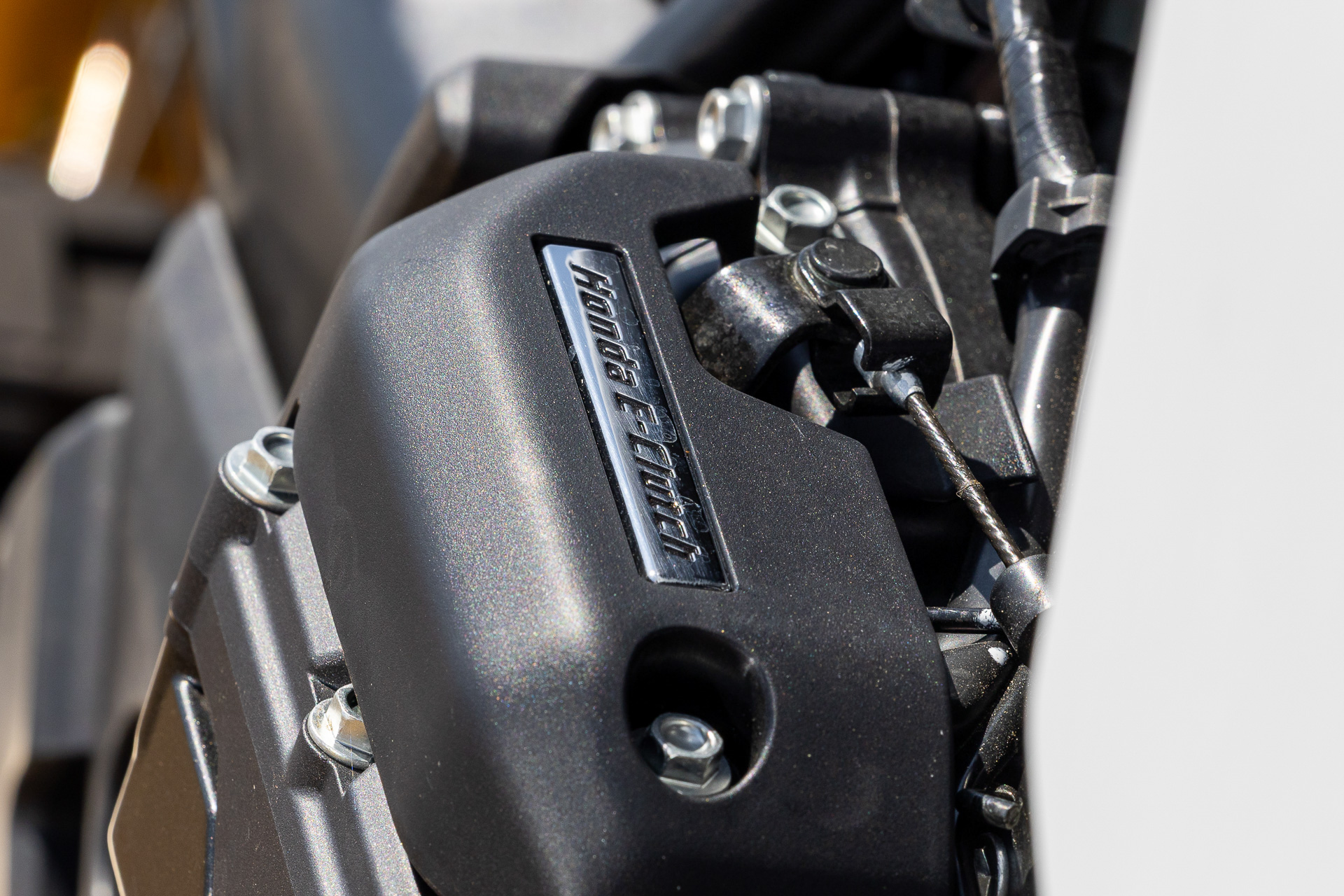
This system allows you to start, stop and change gears without having to operate the clutch lever, although the rider can continue using it if they wish. The result is more comfortable driving in the city, more relaxed on trips and, surprisingly, also effective off the asphalt, where it avoids stalling in complicated situations, with the advantage of its complete disconnection for more expert pilots.
In positioning, perhaps the Honda Transalp XL750 is not the most rugged along with its rivals in the sector in the medium adventure-trail segment, but none offers a system equivalent to Honda’s E-Clutch. A technology that provides differential value especially in the city, long trips and comfortable driving.
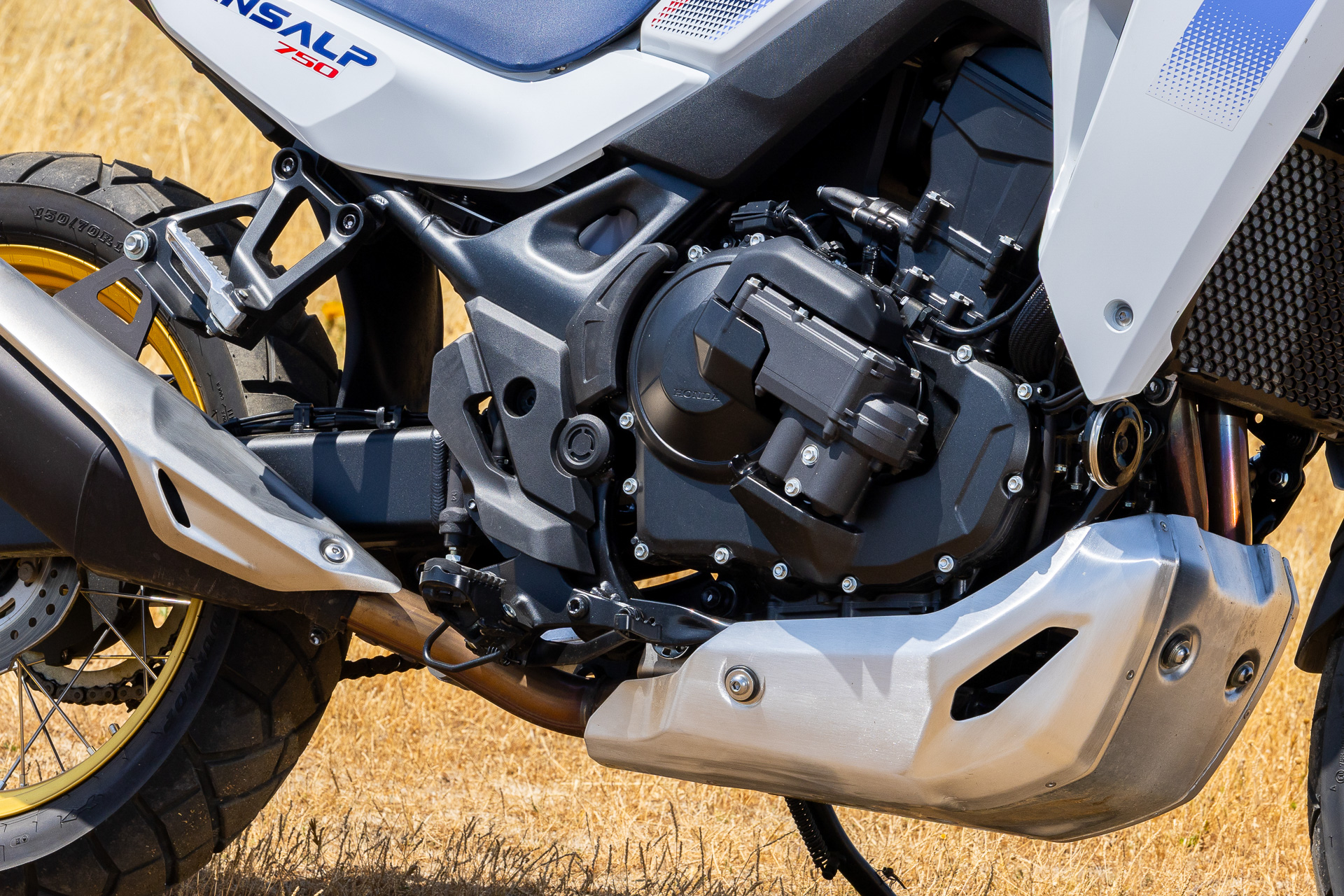
The Honda Transalp XL750 E-Clutch 2026 is equipped with a 755 cc four-stroke parallel twin-cylinder engine, liquid cooling, eight-valve SOHC distribution and 270º crankshaft, developing a maximum power of 91.8 hp at 9,500 rpm and a torque of 75 Nm at 7,250 rpm, associated with a six-speed transmission with E-Clutch.
Its maximum declared speed is 195km/h. The cycle part is based on a diamond-type steel chassis. The front axle mounts a Showa SFF-CA 43mm inverted fork with 200mm of travel, while the rear uses a Pro-Link system with 190mm of travel.
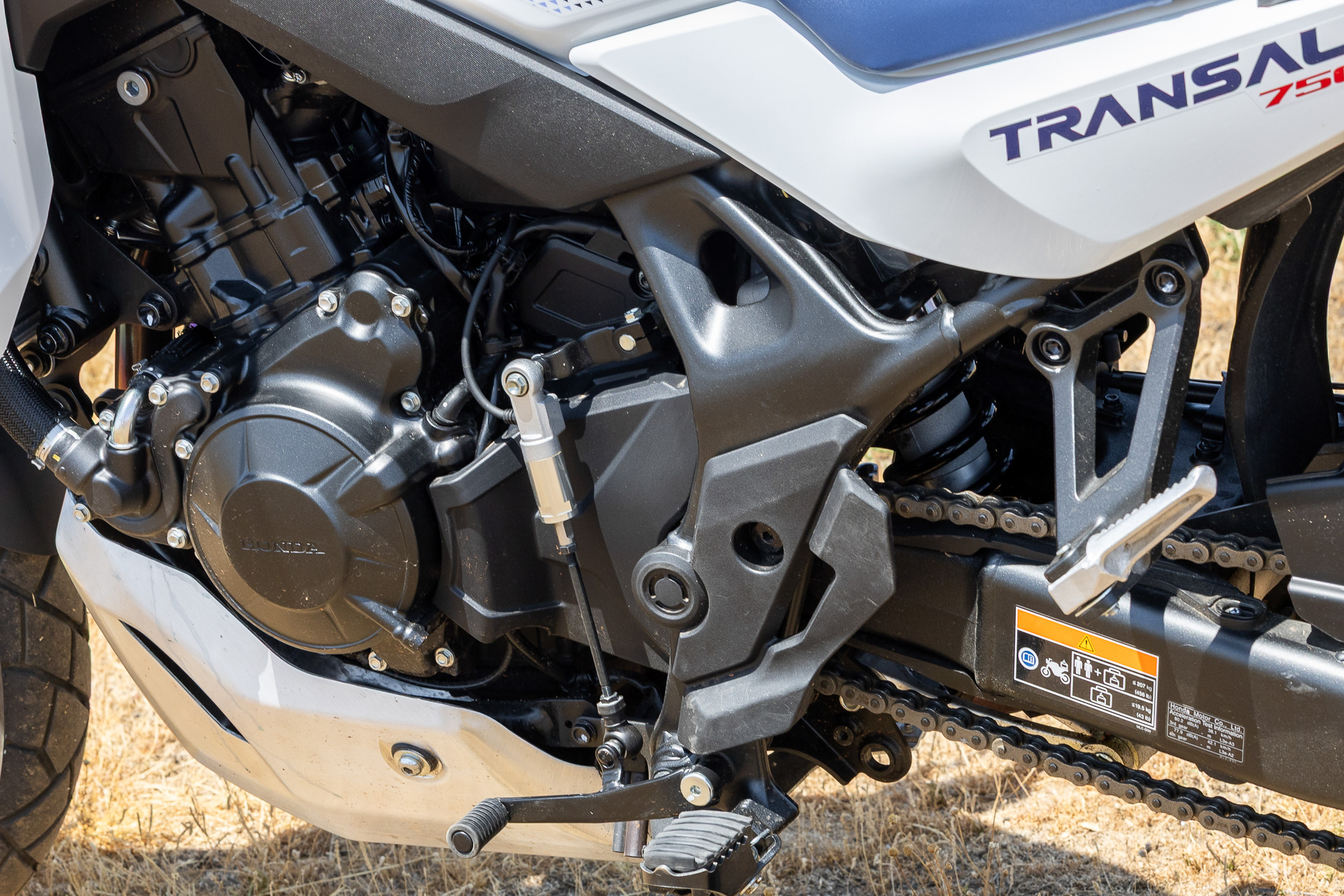
The braking system is made up of a double 310 mm front disc with two-piston axially mounted calipers and a 256 mm rear disc with a single-piston caliper. The ABS system is two channels and allows the rear ABS to be disconnected for off-road use. The aluminum wheels with stainless steel spokes are 21” at the front and 18” at the rear, mounting 90/90-21 and 150/70-R18 tires respectively, both with tubes.
Its dimensions are 2,325 mm in length, 838 in width and 1,455 mm in height, with a wheelbase of 1,560 mm, the seat height is 850 mm and the ground clearance reaches 210 mm. The tank capacity is 16.9 liters, with an approved consumption of 4.3l/100 km, while the curb weight is set at 216kg.
In the electronic section, it incorporates a 5” multifunction TFT screen with Honda RoadSync connectivity and four driving modes: Sport, Standard, Rain, Gravel and two customizable User.
Honda Transalp E-Clutch test: How the Honda Transalp E-Clutch goes (Ana’s opinion)
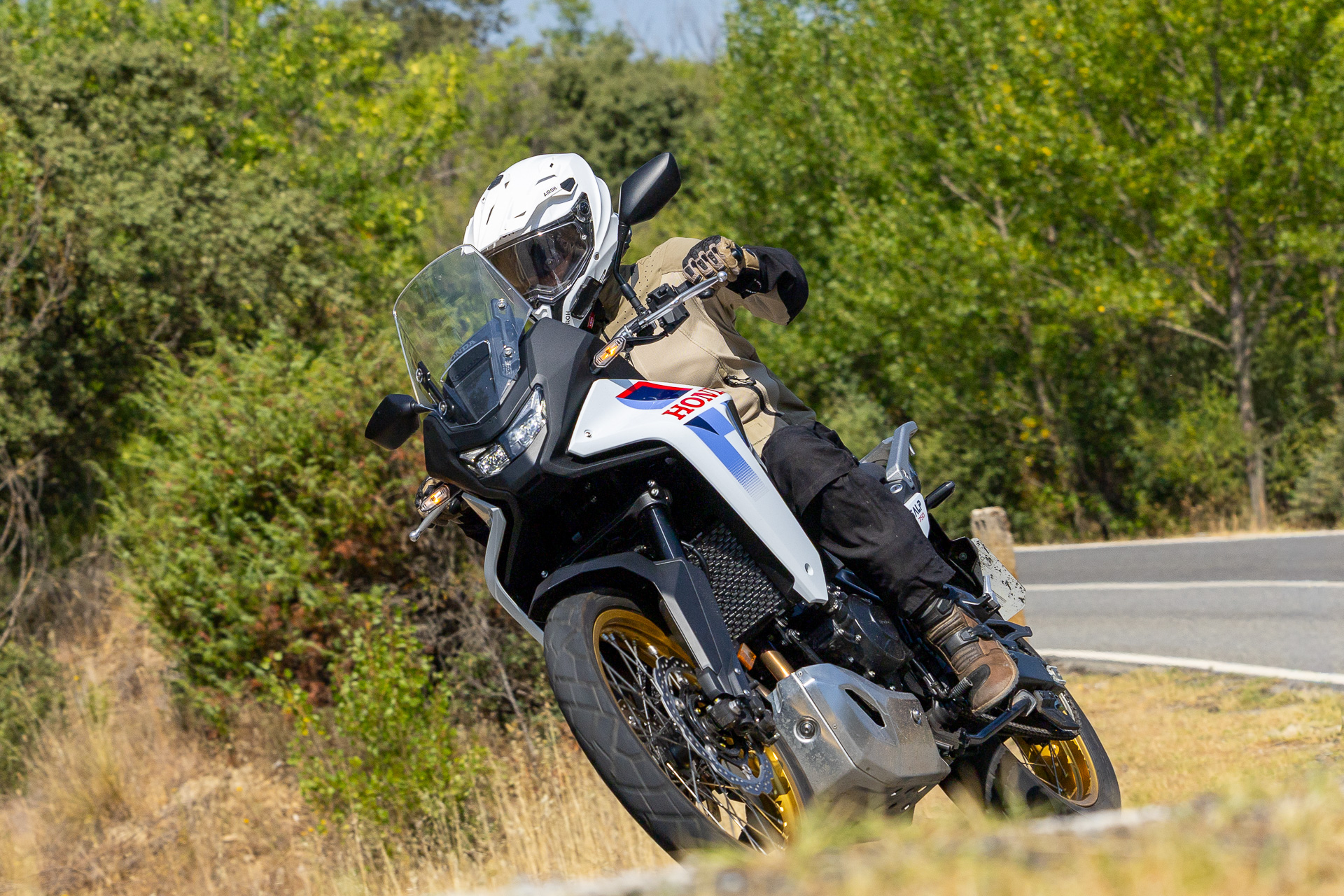
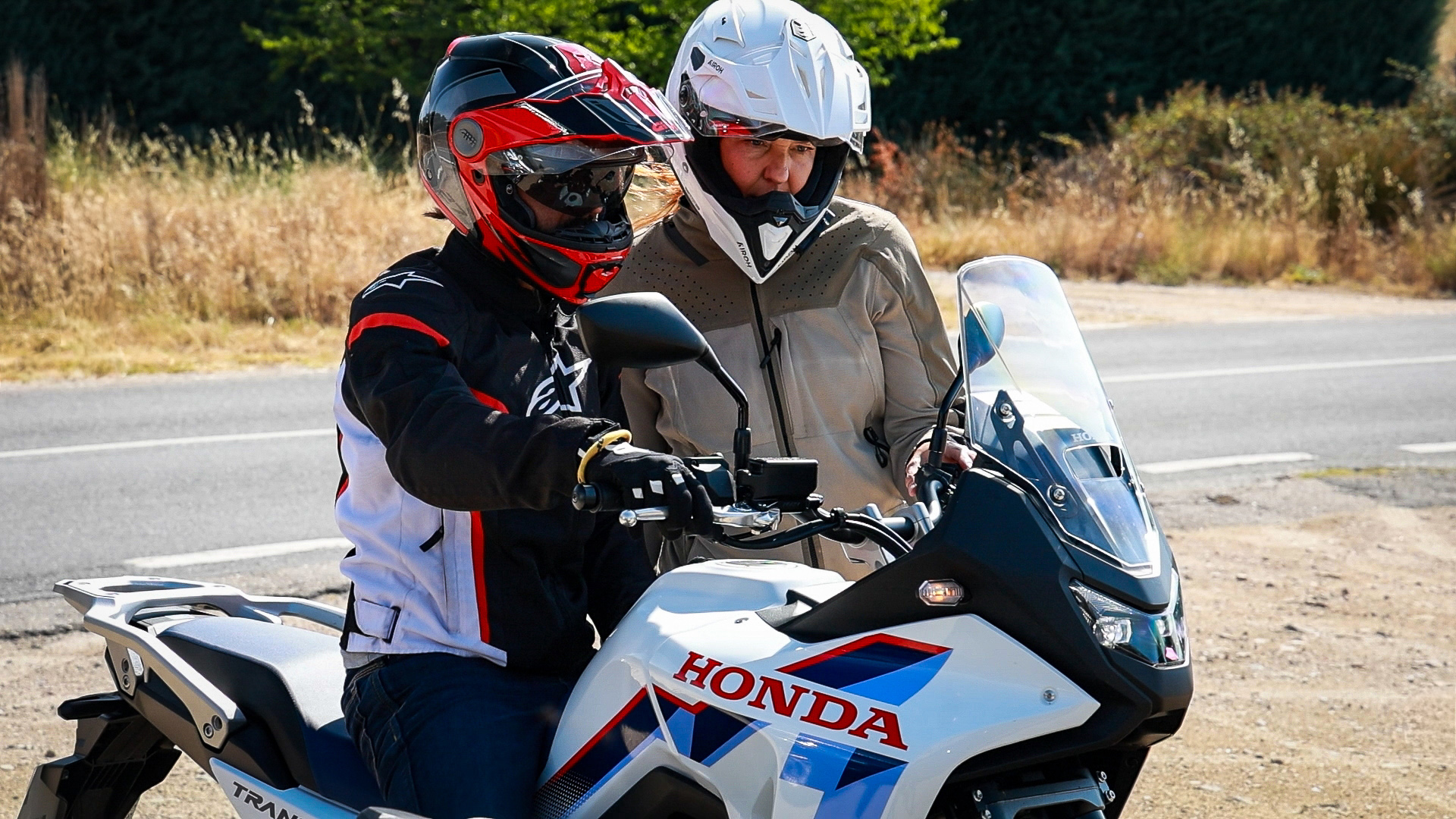
I was looking forward to driving the current Transalp and it didn’t take long to surprise me. Far from resembling a quickshifter or an automatic transmission, the E-Clutch allows you to drive the motorcycle exactly like a conventional motorcycle, but without having to use the clutch lever… If you don’t want to.
Here comes the first nuance, and perhaps the one that surprised me the most: the bike never stalls, neither in first nor in any other gear. Of course, the TFT screen quickly warns you when it is appropriate to downshift to avoid resuming driving in an inappropriate gear.
The second nuance is that you can continue using the clutch lever whenever you need absolute control, something that the most expert users in off-road or certain low-speed maneuvers will especially appreciate, but which restores the system in a few seconds.
And the third and no less important nuance is the possibility of completely disconnecting the system from the settings menu, in addition to being able to adjust the hardness of the shift lever drive in three levels. A detail that I found very practical to adapt to different types of footwear depending on the time of year or the type of driving, on or off asphalt.
For me, where the E-Clutch takes the cake is in the city, it eliminates much of the fatigue between traffic lights, zebra crossings and traffic jams. The absence of having to constantly operate the clutch lever results in a much more comfortable and relaxed driving.
It also provides an important plus when traveling, as it considerably reduces the typical fatigue and discomfort in the wrist and forearm after many hours of driving. It is a help that may not seem relevant on paper, but that is greatly appreciated when you accumulate kilometers.
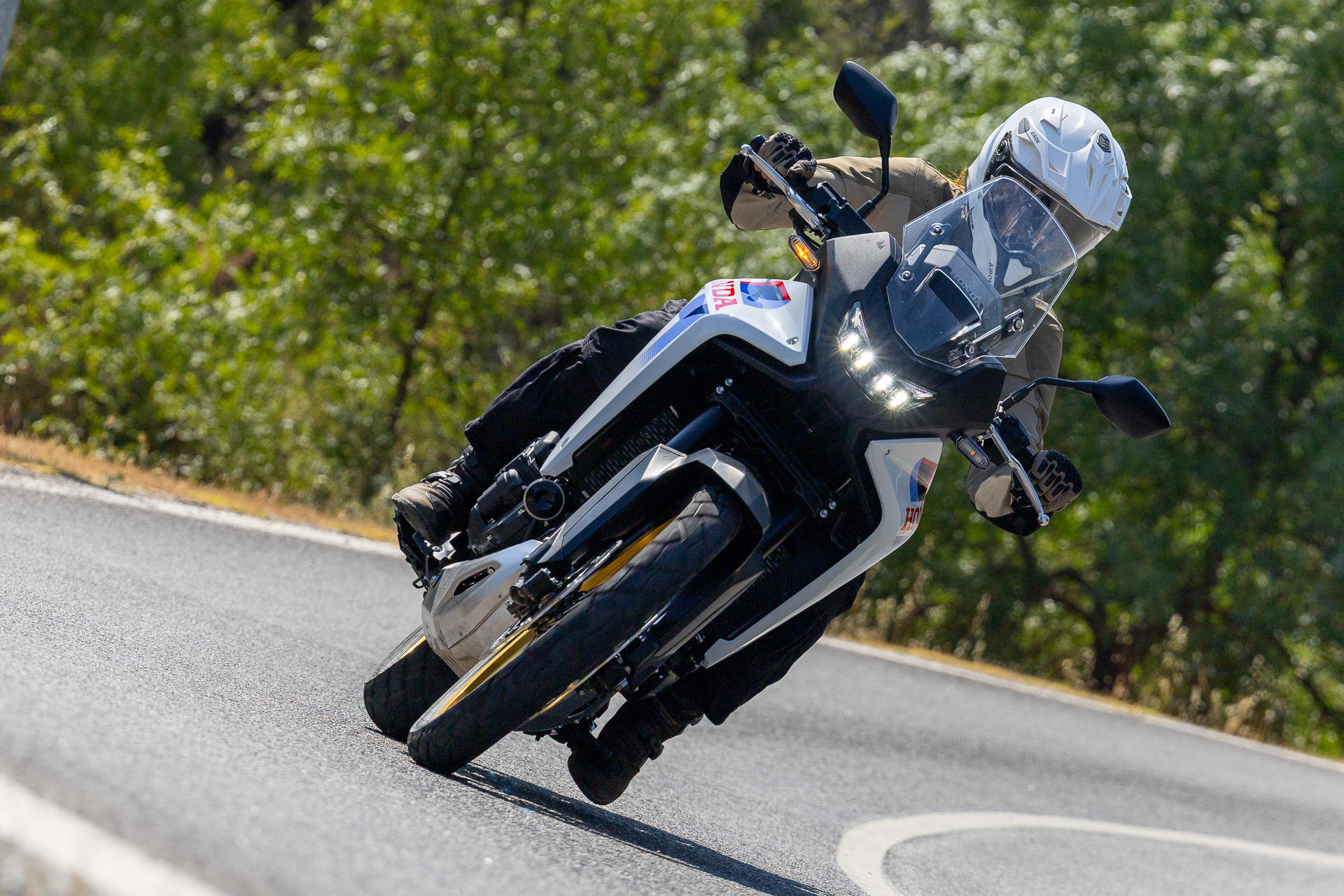
And on curvy roads, in those moments of maximum fun, I would dare say that it even increases safety by focusing all your attention on the road without having to move your left hand to reduce or increase speed. Therefore, less distraction and more concentration equals more security.
I still remember the sensations that the Transalp of the late 90s gave me: it was a comfortable motorcycle to travel with, with a reliable engine and an incredible capacity to devour kilometers. However, its brakes never convinced me, and in the tightest corners, it always seemed to me to be a somewhat clumsy and less agile motorcycle than I would have liked. And it is precisely here where I have noticed its evolution the most, leaving the E-Clutch system aside. Its excellent brakes and a very successful weight distribution have transformed the Transalp into a motorcycle that is much lighter in feel, more intuitive and, above all, more fun on twisty roads.
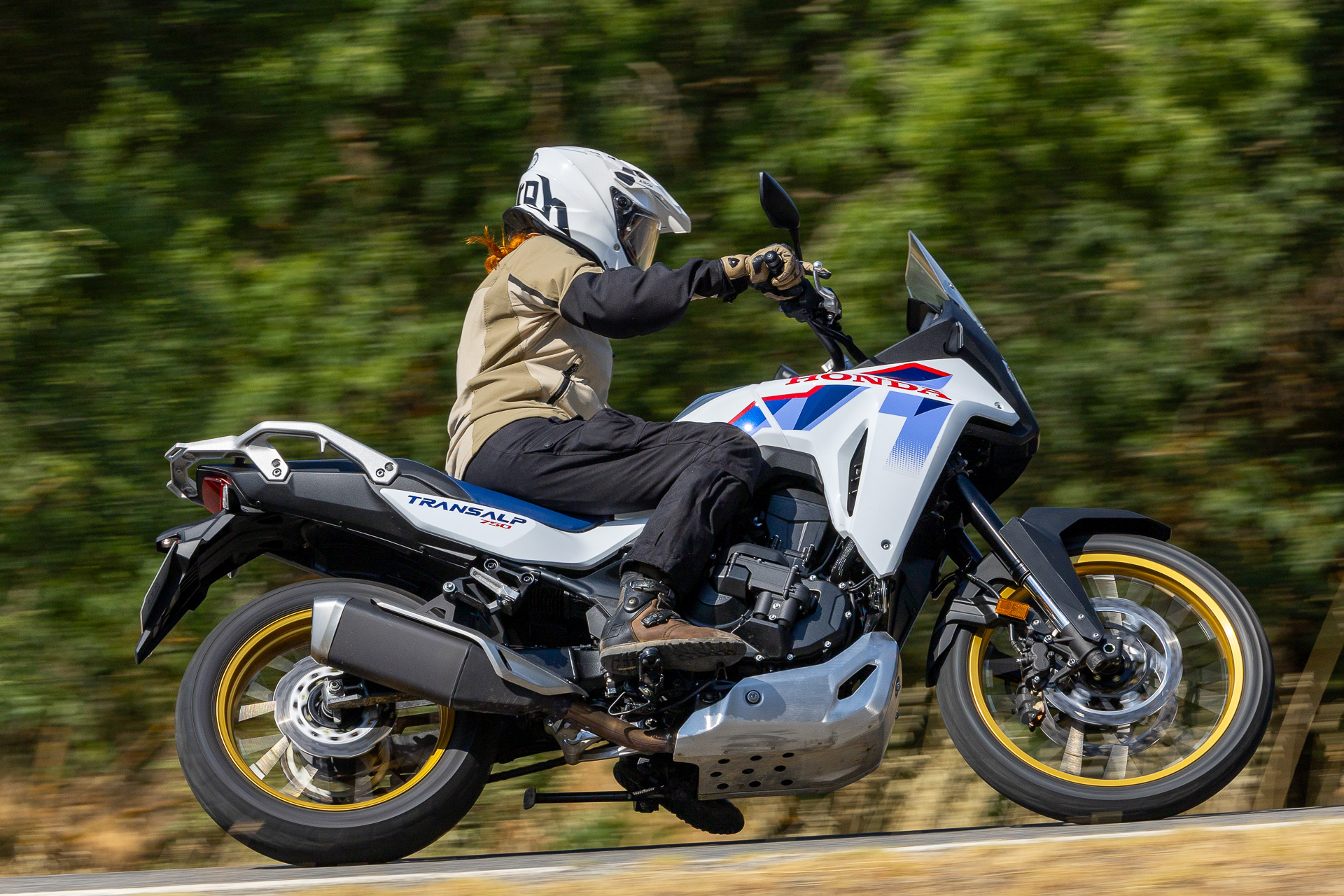
Its lightness in changes of direction, its smoothness in the change, the ease with which it enters curves and its excellent brakes mark a before and after compared to that generation. Now I find it much more lively, more precise, and above all much more fun to drive.
This new current version also has a technological advance that, after trying it, it is difficult to stop missing when you return to a conventional motorcycle. “Then you understand that Honda has hit the nail on the head again”, and for this reason and as a whole, the Medium Traveler Motorcycle 2026 was chosen and won in its category at the MotoTurismo Awards made up of a jury of 50 journalists and specialized communicators from the motorcycle sector.
Honda Transalp E-Clutch test: How the Honda Transalp E-Clutch goes (Jorge Torrecillas’s opinion)
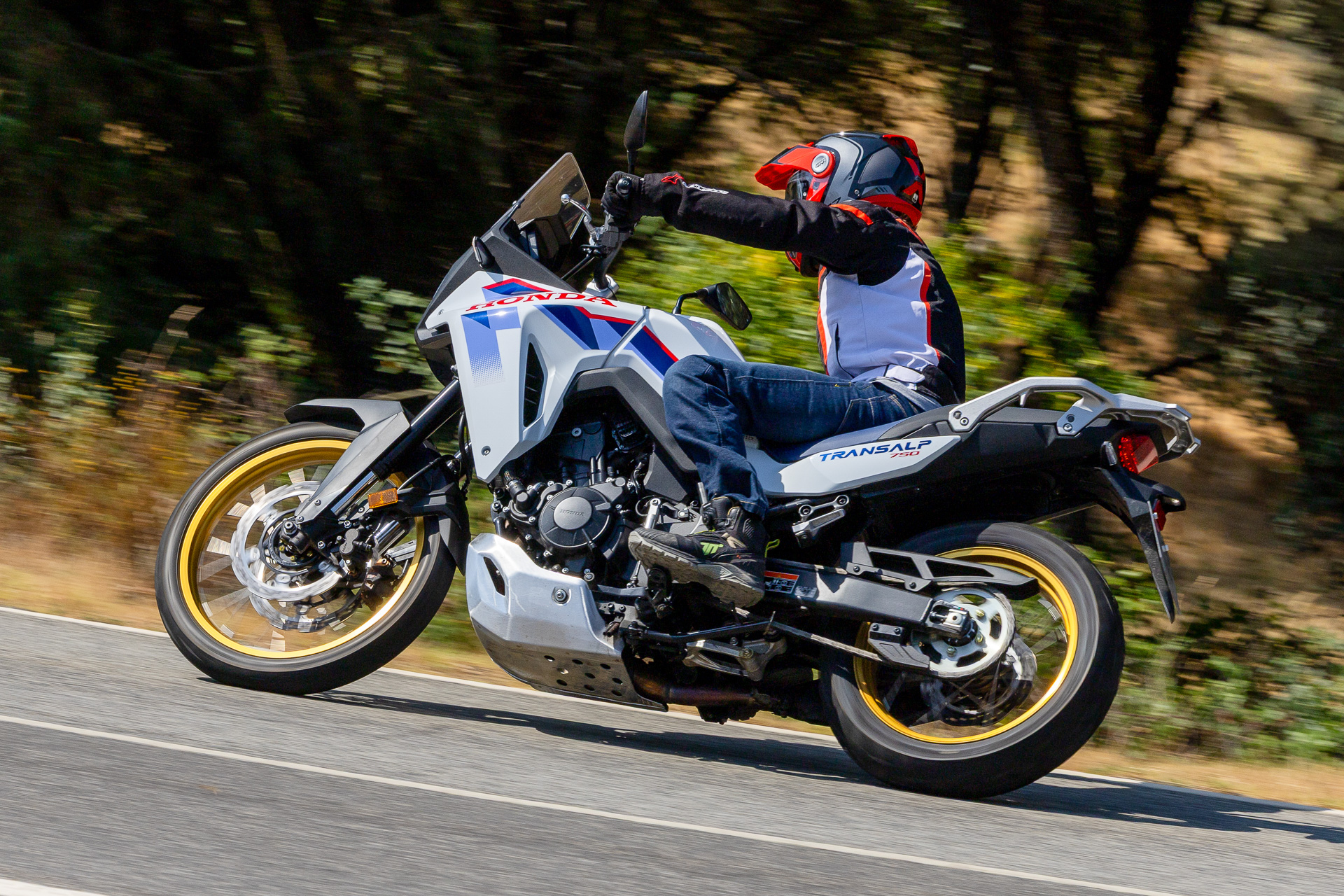
The Honda XL750 Transalp with E-Clutch seems to me, honestly, to be one of the best trail bikes you can buy right now. And I don’t say this only because of the operation of this system, of which Ana will have already explained its advantages in detail, but because overall it is a motorcycle that does absolutely everything well.
On the road it conveys a lot of confidence. It is comfortable, has a powerful engine, accelerates decisively, barely generates vibrations and has very complete electronics that allow you to adapt the motorcycle to your liking, as well as connectivity and aids that work super finely. But where it really surprises is in its overall balance. Honda has achieved a motorcycle that is easy to ride, intuitive and tremendously effective at the same time with character. Its 91 hp are noticeable when you turn on the gas!!
Off the asphalt I also like it. As an off-road lover, I especially appreciate its 21″ front wheel, which provides that extra security when the terrain gets complicated. The standing ergonomics are excellent, the driving position is very natural and the feeling of control is constant, whether you face a fast track or a rougher road.
To all this we must add one of its great arguments: consumption. It is a motorcycle capable of traveling many kilometers with very little fuel, something that, together with Honda’s renowned reliability, makes traveling with it a real peace of mind.
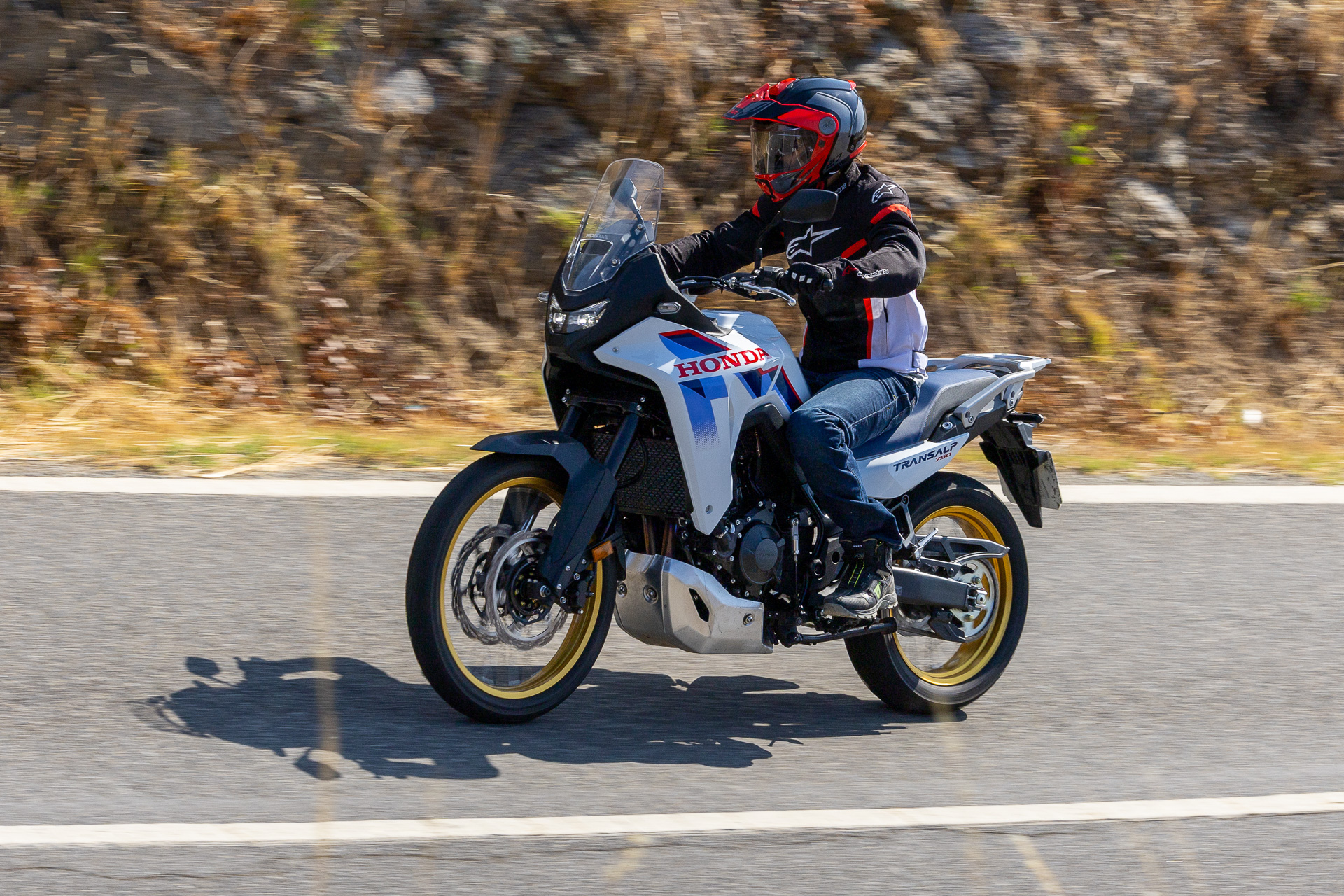
And if we talk about day to day, the E-Clutch finishes rounding off the whole. In the city it moves with surprising ease, and forgetting to continually operate the clutch lever when driving through traffic makes a bigger difference than one imagines until you try it.
For all these reasons, I believe that the Transalp E-Clutch offers one of the best relationships between quality, performance, technology and price in the segment. It is used to go to work every morning with very low consumption, to escape on the weekend, to travel with a passenger and luggage or to get lost on dirt tracks whenever you feel like it. If I had to choose an average Trail to live with every day, this Honda would, without a doubt, be among my first options.