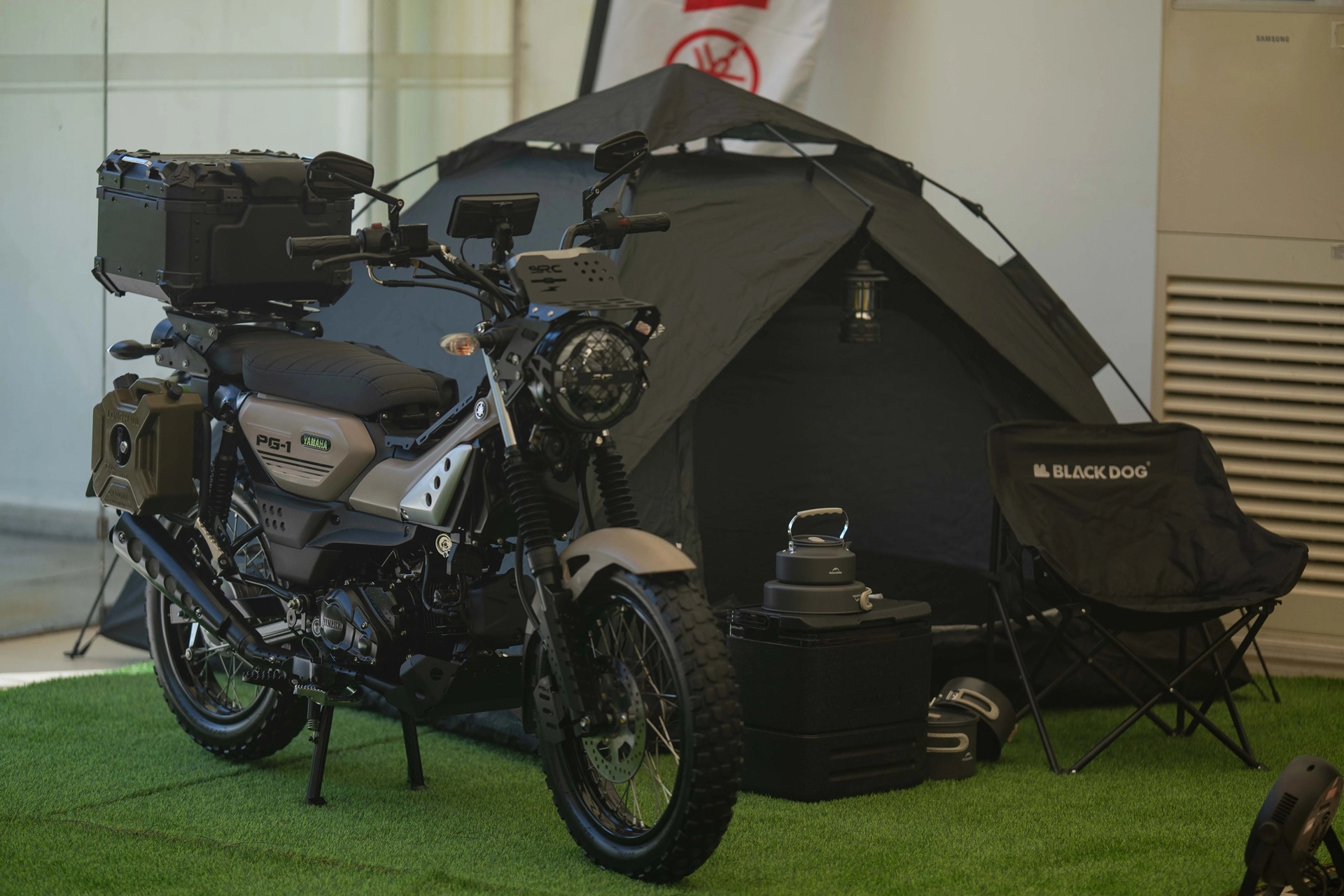
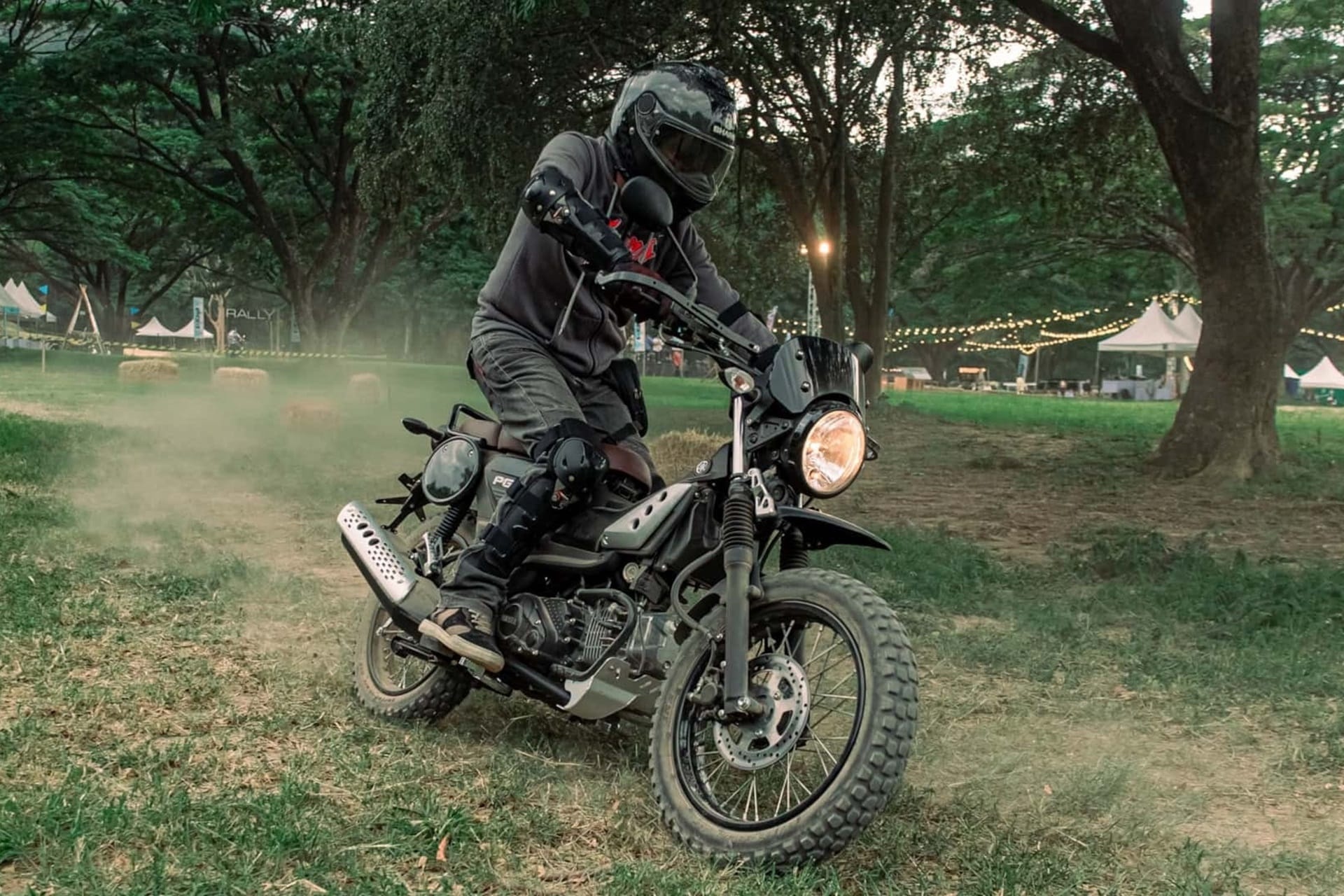
If you still don’t know the Yamaha PG-1, think about the philosophy of the Honda Super Cub—or its more adventurous sister, the CT125 Hunter Cub—and you will have the perfect reference. The PG-1 has been rolling around Thailand and Vietnam since 2023 as a light, simple alternative with an all-terrain vocation, designed to move both on urban asphalt and on dirt tracks without breaking a sweat.
Its approach does not seek to revolutionize anything: it seeks to function, and function well, with the greatest possible mechanical simplicity. Therein lies a good part of its charm and also the reason why so many Western fans have been looking at it with envy for some time through forums and social networks, wondering when it would reach our market.
Simple mechanics, lifelong philosophy

Under its scrambler-style body beats a 114 cc air-cooled horizontal single-cylinder, with a discrete power—around 10 HP—but sufficient for its purpose, coupled to a four-speed transmission with centrifugal clutch. The latter is key: there is no clutch lever, so handling is reduced to accelerating and going up or down gears without fear of stalling, exactly the same as in a Super Cub.
The chassis is a central beam, light and uncomplicated, and mounts 16-inch wheels on both axles shod with knobby tires, a detail that reveals its intentions off the asphalt. The seat, wide and flat, allows you to carry a companion with some comfort, and the whole thing moves at a weight of around 107 kg dry, which together with its compact size promises notable agility both in the city and on a dirt track.
ABS, the missing piece for Europe
Until recently, the main obstacle for the Yamaha PG-1 to leave Southeast Asia was precisely the absence of ABS. The first units sold in Thailand and Vietnam did not incorporate it, which automatically left them outside of Japanese—and, by extension, European—regulations.
That scenario changed at the end of 2025, when an updated version with ABS on the front wheel arrived. The system is single-channel, that is, it acts only on the front wheel; The rear retains the classic drum brake, consistent with the philosophy of simplicity of the entire range. The update brought a new digital instrument panel with LCD screen, while the rest of the chassis remained practically intact.
This small technical change has, however, a big meaning: it paves the way for homologation in Japan and, with it, also opens the door to a possible arrival in Europe, where ABS has been mandatory on practically all motorcycles for years.
Will we see PG-1 at EICMA?
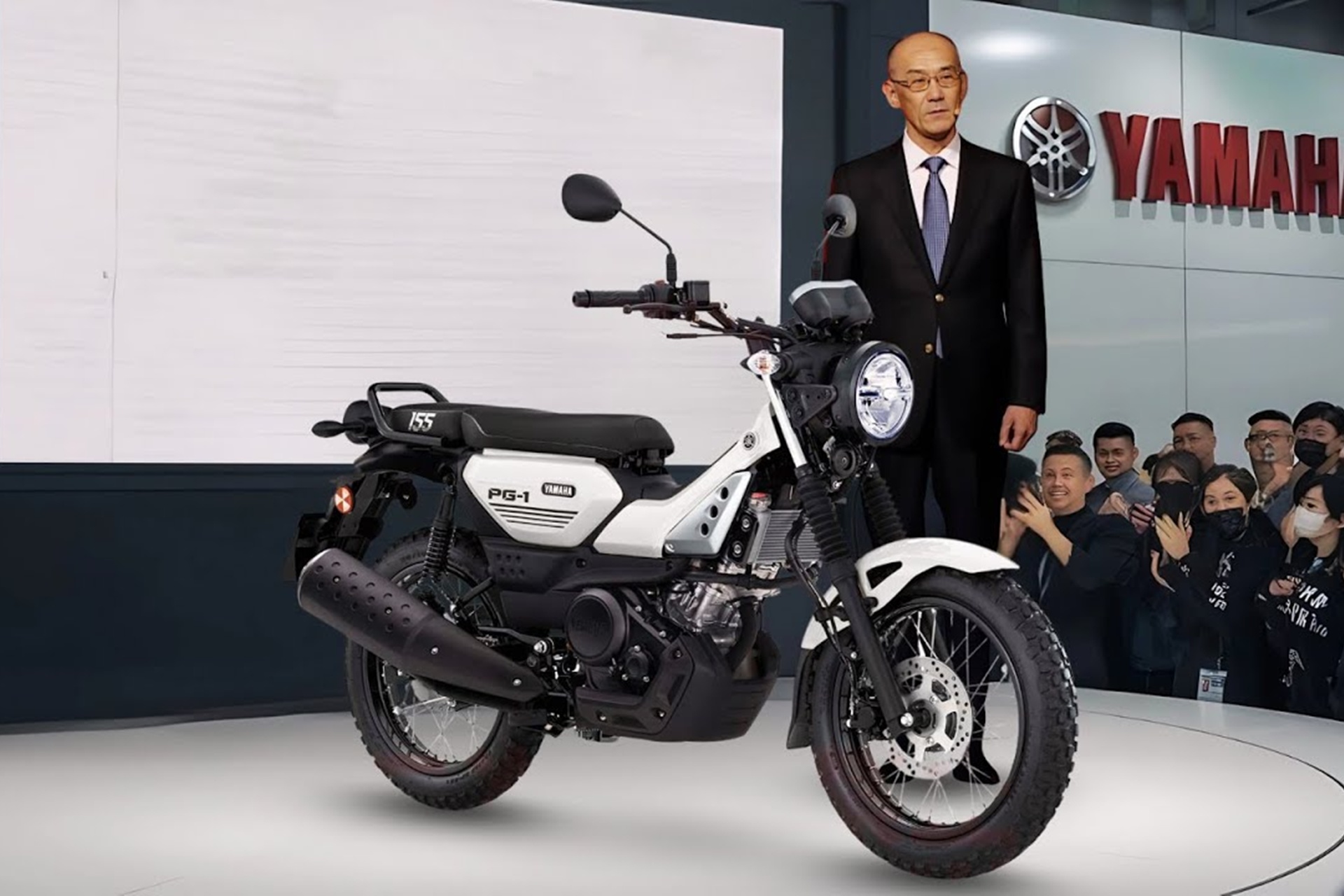
The registration of the “PG-1” brand by Yamaha in recent days fits with this context, although at the moment there is no confirmation on the date, target market or definitive specifications for a hypothetical European version.
The question that remains in the air is whether Yamaha will consider that the demand for a niche model like this—small, simple, with no pretensions to being a best-seller—justifies the effort to homologate it and market it on our continent. The fair calendar plays in favor of intrigue: the EICMA in Milan is held in November, the unmissable event on the world motorcycle calendar, and it would not be the first time that a brand takes advantage of this showcase to reveal a novelty that had been brewing behind the scenes for some time.
For now, the only certainty is that the missing piece for PG-1 to cross borders is already in place. The rest, as so often in motorcycles, is a matter of time and Yamaha deciding that it is worth it.