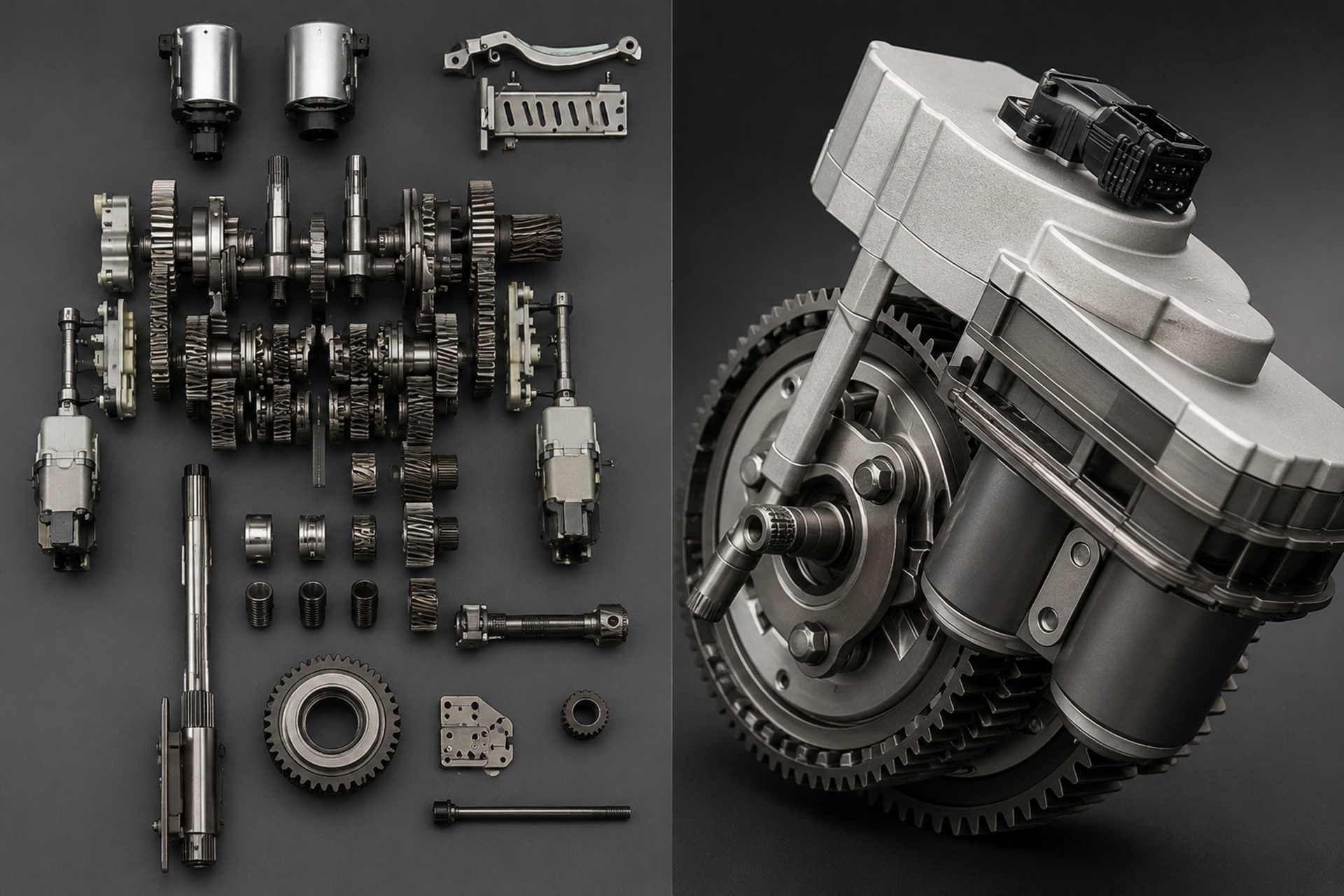
In the last year, news related to Bendaespecially in terms of new models and innovation, happen one after another. The last one seems to be related to an interesting patent where the details around a dual clutch transmission equipped with electromechanical actuators. Everything indicates that we would be looking at the evolution of the first prototype presented on the occasion of the latest edition of the Milan Motor Show.

Benda shows the dual-clutch transmission on its LFS700
If we go back to November last year we can remember how Benda, among its main innovations on the occasion of EICMA 2025, announced what they themselves called electromechanical double clutch transmission (EM-DCT). In order to offer us a first vision of the model, they used a future 1,700 cc inline six-cylinder engine.
Then the brand briefly explained in this regard: “This propulsion system is the flagship unit that the brand hopes will become a new benchmark for luxury touring motorcycles. In addition, it will incorporate a new electromechanical dual clutch transmission (EM-DCT). This engine uses a supporting crankcase that allows the use of a lighter, but more resistant and stable chassis.”
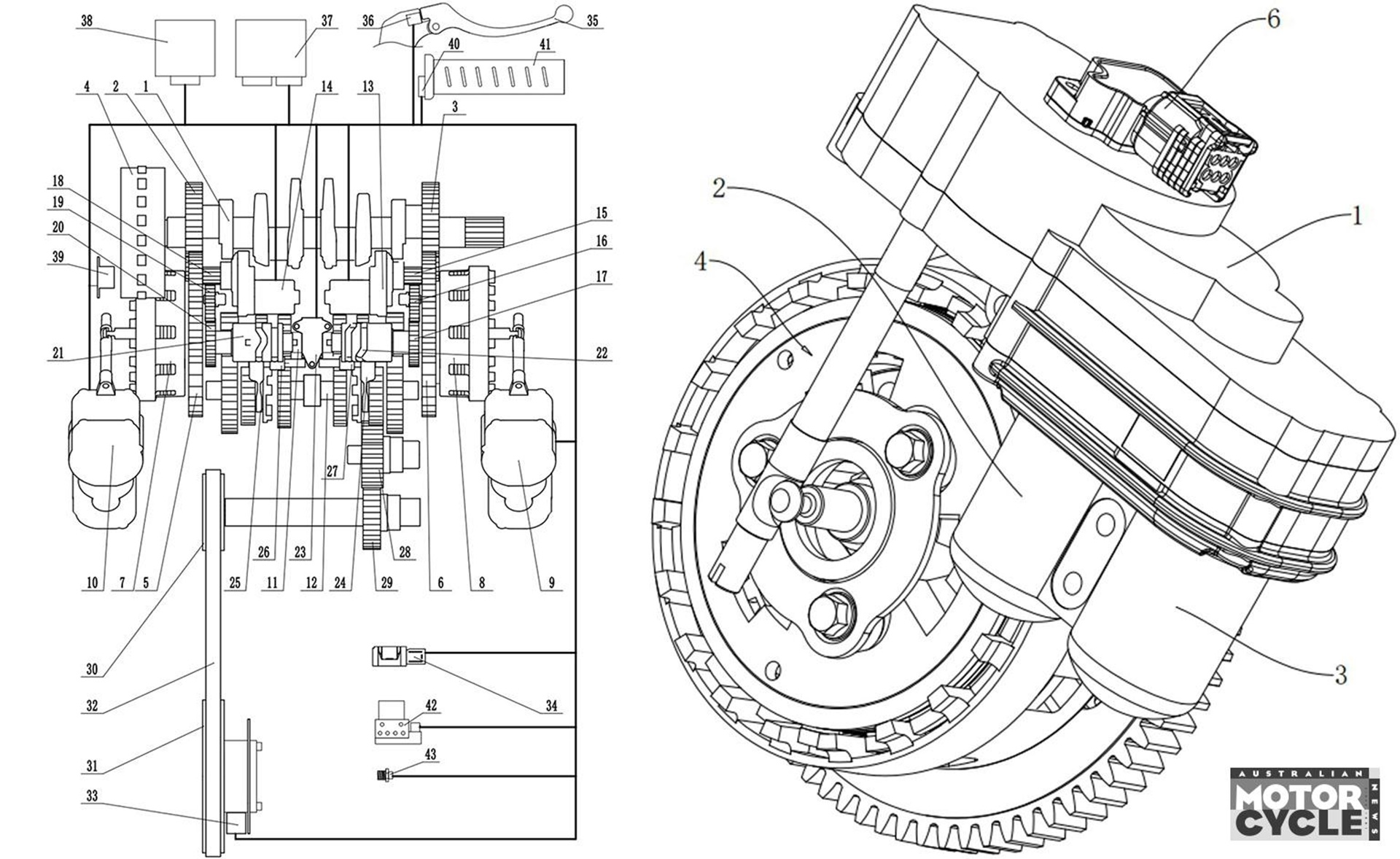
These days it seems to be closer than ever to bringing the final version of its dual-clutch transmission to production. However, now they present us with a more evolved approach to the model. At least as far as technical complexity is concerned. Furthermore, Benda has chosen to fictitiously mount this gearbox in the mechanics that currently powers one of its most sporty models, the LFS700.
In any case, using the technical explanation presented by the colleagues at Australian Motorcycle, “Benda’s dual-clutch gearbox works with the same principle as those used in various cars and motorcycles, but with one particularity. Like these, it uses an input shaft divided into two parts: one half carries the even gears and the other, the odd ones.”
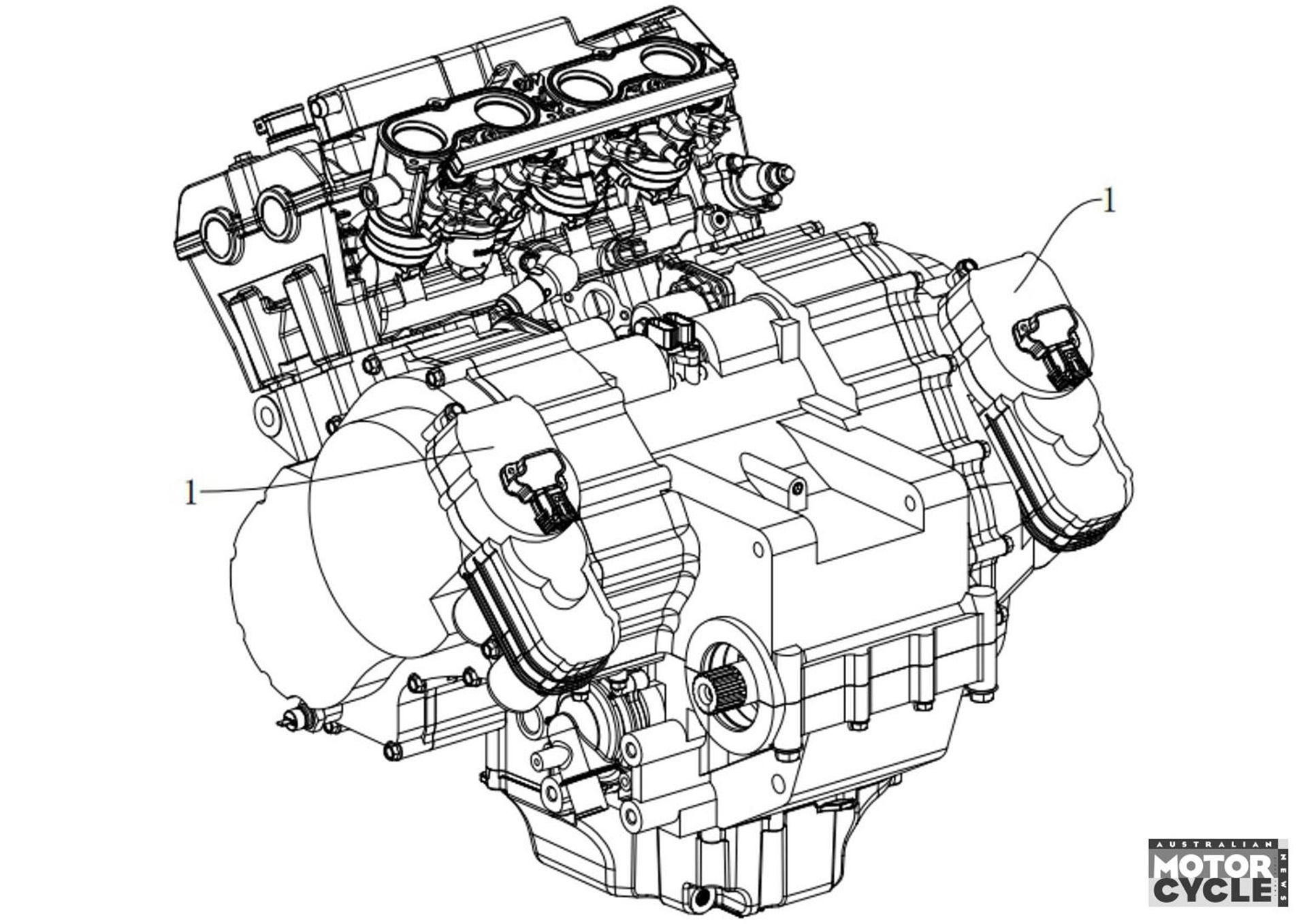
Roughly speaking, this means that each half of the input shaft has its own clutch and is ultimately connected to the engine’s own crankshaft. In this way we can have two gears engaged simultaneously, “switching between them by engaging and disengaging a clutch, a computer-controlled operation that provides a smooth transition, preventing the engine from completely disconnecting from the rear wheel” they conclude.
Similar, but not the same: these are the main differences
Beyond the similarity that this dual-clutch transmission may have, there is a key aspect in the entire development of this gearbox. We refer to the fact that under Benda’s view, it is preferable to vary the arrangement of the clutches at opposite ends of the split input shaft. The Chinese firm ends “connecting them to both ends of the crankshaft, rather than being mounted concentrically on just one side of the gearbox.”
If we return to the layout that the aforementioned in-line six-cylinder engine showed at the time, we can see how Benda stated at the time that the clutches had an electromagnetic design. This aspect is key to understanding the arrangement shown in the latest patent on this dual-clutch transmission. Compiling the technical explanation of the ocean environment:
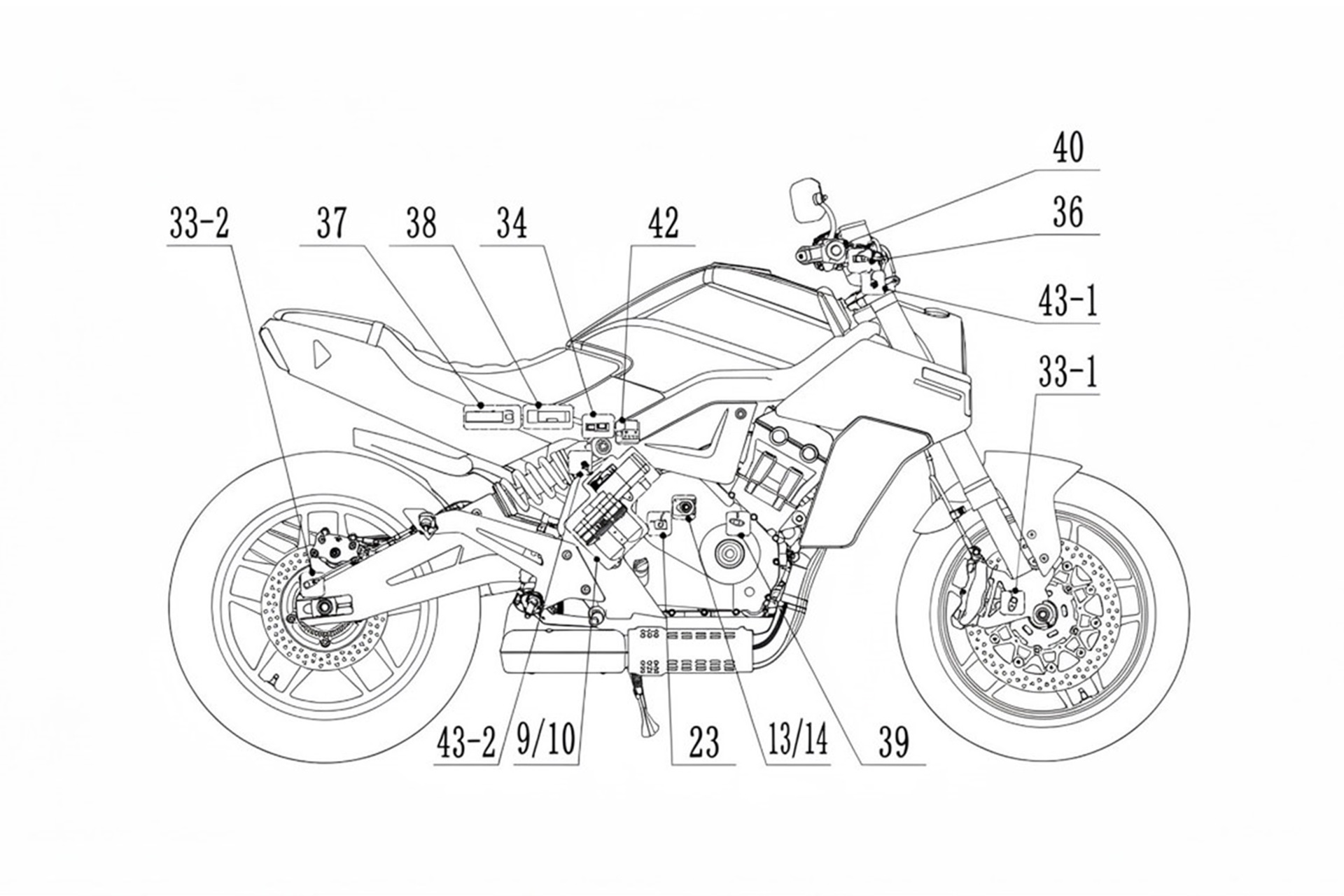
“The new patent shows a simpler system that uses the same electromechanical actuators that Benda already uses in its models with electronic clutch. These actuators are practically identical to those of other manufacturers with electronic clutch and, therefore, they are much simpler and cheaper to manufacture than the complex hydraulic clutch control and gear shifting system normally used in dual-clutch models.”
In this way, Benda once again shows us what it is capable of, but above all how it continues to autonomously develop new systems with which to improve the driving experience of its customers. To all this we must add the increasing demand for motorcycle models with automatic gearboxes. This offers us a clear view of what the Asian brand has in store for future models destined to succeed in the different categories where it has a presence.